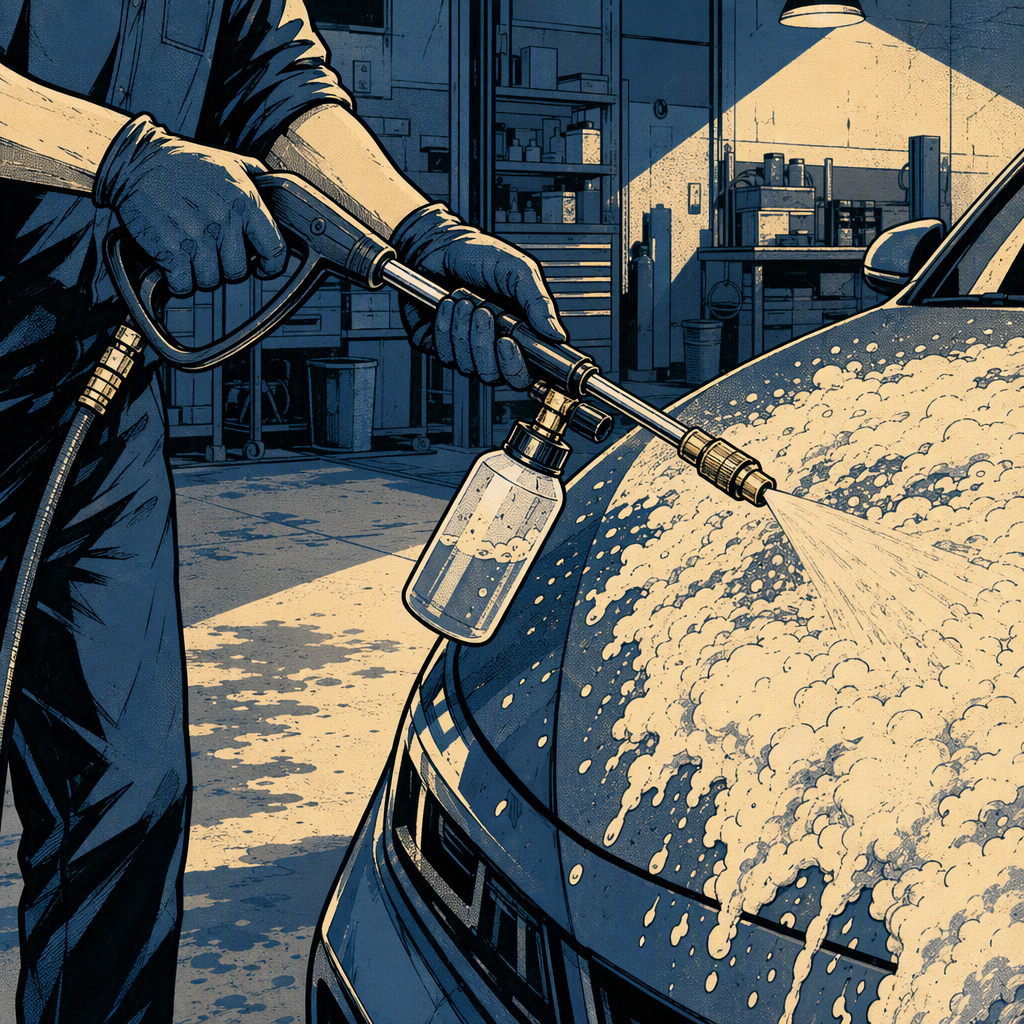
If your foam cannon is putting out a thin, watery spray instead of the shaving-cream-thick foam you see in videos, the cannon itself is usually not the problem. In the vast majority of cases it comes down to three variables: the nozzle orifice size, the soap dilution ratio, and whether your pressure washer has enough flow to feed the cannon properly. This guide covers what actually changes foam consistency, which fixes are worth trying first, and how to troubleshoot the most common cannon failures — leaking, cracking housings, and clogged tips — before you spend money on a replacement.
How Foam Cannons Actually Produce Thick Foam
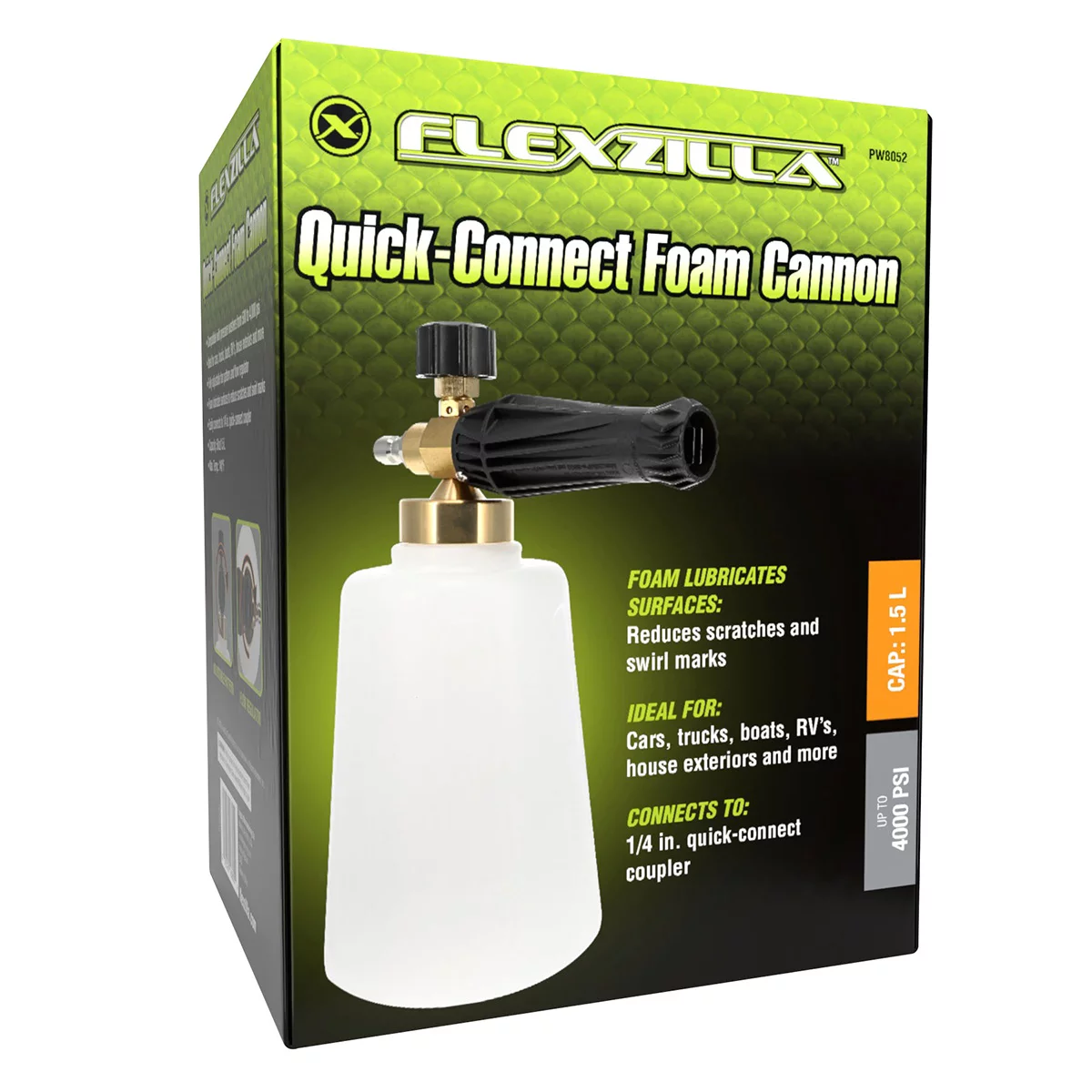
A foam cannon works by mixing diluted soap concentrate with a high-pressure water stream, then forcing that mixture through a small orifice and across a diffuser (often a small disc that looks like fine steel wool or mesh) that aerates the mixture into foam. Three things determine how thick that foam turns out:
- Orifice size — the diameter of the metering tip the soap/water mix passes through. Smaller orifices increase back-pressure and produce denser foam.
- Water pressure and flow (PSI/GPM) — a pressure washer with too little flow (common on lower-end electric units) can’t generate enough force to properly aerate the mixture, even with a good cannon.
- Soap chemistry and dilution — not all car soaps are formulated for foam cannons. Some are diluted incorrectly or simply don’t have the surfactant package needed to hold air.
Most cheap foam cannons ship with an oversized orifice (commonly 1.25mm) intended to work across a wide range of pressure washers without clogging. That default setting is the single biggest reason people get watery foam out of the box.
Choosing the Right Nozzle Orifice and Cannon
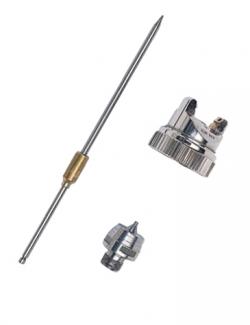
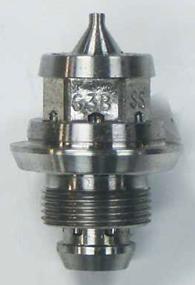
Swapping the stock orifice for a smaller one — 1.1mm is the size most detailers land on — is the cheapest and most effective fix available. The orifice is a small brass or plastic insert inside the cannon’s nozzle assembly; it requires partial disassembly to swap, and many cannons include a second, smaller orifice in the box that goes unused. Check your parts bag before assuming you don’t have one.
If you’re shopping for a new cannon, look for one that explicitly lists an adjustable or swappable orifice, and expect to pay somewhere in the $20–$40 range for a unit that reliably produces thick foam. Reviews consistently point to a handful of models — MJJC-style cannons, Griot’s Garage’s cannon, and a few widely-sold Amazon-brand units — as reliable performers once the orifice is dialed in. Avoid the cannon bundled “free” with big-box pressure washers; they’re generally built to the loosest possible spec and are the most common source of complaints about weak foam.
One recurring defect worth knowing about before you buy: some plastic cannon tops are prone to UV cracking after repeated exposure to sun and heat, especially in hot climates. The crack usually doesn’t stop the unit from working, but it’s worth storing the cannon out of direct sun between washes and inspecting the threads before each use.
===FYP-PRODUCT-SEARCH-1===
Dialing In Your Soap Dilution Ratio
Once the nozzle is sorted, soap choice and dilution are the next lever. A ratio between 1:5 and 1:10 (soap to water, mixed in the cannon’s bottle) is the common starting range for concentrated snow foam soaps — check the label first, since ratios vary significantly by product. Two adjustments matter more than people expect:
- Use warm water when possible. Warm water helps the soap activate and hold air better than cold tap water, particularly in winter.
- Match the soap to the equipment. Not every “snow foam” product is created equal — some technicians report inconsistent foam output from certain mainstream brands and get noticeably better, denser foam simply by switching soaps at the same dilution and pressure. If you’ve already corrected the orifice and pressure and foam is still thin, the soap is the next thing to change, not the cannon.
Hard water can also cut foam volume and stability, since dissolved minerals interfere with surfactants. If you’re on well water or a known hard-water area and foam still underperforms after fixing orifice size and soap, consider a filtered or softened water source for the wash.
The Two-Stage Foam Technique
Thicker foam isn’t just cosmetic — it clings to vertical panels longer, which extends dwell time and lets the soap lift dirt and grit off the paint before any physical contact happens. That’s the entire point of pre-foaming before a contact wash: less abrasive material left on the surface means fewer micro-scratches from the wash mitt.
A two-stage approach gets the most out of this:
- Apply a lighter, more watery foam pass first and let it dwell for a minute or two. This first pass loosens and carries away the heaviest dirt and grime.
- Rinse that pass off with the pressure washer.
- Apply a second, thicker foam pass (this is where the smaller orifice and correct dilution matter most) and proceed directly to your contact wash while the foam is still providing lubrication.
This sequence reduces the amount of grit still on the panel when the wash mitt makes contact, which is the actual mechanism behind fewer swirl marks — not the foam thickness itself.
Troubleshooting Common Foam Cannon Problems
Most complaints fall into a short list of known issues, each with a straightforward fix:
- Thin, runny foam: Check orifice size first (swap to 1.1mm if using 1.25mm), then dilution ratio, then soap brand. Confirm your pressure washer meets the cannon’s minimum PSI/GPM spec — very low-flow electric units (roughly under 1,300 PSI / 1.5 GPM) struggle to aerate properly regardless of cannon quality.
- Leaking at the connection: Usually an O-ring or thread mismatch between the cannon and the pressure washer’s quick-connect. A better-quality upgrade hose can resolve fitment issues with stock hoses that are too rigid or poorly sealed.
- Cracked plastic housing: Common with prolonged sun/heat exposure. A crack that doesn’t affect the threads can often be sealed with cyanoacrylate (super) glue as a temporary fix; otherwise replace the housing or cannon.
- Foam stops working mid-season: Soap residue buildup inside the nozzle and diffuser is the most common cause. Disassemble and flush with hot water.
- Nozzle orifice spins out of alignment: Some cheaper cannons have a nozzle tip that can rotate when screwing the unit onto the pressure washer wand. Hand-tighten carefully and check alignment before each use.
Maintenance Tips to Extend Cannon Life
Foam cannons are simple devices, but soap residue and hard water deposits will degrade performance over a season if ignored. After each use, run clean water through the cannon for a few seconds to flush the metering valve and diffuser. Periodically (monthly with regular use) fully disassemble the nozzle assembly and soak the orifice and diffuser in hot water to dissolve dried soap film. Store the cannon indoors or in a shaded spot rather than leaving it attached to the pressure washer in direct sunlight, which reduces the risk of UV-related cracking on the housing and bottle threads.
Quick Foam Cannon Checklist
- Confirm your pressure washer meets the cannon’s minimum PSI/GPM requirement
- Swap to a 1.1mm orifice if your cannon shipped with a 1.25mm tip
- Mix soap at 1:5 to 1:10 with warm water, per label instructions
- Test a different soap brand before replacing the cannon
- Flush the nozzle with clean water after every wash
- Store the cannon out of direct sun and heat
- Disassemble and hot-water clean the orifice/diffuser monthly
===FYP-PRODUCT-SEARCH-2===
FAQs
Why is my foam cannon spraying water instead of foam?
This is almost always low pressure washer flow, an oversized orifice, or soap that’s too diluted. Check the orifice size first, then verify your pressure washer’s GPM rating meets the cannon manufacturer’s minimum.
What orifice size gives the thickest foam?
Most detailers get shaving-cream-consistency foam with a 1.1mm orifice, compared to the 1.25mm size many cannons ship with by default. Check your cannon’s included parts bag — a smaller orifice is often included but unused.
Does soap brand really matter that much?
Yes. Foam cannons rely on the soap’s surfactant formulation to hold air. Some snow foam products consistently underperform even at correct dilution and pressure, while switching brands at the same settings produces noticeably thicker foam.
Should I use warm or cold water in my foam cannon?
Warm water generally produces thicker, more stable foam than cold tap water, since it helps activate the soap’s surfactants. It’s not mandatory, but it’s a low-effort improvement.
Why did my foam cannon’s plastic top crack?
Prolonged UV and heat exposure is the most common cause, especially in hot climates. It usually doesn’t affect function if the threads are intact, but a fresh crack can be sealed with cyanoacrylate glue as a temporary fix.
Do I need a specific pressure washer to run a foam cannon well?
Foam cannons need adequate flow (GPM) more than raw pressure (PSI). Very low-flow electric pressure washers can struggle to aerate soap properly even with a high-quality cannon and correct orifice, so check the cannon’s minimum GPM spec before buying.
Pressure Washer Selection for Foam Cannon Performance
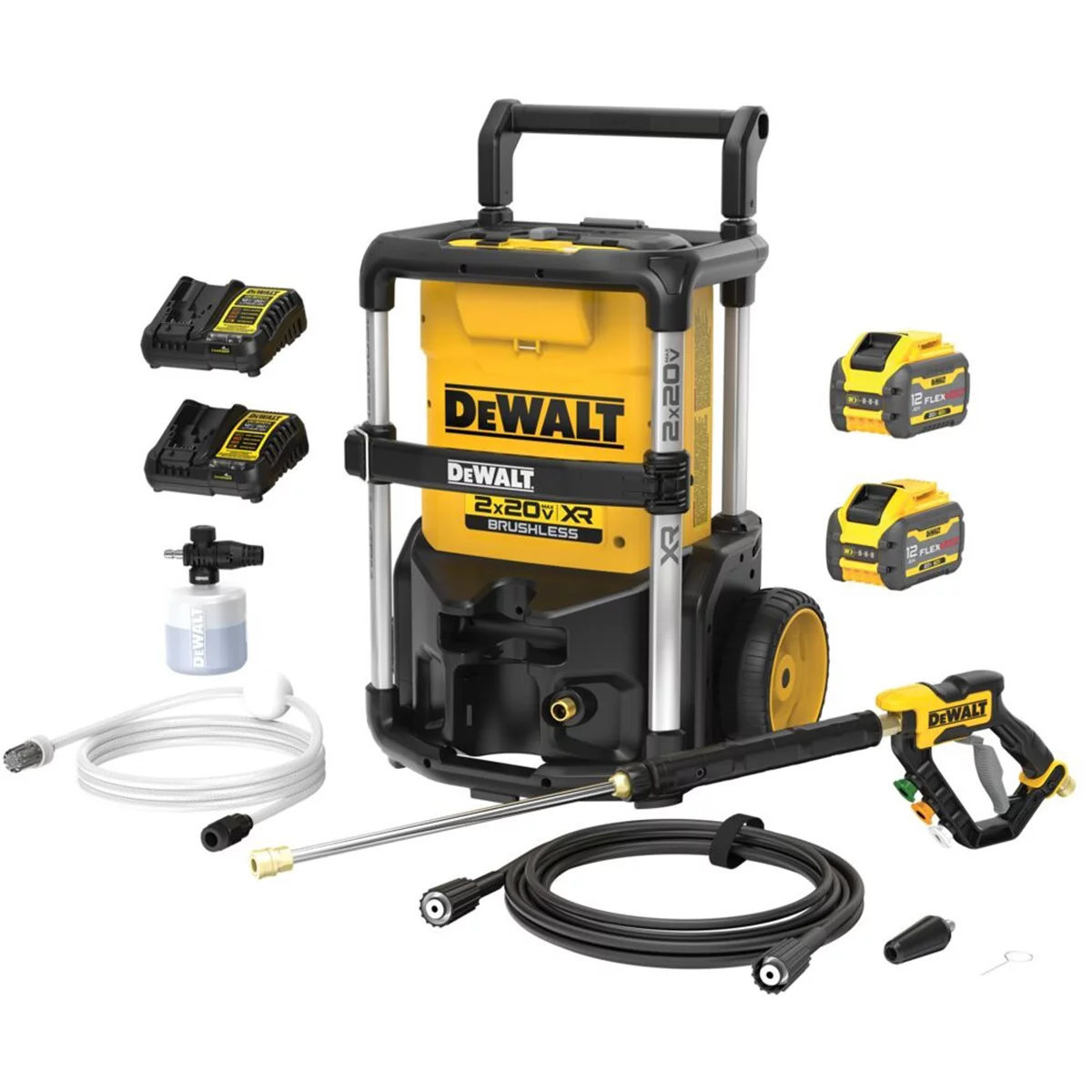
Flow rate (GPM) matters more than raw pressure when pairing a pressure washer with a foam cannon — units with insufficient flow can’t properly aerate soap no matter how well your cannon is tuned. Our pressure washer selection includes equipment at flow ratings and pressure levels suited for foam cannon work.
- Electric and gas models with adequate flow for consistent foam output
- Quick-connect compatibility and hose lengths for varied setups
- Pressure ranges suited for pre-foam, rinsing, and detail work

The Toolsource Technical Team blends decades of real-world automotive service experience with up-to-date technical research. Our writers collaborate with professional mechanics, shop owners, and diagnostic specialists to deliver practical, workshop-ready guidance you can trust.


Follow us on social media