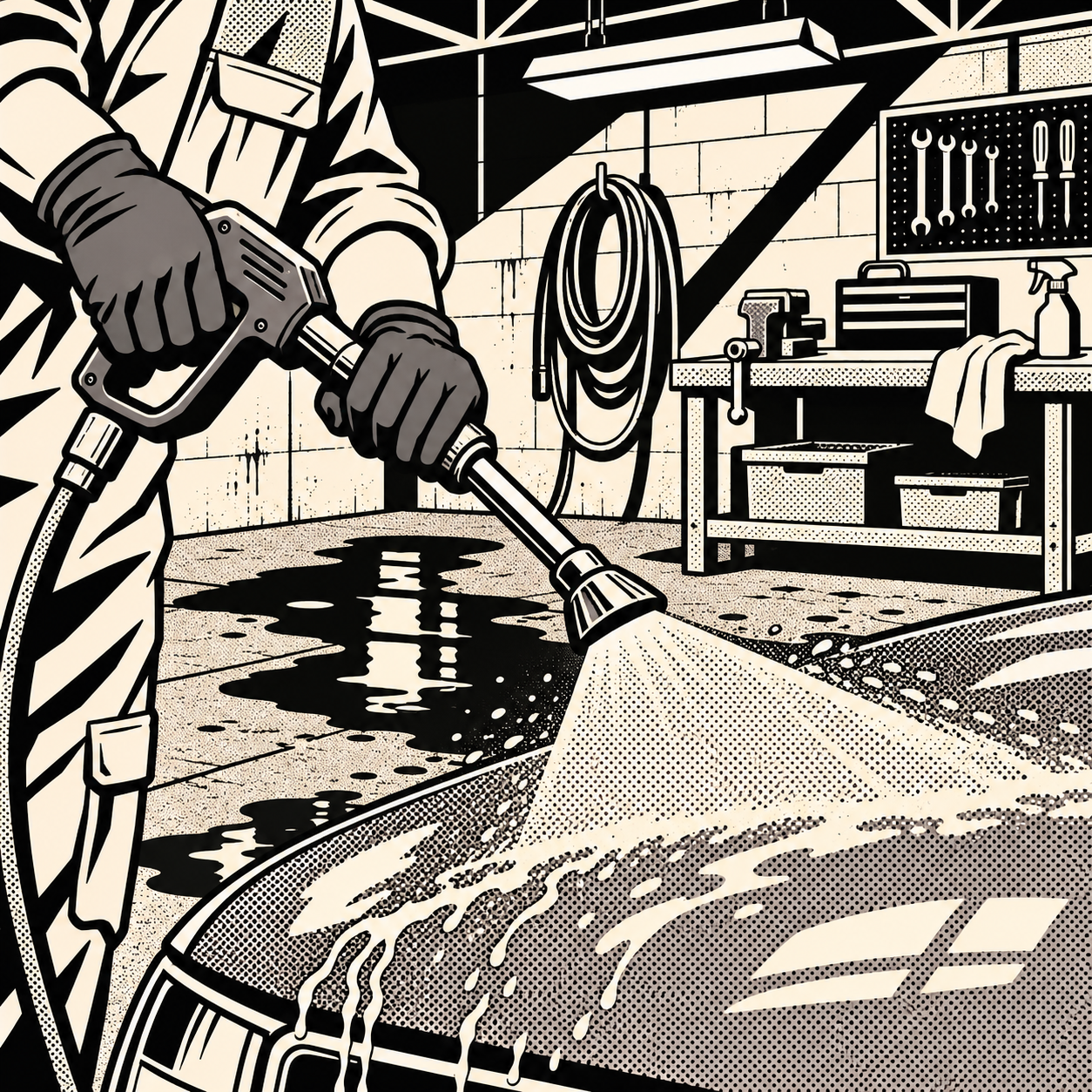
Retail markdowns on pressure washers and portable power stations show up constantly at big-box and warehouse stores, and the comment sections under every deal post are full of good, practical field knowledge buried in jokes about painted decks. Strip out the noise and there’s a consistent set of lessons technicians and detailers keep relearning: PSI by itself is a marketing number, runtime claims on power stations rarely match real-world load, and the cheapest unit on the shelf is often fine if you understand its limits. This guide pulls that practical knowledge into a straight buying and use reference for anyone equipping a shop, mobile detailing rig, or home garage.
PSI Alone Doesn’t Tell You Anything Useful
A pressure washer’s box will headline a PSI number — 1700, 2300, 3000 — and that number alone is close to meaningless without knowing the flow rate (GPM, gallons per minute). PSI measures force at the nozzle tip; GPM measures how much water is actually moving. A unit rated at 2300 PSI but only 1.3 GPM is a low-flow, high-pressure machine — it can feel aggressive at close range but doesn’t rinse or lift dirt as effectively as a higher-GPM unit running lower pressure. The combination of the two, not either number alone, determines both cleaning power and risk to a surface.
For reference, many dedicated car-wash pressure washers run in the 1000–1700 PSI range but push 1.4–2.0+ GPM, which cleans faster and more evenly than a high-PSI, low-GPM homeowner unit. If you’re buying primarily for vehicle work, prioritize GPM over PSI when comparing specs — a “weaker” PSI rating with better flow will usually outperform a high-PSI unit for washing cars, trucks, or equipment.
Protecting Paint and Clear Coat
Electric and gas pressure washers in the 2000–3000 PSI range can absolutely damage automotive clear coat if used incorrectly, but the actual danger comes from the pressure-and-distance combination at the nozzle, not the PSI rating printed on the box. A high-PSI/low-GPM unit held too close with a narrow-degree nozzle (0° or 15°) is the scenario that strips clear coat or drives water past seals and trim. The fix isn’t necessarily a different machine — it’s nozzle selection and technique.
- Use a wide-fan nozzle (25°–40°) for anything touching painted panels; save narrow nozzles for concrete, wheels, or undercarriage.
- Swapping to a detailing/foam-cannon nozzle with a larger orifice drops effective line pressure substantially — often down to 800–1000 PSI even on a 2000+ PSI machine — because the pump’s fixed GPM has to spread across a wider opening.
- Keep the nozzle 12+ inches from the surface and keep it moving; a stationary high-pressure stream is what causes damage, not a quick pass.
- If you’re buying specifically for vehicle use, a snub-nose detailing gun (sold separately from most stock wands) keeps the operator at a safer working distance by design, which matters more for inexperienced users than the PSI spec does.
Search for pressure washer accessories here: foam cannon nozzle attachment for pressure washer

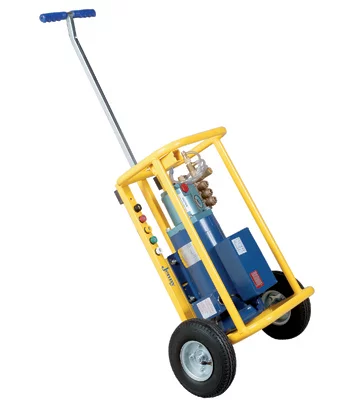
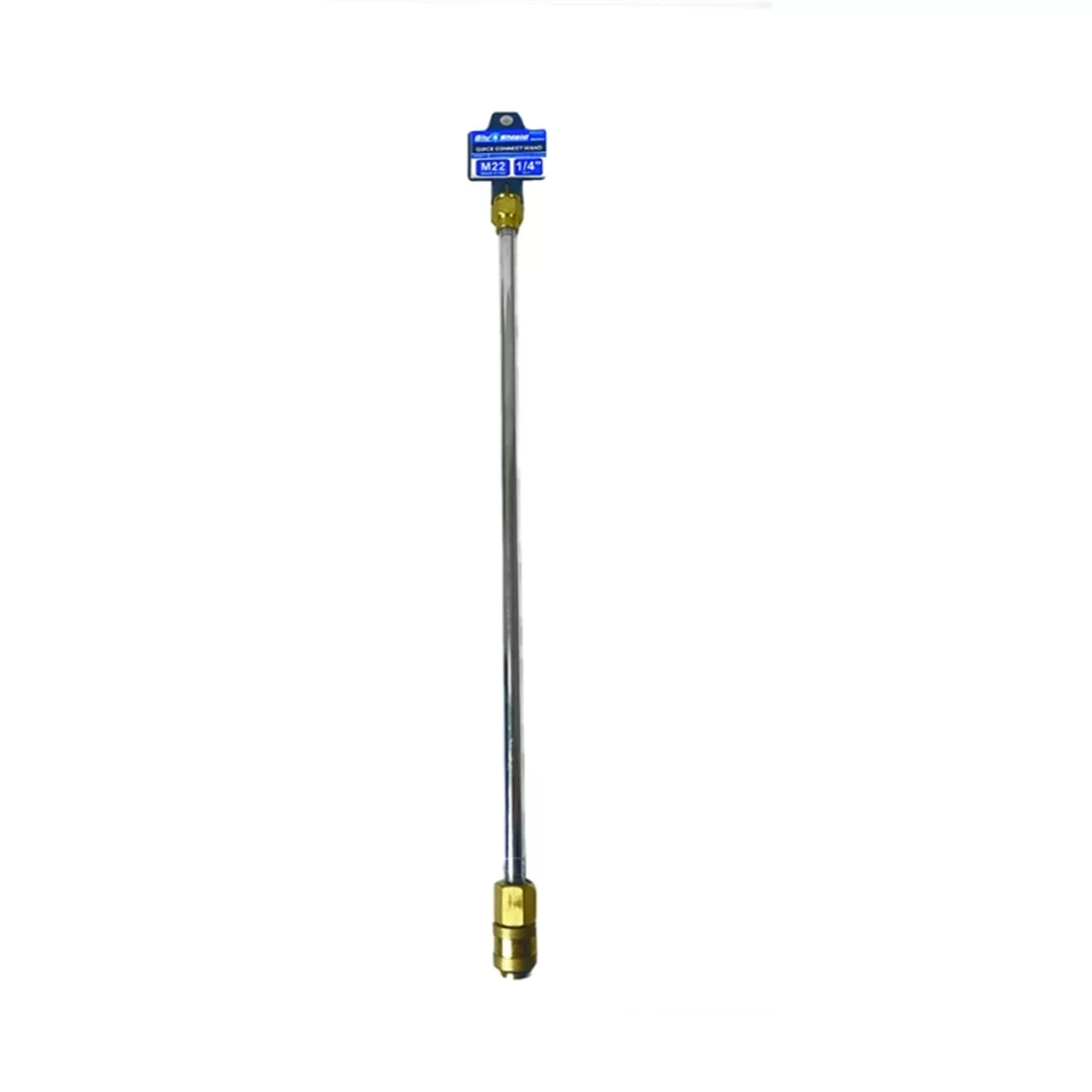
BluBird Blushield 4000 PSI Pressure Washer Wand with Easy-Lock M
Mfg: blubird
Part #: PWL004
Electric vs. Gas: Pick Based on Maintenance Tolerance, Not Just Power
Gas pressure washers generally deliver more sustained GPM and are the right call for heavy-duty concrete, driveway, or fleet-washing work. But small gas engines on these units are notorious for carburetor problems if they sit unused between jobs — fuel varnish gums up the carb, and many owners end up doing an annual cleaning or rebuild just to get the unit started each season. If the washer is going to sit idle for weeks or months at a time (common for seasonal detailing or occasional shop use), that maintenance burden is worth weighing against the power advantage.
Electric pressure washers avoid the carb problem entirely — no fuel system to vanish or gum up, no pull-start, no exhaust in an enclosed bay. The tradeoff is typically lower sustained GPM and a power cord limiting your range. For light-duty work — regular vehicle washing, patio furniture, smaller equipment — a mid-range electric unit is often the better long-term ownership experience even if the gas unit wins on paper specs. If you already own a gas unit and it’s reliable, there’s no reason to switch; the maintenance complaints mostly come from gas units that sit unused for long stretches.
Portable Power Stations: Match Watt-Hours to Actual Load, Not Marketing
Battery power stations in the 1–2 kWh range are frequently marketed as home-backup or emergency solutions, but the realistic runtime depends entirely on what’s plugged in. A 2048Wh unit running a dual-zone fridge/freezer can realistically deliver somewhere around two to three days of runtime because that load is small and intermittent (the compressor cycles on and off). The same unit trying to run space heating plus lighting during a winter outage can be exhausted in as little as one to two hours, because resistive heating draws far more continuous wattage than refrigeration.
Before buying a power station for emergency or mobile-shop use, do the math yourself:
- List every device you intend to run simultaneously and its rated wattage (fridge, laptop, lights, small heater, tools).
- Add up continuous watts, then estimate hours needed per day.
- Divide the unit’s rated Wh by your estimated average draw to get realistic runtime — then subtract 10–15% for inverter losses.
- If the math doesn’t work, expansion battery packs exist but typically cost nearly as much as the base unit, so compare that cost against a small inverter generator before assuming the expansion pack is the economical path.
For anything beyond lights, internet, and small electronics — i.e., real heating or appliance loads — a small gas or propane inverter generator in the 2000–3000W range remains more cost-effective per watt-hour of actual runtime than scaling up battery capacity, though it comes with fuel storage and noise considerations a battery doesn’t have.
Buying on Sale: What to Verify Before You Check Out
Deep discounts on both categories are common at warehouse clubs and hardware retailers, especially on display models, manager’s specials, and off-season clearance. A low price is only a good price if the unit matches your actual use case — the specs above matter more than the discount percentage. Before buying:
- Confirm GPM, not just PSI, if the washer will touch vehicle paint.
- Check whether a wide-fan or detailing nozzle is included or needs to be purchased separately.
- For power stations, confirm rated continuous watts (not just peak/surge watts) against your heaviest intended load.
- Ask about return policy on display/open-box units — floor models are often sold as-is.
- If buying gas-powered equipment that will sit idle between uses, budget for fuel stabilizer or plan to run the tank dry before storage.
Browse current deals on this equipment: portable power stations and electric pressure washers
Quick Pre-Purchase Checklist
- GPM confirmed (not just PSI) for vehicle-washing use
- Correct nozzle degree/orifice available for paint-safe washing
- Continuous wattage (not peak) checked against real load for power stations
- Maintenance tolerance (gas carb upkeep vs. electric simplicity) matches how often it’ll be used
- Return/warranty terms verified for display or open-box units


2000 WT MODIFIED SINE POWER INVERTER 12 VDC TO 120 VAC ETL LISTE
Mfg: Aims Power
Part #: PWRINV200012120W
Frequently Asked Questions
Is 2300 PSI too strong for washing a car?
PSI alone doesn’t determine risk — a 2300 PSI unit with low GPM and a wide-fan nozzle, kept at proper distance, is generally safe. The danger comes from narrow nozzles held too close, not the PSI number by itself.
What GPM should I look for in a pressure washer for vehicle detailing?
Aim for 1.4–2.0+ GPM where possible. Many dedicated detailing washers run lower PSI (800–1700) with higher flow, which rinses more effectively than a high-PSI, low-GPM homeowner unit.
Why does my gas pressure washer need carb cleaning every year?
Small engines that sit idle between seasons are prone to fuel varnish buildup in the carburetor. Running the tank dry before storage or using a fuel stabilizer reduces this; electric units avoid the issue entirely.
How long will a 2kWh power station actually run my fridge during an outage?
Expect roughly two to three days for a single fridge/freezer, since compressor loads are intermittent and relatively low-draw. Adding heating or multiple appliances can cut that to a few hours.
Is an expansion battery or a small generator better for extended outages?
Expansion packs often cost nearly as much as the base power station and still have a hard capacity ceiling. A small inverter generator in the 2000–3000W range typically delivers more total runtime per dollar for sustained loads like heating.
Do I need a special nozzle to pressure-wash a car safely?
A wide-fan nozzle (25°–40°) is the minimum for painted panels. A dedicated foam-cannon or snub-nose detailing attachment further reduces risk by lowering effective pressure and limiting how close the operator can get.
Shop Pressure Washers
Whether you’re equipping a mobile rig, shop bay, or home garage, choosing the right pressure washer starts with understanding GPM, nozzle selection, and your maintenance tolerance. Browse pressure washers that match the specs and build quality needed for vehicle detailing, shop use, or equipment washing.
- Electric and gas models with verified GPM and PSI ratings for your workflow
- Paint-safe nozzles and detailing attachments for vehicle washing
- Equipment suited to light-duty shop work, vehicle detailing, or heavy-duty concrete cleaning

The Toolsource Technical Team blends decades of real-world automotive service experience with up-to-date technical research. Our writers collaborate with professional mechanics, shop owners, and diagnostic specialists to deliver practical, workshop-ready guidance you can trust.


Follow us on social media