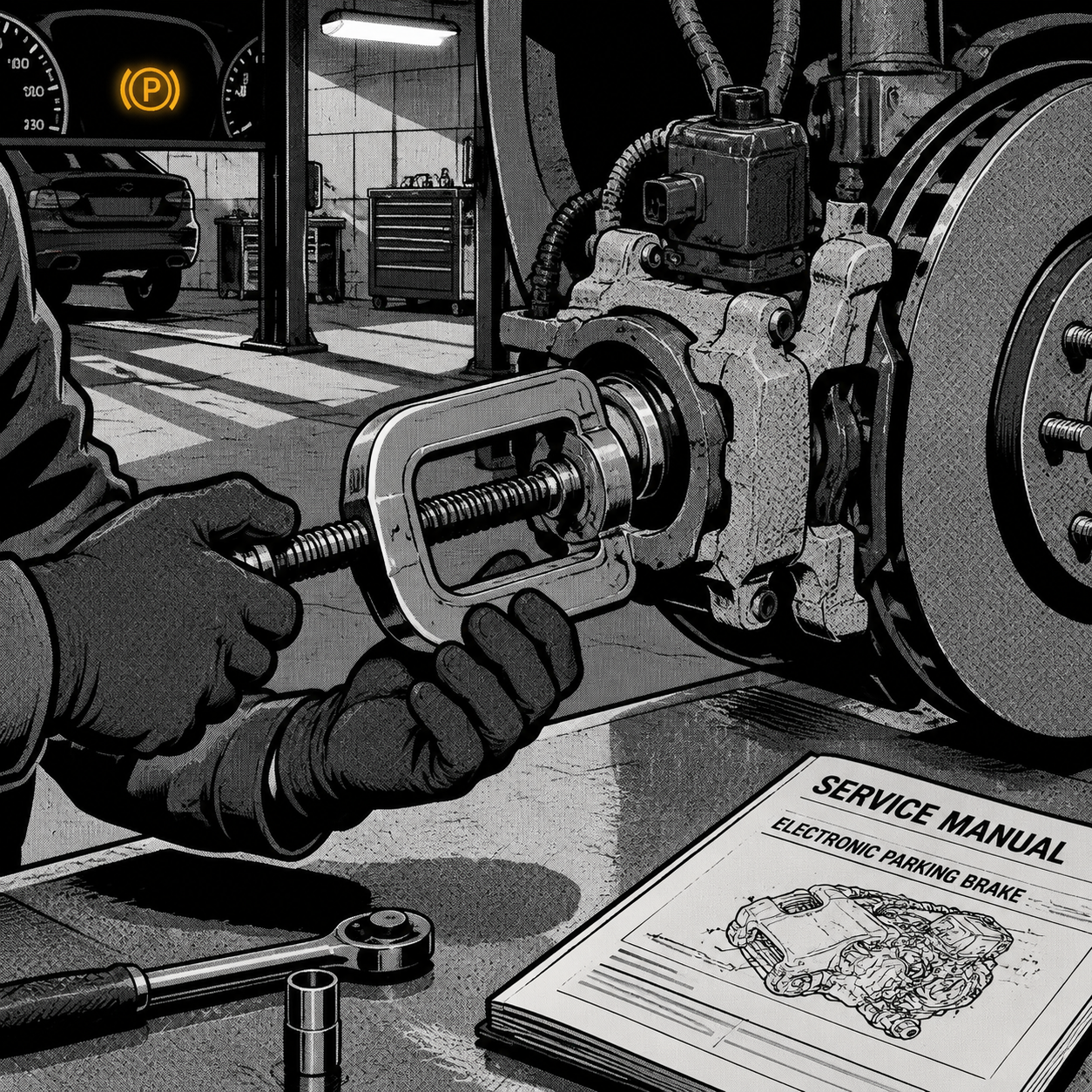
A pad and rotor swap used to be a 30-minute job with no tools beyond a C-clamp and a lug wrench. On a growing number of GM, Ford, and Volvo vehicles with electronic parking brakes (EPB) and brake-by-wire control, that same job can end with the ABS light on, the parking brake disabled, speed limited to around 30-60 mph, and suspension dropped into a fail-safe setting. None of that means the brake job was done wrong. It means the control module detected a pressure or position change it wasn’t told to expect, and it locked the system down until it’s told otherwise. This happens because EPB calipers use a motor-driven actuator to apply the parking brake, and the module constantly monitors piston position and line pressure to catch real leaks. A normal pad replacement changes both of those readings, and if the module isn’t in the right mode when that happens, it reads the change as a failure instead of routine service. The fix is almost always procedural, not mechanical: put the vehicle into the correct service state, manage the battery and pedal correctly, and clear the resulting codes with a capable scan tool.
Why the Dash Lights Up After a Routine Brake Job
When you compress an EPB caliper piston to fit new pads, you’re retracting a motor-driven actuator that the module tracks continuously. If the key is on (or the module is awake) while you do this, it sees a sudden, large change in actuator position or hydraulic pressure with no corresponding driver input. The module’s logic treats that as a potential leak or actuator fault, not as service activity, and sets codes for brake pressure, ABS, or EPB faults. On some platforms this also triggers a secondary fail-safe: speed limiting and a lowered ride height, because the system assumes it can no longer guarantee full braking performance. The warnings and limitations are a logical response to bad data, not a sign of a damaged part. That’s the key diagnostic insight before you touch a scan tool: the vehicle isn’t broken, it’s confused, and the repair is about giving it clean data to re-learn from.
Putting the Vehicle Into Service or Repair Mode First
Before you retract a single piston, check the service procedure for that specific platform. Many GM trucks require holding the parking brake switch for an extended period to enter a service/repair mode that tells the module to ignore actuator movement during the job. Other platforms use a menu sequence through the infotainment system or require a dedicated diagnostic command from a scan tool. Skipping this step is the single most common reason DIY brake jobs on EPB vehicles end in a disabled caliper or a limp-mode dash. Look up the exact sequence for the year, make, and model before starting — a GMC Sierra procedure is not the same as a Ford Escape procedure, and neither matches a Volvo. If the written procedure calls for a scan tool to initiate service mode rather than a button sequence, don’t substitute a workaround; some modules won’t exit that mode cleanly without the same tool that opened it.


Battery Disconnect and the Pedal-Pump Procedure
For front brake work specifically — not just the rear EPB actuators — several manufacturers specify disconnecting the negative battery terminal before you compress the caliper pistons. With the module unpowered, it can’t run its self-test or log the piston travel as a fault. The general sequence used successfully across GM trucks and SUVs is:
Disconnect the negative battery terminal. With the key fully off and the battery still disconnected, pump the brake pedal several times (plan on 10-15 strokes, repeated in a few sets) to extend the caliper pistons back out against the new pads. Reconnect the battery only after the pedal feels firm. Start the vehicle and verify the brake pedal is solid before driving. The pumping step matters because new pads are thicker than worn ones; until the pistons travel out to meet them, the system reads a pedal-to-floor condition that looks identical to a hydraulic leak. Doing this with the key on, or skipping the battery disconnect, is what sets off the fault codes in the first place.
Find the right scan tool before you start — product search: bi-directional OBD2 scan tool for GM brake service mode and ABS self-test
Clearing Codes and Running the Hydraulic Self-Test
If codes are already set — because the service mode step was missed or the pedal was pumped with the key on — pumping the pedal correctly afterward will not always clear them on its own. You’ll need a scan tool capable of reading and clearing ABS, EPB, and brake pressure codes, and on many late-model GM and Ford platforms, running a bi-directional hydraulic control unit self-test or brake bleed function after reconnecting the battery. A basic code reader that only pulls generic OBD2 codes frequently can’t reach these manufacturer-specific modules. Budget bi-directional tools in the $300-600 range have cleared these faults successfully for many techs and DIYers; in some cases a tool still can’t finish the job and a dealer-level scan tool or software update is required, particularly when the master cylinder/ABS pump is a combined unit. If codes return immediately after clearing, don’t keep clearing and driving — that points to an actual pressure issue (open bleeder, air in the lines, failed actuator) rather than a software state that needs resetting.
Platform Quirks Worth Knowing Before the Job
GM trucks: service mode is required for rear EPB actuators, and a separate battery-disconnect/pedal-pump step is required for front brakes — missing either one is the most common cause of a “simple” brake job turning into a tow. Ford: some models use a stubborn repair mode that won’t exit with the standard button sequence and may need a manufacturer-specific cable and software, occasionally requiring a firmware update on the cable itself before it will even communicate. Volvo: the module can flag a sudden fluid level drop even with the key off, and aftermarket modules (such as trailer wiring) added outside of Volvo’s own service system can flag the VIN on their diagnostic network, affecting future dealer service until it’s reset through Volvo directly. Across brands, the common thread is the same: read the specific procedure for that vehicle rather than assuming the last truck’s steps will transfer over.
Quick Reference Checklist
- Look up the exact service/repair mode procedure for the specific year, make, and model before starting
- Enter service mode (button sequence, infotainment menu, or scan tool command) before touching EPB actuators
- Disconnect the negative battery terminal before compressing front caliper pistons on EPB-equipped vehicles
- Pump the brake pedal with the key off and battery disconnected until the pedal feels firm
- Reconnect the battery, then verify pedal feel before driving
- Use a bi-directional scan tool to clear any set codes and run the hydraulic self-test if required
- If codes return immediately, treat it as a real pressure/air issue, not a software reset problem
Product search: OBD2 and bi-directional diagnostic scan tools for brake and ABS service
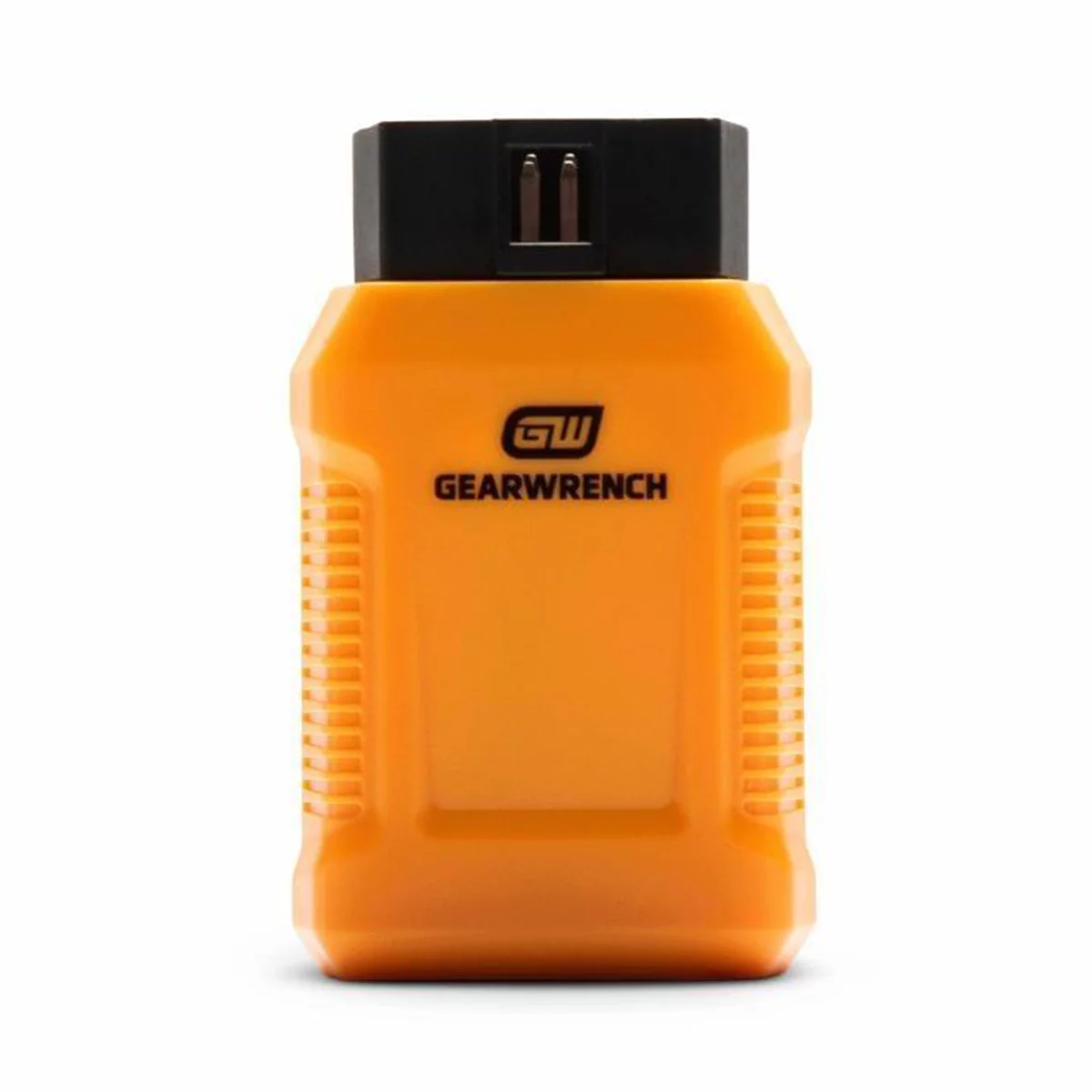
GearWrench Professional Bi-Directional Diagnostic Scan Tool
Mfg: GearWrench
Part #: GWSMARTBT
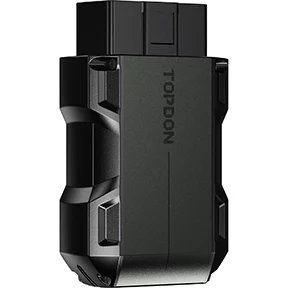
Topdon Pocket-Size Bluetooth Scan Tool w/Bi-Directional Cont
Mfg: TOPDON
Part #: TOPSCANLITE
Frequently Asked Questions
Do I need a scan tool for a basic pad and rotor swap?
On vehicles with electronic parking brakes, yes — at minimum to clear codes if the service mode or battery-disconnect steps are missed, and in some cases to enter service mode in the first place. A generic code reader is often not enough; you need a tool that reaches manufacturer-specific ABS/EPB modules.
Why does the truck think it has a brake pressure leak when nothing is leaking?
The module tracks caliper piston travel and line pressure continuously. Retracting a piston for new pads with the key on produces the same signature as a real leak, so the module sets a fault defensively.
Is it safe to disconnect the battery during a brake job?
Yes, when done per the manufacturer procedure: disconnect before compressing pistons, pump the pedal with the key off, then reconnect. This is a documented GM procedure specifically to prevent the ABS pump from running its self-test during service.
What does it mean if the speed limiter and lowered suspension kick in?
That’s a fail-safe response triggered by the same false pressure fault, not a separate problem. Once the underlying code is cleared and the module re-verifies normal pressure, these usually resolve on their own.
My scan tool won’t clear the code or exit service mode — now what?
Some platforms need a manufacturer-specific cable, software, or even a cable firmware update to communicate properly. If a mid-range bi-directional tool can’t resolve it, the next step is dealer-level software rather than repeating the same clear-and-drive cycle.
Does this apply to rear brakes, front brakes, or both?
Depends on the platform. Some vehicles only require service mode for the rear EPB actuators; others, including several GM trucks, also require the battery-disconnect/pedal-pump procedure for front brake service. Confirm scope in the specific repair procedure rather than assuming it’s rear-only.
Get the Right Scan Tool
Modern EPB brake jobs often require more than a basic code reader — you need a bi-directional scan tool that reaches manufacturer-specific modules for service mode and code clearing. Browse our Automotive Scan Tools selection to find the right equipment for your next job.
- Bi-directional tools for ABS, EPB, and brake pressure code clearing and module access
- Equipment capable of service mode commands and hydraulic control unit self-tests
- Mid-range and professional-grade options for GM, Ford, Volvo, and other platforms

The Toolsource Technical Team blends decades of real-world automotive service experience with up-to-date technical research. Our writers collaborate with professional mechanics, shop owners, and diagnostic specialists to deliver practical, workshop-ready guidance you can trust.


Follow us on social media