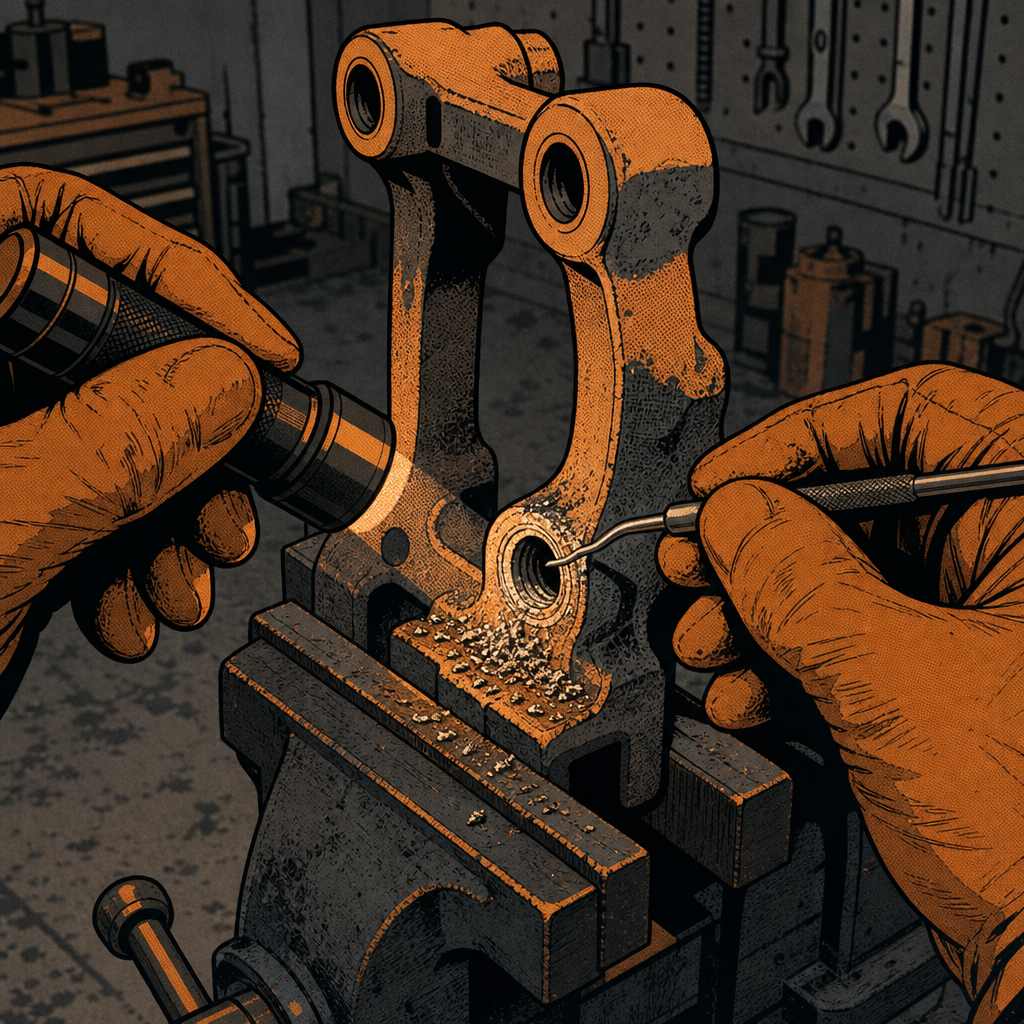
A caliper slide pin bolt that spins without tightening — or that snaps off flush with the mounting bracket — is one of the most common ways a routine brake job turns into a two-hour detour. It almost always comes down to the same root causes: cross-threading on install, over-torquing past the point of yield, or corrosion that made the threads fail before the fastener did. None of those mean the caliper or bracket is junk. Here’s how to diagnose what actually happened, extract what’s left, repair the threads, and torque it correctly so you’re not back here next time.
Diagnose What You’re Actually Dealing With
Before reaching for a extractor or a helicoil kit, figure out which failure mode you have — the fix is different for each:
- Spinning freely, never tightened up: classic cross-thread. The bolt went in at an angle and rode over the threads instead of through them. If it still turns by hand, back it out immediately — don’t force it further in either direction.
- Tightened then went loose (“righty-tighty until it isn’t”): the threads stripped under torque, either in the bracket/caliper bore or on the bolt itself. Feel for metal shavings or a gritty texture when you back the bolt out.
- Bolt snapped off: usually corrosion-seized threads that were over-torqued trying to break them free, or a bolt that was already fatigued. You’ll be dealing with an extraction, not just a re-tap.
Pull the bolt (or what’s left of it) and inspect both the fastener and the bore threads with a flashlight and a pick. If the bore threads look intact and it’s just the bolt that’s damaged, you may only need a new bolt. If the bore threads are chewed up or missing, you’re repairing the hole.
Get the Broken or Seized Bolt Out
If the bolt is still in one piece and just cross-threaded or stuck, don’t fight it with the same tool that got you here. Switch to locking pliers (vise grips) clamped directly on the bolt shank for extra grip and control, and back it out slowly while feeling for binding. If it binds, stop and back up rather than pushing through — that’s how threads get worse instead of better.
For a bolt that’s snapped off flush or below the surface:
- Center-punch the remaining stub before drilling so the bit doesn’t wander.
- Drill a pilot hole sized for your extractor, not for the bolt’s full diameter.
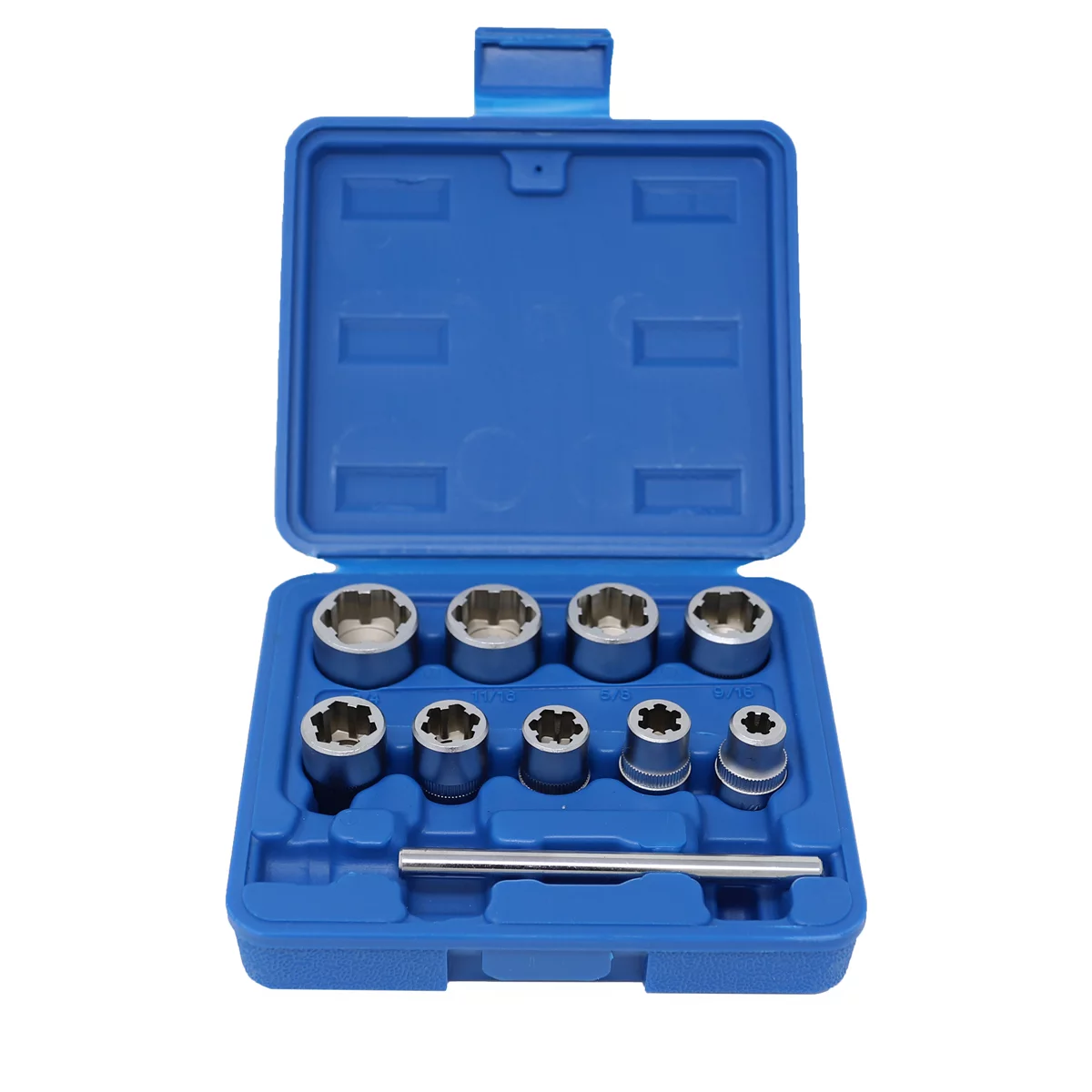
- Use a spiral or straight-flute screw extractor, turning counterclockwise with steady pressure — don’t crank hard on the extractor itself, as they snap easily and are far harder to remove than the original bolt.
- If the extractor won’t bite or the stub is too short to grab, this is where a shop with EDM (electrical discharge machining) capability can burn out the remnant without touching the surrounding threads — worth a call before you drill the bore oversized.
[PRODUCT_SEARCH: broken bolt extractor set]
Repair the Threads: Helicoil, Time-Sert, or Re-Tap
Once the old fastener is out, assess the bore threads themselves:
- Minor damage, threads mostly intact: a thread-chasing tap (not a cutting tap) can clean up light damage without removing material. Run it in by hand, back it out to clear chips every half turn, and flush with brake clean before reassembly.
- Moderate to severe stripping: install a thread insert. A helicoil kit drills the damaged hole to a specified oversize, taps it for the insert, and threads in a coiled sleeve that restores the original bolt size. It’s the standard fix for aluminum caliper brackets, which strip more easily than cast iron.
- High-load or repeat-failure holes: a solid insert system (Time-Sert or similar) is more robust than a coiled helicoil because it’s a solid steel bushing rather than a wound coil — worth the extra cost on a bore that’s already been repaired once.
Follow the kit’s drill and tap sizes exactly — guessing here is how a repairable hole becomes an unrepairable one. Clean out all metal shavings and thread-cutting oil with brake parts cleaner and compressed air before the insert or new bolt goes in; leftover grit will just strip the new threads too.
Know When to Just Replace the Caliper
Thread repair isn’t always the right call. Replace the caliper (or bracket, if it’s a separate part) instead of repairing it when:
- The damage is on a casting boss that’s too thin to safely drill oversize without breaking into a fluid passage or the piston bore.
- The bracket shows other corrosion or cracking beyond the bolt hole — a repaired hole next to a compromised casting isn’t worth the labor.
- The insert has already failed once at that location. A second insert in the same hole rarely holds as well as the first.
- You don’t have the specific insert kit size on hand and the vehicle needs to move today — a same-day caliper swap is often faster and more certain than sourcing the right kit.
Calipers and mounting brackets are a lot cheaper than a comeback for a loose slide pin bolt, so don’t be precious about repairing a part that’s marginal to begin with.
Reassemble and Torque Correctly the First Time
Whether you repaired the threads or installed new parts, this is where most of these failures actually start — so don’t skip it on the way back together:
- Start every bolt by hand for at least two or three full turns before touching it with a ratchet. If it doesn’t spin freely by hand, it’s cross-threaded — stop and realign it.
- Use the caliper bracket bolt torque spec from the service manual, not a guess or “snug plus a quarter turn.” Slide pin bolts are often lower torque than people expect, and overshooting strips aluminum brackets fast.
- Use a torque wrench, not a ratchet by feel. “Tighten until it gets loose” is a joke in the shop, not a torque procedure.
- Apply thread locker or anti-seize per the bolt manufacturer’s spec — most caliper bolts spec a thread locker, not anti-seize, on the threads, with light lubrication only on the slide pin’s sliding surface (usually silicone brake grease).
- After torquing, cycle the caliper on the slide pins by hand to confirm it moves freely before you put the wheel back on.
[PRODUCT_SEARCH: brake caliper bolt torque wrench and repair kits]
Quick Checklist
- Confirm which failure you have: cross-threaded, stripped, or snapped
- Inspect bore threads before choosing an extraction/repair method
- Center-punch and pilot-drill snapped bolts before extracting
- Chase, helicoil, or solid-insert the bore based on damage severity
- Clean all metal shavings and cutting oil before reassembly
- Hand-start every bolt; torque to spec with a torque wrench
- Cycle the caliper on the slide pins before reinstalling the wheel


FAQs
Is it “righty-tighty, lefty-loosey” for caliper bolts too?
Yes, standard right-hand threads apply to virtually all caliper slide pin bolts. If a bolt that was tightening suddenly turns easily to the right with no resistance, that’s not a thread reversal — it’s the threads stripping out.
Can I reuse a caliper bolt that came out fine, or should I always replace it?
If the bolt itself shows no thread damage, discoloration, or stretching, and the manufacturer doesn’t call it a torque-to-yield fastener, reuse is generally fine. Torque-to-yield bolts should always be replaced.
What torque spec should I use if I can’t find the exact one for my vehicle?
Don’t guess. Look it up in a service manual or reliable torque spec database for that make, model, and caliper bracket. Slide pin bolt torque varies more between vehicles than people expect.
Do I need anti-seize on caliper slide pin bolts?
Check the bolt spec first — many caliper bolts spec thread locker rather than anti-seize on the threads themselves, with lubricant only on the pin’s sliding surface. Anti-seize on threads not designed for it can throw off torque readings.
The bolt snapped off flush and I can’t get a grip on it — now what?
Center-punch, pilot drill, and try a screw extractor first. If it won’t bite or the remaining stub is too short, a machine shop with EDM capability can remove it without damaging the surrounding threads.
Will a helicoil repair hold up as well as the original threads?
For most caliper bracket applications, yes, when installed correctly with the proper kit and torque spec. For repeat failures at the same hole, a solid thread insert is generally more durable than a coiled helicoil.
Shop Brake Caliper Tools
Getting your caliper bolts right means having the right tools on hand — from extractors for seized fasteners to torque wrenches and thread-repair kits. Browse our selection of brake caliper tools to keep your next brake job moving forward.
- Bolt extractors and removal tools for cross-threaded or seized fasteners
- Thread-repair kits, including helicoil and solid insert systems
- Precision torque wrenches and caliper-specific service tools

The Toolsource Technical Team blends decades of real-world automotive service experience with up-to-date technical research. Our writers collaborate with professional mechanics, shop owners, and diagnostic specialists to deliver practical, workshop-ready guidance you can trust.


Follow us on social media