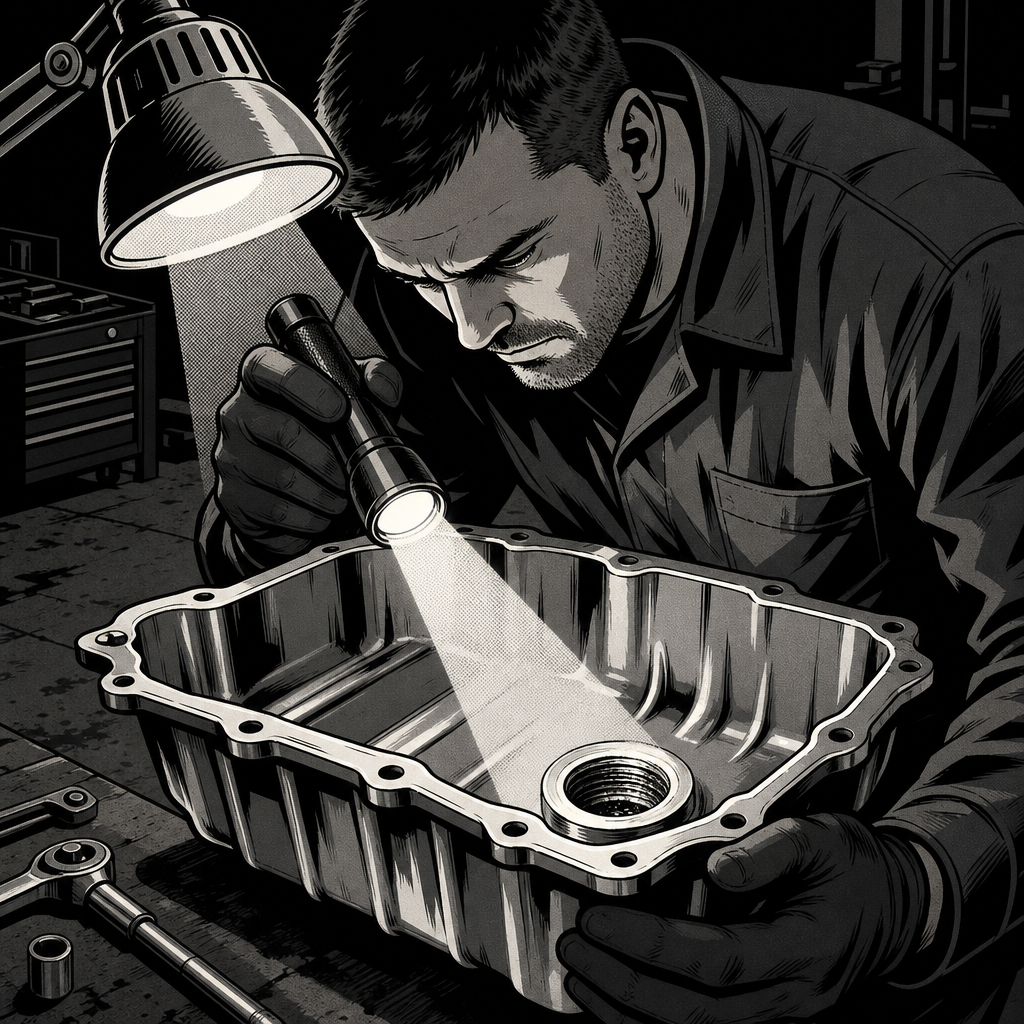
A stripped oil pan drain plug is one of the most common comebacks in any shop, and it’s rarely a one-time offender — most of the time you’re not looking at virgin aluminum threads, you’re looking at a failed prior repair. Before you quote a job, you need to know exactly what’s in that hole: factory aluminum threads, a wire thread insert (helicoil), or a solid insert like a Time-Sert or Keensert. Each starting point points to a different fix, and guessing wrong means a comeback with oil on the customer’s driveway. Here’s how to diagnose it and pick a repair that actually holds.
Diagnosing What’s Actually in the Hole
Pull the drain plug and look closely at what came out with it, and what’s left in the pan. A few things to check before you touch a tool:
- Loose metal on the plug threads or magnet: Silver, coiled wire material clinging to the bolt threads is a failed helicoil. If it’s soft, dull gray shavings instead, that’s aluminum from the pan itself.
- Two distinct thread patterns in the bore: On many GM aluminum pans, a wire insert was installed at the factory — this is normal OEM design, not a prior repair. If you see coil remnants stacked on top of visibly pulled aluminum threads, the insert has failed and taken pan material with it.
- Shine a light straight down the bore. Even, continuous threads mean the insert (or the aluminum) is largely intact and might be salvageable. Threads that stop partway around, or that look torn rather than cut, mean material has pulled out and a same-size fix won’t bite.
- Check the sealing surface on the pan face around the bore, not just the threads. A washer or crush gasket that’s been overtightened repeatedly can also gall or crack the seating surface, which matters no matter which thread repair you choose.
If the insert failed and pulled aluminum threads with it, a like-for-like helicoil in the same hole is very likely to fail again — there isn’t enough sound parent material left to bite into. That single observation should drive your entire repair decision.
Repair Option 1: Wire Thread Insert (Helicoil)
A helicoil is the right call only when the original aluminum threads are stripped but otherwise intact — no history of a prior insert failure in that bore. The process:
- Drill out the damaged threads with the tap drill size specified for the insert kit.
- Tap the hole with the helicoil tap, keeping it square to the bore. A tap guide or the old bolt as a pilot helps keep it straight.
- Install the insert with the installation tool, then break off the tang.
- Clean the bore thoroughly — swarf left in an oil pan drain hole ends up in the pickup screen.
The catch: if this hole already has a failed helicoil in it (common on GM aluminum pans where one was installed from the factory), you don’t have the parent material to run another coil at the same size. In that case, skip straight to a solid insert or an oversized plug — a second helicoil in the same spot is a near-guaranteed repeat failure.
[PRODUCT_SEARCH: oil pan drain plug helicoil thread repair kit]
Spark Plug Thread Repair Kit M14 Normal Reach Helicoil
Mfg: Heli Coil Products
Part #: R5326-14N
Repair Option 2: Time-Sert or Solid Thread Insert
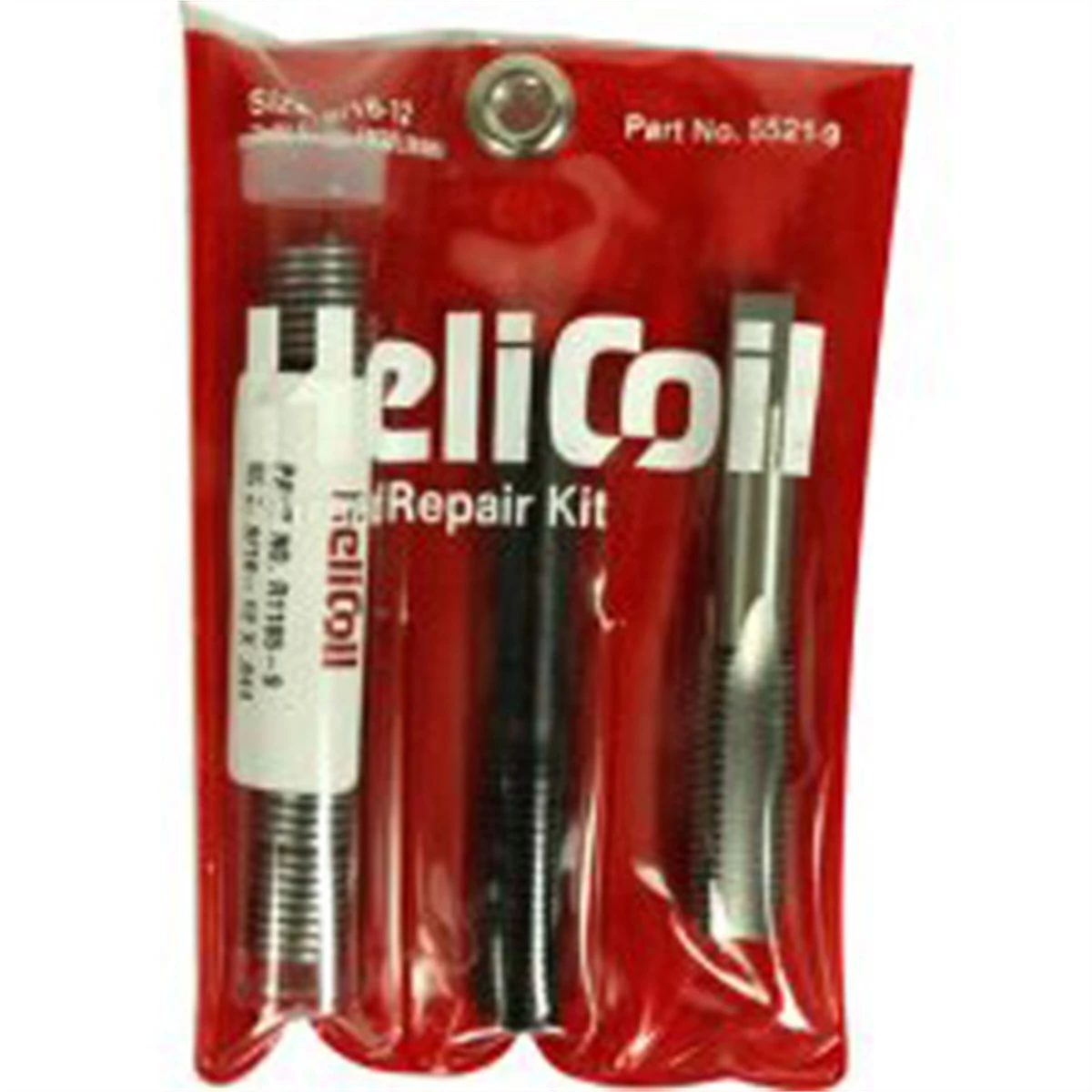
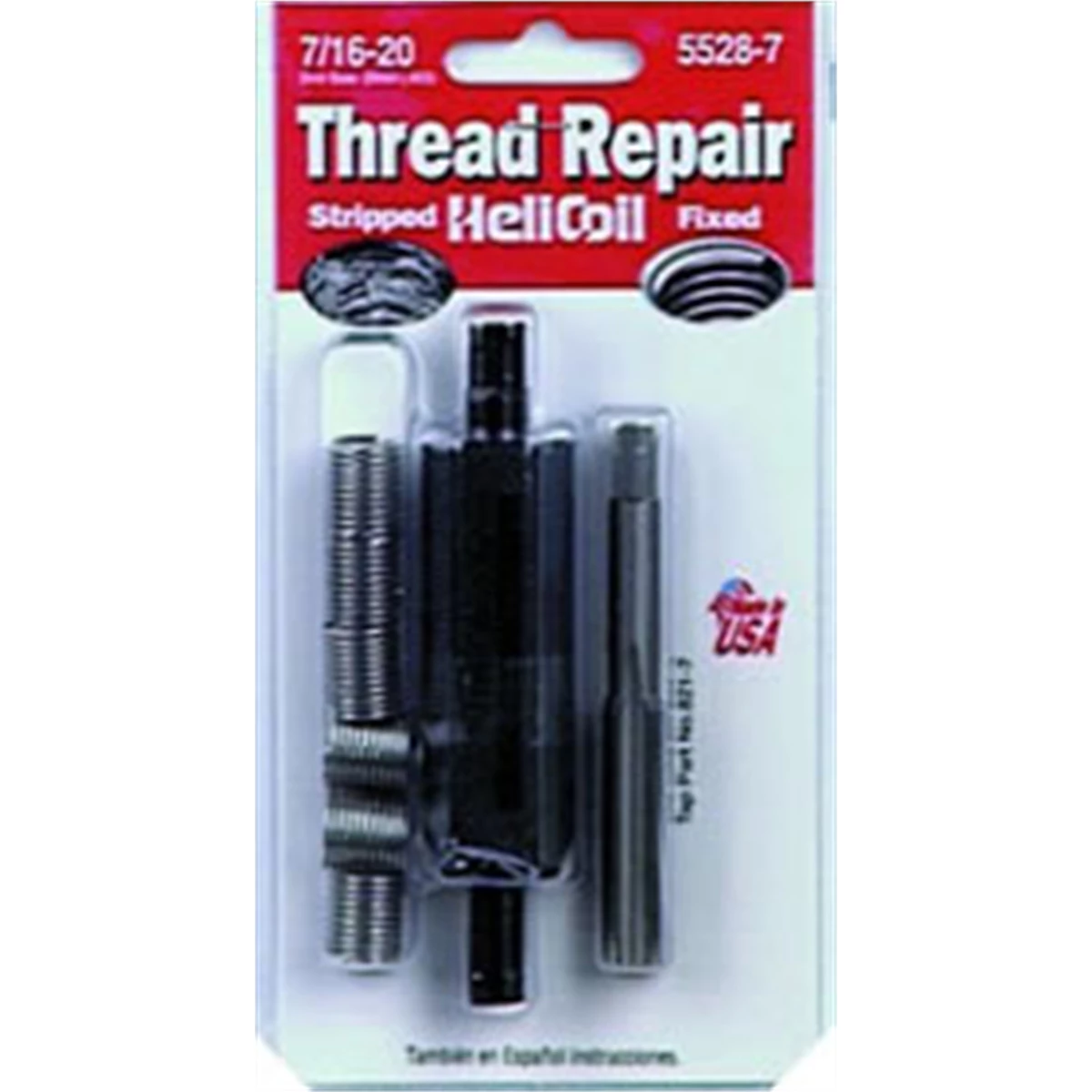
A solid insert — commonly called a Time-Sert, Big-Sert, or Keensert depending on brand — is the more durable fix, especially for a hole that sees repeated in-and-out cycles like a drain plug. Unlike a coiled wire insert, it’s a solid steel bushing that’s drilled, tapped, and threaded into place, then often mechanically expanded or locked with retaining threads at the top. It distributes clamping load more evenly and doesn’t rely on a springy coil to hold shape.
Key points for this repair:
- Solid inserts need more parent material thickness than a wire coil, so measure the pan boss before you commit — thin-wall aluminum pans may not have enough meat for the largest insert sizes.
- The kit’s installation tool is expensive to buy for a single job; unless you’re doing this repair regularly, it’s often cheaper to sublet it to a machine shop or a shop that already owns the tooling.
- Use thread locker on the insert’s outer threads per the kit instructions, and torque the final plug to the vehicle’s factory spec, not “gorilla tight.”
- Inspect and, if needed, resurface the sealing face around the bore before installing the insert — a perfect thread repair with a damaged gasket surface will still weep.
This is generally regarded as the closest thing to a permanent fix short of replacing the pan, and it typically costs less than half of a pan replacement when done by a shop that already has the kit.
Repair Option 3: Oversized Self-Tapping Drain Plug
When the bore is too far gone for a standard-size insert — multiple failed repairs, torn threads most of the way around — stepping up to a self-tapping oversized drain plug is a practical field fix. Drill and tap the hole to the next common metric size (e.g., stepping from M12 to M14x1.5), then run a magnetic drain plug sized to match. Pack the tap with heavy grease as you cut to trap the shavings, then flush the bore and pan thoroughly before refilling with oil.
This works well when there’s enough wall thickness to support a larger thread and when a matching plug is readily available for the new size — several aftermarket brands sell oversized and self-tapping plugs specifically for this scenario. It’s not appropriate if the boss is already thin or if the damage extends into the surrounding pan casting.
When to Replace the Oil Pan Outright
Recommend a full pan replacement when any of the following apply:
- The bore is stripped beyond what any insert or oversized plug can support without excessive drilling into thin material.
- You’ve already found a prior failed repair (helicoil or insert) and there’s no confidence the next repair will hold long-term for a customer who may not bring the car back for a check.
- The customer plans to keep the vehicle long-term and wants a one-and-done fix rather than a series of increasingly marginal repairs.
- There’s already an oil leak or wet pan surface suggesting the gasket or pan seam is also compromised, not just the drain threads.
Set expectations on price and labor up front. A pan swap is more labor-intensive — drain, remove crossmember or subframe bracing if needed, clean the mating surface, replace the gasket, and refill — so it will always cost more than an insert repair, but it eliminates any doubt about hole condition or sealing surface integrity. If a customer or DIYer got a quote that seems high, it’s worth comparing against a shop that offers the Time-Sert route, which is frequently a few hundred dollars cheaper than a pan replacement for the same failure mode.
Preventing a Repeat Failure
Most stripped drain plugs trace back to overtightening, not normal wear. A few habits prevent the comeback:
- Always torque to the manufacturer’s spec — commonly in the 20-30 ft-lb range for aluminum pans, though this varies by vehicle, so check the service data rather than going by feel.
- Replace the crush washer or sealing washer every oil change; a reused, flattened washer tempts techs to overtighten to stop a weep.
- Use a torque wrench on the drain plug, not an impact gun — impacts are the single most common cause of stripped aluminum drain threads.
- On vehicles with factory wire inserts, treat the hole with the same torque discipline as any other aluminum thread; the insert reduces some risk but doesn’t eliminate it.
- Consider a magnetic, low-profile drain plug with a built-in seal (sometimes called a “no-drip” style) to reduce washer dependency and torque variance between changes.
Quick Reference Checklist
- Inspect the removed plug and bore for coil material vs. bare aluminum before quoting a repair
- Rule out a same-size helicoil if a prior insert has already failed
- Measure boss thickness before selecting a solid insert size
- Pack the tap with grease and flush thoroughly to keep shavings out of the sump
- Inspect the gasket sealing surface, not just the threads
- Torque the final plug to factory spec with a torque wrench, every time
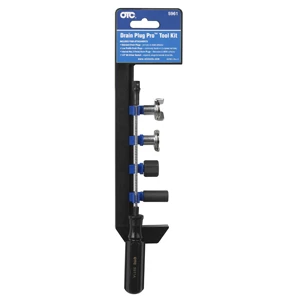
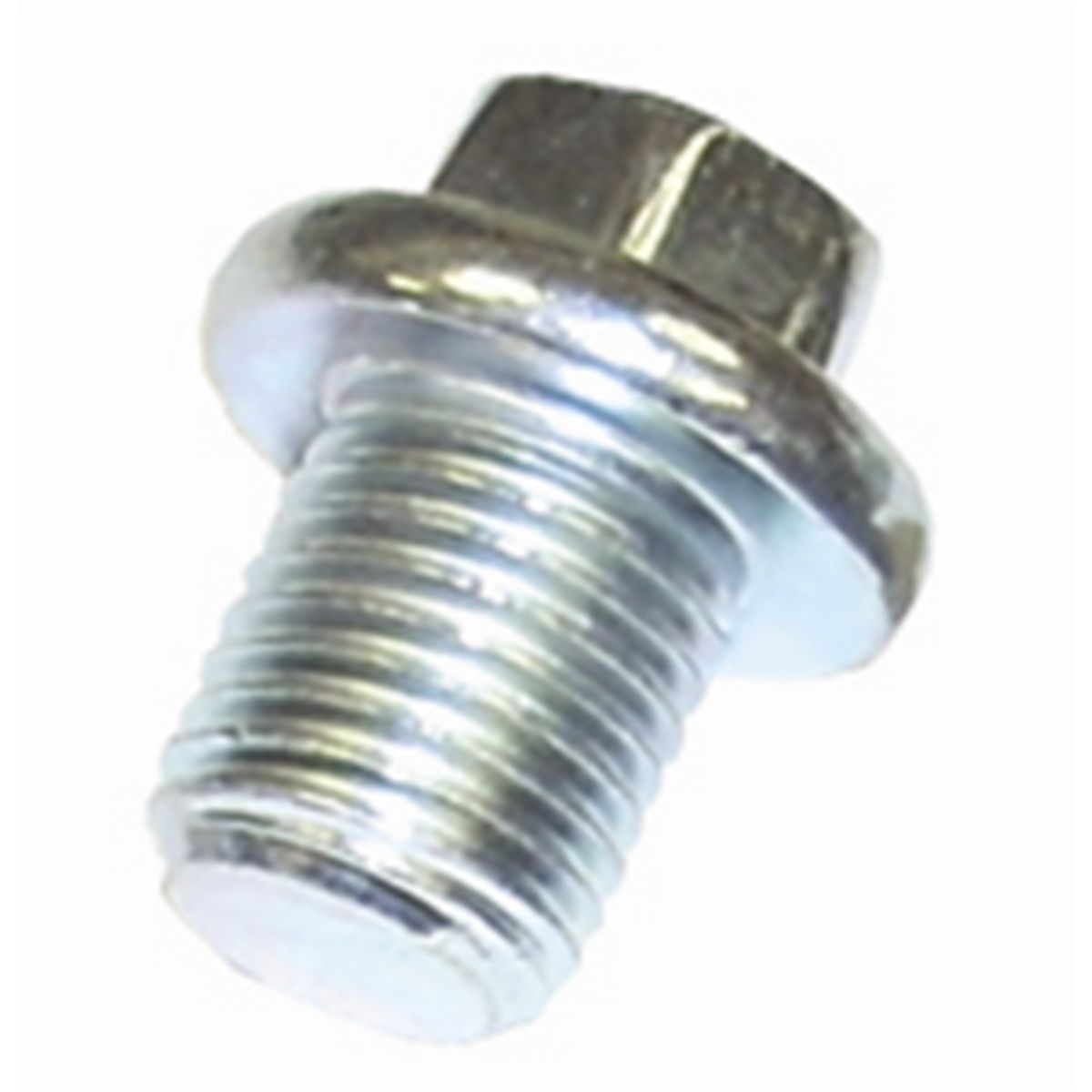
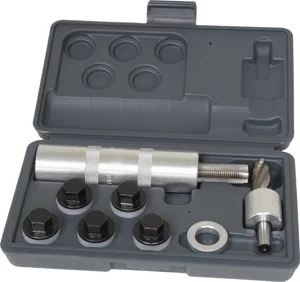
[PRODUCT_SEARCH: oil pan drain plug repair tools]
FAQs
Is a helicoil in my oil pan normal, or does it mean the pan was already repaired?
Some manufacturers, notably GM, install wire thread inserts in aluminum oil pans from the factory. Finding one doesn’t automatically mean a prior repair — but finding a second, failed insert on top of it usually does.
Can I reuse the same size helicoil if the old one failed?
Generally no. If the insert pulled out along with surrounding aluminum, there isn’t enough sound parent thread left to support another coil at the same size. Step up to a solid insert or an oversized plug instead.
How much does a Time-Sert repair typically cost compared to a new oil pan?
Shop pricing varies, but a solid-insert repair commonly runs well under half the price of a pan replacement, since it avoids the labor of removing and resealing the entire pan.
What torque should I use on an oil pan drain plug?
Always check the factory spec for the specific vehicle. As a general reference, many aluminum pans call for roughly 20-30 ft-lb, but overtightening even slightly beyond spec is a leading cause of stripped threads.
Can I DIY a Time-Sert repair myself?
Yes, if you’re comfortable with precision drilling and tapping and are willing to buy the kit, which includes a dedicated installation tool. For a one-time repair, many DIYers find it cheaper to have a shop with existing tooling do the job.
Will an oversized self-tapping plug hold up long-term?
It can, provided there’s enough wall thickness in the pan boss to support the larger thread and the tapping is done carefully with shavings fully cleared. It’s a solid fallback when the hole is too damaged for a standard-size insert but not so far gone that pan replacement is required.
Shop Thread Repair Supplies
Once you’ve identified which repair method fits the job, our Thread Repair category has the kits, tools, and supplies you need — whether you’re installing a helicoil, a solid insert, or stepping up to an oversized plug.
- Wire thread insert (helicoil) kits and solid insert systems (Time-Sert, Keensert, Big-Sert)
- Taps, drills, and dedicated installation tools for all repair methods
- Oversized and self-tapping magnetic drain plugs

The Toolsource Technical Team blends decades of real-world automotive service experience with up-to-date technical research. Our writers collaborate with professional mechanics, shop owners, and diagnostic specialists to deliver practical, workshop-ready guidance you can trust.


Follow us on social media