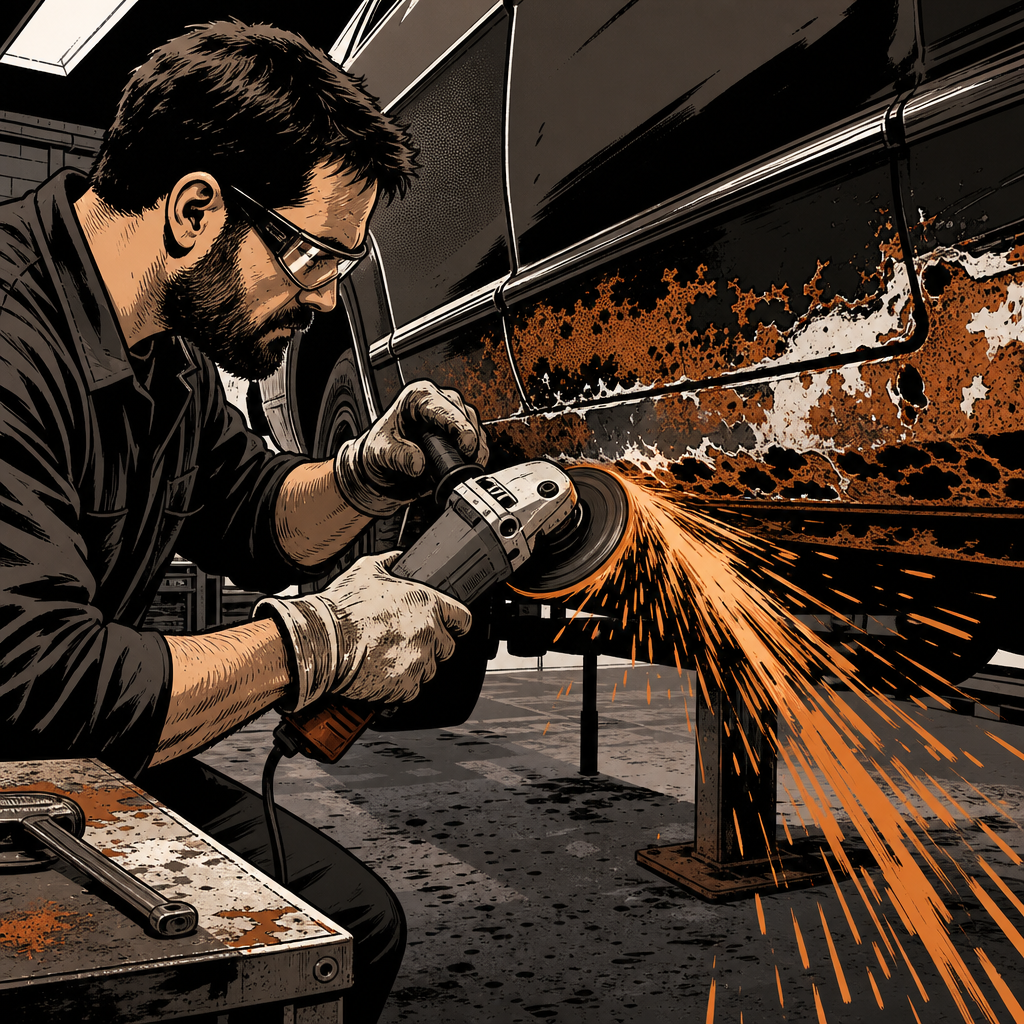
Rocker panel rust-through is one of the most common reasons a vehicle gets bounced at state inspection, and it’s also one of the most misunderstood repairs among DIYers. Online advice ranges from spray foam and duct tape to full panel replacement, and the gap between “looks fixed” and “is actually safe” is wider than most people realize. On a unibody vehicle, the rocker panel isn’t just trim — it’s part of the structural frame rail that ties the front and rear subframes together and contributes to crash energy management. This guide breaks down how to correctly assess rocker rust, what separates a legitimate temporary patch from a cosmetic cover-up, and when replacement is the only real answer.
Why Rocker Panels Matter More Than They Look
On body-on-frame trucks, a rusted rocker is mostly a cosmetic and water-intrusion problem. On a unibody car or crossover — which is the vast majority of passenger vehicles on the road today — the rocker panel is a load-bearing box section. It carries torsional loads, supports the jack points, and is a key part of the side-impact and rollover structure. This is exactly why inspection stations in rust-belt states treat rocker corrosion so seriously: a hole in the outer skin often signals that the inner reinforcement, which you can’t see, is compromised too.
Inspectors aren’t failing cars over cosmetics for the sake of it in most cases. States with strict corrosion criteria are specifically trained to distinguish surface bubbling from perforation and structural rot, and many stations now use photo documentation or camera review to catch attempts to mask holes rather than repair them. If you’re being failed for a rocker panel, assume the reviewer has already ruled out “this is just paint bubbling.”
Assessing the Damage: Cosmetic vs. Structural
Before deciding on a repair path, figure out what you’re actually dealing with:
- Poke test: Use a screwdriver or awl to probe the rusted area and the metal around it. Sound metal resists; rotted metal crumbles or gives way easily.
- Check the inner structure: Rockers are typically a two- or three-layer box section (outer skin, inner reinforcement, sometimes a full inner rocker). Look and feel through any existing holes with a flashlight and pick to see how much of the inner structure remains.
- Check the pinch weld and floor pan junction: Rust often starts at the rocker-to-floor seam. If rot has spread into the floor pan or the jack point area, this is no longer a simple patch job.
- Look underneath, not just at the visible face: Surface bubbling on the outer panel can hide a much larger hole on the bottom or inboard side where road spray and salt collect.
If the inner structure is solid and this is a single, contained perforation in the outer skin, a patch repair is reasonable. If you find soft, flaking metal across a wide area, or the inner rocker reinforcement is gone, you’re looking at a section replacement, not a patch.
===FYP-PRODUCT-SEARCH-1===
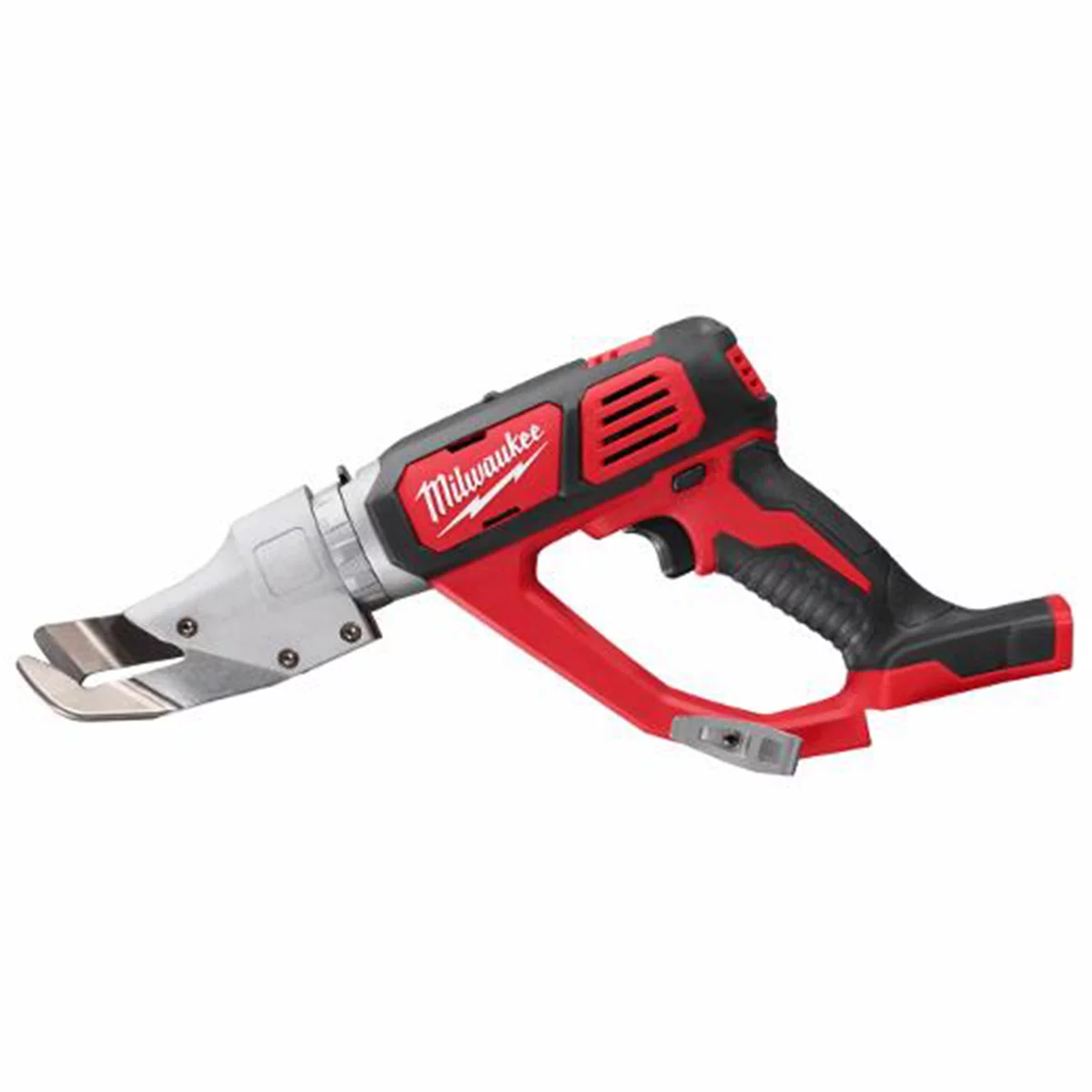
M18 Cordless 18 Gauge Single Cut Shear - Bare Tool
Mfg: Milwaukee Electric Tools
Part #: 2637-20
Why Foam, Tape, and “Cosmetic” Fixes Don’t Hold Up
Spray foam, duct tape, and similar cover-ups show up constantly in online rust-repair discussions because they’re fast and cheap. They are not durable repairs and, in several ways, make the underlying problem worse:
- Expanding foam traps moisture. If any water or road salt residue is already inside the cavity, foam seals it in rather than letting it drain or dry, which accelerates hidden corrosion behind the visible patch.
- Foam has no structural value. It won’t restore any load-bearing capability to a compromised rocker box, and it can crack or crumble under vibration, leaving the edge exposed again within a season.
- Tape and cosmetic bondo-over-nothing won’t pass camera-reviewed inspections. Stations that photograph repairs or use AI-assisted review are specifically looking for exactly this kind of shortcut, and a hole covered without an actual metal patch underneath is usually caught.
- These fixes ignore drainage. Rocker panels have factory drain points for a reason. Sealing a cavity completely without drainage just relocates where the water pools next.
None of this means every repair needs to be show-quality. It means the repair needs actual metal and actual sealant doing actual work, not just something that looks solid from three feet away.
Doing a Legitimate Temporary Patch Repair
If the inner structure is sound and you need a repair that will hold for a year or more (not a permanent fix, but a real one), the process technicians commonly use is:
- Grind back all visible rust to clean, sound metal well past the edge of the hole — at least 2-3 inches beyond visible corrosion in every direction. Rust that isn’t fully removed will continue spreading under any patch.
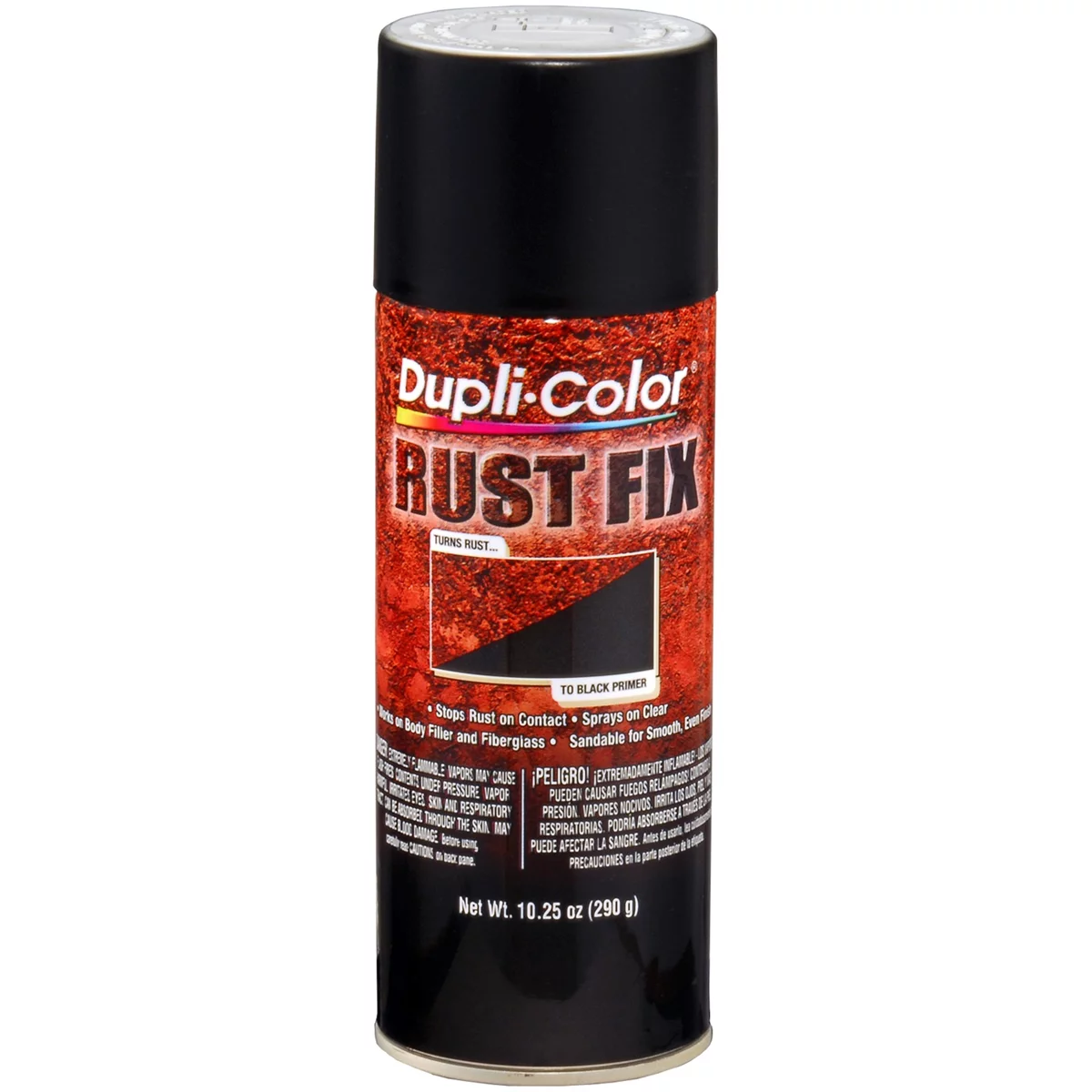
- Treat the surrounding metal with a rust converter or rust-inhibiting primer before patching, especially on the inboard surfaces you can’t easily re-access later.
- Cut a sheet metal patch (18-20 gauge steel is typical for rocker sections) sized to overlap the hole by at least an inch on all sides.
- Secure the patch mechanically — pop rivets or self-tapping screws work for a bolt-on style panel patch; a MIG-welded patch is stronger and is the correct method if you have welding equipment and access to bare metal on both sides.
- Seal the seams with seam sealer or panel bond adhesive, not just body filler, to keep water from re-entering behind the patch.
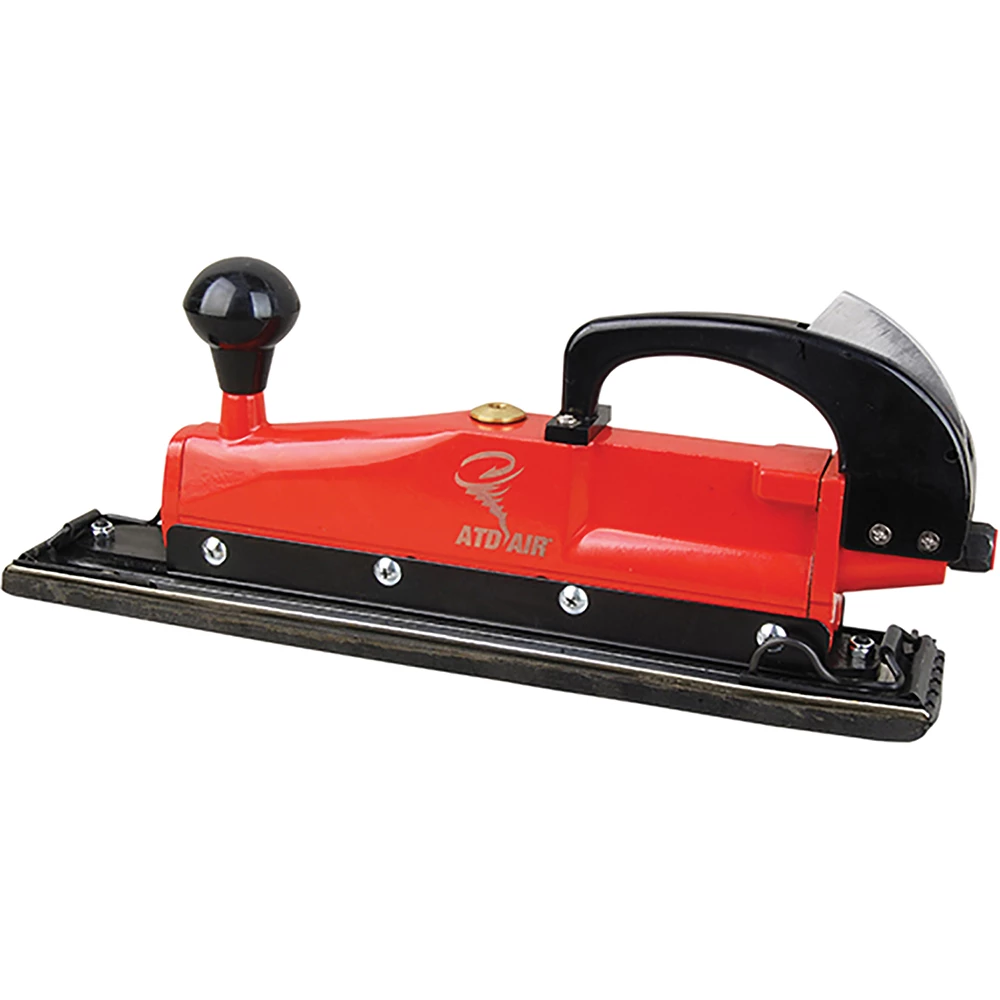
- Skim with body filler only over the mechanical patch, never as a substitute for the patch itself, then sand smooth.
- Prime, seal, and topcoat to match, and apply a rust-inhibiting undercoating or cavity wax inside the repaired section afterward.
- Preserve or add drainage. If the rocker has factory drain holes near the patch, keep them clear. If you’re closing a cavity that previously drained through the damaged area, drill a small drain hole at the low point and treat the edge with rust converter or a grommet.
This approach restores a paintable, structurally attached surface and will typically satisfy an inspection that failed on cosmetic-to-moderate rocker corrosion. It is explicitly not a substitute for proper structural repair if the inner rocker reinforcement is compromised.
When Replacement Is the Real Answer
If the poke test finds significant soft metal in the inner structure, if rust has migrated into the floor pan or pinch weld, or if you’re finding this kind of corrosion on more than one panel section, patching is a stopgap at best. Full rocker panel replacement — cutting out the rotted section and welding in new sheet metal or a reproduction rocker panel — is a job for a shop with proper welding equipment, panel alignment fixtures, and rust-proofing capability afterward. Cost commonly lands in the low hundreds per side for a straightforward bolt-on or basic weld-in replacement, and significantly more if adjacent structure (floor pan, pillar base) needs work too. If the vehicle has rot at this level in more than one area, it’s worth weighing repair cost against the vehicle’s overall value before committing.
Preventing Rust From Coming Back
Whether you patch or replace, the repair only lasts if you address what let the rust start in the first place:
- Drill small drain/access holes at the bottom of rocker cavities if they don’t already exist, and keep them clear of debris.
- Apply an oil-based rust inhibitor (such as a lanolin-based cavity spray) inside the rocker annually, especially before and after winter in salt-belt regions.
- Wash the underbody after winter driving to clear accumulated salt before it sits against bare or repaired metal.
- Inspect rocker panels and wheel wells at every oil change — catching surface rust early is far cheaper than patching a hole later.
Quick Checklist Before You Start
- Poke-test the rusted area and surrounding metal to confirm how far corrosion extends
- Inspect the inner rocker structure and floor pan junction, not just the visible skin
- Rule out foam, tape, or filler-only cover-ups — they don’t add structural value and can trap moisture
- Grind to clean metal, treat with rust converter, and patch with actual sheet metal, riveted or welded
- Seal seams properly and preserve or add drainage before final paint
- Get a second opinion from a body shop if inner structure damage is found
===FYP-PRODUCT-SEARCH-2===

Frequently Asked Questions
Is rocker panel rust always a structural issue?
On unibody cars, crossovers, and most modern SUVs, yes — the rocker is part of the load-bearing structure. On body-on-frame trucks with a separate frame, rocker rust is more often cosmetic, though it can still let water and debris into the cabin area over time.
Will spray foam and paint actually pass inspection?
It might pass a quick visual check at some stations, but it is not a repair and will not hold up to close inspection, camera review, or another season of road salt. Many inspectors are specifically trained to spot cover-ups rather than repairs.
How long will a sheet metal patch last?
A properly ground, patched, sealed, and painted repair with rust-inhibiting treatment inside the cavity commonly lasts one to several years, depending on climate and how well drainage was preserved. It is a durable repair, not necessarily a permanent one, especially in heavy salt regions.
Do I need to weld the patch, or can I rivet it?
Pop-riveted patches with seam sealer are an accepted and common approach for cosmetic-to-moderate perforation and are often enough to satisfy inspection. Welding is stronger and preferred where the panel has any remaining structural role, but it requires bare, accessible metal on both sides and proper equipment.
What does a rocker panel replacement typically cost?
A straightforward bolt-on or basic weld-in rocker panel replacement often runs a few hundred dollars per side in labor and parts, more if adjacent floor pan or pillar structure is also affected. Get a shop estimate before committing to a DIY patch on a vehicle with extensive rot.
Can I prevent rocker rust from coming back after a repair?
Yes — keeping drain holes clear, applying a cavity rust inhibitor annually, and rinsing accumulated salt off the underbody after winter driving are the most effective ways to extend the life of any rocker repair.
Recommended Paint & Body Supplies
A proper rocker panel patch requires sheet metal, rust treatment, seam sealing, and finishing materials available in the Paint & Body category. Having primer, rust converter, seam sealer, and body filler on hand ensures your repair meets inspection standards and lasts.
- Sheet metal patches, pop rivets, and self-tapping screws for securing patches
- Rust converter, primer, seam sealer, and panel adhesive for treating and bonding
- Body filler, topcoat primer, and rust-inhibiting cavity treatments

The Toolsource Technical Team blends decades of real-world automotive service experience with up-to-date technical research. Our writers collaborate with professional mechanics, shop owners, and diagnostic specialists to deliver practical, workshop-ready guidance you can trust.


Follow us on social media