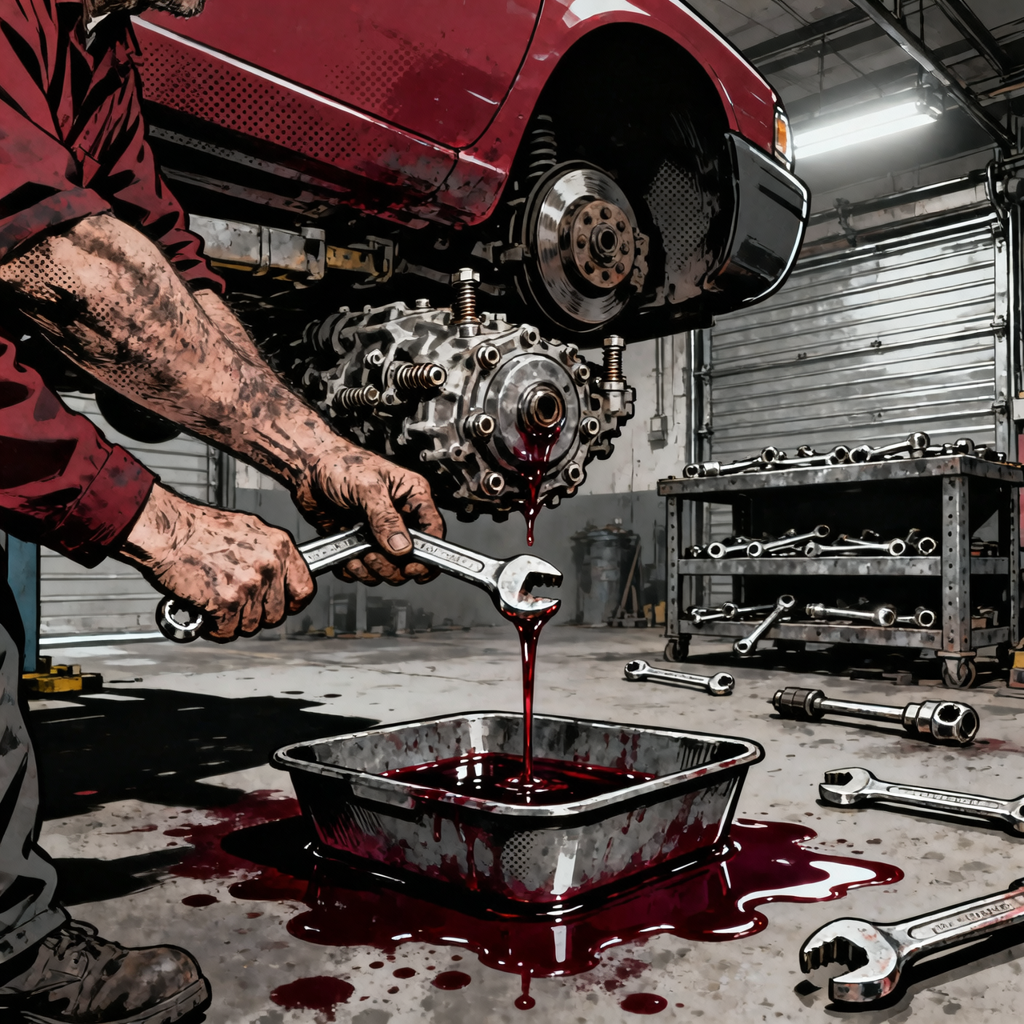
Transmission fluid is critical yet often overlooked. Knowing when to replace it, diagnosing leaks, and choosing between synthetic and conventional fluids can save thousands in repair costs. This guide covers identifying fluid needs, verifying work after engine replacement, leak diagnosis, and choosing between dealer and independent shops.
When to Replace Transmission Oil
Transmission fluid degrades despite “lifetime” marketing claims. Most manufacturers recommend changes between 30,000-60,000 miles for normal driving, shortening to 15,000-30,000 miles for severe use. Ford’s 10-speeds: 150,000 miles normally (service at 60,000 recommended). GM 8L45/8L90: 45,000 miles. Chrysler ZF 8-speed: 60,000 miles. Honda/Acura CVTs: 25,000-30,000 miles (critical to prevent belt failure). Toyota automatics: 60,000 miles (40,000 for newer 8/10-speeds). Jeep ZF units: 60,000 miles (degraded fluid accelerates solenoid failures).
Warning signs of degraded transmission fluid
Fresh fluid is bright red/amber and translucent. Dark brown or black indicates oxidation—overdue for replacement. Burnt smell signals breakdown. Metal particles or gritty texture indicate internal wear. Performance symptoms: delayed engagement, harsh/delayed shifts, slipping gears, temperature above 200°F, or transmission warning lights. Never ignore these signs.
Post-engine replacement verification
Always verify fluid levels yourself. Check transmission fluid with engine running, transmission in Park, on level ground, at operating temperature. Fluid should reach the “Hot” mark on dipstick; on models without dipsticks, check the fill hole. Inspect transmission pan and cooler lines for leaks—engine removal requires disconnecting these lines, and rushed reassembly causes loose fittings. Check bellhousing for fresh fluid (indicates front pump or torque converter seal failure). Also verify engine oil, coolant (both reservoir and radiator), power steering, brake fluid, and differential/transfer case fluids. Document all levels with photos immediately.
Synthetic vs Conventional Transmission Fluid
Specifications matter
Transmission fluid specs are rigid—wrong type causes immediate problems. GM: Dexron VI. Ford: Mercon LV or ULV. Chrysler/Jeep/Ram: ATF+4. Honda: DW-1 (substituting generic ATF destroys Honda CVTs within 20,000 miles). Always reference your manual. These designations represent specific friction modifiers, viscosity, and additives engineered for your transmission’s clutch packs and seals. Avoid universal fluids unless they explicitly list your required spec.
Performance advantages
Synthetic outperforms conventional in oxidation resistance and temperature stability. At 175-200°F, synthetics maintain viscosity for crisp shifts. Conventional breaks down around 220°F; synthetics stay stable past 300°F (crucial for towing). Conventional oxidizes within 30,000-40,000 miles; synthetic resists oxidation for 60,000-100,000 miles. Cost difference: $80-120 synthetic vs. $60-90 conventional service, but synthetic services are needed half as often.
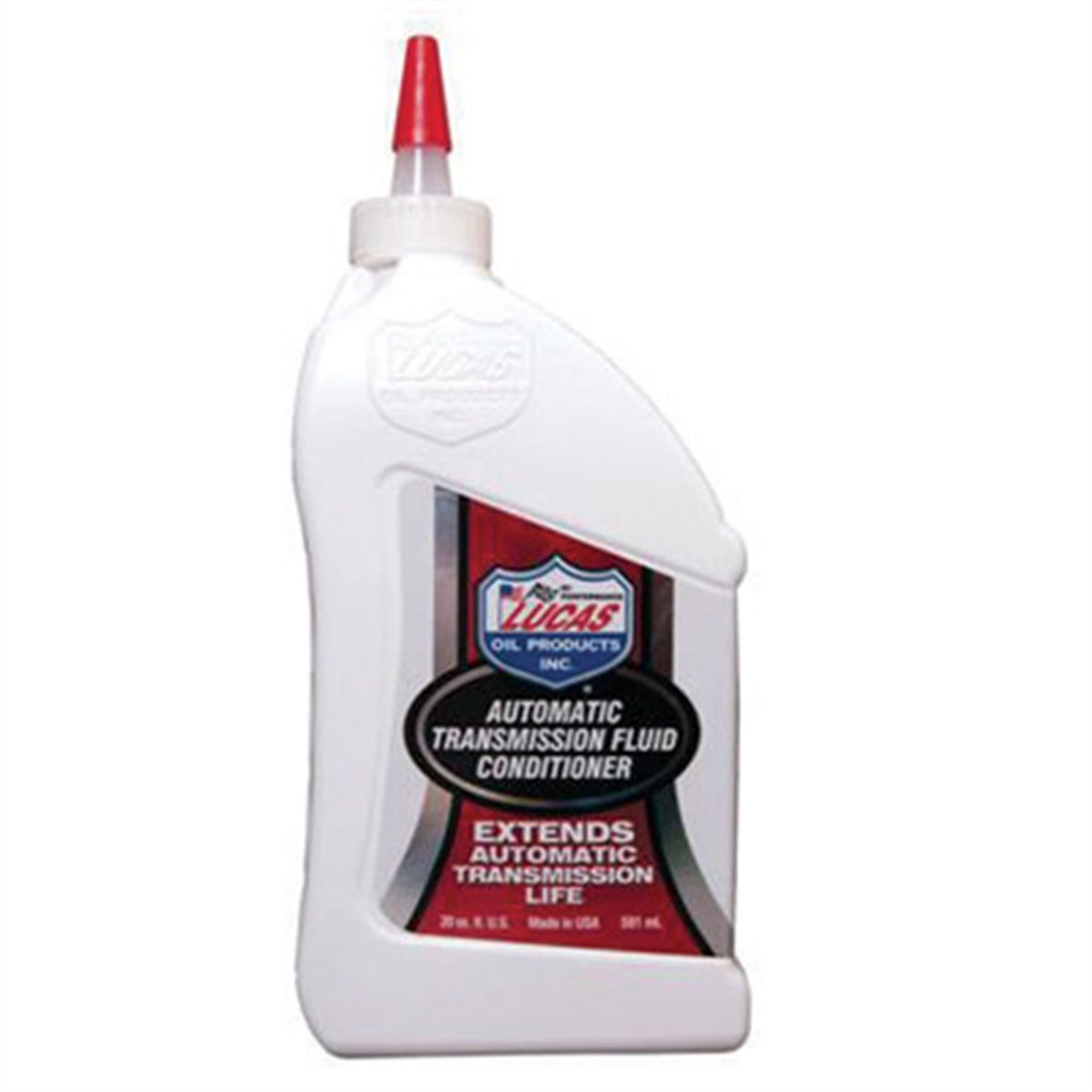
Transmission Oil Change: DIY Process
Tools needed
Floor jack, jack stands, 8-quart drain pan, 3/8″ ratchet/sockets, torque wrench, funnel, correct transmission fluid (4-6 quarts typically), new filter, pan gasket, digital thermometer, nitrile gloves, safety glasses, brake cleaner.
Draining and refilling
Start at operating temperature (10-minute drive). Raise vehicle securely. Locate transmission pan. Remove drain plug or unbolt pan (loose bolts in crisscross pattern to control fluid rush). Drain 10-15 minutes. Inspect old fluid for metal, clutch material, or debris (small amounts normal; chunks indicate internal damage). Clean magnet and pan thoroughly. Check pan gasket surface for damage. Install new filter (snap into place), gasket, and pan bolts (torque to spec—typically 10-12 ft-lbs).
Refill through dipstick tube or fill plug with long-neck funnel. Add 80% of drained amount initially. Start engine, idle in Park 2-3 minutes, cycle through gears. Check fluid with engine running—should reach “Hot” mark on dipstick. For non-dipstick models, fluid level is correct when it drips from the fill hole at 180-200°F operating temperature. Take a 10-15 minute test drive, recheck level, adjust as needed. Overfilling causes foaming; underfilling causes pump starvation.
Identifying Leaks
Visual inspection
Identify fluid type by color, smell, and texture. Transmission fluid: red/pink fresh, turns brown; distinct petroleum smell; slick and oily. Engine oil: amber new, black aged. Power steering: clear/light amber. Coolant: various colors, sweet smell. Trace leaks backward from drip point—actual source is 6-12 inches forward. Clean suspected area with brake cleaner, drive 10-15 minutes, inspect for fresh fluid. Common leak points: transmission pan gasket (seeps from perimeter), cooler lines (drips at fittings), output shaft seals (fluid flings from driveshaft area), front pump seal (fluid at bellhousing). On Jeep 3.6L Pentastar engines, oil filter housing failure is most common (often misdiagnosed as rear main seal).
UV dye detection
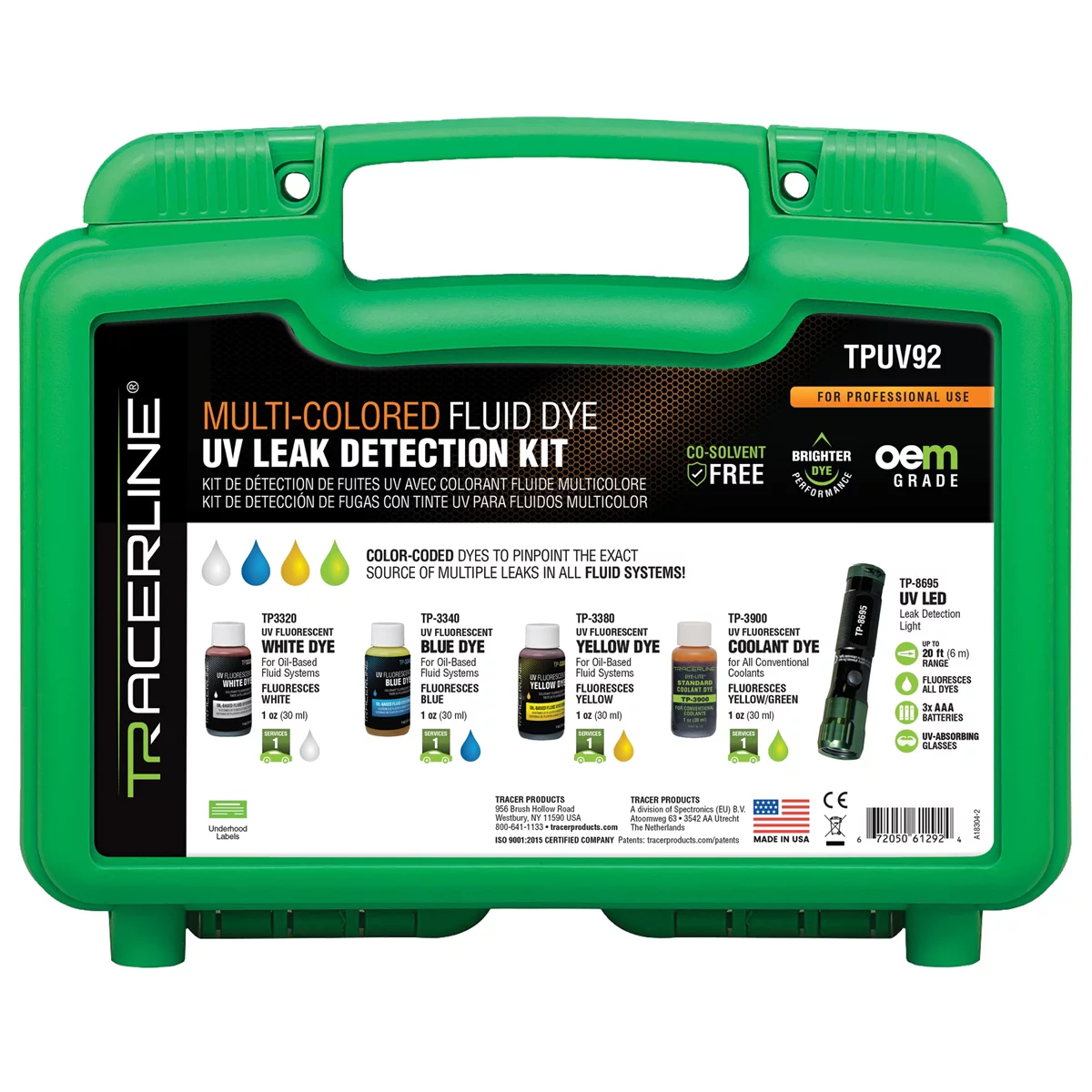
UV dye kits ($15-30) pinpoint leaks precisely. Add dye through dipstick or fill plug, run 15-20 minutes cycling gears. In dark garage, use UV flashlight—dye glows yellow-green, revealing exact leak location. Distinguishes between rear main seal, oil cooler housing, and pan gasket leaks. Document with photos. Dye remains detectable for several hundred miles, allowing leak verification post-repair.
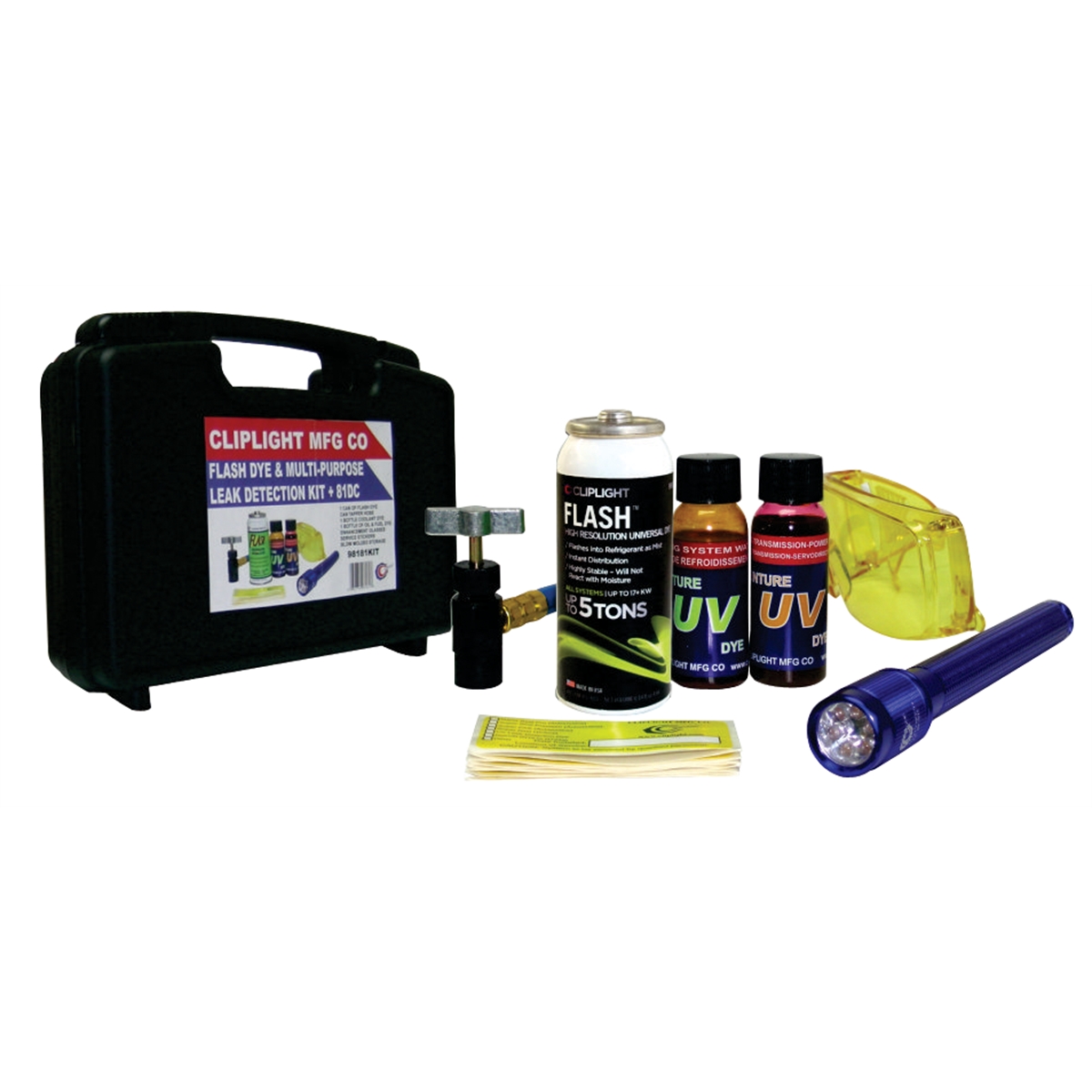
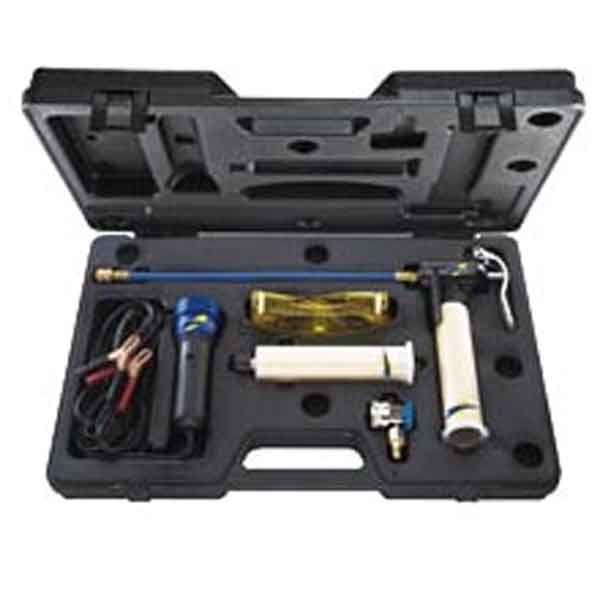
Viper Eyes UV Automotive A/C Leak Detection Kit
Mfg: Viper - Clore Automotive
Part #: 414600
Dealer vs Independent Shop
Cost comparison
Dealerships: $150-300 drain-and-fill; OEM fluid at $25-35/quart. Independents: $100-200 drain-and-fill; quality aftermarket at $15-25/quart. Full flushes: $200-400 dealerships, $150-300 independents (avoid on high-mileage transmissions—detergents can dislodge deposits and cause valve blockages). Quick lubes: $80-150 (inconsistent quality; may use wrong fluid).
| Provider | Cost | Fluid Quality | Expertise | Best For |
|---|---|---|---|---|
| Dealership | $150-300 | OEM | Model-specific | Warranty, complex transmissions |
| Independent | $100-200 | OEM/aftermarket | Varies | Out-of-warranty vehicles |
| Quick Lube | $80-150 | Often incorrect | Minimal | Simple transmissions only |
| DIY | $50-100 | Your choice | Your skill | Mechanically inclined owners |
Warranty considerations
Factory and CPO warranties cover defects, not routine maintenance. Dealerships receive limited allowances—they may underfill fluid to stay within budget. After engine replacement, verify all fluids yourself despite work orders claiming they’re “topped off.” CPO warranties ($100-200 deductible) cover powertrain: Ford 7 years/100k miles, GM 6 years/100k miles, Toyota 7 years/100k miles. All exclude routine maintenance.
Red flags
Harsh or slipping shifts within 50 miles: fluid level incorrect. Pan/drain plug wet within days: gasket not properly seated or undertorqued. Dark brown/black fluid after service: fluid wasn’t replaced. Vague invoices without fluid brand/type/quantity: shop used cheapest option. Request detailed receipts. After major work, photograph engine bay/undercarriage before leaving; verify no tools left, no loose connections, no leaks.
Post-Service Verification Checklist
- Verify fluid level: Engine running, Park, level ground, operating temperature
- Confirm fluid color: Bright red/amber and translucent; dark indicates old fluid
- Check for leaks: Pan, cooler lines, bellhousing immediately and after 50-100 miles
- Test shift quality: Smooth engagement; harsh shifts indicate wrong type/level
- Verify torque converter lockup: At 55+ mph, no slippage or shudder
- Monitor temperature: Below 200°F; higher temps indicate low fluid or wrong type
- Document work: Keep receipts with fluid brand, specification, quantity
- Recheck after 500 miles: Account for system circulation
Frequently Asked Questions
How do I know if my engine replacement was done properly?
Verify all fluid levels yourself—don’t trust the shop. Check engine oil, transmission, coolant (reservoir and radiator), brake and power steering fluid. Look for leaks at oil pan, valve covers, hoses, bellhousing. Test drive: smooth operation, no warning lights, proper temperature, normal transmission shifts. Compare engine appearance to photos taken before replacement. Request documentation on whether the replacement engine is new, remanufactured, or used.
What fluids should be checked after engine work?
Engine oil, transmission, coolant (both locations), brake fluid, power steering, windshield washer, and on 4WD vehicles, transfer case and differential fluids. Shops often overlook auxiliary fluids. Transmission cooler lines require disconnection during engine removal—loose reassembly causes leaks or low levels. Coolant needs verification in both reservoir and radiator to prevent air pockets and overheating.
Can I trust quick lube shops for transmission maintenance?
Quick lubes are inconsistent. Problems: inexperienced technicians, incorrect fluid types, overfilling/underfilling, improper torquing. If using one, verify they’re using your exact fluid spec, watch them check level at operating temperature, inspect work before leaving. For complex transmissions (CVTs, ZF 8-speeds, Ford 10-speeds), use dealerships or reputable independent shops.
How much does it cost to fix transmission leaks?
Pan gasket: $150-300. Output shaft seal: $200-400. Cooler lines: $100-250. Front pump or torque converter seal: $800-1,500. Oil cooler housing (Jeep 3.6L): $300-600 (aluminum replacements outlast OEM plastic).
Transmission flush vs drain-and-fill?
Drain-and-fill removes pan, drains 40-60% fluid, replaces filter, refills. Gentler, recommended for maintenance. Flush uses machine forcing new fluid while removing old, replacing 90-100% capacity. Doesn’t include filter replacement; can dislodge deposits in high-mileage transmissions causing valve blockages. For routine maintenance, drain-and-fill every 60,000 miles is preferable.
Can wrong transmission fluid damage my transmission?
Yes. Modern transmissions require specific formulations—wrong type causes immediate shift problems and accelerated wear. CVTs: wrong fluid destroys belt in 20,000 miles. Conventional automatics: incorrect fluid causes clutch slippage, valve body sticking, seal degradation. Honda requires proprietary fluid—generic ATF voids warranty and causes damage within one interval. Always use exact manual specification.
No products found for "transmission service kit filter gasket"
Ready to tackle your transmission fluid change? Explore our complete selection of transmission maintenance products and drivetrain tools to get the job done right.

The Toolsource Technical Team blends decades of real-world automotive service experience with up-to-date technical research. Our writers collaborate with professional mechanics, shop owners, and diagnostic specialists to deliver practical, workshop-ready guidance you can trust.


Follow us on social media