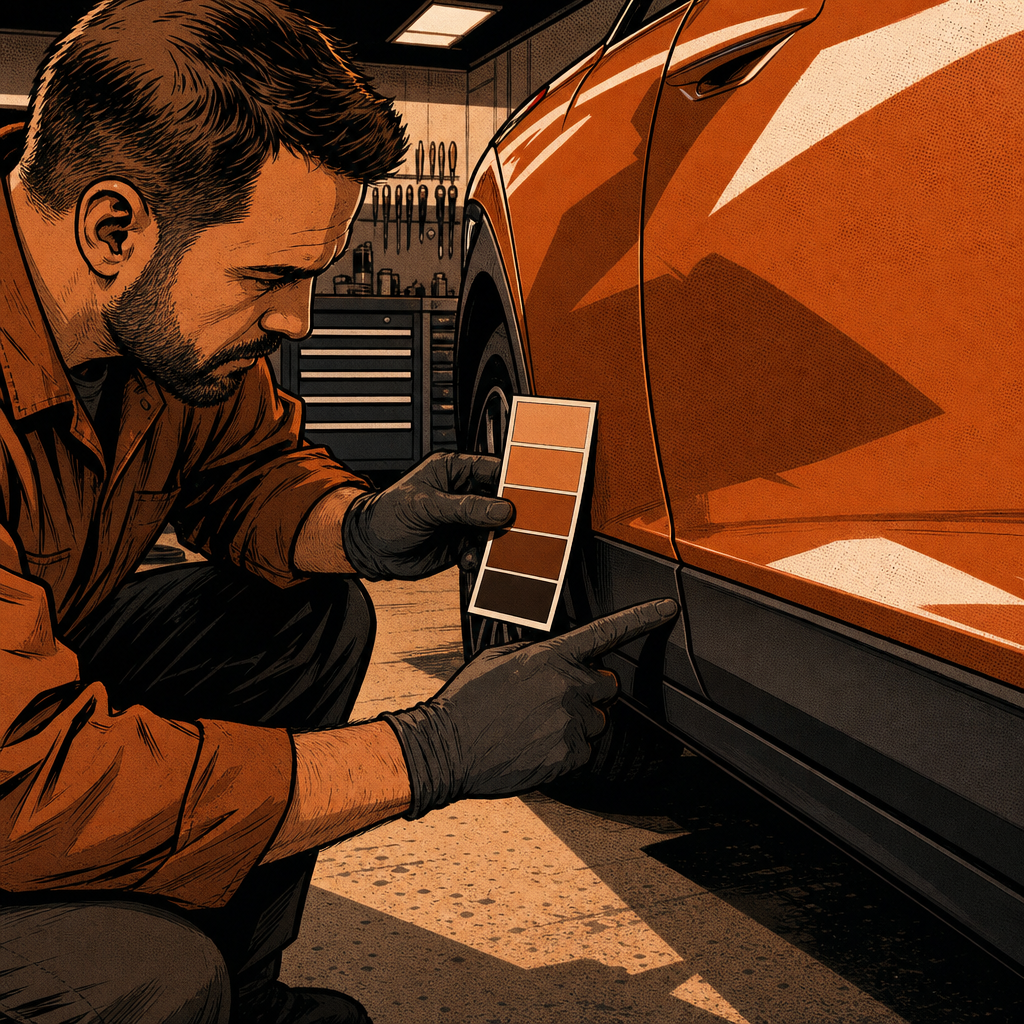
A customer brings a car back in convinced the rocker panel doesn’t match the fender, and half your shop can’t see it while the other half spots it from across the lot. This scenario plays out constantly on specialty and low-volume colors, and it’s rarely as simple as “the painter got it wrong.” Substrate differences, UV exposure, and paint chemistry all stack up to create mismatches that are difficult to explain to a customer but very explainable on the shop floor. Here’s how to work through a mismatch complaint methodically, decide whether blending is worth the risk, and set expectations that keep the comeback from turning into a bigger job than it needs to be.
Why Panel Color Mismatches Happen Even With the Correct Code
Pulling the right paint code out of the system doesn’t guarantee a match, and techs who’ve been doing this a while know why. Paint formulas ship with built-in variance — the same code sprayed in different regions, humidities, and booth conditions can land slightly different from batch to batch. On top of that, every panel on the vehicle has been aging under UV light at a different rate depending on orientation, shade exposure, and how long it’s been on the road. A panel that’s six years old and has taken direct sun will read differently than the fresh respray sitting next to it, even if the formula on paper is identical.
Substrate matters just as much as age. Painted plastic (bumper covers, rocker mouldings, cladding) and painted metal don’t take basecoat the same way. Flex additives, primer requirements, and how the color lays down on a flexible substrate versus sheet metal all introduce subtle shifts. This is why a rocker panel can look slightly warmer or cooler than the door above it even when both were shot from the same mixed batch on the same day. Before you assume a bad mix, rule out substrate and age as the culprits — it changes the entire repair strategy.
Diagnosing the Mismatch: Metal vs. Plastic, UV Fade, and Sealer Bleed
Start with a side-by-side inspection in consistent daylight, not shop lighting. Metal halide and fluorescent bays shift color perception enough to send you chasing a problem that isn’t there — or miss one that is. Compare the disputed panel against the closest known-good factory panel, not just the one it was blended toward.
Next, separate the variables:
- Substrate check — is the mismatched panel plastic against a metal neighbor? Expect some variance here regardless of skill level.
- Age check — is one panel original and sun-exposed while the other is fresh paint? Fresh clear and basecoat often needs weeks to a few months of UV exposure to “settle” and match aged panels nearby.
- Transparency check — on yellows, oranges, and some reds, the basecoat is inherently more transparent. If coverage was thin or shot over a light sealer instead of the correct tint of sealer, the substrate or e-coat can bleed through and shift the hue, often toward green or an off-tone.
If you’re the shop that did the repair, pull your job file: what sealer was used, how many coats went down, what the spray-out card looked like before it was cleared. If you’re the shop being asked to fix someone else’s respray, request that information from the customer or original shop before you commit to a plan — reworking someone else’s tint job blind wastes material and time.
Matching Waterborne Basecoats: Paint Systems and Spray-Out Techniques
Nearly every vehicle from the last 15 years or so left the factory in a waterborne basecoat. If your shop or the shop that did the prior work sprayed a solvent-borne product to chase that color, that’s very likely your root cause — solvent and waterborne basecoats from the same nominal code will not lay down identically, and matching one to the other is a losing fight. Confirm which paint line and which of the major refinish systems (PPG, Sherwin-Williams’ waterborne lines, Spies Hecker, BASF, Axalta, and others) is being used, and make sure it’s the correct generation of formula for the vehicle’s build year — manufacturers update factory colors more often than aftermarket formula books get updated.
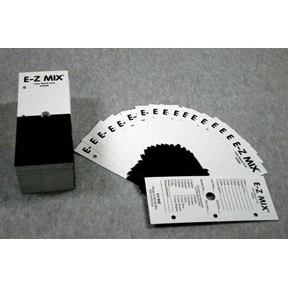
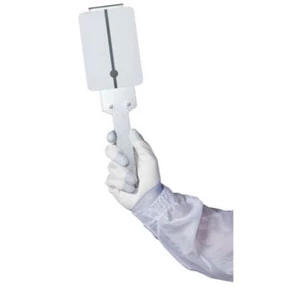
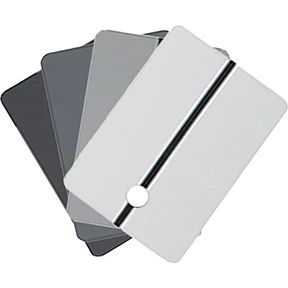
Before committing paint to the panel, run spray-out cards under the same booth conditions and let them flash and cure fully — comparing wet or under-cured color to a fully cured factory panel will mislead you. A trained color technician can often tint a stock formula closer by adjusting toner ratios in small increments, but this takes iteration; budget the shop time for it rather than promising a one-shot fix.
To Blend or Not to Blend: When It’s Worth the Risk
Blending — feathering fresh color into an adjacent undamaged panel to soften a hard edge — is the most debated call in this line of work, and for good reason. Done well, it can make a near-miss color nearly invisible. Done poorly, it turns one mismatched panel into two, because now you’ve got a transition zone that has to fade perfectly or it just moves the problem line higher up the car.
General guidance techs rely on:
- Don’t break into undamaged factory paint unless the customer explicitly understands and accepts the risk and cost. The least invasive repair is usually the right default.
- If you do blend, commit to the full panel set that shares a body line (e.g., quarter, door, and fender together) rather than trying to feather into just a few inches of an adjacent panel — partial blends are the ones most likely to show a line.
- Only take on a blend if the shop has a tech with real blending reps under their belt. This is not a “figure it out” task; a rushed blend on a customer’s collector or high-value vehicle is how you turn a warranty comeback into a total redo.
- Set the expectation up front that blending narrows the gap — it does not guarantee an invisible match, especially on colors with high transparency or metallic/pearl content.
Tinting and Adjusting for a Closer Match Without a Full Respray
If a full panel blend isn’t warranted but the customer isn’t satisfied, tinting the existing formula is the middle path. This means pulling the panel (a bolt-on piece like a rocker moulding or bumper cover is the easiest candidate), running fresh spray-outs, and adjusting the mix in small percentages until it reads correctly under natural light next to the panels it borders. This works best on parts that mount independently and can be refinished off the car, since it avoids the risk of overspray onto surrounding factory paint.
If the piece was originally a pre-painted OEM component (common on some bumper covers and moulding, less common than people assume on rocker panels), verify that before assuming a shop’s tint job is the sole cause — some panels ship from the factory with an inherent shade offset from adjacent painted-metal surfaces, and no amount of respraying will erase that gap.
Setting Customer Expectations Before the Job Starts
A lot of comeback friction is avoidable with a five-minute conversation before any paint goes down. Explain plainly that: exact, side-by-side, zero-tolerance color match is not a guaranteed outcome on any repaint, especially on rare or transparent colors; UV aging on the rest of the car will continue to shift tone even after a perfect match is achieved; and blending carries its own risk to previously undamaged panels. Photograph the panel in natural light before and after, and document what was discussed and agreed to. This protects both the shop and the customer, and it prevents a reasonable outcome from being read as a failed repair.
Quick Reference Checklist
- Inspect in natural daylight, not booth lighting, against the nearest factory panel
- Confirm substrate (plastic vs. metal) before judging the mismatch
- Check panel age/UV exposure on both sides of the comparison
- Verify correct sealer tint and adequate basecoat coverage for transparent colors
- Confirm waterborne vs. solvent-borne system matches the factory process
- Run and fully cure spray-out cards before committing to the panel
- Only blend if committing to full adjacent panels with an experienced tech
- Document the color conversation and photos before starting the job
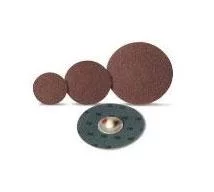
HOOK & LOOP DISC DA 2" 180 GRIT 25/BOX*
Mfg: Ingersoll-Rand Parts
Part #: 02A-180AO-25
FAQs
Why does my repainted panel look off even though the shop used the correct paint code?
Paint codes have built-in batch variance, and substrate (plastic vs. metal), sealer choice, and UV aging on the surrounding panels all affect how a “correct” code actually reads once cured.
Will color match improve over time?
Often yes, to a point. Fresh clearcoat and basecoat continue to cure and can shift slightly as they’re exposed to UV over the following weeks to months, sometimes narrowing the visible gap without any further work.
Should I let a shop blend adjacent undamaged panels to fix a mismatch?
Only if the color gap genuinely bothers you and you accept the risk — a poor blend can move the mismatch line onto a panel that never needed work. Get a shop with documented blending experience, and confirm they plan to blend a full panel, not a partial patch.
Does plastic vs. metal really matter that much for color match?
Yes. Flexible substrates take basecoat differently than metal, and painted plastic trim (rockers, bumper covers) will frequently read slightly different from adjacent metal panels even when sprayed from the same batch on the same day.
What paint system should a shop be using to match a modern factory color?
A waterborne basecoat matching the factory process, from a major refinish line (PPG, Sherwin-Williams, Spies Hecker, BASF, Axalta, etc.), using current formula updates for the vehicle’s build year. Matching a modern waterborne factory color with an older solvent-borne formula is a common and avoidable cause of mismatch.
Is a slight mismatch after a repair considered normal?
Within reason, yes — especially on rare, transparent, or metallic colors, and especially on a vehicle with several years of UV exposure on its original panels. A slight, hard-to-see shade difference is a common, accepted outcome in the industry rather than a sign of a failed repair.
Recommended Tools for Color Matching
To get a color match right, you need the right supplies on hand — sealer, basecoat, spray-out cards, and tinting materials. Find these and more in our Paint & Body category.
- Color matching and tinting supplies
- Sealer products and basecoat systems
- Spray-out cards and testing equipment

The Toolsource Technical Team blends decades of real-world automotive service experience with up-to-date technical research. Our writers collaborate with professional mechanics, shop owners, and diagnostic specialists to deliver practical, workshop-ready guidance you can trust.


Follow us on social media