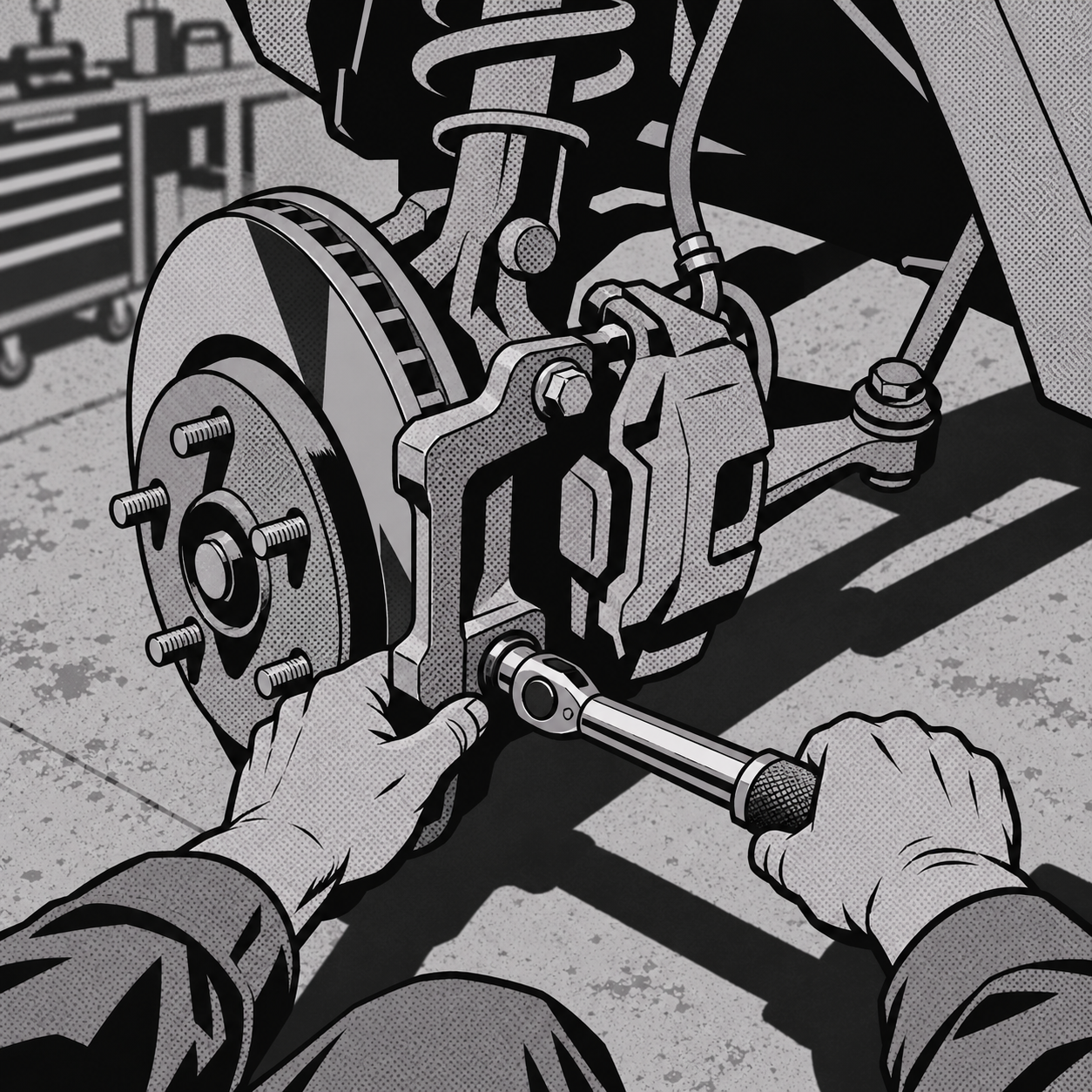
A rattle over potholes and a scratchy, cyclic noise when braking are two of the most common early warning signs that a caliper bracket bolt is loose or missing after a recent brake pad and rotor job. It’s a more frequent comeback than most shops like to admit, and it’s not a minor annoyance — a caliper bracket that isn’t fully secured can shift, contact the wheel, and cause serious damage or loss of control in a short amount of time. This guide walks through how to recognize the symptoms, why the failure mode is genuinely dangerous, how to safely get the vehicle back to a shop, and how to break loose and properly reinstall the bolts if you’re doing the repair yourself.
Recognizing the Symptoms
Caliper bracket problems rarely announce themselves with a dash light. Instead, techs and owners typically notice:
- A rattling or clunking noise over bumps and potholes, especially at low speed.
- A scratchy, metallic, cyclic noise that occurs specifically when the brakes are applied — this is often the caliper bracket shifting against the rotor or wheel as it rotates.
- Noise that shows up shortly after a pad and rotor replacement, which is the biggest clue pointing at the recent service rather than a coincidental unrelated failure.
If a vehicle was just serviced and starts making noise within days or a couple hundred miles, treat the caliper mounting hardware as suspect number one before chasing anything else. Get the vehicle on a lift or securely jack it up and visually inspect both bolts on the caliper bracket (the bolts that mount the bracket to the steering knuckle/frame, not the caliper-to-bracket slide pins) on the affected corner. Compare side to side — both front calipers and both rear calipers should look identical in bolt count and position.
Why This Is a Genuine Safety Issue
A caliper has two mounting points: the bracket-to-knuckle bolts and the caliper-to-bracket slide bolts. If a bracket bolt backs out completely or was never tightened, the bracket is no longer rigidly fixed to the suspension. Depending on which bolt is missing — upper or lower — the consequences differ, but neither is acceptable to drive on:
- If the top bolt is missing, the bracket can rotate forward when the vehicle moves and the brakes are applied. On many vehicles this allows the bracket to contact the wheel, and it can be pulled into the spokes hard enough to punch through or crack the rim.
- If the bottom bolt is missing, the caliper may still function somewhat normally in the short term, but the mount is compromised and can fail further with vibration, heat cycling, or hard braking.
- If both bolts are missing, the entire caliper assembly can separate from the knuckle. The brake hose is intentionally sized to prevent the caliper from flying completely off the vehicle, but a caliper hanging by the hose is not providing braking force and can cause catastrophic damage to the wheel, suspension, and hose itself.
This is why the consistent, correct advice is: do not continue driving on a vehicle with a confirmed missing or loose caliper bracket bolt, even for a short distance at low speed. “Just drive it slow and coast to stops” is not a safe workaround — a bracket that’s already shifted can catch the wheel unpredictably, not just under hard braking.

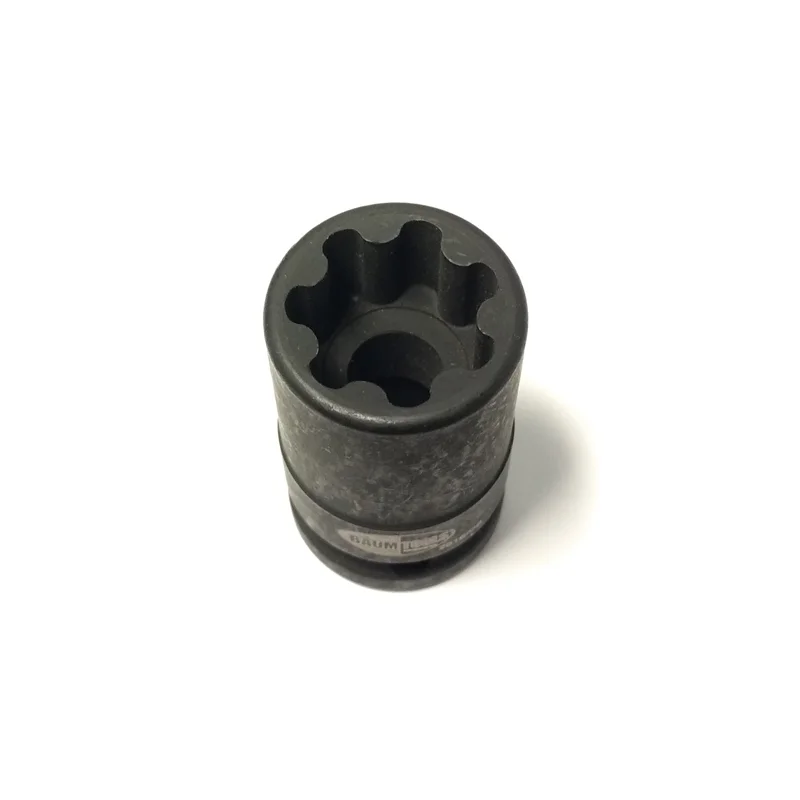
1/2" Drive 22mm 7 Pt Audi S5 Brake Caliper Pin Socket
Mfg: Baum Tools
Part #: BS5BRAKE
Verify Which Bolts Are Missing or Loose
Before calling the shop or planning the fix, confirm exactly what’s wrong so you (or the shop) aren’t guessing:
- Pull the wheel and visually inspect both bracket mounting bolts. Look for a bolt that’s fully gone, one that’s backed out partially, or witness marks (shiny/scraped metal) showing the bracket has already shifted.
- Check the caliper slide pins/bolts separately — these are a different fastener and a different failure mode (dry or seized slides cause dragging brakes, not a loose bracket).
- Inspect the rim and tire sidewall at the location nearest the bracket for scoring, gouges, or witness marks — this tells you whether contact has already occurred, which matters for assessing wheel integrity before the vehicle is driven again at all.
- Photograph or video the issue, including the rattle and any visible gap or movement at the bracket. This documentation is useful if the vehicle needs to go back to the shop that performed the original service.
Search: OEM caliper bracket bolt torque-to-yield replacement kit
Getting the Vehicle Back to the Shop Safely
If the original service was done by a shop, this is their comeback and their liability — most reputable shops will tow the vehicle back at no cost or send a technician out to the vehicle’s location, since it’s often a quick fix with the right bolt in hand. Steps to take:
- Do not drive the vehicle, even a short distance, once a missing or loose caliper bracket bolt is confirmed. Arrange a flatbed tow — a vehicle with a compromised caliper mount should not be driven onto a rollback at an angle that stresses the wheel/brake area; flatbed is the safer tow method.
- Contact the shop directly, describe the finding, and share photos or video. A shop that left a vehicle in this condition should own the mistake and cover the tow and repair.
- Ask that the specific OEM bolt be used for the reinstall. Caliper bracket bolts are frequently a specific grade and length, and many manufacturers specify a torque-to-yield (one-time-use) bolt that should not be reused if it was ever removed and reinstalled.
- If a shop pushes back or suggests driving it in, document the conversation and consider that continuing to drive on a known defective brake mount can shift liability in the event of an accident — this is a reasonable point to raise if a shop is reluctant to send a tow.
Removing and Reinstalling Stuck or Seized Bracket Bolts
For techs tackling a seized caliper bracket bolt during a pad/rotor job or a repair like this, a few field-tested approaches:
- Use the double-wrench (or box-end/line wrench and ratchet) technique — one wrench holds a reference point or counter-torques while the other applies breaking force, giving better leverage and control than a single ratchet, especially in tight wheel-well clearances.
- Apply penetrating oil and allow it to soak; multiple short soaks over 15-20 minutes each are more effective than one long soak.
- If the bolt still won’t break loose, controlled heat from a torch on the bracket (not the rubber brake hose or ABS line) can help expand the metal and break corrosion bonds. Let it cool slightly before applying force.
- Use a 6-point socket or wrench rather than a 12-point to reduce the risk of rounding a stubborn bolt head.
- If a bolt shears or the head rounds off despite these steps, extraction tools (bolt extractors, left-hand drill bits) or drilling and re-tapping may be necessary — know when to stop and get it to a shop with a lift and proper extraction equipment rather than fighting it on the ground at home, especially with limited mobility or leverage.
On reinstall, always torque the bracket bolts to the manufacturer’s specification with a calibrated torque wrench — don’t “feel” it tight. Under-torquing is the most common root cause of this entire failure mode, and over-torquing can stretch or snap a bolt that then works its way loose under vibration. Apply thread locker only if specified by the manufacturer, and replace any torque-to-yield bolt rather than reusing it.
Quality Control to Prevent a Comeback
For shops and techs, this is an easy comeback to eliminate with a consistent process:
- Torque every bracket bolt with a torque wrench and call it out verbally or on a checklist — don’t rely on an impact gun “feel.”
- Use a torque stripe (paint pen mark across the bolt head and adjacent surface) so a final visual inspection instantly reveals any bolt that moved or was never tightened.
- Have a second tech or the service writer do a final walk-around that includes checking for paint stripes on all brake hardware before the vehicle leaves the bay.
- Keep a log of torque specs per bolt type and vehicle in the bay, since bracket bolt specs vary significantly by make and model and by whether the bolt is torque-to-yield.
Search: torque wrench and brake caliper service tool kit
Quick Checklist
- Noise appeared shortly after brake service? Suspect bracket bolts first.
- Pull the wheel and visually confirm both bracket bolts are present and tight.
- Check the rim/tire for contact damage before driving further.
- If a bolt is missing or loose, stop driving — arrange a flatbed tow, don’t limp it in.
- Document with photos/video and contact the shop that performed the service.
- On reinstall, use the correct OEM bolt, torque to spec, and apply a torque stripe.

Mercedes Benz 1/2" Drive 10 Pt Socket Kit 8mm and 10mm
Mfg: Baum Tools
Part #: MBWHEELKIT

FAQs
Can I drive a short distance if only the lower bracket bolt is missing?
No. Even if the brakes still technically function with one bolt in place, the mount is compromised and can shift further under load, heat, or vibration. Treat any missing bracket bolt as a tow situation.
Will the shop have to pay for the tow?
In most cases, yes — if the issue stems from their service, a reputable shop will cover towing and the repair. Share clear photos or video of the missing/loose bolt when you contact them.
What’s the difference between the caliper bracket bolts and the slide pin bolts?
The bracket bolts mount the entire caliper bracket to the steering knuckle or frame — these are the safety-critical fasteners discussed here. The slide pins/bolts attach the caliper body to the bracket and allow it to float; a problem there typically causes dragging or uneven pad wear, not the bracket separating.
Are caliper bracket bolts reusable after removal?
Check the manufacturer’s spec. Many are torque-to-yield (one-time-use) fasteners that stretch permanently when torqued and should be replaced any time they’re removed, even if they look fine.
How do I know if the rim is still safe after contact damage?
Any gouge, crack, or deep scoring near the bead or spoke area warrants a wheel inspection by a shop before the vehicle is driven again — a weakened wheel can fail under load even if it looks mostly intact.
What torque technique works best on a seized bracket bolt without a lift?
The double-wrench technique combined with penetrating oil soaks and, if needed, localized heat on the bracket (avoiding brake lines and hoses) is the most reliable combination for hand tools at ground level.
Recommended Tools for Caliper Bracket Work
Properly diagnosing and repairing a loose or missing caliper bracket bolt requires the right tools — from penetrating oils and bolt extractors for stubborn fasteners to a calibrated torque wrench for accurate reassembly. Our Brake Caliper Tools category includes the precision equipment and specialty items needed for safe bracket service.
- Calibrated torque wrenches to ensure fasteners meet manufacturer specifications.
- Bolt extractors and penetrating oils for removing stuck or corroded bracket fasteners.
- Specialized removal and inspection tools designed for tight wheel-well access.

The Toolsource Technical Team blends decades of real-world automotive service experience with up-to-date technical research. Our writers collaborate with professional mechanics, shop owners, and diagnostic specialists to deliver practical, workshop-ready guidance you can trust.


Follow us on social media