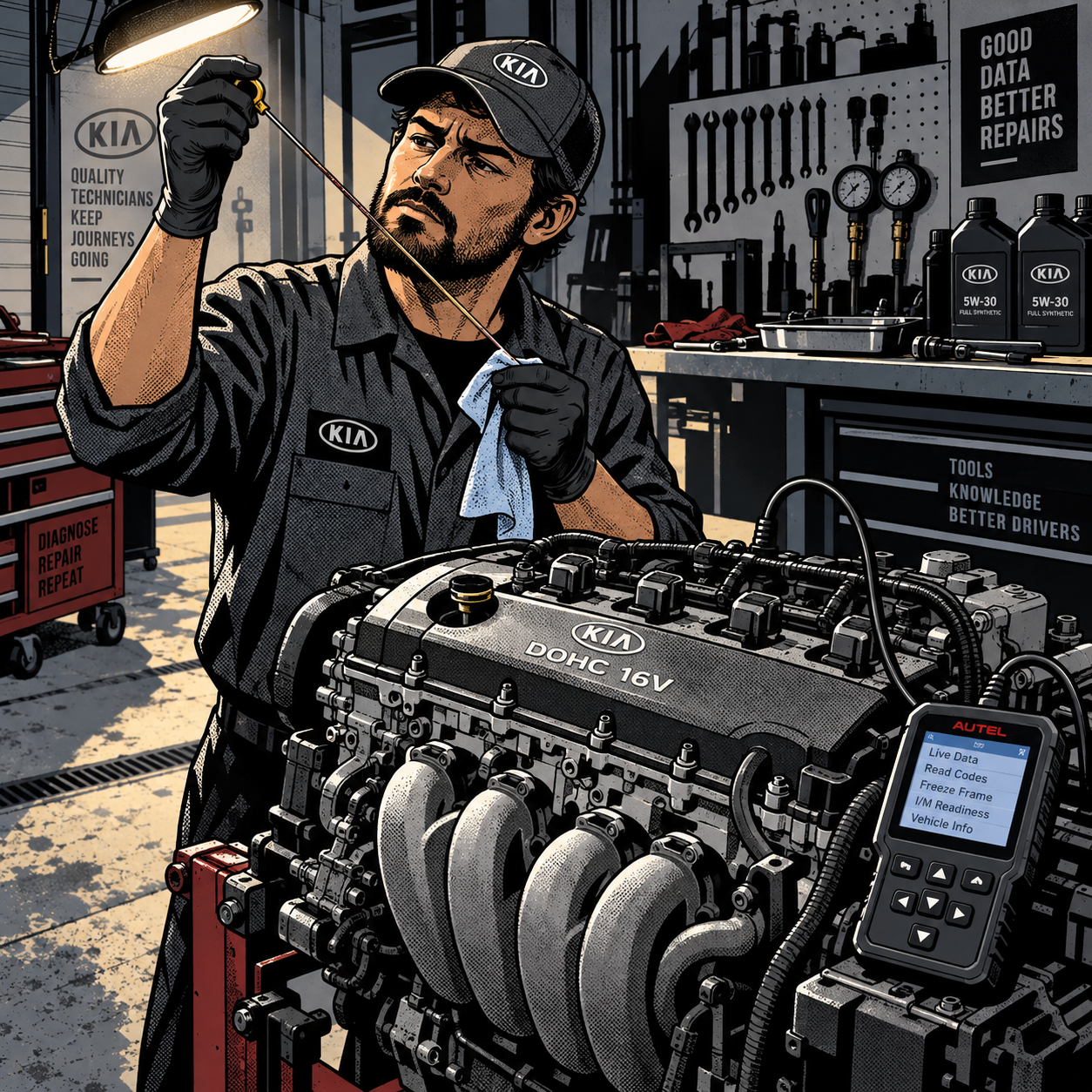
Excessive oil consumption and rod bearing failure in Kia and Hyundai’s Theta II, Nu, and related GDI four-cylinder engines have generated years of recalls, a class-action settlement, and no shortage of confusion at the service counter. Technicians working on these vehicles need to know the specific diagnostic codes, the documentation standards that determine whether a claim gets approved or denied, and how to talk customers through a process that can take months and multiple visits. This guide breaks down what actually matters at the bay level — not internet rumor, but the procedures that decide whether an engine replacement gets covered.
Why These Engines Burn Oil
The affected engine families use direct injection combined with piston ring and oil control ring designs that, in a documented subset of production, don’t seal consistently as mileage accumulates. The result is oil migrating past the rings and burning in the combustion chamber — often with little or no visible smoke and no fluid on the ground, which is exactly why customers don’t catch it until the dash lights up or the engine starts knocking. Manufacturing debris left in the oil gallery during machining has also been identified as a root cause on some engines, restricting oil flow to the rod bearings and accelerating wear independent of consumption. Both failure modes — ring-related oil burning and bearing starvation — can coexist in the same vehicle, which is why a customer can be topping off oil responsibly and still end up with a knocking engine.
The Diagnostic Code That Actually Matters: P1326
Hyundai and Kia’s Knock Sensor Detonation System monitors bearing clearance indirectly through knock sensor input. When clearance exceeds spec, the ECU sets code P1326 and typically forces the vehicle into limp mode to prevent catastrophic failure before a rod lets go. This code is the gatekeeper for warranty coverage on rod bearing claims — without it, most service departments won’t move forward with a teardown or engine replacement request, regardless of how the vehicle sounds or how much oil it’s using. If a customer reports knocking but the code hasn’t set, document the complaint, pull freeze-frame data if available, and advise a return visit if the light comes on. Don’t be surprised if a vehicle needs to get measurably worse before the system flags it — that’s a known weakness of relying on knock-sensor logic rather than direct bearing measurement.
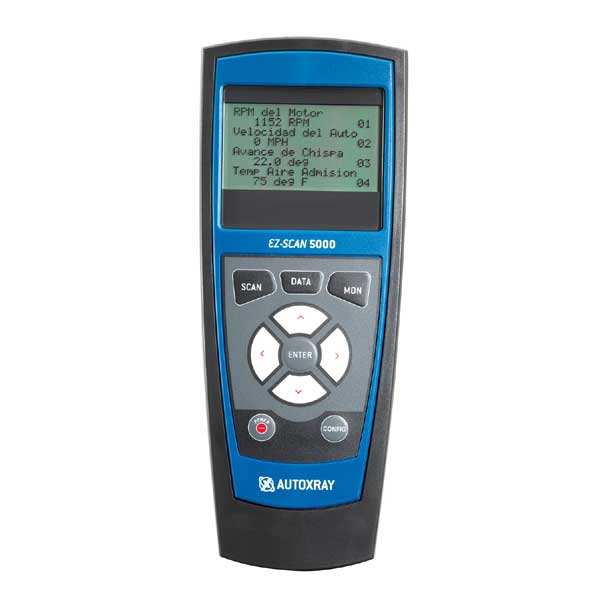
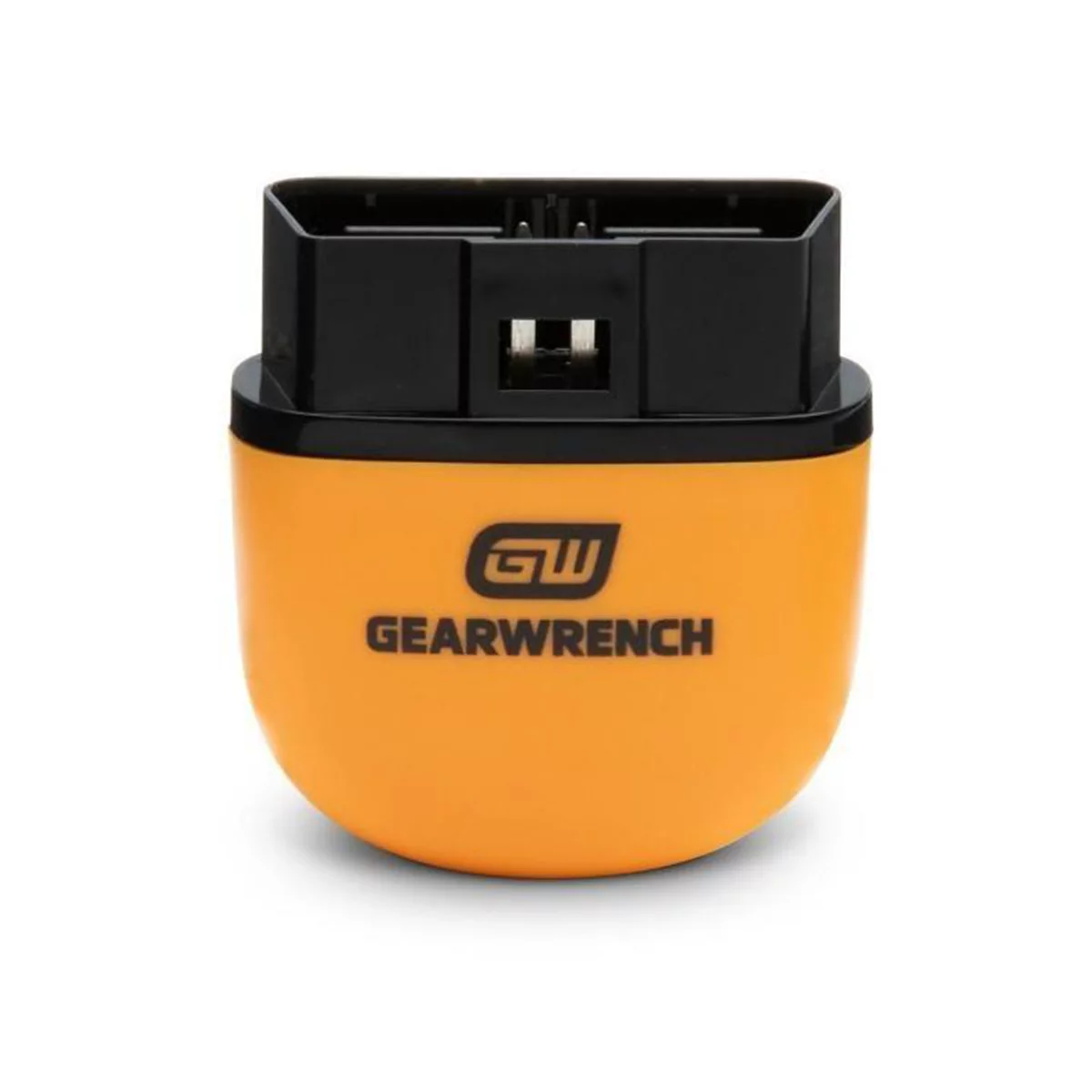
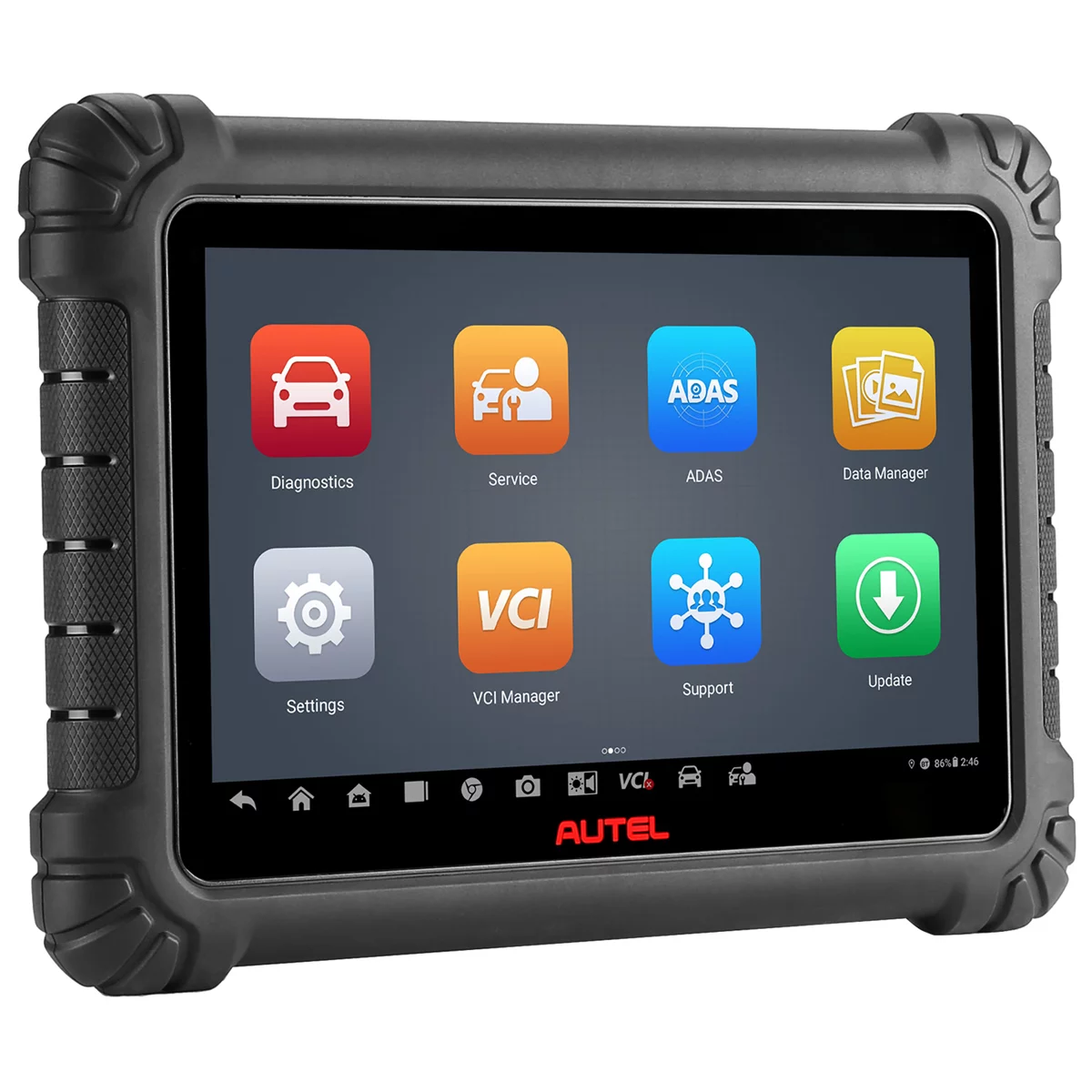
For shops regularly working on these platforms, a capable OBD-II scan tool with manufacturer-specific PID access makes it much easier to catch knock sensor trend data and freeze-frame history before a customer’s next oil top-off masks the symptom.
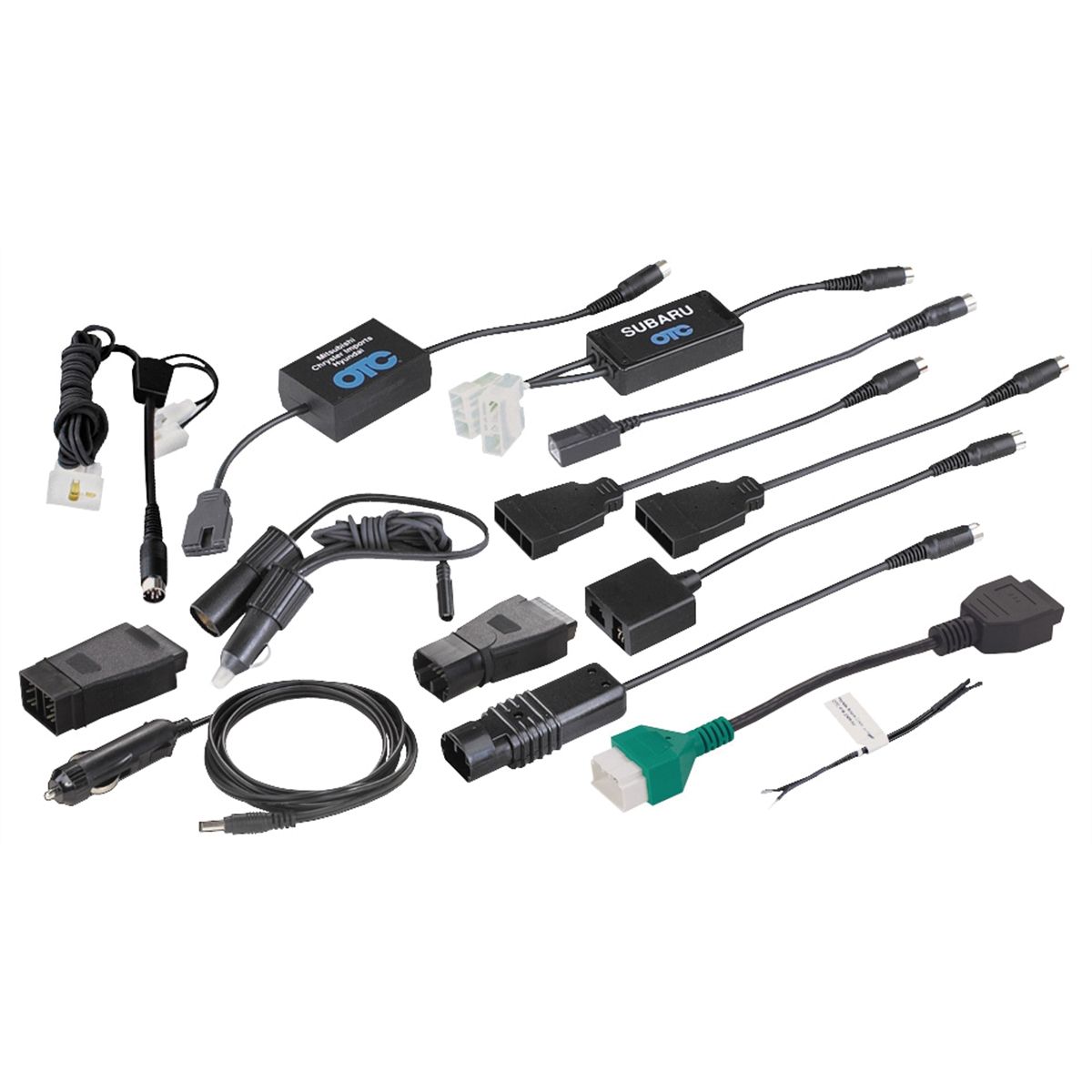
Genisys USA 2007 Asian Cable Kit for Genisys Scan Tools
Mfg: OTC Tools and Equipment
Part #: 3421-94
Documentation: The Difference Between Approval and Denial
Warranty adjudication on these engines hinges almost entirely on paperwork. Build the file before the customer needs it:
- Full oil change history at the manufacturer-specified interval, ideally from one shop or a chain with centralized records
- Receipts showing oil purchased between changes, if the customer is topping off themselves
- A dated log of dipstick checks, especially once consumption is suspected
- Confirmation that every applicable recall and service campaign has been completed before the failure — incomplete recall work is a documented reason for denial
- Any prior diagnostic visits where oil level or consumption was discussed, even if no code was present at the time
Advise customers in writing to keep this file themselves, separate from the shop’s records, since warranty disputes can stretch over months and records occasionally go missing between service writers. If a customer already has gaps in their history — say they bought the car used and don’t have records from the first owner — flag that early. Some claims under the extended rod bearing coverage (up to 15 years or 150,000 miles on affected models) have been approved for second owners, but only with a clean oil-change trail from the point of purchase forward.
What to Tell Customers — and What Not To
There’s a persistent idea online that deliberately running an engine low on oil, or doctoring a dipstick reading with used oil before a dealer inspection, speeds up a warranty claim. Do not advise this, and do not let a customer talk you into writing it up that way. Service departments that handle volume on these engines can and do identify abuse patterns — burnt oil poured in right before an inspection, mismatched oil condition versus mileage, or a consumption rate that doesn’t match the maintenance interval. An abuse finding doesn’t just kill the current claim; it can be used to deny future claims on the same VIN. The correct advice is boring but effective: check the dipstick at every fill-up, top off with the spec’d oil grade, keep every receipt, and let the failure occur naturally within a documented maintenance pattern. If oil consumption is already elevated, shortening the interval between checks protects the customer far more than any shortcut does.
Handling the Customer Conversation on Timeline
Set expectations early. A claim built around P1326 and bearing failure typically isn’t a same-day fix — it can involve a break-in consumption test (BCT) if oil usage rate is the basis for the claim rather than an outright knock, and BCTs run over a measured mileage interval before a decision is made. Customers who hear “it’s covered” assume next week; the realistic timeline is often weeks to a couple of months between symptom onset, diagnosis, approval, and parts availability for the replacement engine. Be direct that a customer who wants to avoid this timeline risk entirely — particularly on a vehicle outside the strongest warranty window, or one with a sketchy maintenance history before their ownership — may be better served selling or trading in before a failure happens, since a denied claim after a breakdown leaves them holding both a dead engine and a diminished trade value.
Beyond the Engine: What Else to Flag During Service
Once an engine replacement has happened, two follow-up items come up often enough to mention proactively. First, the manifold catalytic converter frequently needs replacement afterward on these platforms and isn’t typically covered under the same warranty action — give customers a heads-up on cost so it isn’t a surprise. Second, confirm valve train health during any oil-consumption workup; burnt valves and worn piston rings can produce consumption symptoms that mimic early bearing wear but require a different repair path and aren’t covered by the bearing-specific extension. A compression and leak-down test alongside the oil consumption check gives a clearer picture before committing to a diagnosis.
Stocking the right fluids and basic diagnostic consumables for these jobs — correct-viscosity oil, OBD code readers, and compression testing kits — keeps a shop from scrambling mid-inspection when a customer shows up with a knock complaint.
Quick Reference Checklist
- Confirm all recalls/campaigns completed before any bearing-related diagnosis
- Pull codes for P1326; document freeze-frame data even if code isn’t currently set
- Verify full, dated oil-change history and any self-performed top-off receipts
- Advise against artificially inducing failure — document everything as it naturally occurs
- Run compression/leak-down alongside consumption checks to rule out valve/ring issues
- Set realistic timeline expectations for BCT and claim adjudication
- Flag manifold cat and valve train follow-up costs after an engine swap
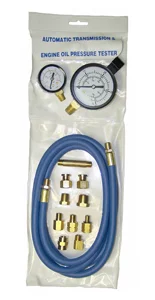
Automatic Transmission & Engine Oil Pressure Tester 34550
Mfg: S & G Tool Aid
Part #: 34550
Frequently Asked Questions
What is a BCT and why does it matter?
A break-in consumption test measures oil usage over a defined mileage interval to establish whether consumption exceeds the manufacturer’s acceptable threshold. It’s used when the claim basis is oil usage rather than a hard failure code, and the result directly determines whether a repair proceeds under warranty.
Does topping off oil between changes hurt a warranty claim?
No — properly documented, it supports the claim by showing the customer maintained the vehicle despite a manufacturer defect. The risk is in undocumented or inconsistent topping off that can’t be verified against receipts or logs.
Will a dealer cover a bearing failure if recalls weren’t completed?
Generally no. Outstanding recall or campaign work at the time of failure is a commonly cited reason for warranty denial, so confirming recall status should be the first step in any related diagnosis.
Can a second or third owner still get coverage?
Yes, in many cases the extended rod bearing coverage follows the VIN rather than the original owner, but the maintenance documentation requirement still applies for the full ownership period being claimed.
What if the customer is denied and disagrees with the outcome?
Appeals and arbitration processes exist but typically route through the manufacturer or its designated arbitrators, which limits independent recourse. Strong documentation from the outset is the best defense against needing an appeal at all.
Is this issue isolated to one engine family?
No — it’s been documented across several Theta II and Nu-family four-cylinder GDI engines used in multiple Kia and Hyundai models over a range of model years, so technicians should check the specific VIN and engine code against current service bulletins rather than assuming based on model name alone.
Essential Diagnostic Tools
Effective diagnosis of oil consumption and bearing wear on these GDI engines requires manufacturer-specific code reading, knock sensor monitoring, and compression testing. Find the tools you need in our Automotive Diagnostic Tools selection.
- OBD-II scanners with manufacturer-specific PID access for freeze-frame capture and knock sensor trend data
- Compression and leak-down testing equipment for valve train and piston ring assessment
- Code readers capable of pulling P1326 and related diagnostic codes

The Toolsource Technical Team blends decades of real-world automotive service experience with up-to-date technical research. Our writers collaborate with professional mechanics, shop owners, and diagnostic specialists to deliver practical, workshop-ready guidance you can trust.


Follow us on social media