
A customer pulls in with a low-voltage complaint, you hook up a meter, see 13.9 volts, and now you have to decide: is that normal, or is the alternator on its way out? On older vehicles with dumb, fixed-output alternators, a number like that might have raised an eyebrow. On modern vehicles with ECU-controlled charging, it’s often exactly where the system wants to be. Misreading this one number is one of the most common ways shops end up recommending — and customers end up paying for — an alternator that never needed to be replaced. This guide breaks down what actually counts as normal, how to test a charging system the right way, and how to tell a real fault from a false alarm.
What a Normal Charging Voltage Range Actually Looks Like
A fully charged, resting 12V lead-acid battery reads about 12.6–12.7 volts with the engine off. Once the engine is running and the alternator is charging, you should see that number climb — generally into the 13.2V to 14.8V range, depending on the vehicle, battery chemistry, temperature, and electrical load at the moment you take the reading. There is no single “correct” number; there’s a range, and where a given vehicle sits in that range depends on several factors:
- Battery type — AGM and calcium/silver batteries often charge at different voltages than standard flooded lead-acid batteries.
- Ambient and under-hood temperature — charging voltage targets typically drop as temperature rises.
- State of charge — a nearly full battery needs less charging voltage than a depleted one.
- Electrical load — headlights, HVAC blower, defroster, and accessories all pull current and affect what the system commands.
Many European manufacturers in particular spec charging voltages in the 13.8–14.8V window rather than a flat 14.4V, so a reading that looks “low” compared to a generic rule of thumb can be completely within factory spec. The only way to know for certain is to check the factory service information for that specific vehicle and battery combination — not a general internet rule.
How Smart, Computer-Controlled Charging Systems Changed the Rules
The biggest shift techs need to internalize: on most vehicles built in the last 10–15 years, the alternator does not decide its own output voltage. A body control module, powertrain control module, or dedicated charging system module tells the alternator what voltage to produce based on battery state of charge, electrical load, engine operating mode, and fuel economy strategy. This is sometimes called variable voltage charging or smart charging.
Two things fall out of this:
- Voltage can legitimately swing low, even down toward 12V at idle with no load, on some platforms. If the module has decided the battery doesn’t need a full charge right now, it will intentionally reduce alternator output to reduce parasitic engine load and improve mileage. This is normal operation, not a fault.
- A single voltage snapshot tells you almost nothing. Reading 13.9V once, with the engine idling and no accessories on, doesn’t confirm or rule out a problem. You have to see how the system responds to a command for more output.
The practical implication is that alternator diagnosis on a modern vehicle is no longer just “put a meter on the battery.” It’s a system-level check that starts with a scan tool, not a multimeter.
===FYP-PRODUCT-SEARCH-1===


Step-by-Step: Testing a Charging System the Right Way
Follow this sequence instead of relying on one static reading:
- Pull codes first. Connect a scan tool capable of reading all modules, not just powertrain. Charging system faults often set codes in the BCM or a dedicated energy management module before they show up as a dead battery.
- Check commanded vs. actual charging voltage. On platforms that support it, a bidirectional scan tool can show what the module is requesting from the alternator and what the alternator is actually producing. A mismatch between commanded and actual output is a real fault; a low commanded voltage with matching actual output is the system working as designed.
- Load the system and watch the response. With the engine running, turn on the headlights, HVAC blower on high, rear defroster, and hazard lights simultaneously, then bring engine speed up to around 2,000 RPM. Voltage should rise into the mid-13V to 14V range under this load. If it stays flat or drops, that’s a legitimate red flag.
- Amp-clamp the alternator output. A current clamp on the main alternator output wire tells you how many amps it’s actually producing versus its rated capacity. This catches a weak alternator that’s producing correct voltage but can’t sustain current under real load — something a voltage-only test will miss.
- Check for parasitic draw. A battery that keeps dying with a charging system that tests fine is frequently a parasitic draw problem — a module or relay staying awake when it shouldn’t. Test key-off current draw at the battery and pull fuses one at a time to isolate the circuit if draw is excessive (typically anything sustained over 50 mA on most modern vehicles warrants investigation).
- Inspect connections before condemning parts. Corroded or loose battery terminals and ground straps cause voltage drop that mimics a weak alternator. Do a voltage drop test across the battery cables and ground connections under load before assuming the alternator itself is at fault.
Common False Alarms: When Low-Looking Voltage Isn’t the Alternator
Several things routinely get blamed on the alternator when they aren’t the actual cause:
- An old or weak battery. A battery near end of life can pull down system voltage readings even when the alternator is charging correctly. Load-test or replace the battery and recheck the system after a few days of normal driving before condemning the alternator.
- Corroded battery terminals. Resistance at the terminals can cause intermittent no-start or low-voltage symptoms that look electrical but are really a connection problem. Clean and torque terminals as a first step, not a last resort.
- Reading taken at idle with no load. Many smart systems intentionally run lower voltage at idle. The number climbs once RPM and load increase — if you only checked idle, you haven’t actually tested the system.
- Forgetting the battery monitor reset after a battery replacement. On vehicles with a battery state-of-charge sensor, failing to reset or relearn it after installing a new battery can cause the module to miscalculate charging needs and produce readings that look abnormal.
When It’s Actually the Alternator
Some symptoms do point to a genuine charging fault rather than normal smart-charging behavior:
- Battery light illuminated on the dash — on most vehicles, if this light is off, the system considers itself to be charging correctly.
- Voltage under commanded load that doesn’t rise at all, or that drops steadily during a drive.
- Amp-clamp readings well below the alternator’s rated output under full electrical load.
- A voltage that sits at or below resting battery voltage (roughly 12.4–12.6V) with the engine running and accessories on — this suggests the alternator isn’t producing meaningful output at all.
- Audible bearing noise, belt squeal under load, or visible physical damage to the alternator itself.
Note the corrosion example some techs run into: a car that keeps needing battery terminal cleaning every few months, where the alternator tests at “13 something” and seems fine, can still have a genuinely weak alternator. In one documented case, swapping in a new unit that charged at 14.5V (versus the old one’s marginal 13V) eliminated recurring terminal corrosion entirely — low-but-technically-in-range output was still enough to cause chronic problems. Borderline readings on an older, higher-mileage alternator are worth a full load and amp-draw test even if they’re not clearly “broken.”
Quick Diagnostic Checklist
- Confirm battery resting voltage (12.6–12.7V) before starting the engine.
- Scan all modules for codes, not just the engine.
- Check voltage under full accessory load at ~2,000 RPM, not just at idle.
- Amp-clamp the alternator output, don’t rely on voltage alone.
- Test for parasitic draw if the battery keeps going dead.
- Inspect and clean battery terminals and grounds before condemning the alternator.
- Verify against factory service manual specs for that exact vehicle and battery type.
===FYP-PRODUCT-SEARCH-2===


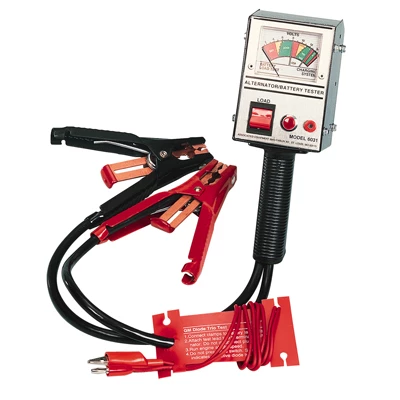
Alternator/Battery Load Tester - 0-16Volt 125AMP
Mfg: Associated Equipment
Part #: 6031
Frequently Asked Questions
Is 13.9 volts a bad alternator reading?
Not by itself. 13.9V falls within the normal charging range for most vehicles, and it’s a documented normal operating voltage for a number of European models specifically. Confirm against the factory spec and test under load before drawing conclusions.
Why does my alternator show different voltage at different times?
On vehicles with smart or variable-voltage charging, output is controlled by a module based on battery state of charge, temperature, and electrical load — not a fixed setpoint. Fluctuation between roughly 12V and 14.8V across different conditions can be entirely normal.
Can I test an alternator with just a multimeter?
A multimeter gives you voltage, which is only half the picture on modern systems. Pair it with a scan tool to check commanded versus actual voltage and an amp clamp to verify actual current output under load for a complete test.
What should I do after replacing a battery?
Reset or relearn the battery monitor if the vehicle has one, then drive it normally and recheck charging voltage after a few days. Don’t restrict accessory use during this period unless the vehicle manufacturer specifically instructs otherwise.
My battery keeps dying but the charging system tests fine — what’s next?
Run a parasitic draw test at the battery with the vehicle asleep, then pull fuses one at a time to isolate which circuit is staying active. This is a far more common cause of repeat battery failure than a marginal alternator.
Does the battery warning light always come on if the alternator fails?
On most vehicles, yes — if the charging module detects output doesn’t match what it commanded, it triggers the warning light. A charging system with the light off and voltage climbing under load is very unlikely to have a failed alternator.
Recommended Tools
Modern charging system diagnosis demands more than a basic multimeter — you need tools that can see into the smart charging system’s decision-making. Our selection of alternator testers and charging system diagnostic equipment will help you separate real faults from normal smart-charging behavior.
- Multimeters and clamp meters for voltage and current measurement
- Scan tools and load testers for system-level diagnostics
- Battery state-of-charge monitors and parasitic draw testers

The Toolsource Technical Team blends decades of real-world automotive service experience with up-to-date technical research. Our writers collaborate with professional mechanics, shop owners, and diagnostic specialists to deliver practical, workshop-ready guidance you can trust.


Follow us on social media