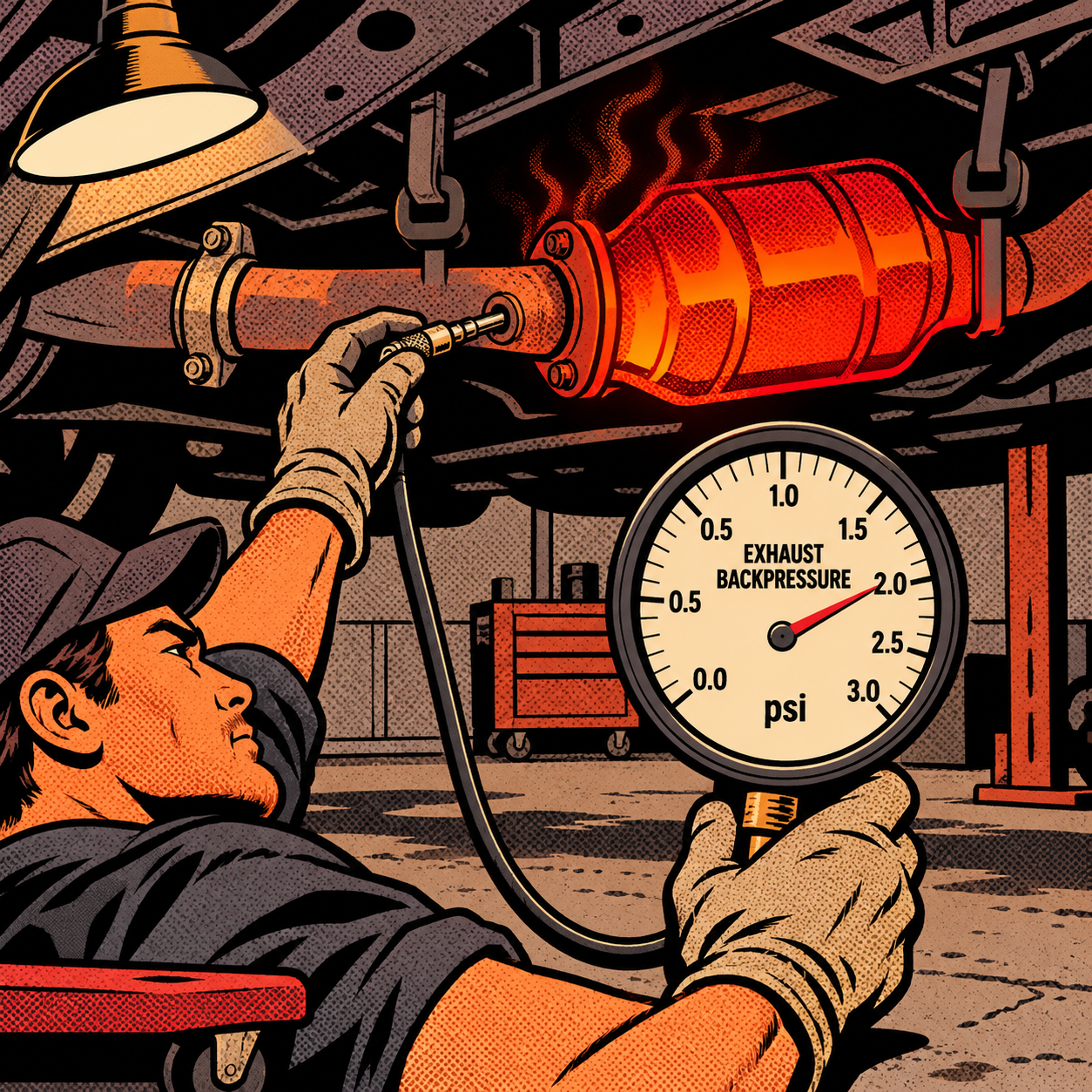
A catalytic converter glowing cherry red under a vehicle is not a quirky cosmetic issue — it’s a visible sign that something upstream is seriously wrong. In most cases it means one of two things: the engine is dumping unburned fuel into the exhaust, which the cat is trying to burn off and overheating in the process, or the converter’s internal honeycomb has partially melted and collapsed, creating a restriction that’s choking the engine. Both conditions can escalate quickly into stalling, fire risk, or a ruined engine, so the glow should always be treated as a “diagnose now” symptom rather than something to drive through. This guide walks through how to read the glow, isolate the cause, confirm a clog, and pick the right repair path.
What a Red-Hot Converter Is Actually Telling You
A catalytic converter’s job is to catalyze leftover hydrocarbons and CO in the exhaust stream, and that chemical reaction already runs several hundred degrees hotter downstream of the cat than upstream. Under normal operation, that heat stays contained inside the converter shell and isn’t visible. When you can see the housing glowing through the insulation or heat shield, the cat is processing far more unburned fuel than it was designed for, or the airflow through it is badly restricted and the heat has nowhere to go.
There are two broad failure patterns technicians see with this symptom:
- Excess fuel reaching the cat. A rich-running condition — bad injector, failing fuel pressure regulator, leaking injector seal, oil being burned and carbonizing on the substrate — sends raw fuel into the converter, where it ignites and cooks the honeycomb.
- Physical restriction. A melted, collapsed, or carbon-clogged substrate creates a bottleneck. Exhaust gas backs up, pressure and heat build on the restricted side, and the engine loses power or stalls at idle because it can’t push spent gases out.
Pre-OBDII vehicles (roughly pre-1996) may not illuminate a check engine light for this at all, since many of those ECUs don’t monitor catalyst efficiency. Don’t rule out a melted cat just because there’s no warning lamp.
Reading the Glow: Rich Condition vs. Clogged Substrate
Where the glow shows up on the converter body is a useful first clue, though it’s not a substitute for proper testing:
- Glow concentrated near the inlet side often points to a clogged or partially melted substrate — exhaust gas is piling up and overheating right where it enters, because it can’t get through.
- Glow extending toward the outlet side more often suggests a rich-fuel condition, where the converter is working overtime catalyzing excess unburned fuel the entire length of the substrate.
- The whole exhaust system glowing, not just the cat, points toward a lean misfire condition dumping raw oxygen and unburned fuel further downstream, which behaves differently from a simple rich condition at the injectors.
A practical road symptom that correlates with a melting/clogging cat: the engine starts and idles but dies as soon as you lift off the throttle, because back pressure is strangling the engine the moment RPM drops. If the car also takes multiple cranks to start after sitting, suspect a fuel delivery problem (weak injector, failing pressure regulator, or a leaking check valve) that’s been dumping fuel into the cat over time — that’s a root cause, not just a symptom.

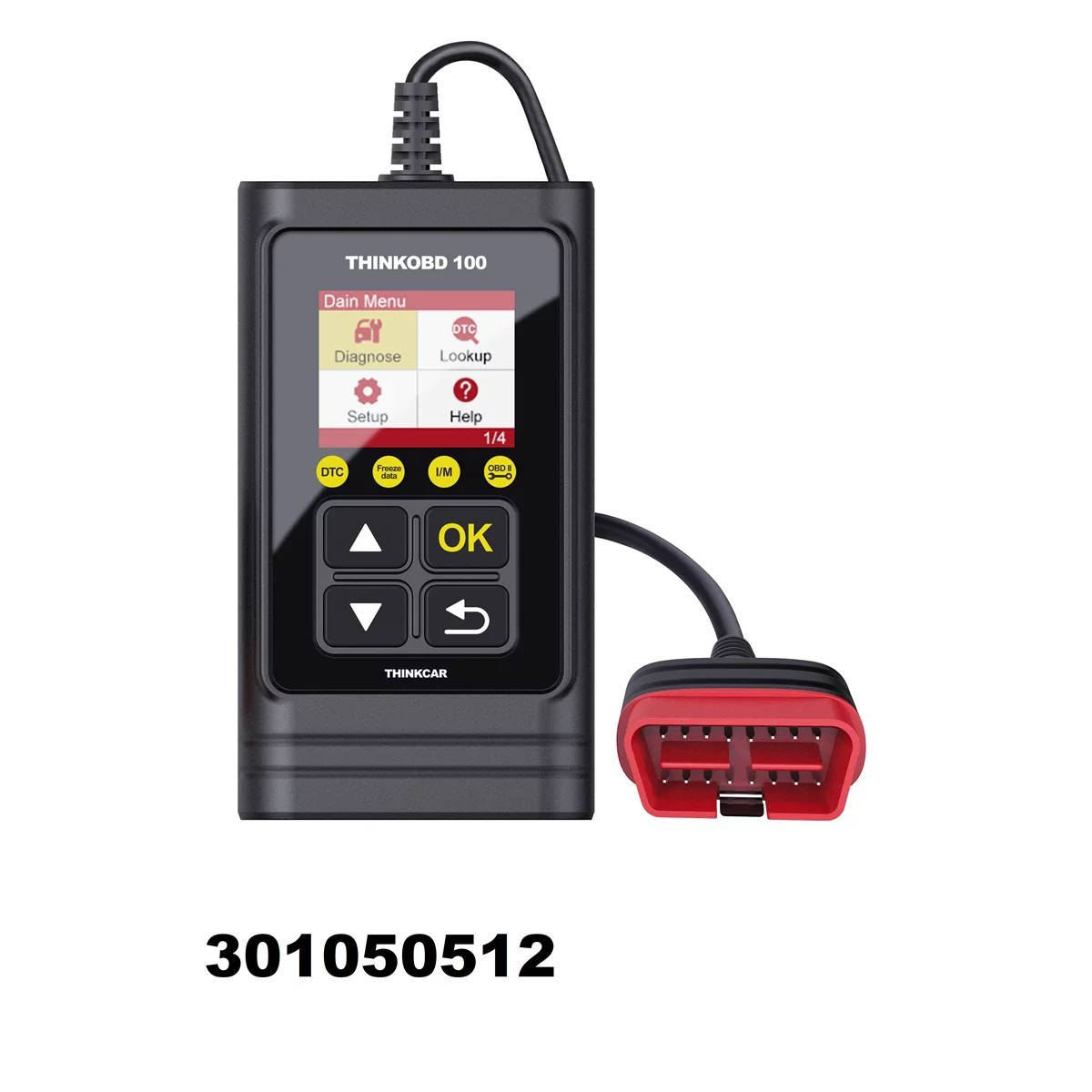
2002 Monitor Elite Deluxe OBD2 Scan Tool Kit
Mfg: OTC Tools and Equipment
Part #: 3354

Diagnose the Root Cause Before Replacing Anything
Replacing a cooked converter without finding out why it cooked guarantees a repeat failure, often within weeks. Work through root cause first:
- Check for oil consumption. Oil reaching the cat via worn rings, valve seals, or a failing turbo will carbonize on the substrate and clog it even with correct fuel trims. Check oil level trends, look for blue smoke, and inspect for oil fouling on the inlet side when the converter is removed.
- Scan for fuel trim and misfire codes. Even on an OBDII vehicle with no MIL flashing, pull codes and check long-term fuel trims. Positive trims pushing toward the rich limit, or stored/pending misfire codes, point at ignition components (plugs, coils, ICM) or a leaking/stuck-open injector.
- Pressure-test the fuel system. A leaking injector or bad fuel pressure regulator diaphragm can dump raw fuel into a cylinder or vacuum line without triggering an obvious misfire, and it will cook a cat silently over time.
- Inspect for a missing heat shield. If the factory heat shield under the converter is missing or damaged, that alone can cause the glow to radiate visibly and increase fire risk from debris (dry grass, leaves) even on a cat that’s otherwise functioning normally.
Don’t fall into the trap of swapping plugs, coils, and modules one at a time hoping something sticks — that approach gets expensive fast and often misses the actual fault. Confirm the failure with trims, codes, and a visual/mechanical inspection before ordering parts.
Need test equipment to confirm fuel trims and misfire data before you commit to parts?
[PRODUCT_SEARCH: OBD2 scan tool with live fuel trim data]
Confirming a Clogged or Melted Converter
Once a fuel-delivery or oil-burning root cause has been ruled in or out, confirm the converter itself is physically restricted:
- Backpressure test. Thread a backpressure gauge into the O2 sensor port or an exhaust manifold plug ahead of the cat. Readings climbing well above 1.5–2 psi at higher RPM indicate a restriction.
- Vacuum test under load. Monitor intake vacuum at idle, then snap the throttle. A vacuum reading that drops and stays low instead of recovering suggests exhaust backpressure is choking the engine.
- Visual and physical check. With the converter off the car, shine a light through the inlet and outlet. You should see light clearly through the honeycomb. A rattle when you shake the converter, or visible melted/collapsed substrate, confirms the diagnosis without needing instruments.
- Compare inlet vs. outlet pipe diameter against the glow pattern noted earlier to decide whether you’re dealing with restriction, excess fuel, or both.
Repair Options and What They Cost You Long-Term
Once the converter is confirmed bad, there are a few realistic paths, in order of durability:
- Full converter replacement is the only repair that restores proper catalytic function and emissions compliance. Match OEM or CARB-compliant aftermarket units to the vehicle’s emissions requirements — non-compliant “universal” cats can trigger new codes or fail inspection.
- Cut-and-splice pipe repair (removing the cat and welding in a straight section or test pipe) restores drivability but eliminates emissions control entirely. This is a common shop workaround on vehicles that are old enough to be exempt from inspection, but it is not a universal legal pass — see the FAQ below.
- Drilling out the honeycomb and reinstalling the shell is a quick, cheap fix some techs use on clogged-but-not-melted cats. It restores flow but destroys catalytic function, so it only makes sense as a stopgap on an already non-compliant or exempt vehicle.
- Resonator or muffler shop fabrication on cars that never had cats from the factory (pre-1975 in the US) or that have had the cat legally removed. A $20–40 resonator section is often enough to keep exhaust sound civil after a straight-pipe repair — a bare straight pipe with no cat or resonator tends to sound unacceptably loud and raspy.
Whichever path you choose, also replace or clear the section of pipe immediately downstream of the cat — melted substrate often sheds “catalyst cookies” (chunks of ceramic honeycomb) that lodge in the muffler or resonator and cause a second restriction later.
Checklist: Responding to a Glowing Catalytic Converter
- Stop driving — do not park over dry grass, leaves, or flammable debris while the cat is hot.
- Pull codes and check long-term fuel trims before assuming a part has failed.
- Check oil consumption and look for oil fouling on the cat’s inlet side.
- Run a backpressure or vacuum test to confirm physical restriction.
- Inspect for a missing or damaged heat shield.
- Fix the root cause (injector, regulator, oil burning) before or alongside converter replacement.
- Check downstream pipe and muffler for loose honeycomb debris.
- Verify local/federal emissions rules before choosing a straight-pipe repair.
Stocking up for exhaust and emissions repair jobs in general?
[PRODUCT_SEARCH: catalytic converter and exhaust repair tools]


Frequently Asked Questions
Can a clogged catalytic converter cause the engine to die when I let off the gas?
Yes. A restricted cat traps exhaust gas in the system. At higher RPM, engine output can still push past the blockage, but at idle or low RPM there’s not enough pressure to clear it, so the engine stalls as backpressure rises.
Is it legal to remove a catalytic converter from an older car?
Generally no, even on vehicles exempt from emissions testing. Under the US federal Clean Air Act, removing or tampering with a catalytic converter on any vehicle built in 1975 or later is illegal regardless of the vehicle’s age or whether it’s due for an emissions test, and it can still result in a citation. State and county rules on testing exemptions vary and don’t override the federal tampering prohibition.
Important: pulling the EPA/Clean Air Act specifics above from memory risks being stale or jurisdiction-dependent — verify current federal and local tampering rules before advising a customer, since enforcement and exemption cutoffs vary by state and county.
Will a glowing cat always trigger a check engine light?
Not necessarily. Pre-OBDII vehicles (roughly before 1996) often don’t monitor catalyst efficiency at all, so there may be no warning lamp. On OBDII-equipped vehicles, a flashing MIL typically indicates a catalyst-damaging misfire condition, but a steady or absent light doesn’t rule out converter damage.
Does burning oil really damage a catalytic converter?
Yes. Oil reaching the exhaust from worn rings, valve seals, or a failing turbo carbonizes on the substrate at high heat, building up deposits that restrict flow and reduce catalytic efficiency over time, even if fuel delivery is otherwise correct.
What’s the difference between a rich condition and a lean condition in terms of exhaust heat?
Combustion chamber temperatures run hotter when lean, but a rich condition tends to produce more extreme heat specifically at the catalytic converter, since the excess unburned fuel is combusting inside the cat itself rather than in the cylinder.
Can a missing heat shield cause a fire risk even if the converter is working normally?
Yes. Catalytic converters run hot even under normal operation. A missing or damaged heat shield lets that heat radiate more directly, which raises the risk of igniting dry grass, leaves, or other debris if you park or idle over them, independent of whether the converter itself is clogged or rich-fouled.
Tools for Exhaust Diagnosis and Repair
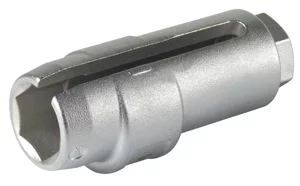
The diagnostic and repair procedures outlined in this guide require specialized equipment. Browse our selection of Exhaust & Muffler Tools to find backpressure gauges, removal equipment, and everything needed for converter diagnosis and replacement work.
- Backpressure and vacuum test adapters for confirming converter restriction
- Converter removal and installation tools
- Exhaust work accessories and heat-protective equipment

The Toolsource Technical Team blends decades of real-world automotive service experience with up-to-date technical research. Our writers collaborate with professional mechanics, shop owners, and diagnostic specialists to deliver practical, workshop-ready guidance you can trust.


Follow us on social media