Walk into any shop break room and you’ll hear the same argument on repeat: “Don’t flag too many hours, you’ll just get bumped into a higher tax bracket and lose money.” It’s one of the most persistent myths in the trade, and it’s completely wrong. Flat rate techs who understand how marginal tax brackets actually work, and who use that understanding to make smarter decisions about overtime and retirement savings, come out ahead of coworkers who leave money on the table out of fear. This post breaks down the tax mechanics, explains why every flagged hour pays, and covers how to put your 401(k) match to work while you’re still physically able to grind out big weeks.
The Tax Bracket Myth, Debunked
The core misunderstanding is this: people think that once your income crosses into a higher tax bracket, your entire paycheck gets taxed at that higher rate. That’s not how the U.S. tax system works. Marginal tax brackets only apply to the income earned within that bracket, not to every dollar you’ve made.
Here’s a simplified example. Say the first $1,000 of taxable income is taxed at 10%, the next $1,000 at 20%, and the next $1,000 at 30%. If you earn $3,000 total, you don’t owe $900 (30% of the whole amount). You owe $100 on the first $1,000, $200 on the second $1,000, and $300 on the third, for a total of $600. Every extra dollar you earn is taxed only at the rate for that slice of income, and that rate is always applied to new money on top of what you already brought home. There is no scenario in a flat-rate shop where working more hours results in a smaller paycheck. It is mathematically impossible under a marginal tax system.
Why Your Big Check Feels Over-Taxed (and What Happens Next)
The myth survives because there’s a real, visible phenomenon behind it: a 70-hour week check genuinely gets more withheld than a 40-hour week check. That’s a payroll withholding quirk, not a tax penalty. Payroll systems annualize whatever you earned in that single pay period and withhold as if you’ll make that amount every period for the rest of the year. A huge week looks like a huge annual salary to the withholding formula, so it withholds more aggressively than your actual year-end tax bill requires.
The fix isn’t to flag fewer hours, it’s to understand that withholding and tax liability are two different numbers. Your actual tax bill is calculated once a year based on your total taxable income, run through the brackets described above. If too much was withheld during big weeks, you get that difference back as a refund when you file. If you want more predictable paychecks instead of a large refund, adjust your W-4 withholding elections rather than turning down hours. Either way, the hours you worked get paid for and taxed fairly in the end.


Flag Every Hour You Can Honestly Earn
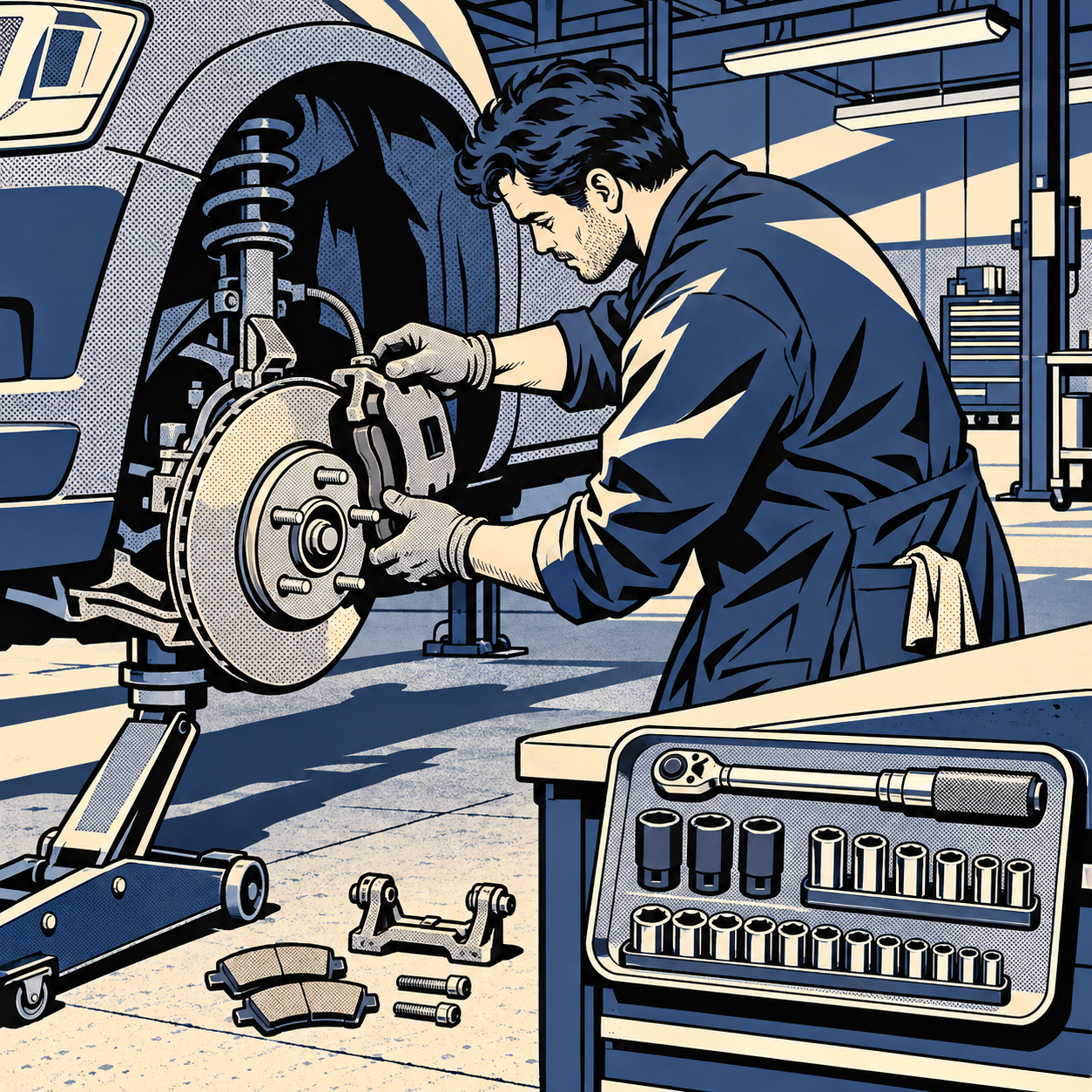
Once the tax myth is off the table, the math is simple: more flagged hours means more take-home pay, every time. The ceiling on flat-rate income isn’t tax brackets, it’s your own efficiency and the volume of work coming through the shop. Techs who consistently post high hours tend to share a few habits: they keep their bay organized so they’re not hunting for tools mid-job, they batch similar jobs when the schedule allows it, and they get fast on the repairs that make up the bulk of their ticket volume, like brakes, suspension, and routine maintenance, so the harder diagnostic and heavy-line jobs don’t eat their whole day.
Speed matters most on the jobs you do every single day. Shaving ten minutes off a brake job by having the right impact sockets, a torque stick set, and a decent floor jack within arm’s reach adds up over dozens of repetitions a month in a way that one lucky 20-hour engine job never will.
{{PRODUCT_SEARCH_1}}
Protect Your Numbers on Gravy Jobs
If you find a shortcut on a heavy-line or warranty job that lets you consistently beat book time, keep it to yourself. Warranty and flat-rate times get revised downward when manufacturers or shop management notice techs blowing past the allotted hours. Several techs have reported watching book times get cut on specific repairs after a coworker bragged about a shortcut, which quietly erases the advantage for everyone in the shop. Document your process for your own reference, train your speed quietly, and don’t broadcast exactly how you’re beating a job’s flagged time in the shop group chat or at a training event.
Max Your 401(k), Especially the Match
Separate from the hours-and-taxes conversation, the single highest-leverage financial move available to most techs is contributing enough to a 401(k) to capture the full employer match. If your employer matches contributions dollar-for-dollar or fifty cents on the dollar up to a certain percentage, that match is money you are otherwise walking away from. There’s no equivalent return available anywhere else with that little effort.
The years you can consistently flag 80, 90, or 100+ hours a week are a limited window. Bodies wear down, and the jobs that pay best often require the physical stamina and stand-up pace that gets harder to sustain over time. Front-loading retirement contributions during your highest-earning years, while the money is coming in fast, gives it the maximum number of years to compound before you need it. Some techs have also used 401(k) loans to cover down payments or consolidate debt, borrowing against their own balance and paying themselves back instead of a bank. That can work, but weigh it carefully: money pulled out of the market stops growing while it’s out, and if your investments are earning more than the loan’s interest rate, you’re giving up growth to avoid interest you’d otherwise pay a lender.
Build a Simple Paycheck Routine
Techs who come out ahead financially tend to treat their flat-rate income like a business with cash flow, not just a paycheck that shows up every two weeks. That means tracking flagged hours against actual pay, planning around slow weeks instead of being surprised by them, and treating big weeks as an opportunity to save rather than spend.
{{PRODUCT_SEARCH_2}}
Quick Checklist for Flat Rate Techs
- Flag every hour you legitimately earn, don’t self-limit over tax bracket myths
- Expect higher withholding on big checks, and adjust your W-4 if you’d rather smooth out paychecks than wait for a refund
- Contribute at least enough to your 401(k) to get the full employer match
- Keep your bay and tools organized to shave minutes off high-frequency jobs
- Track your flagged hours versus pay weekly so slow weeks don’t catch you off guard
- Keep unusually fast times on heavy-line or warranty jobs to yourself

22.5" Red Metal Portable Toolbox with Black Plastic Lid
Mfg: Homak Tool Storage
Part #: RD00122504

19" Black Plastic Tool Box with Lid, Tray & Dividers
Mfg: Homak Tool Storage
Part #: BK00119005
FAQs
Will working overtime ever actually reduce my take-home pay?
No. Under a marginal tax system, additional income is only taxed at the rate for that income bracket, not retroactively applied to everything you’ve already earned. More hours always means more money in your pocket.
Why does my big check have so much more withheld than usual?
Payroll withholding formulas annualize each paycheck, assuming you’ll earn that amount every pay period all year. A big week triggers higher withholding than your actual year-end tax liability requires, and the overage typically comes back as part of your refund.
Should I ask payroll to withhold less from big checks?
You can adjust your W-4 to reduce withholding and get more in each check, but that also means a smaller refund (or a balance due) at tax time. It’s a cash-flow preference, not a way to lower your actual tax bill.
How much should I put into my 401(k) if my employer offers a match?
At minimum, contribute enough to capture the full match percentage your employer offers. That match is immediate, guaranteed return you don’t get anywhere else.
Is it a bad idea to borrow against my 401(k)?
It can make sense in specific situations, like avoiding high-interest consumer debt, but money pulled out of your account stops growing while the loan is outstanding. Compare the loan’s interest rate to your typical investment returns before deciding, and understand the tax and penalty consequences if you leave the job before it’s repaid.
What’s the fastest way to increase my flagged hours without cutting corners?
Focus on efficiency in your highest-volume repair categories, keep your tools and bay organized so you’re not losing minutes to searching or walking, and build speed on routine jobs like brakes and maintenance rather than chasing occasional big-ticket repairs.
Stock Your Bay with the Right Tools
Efficiency on high-frequency repairs comes down to having the right tools at hand. Browse Automotive Specialty Tools for impact sockets, brake and suspension gear, and diagnostic equipment that keep you moving between jobs without losing minutes to searching or walking.
- Impact sockets, torque sticks, and fastening tools for faster, accurate work
- Brake and suspension equipment for your most common repair categories
- Specialty diagnostic and lifting tools to reduce time between jobs

The Toolsource Technical Team blends decades of real-world automotive service experience with up-to-date technical research. Our writers collaborate with professional mechanics, shop owners, and diagnostic specialists to deliver practical, workshop-ready guidance you can trust.


Follow us on social media