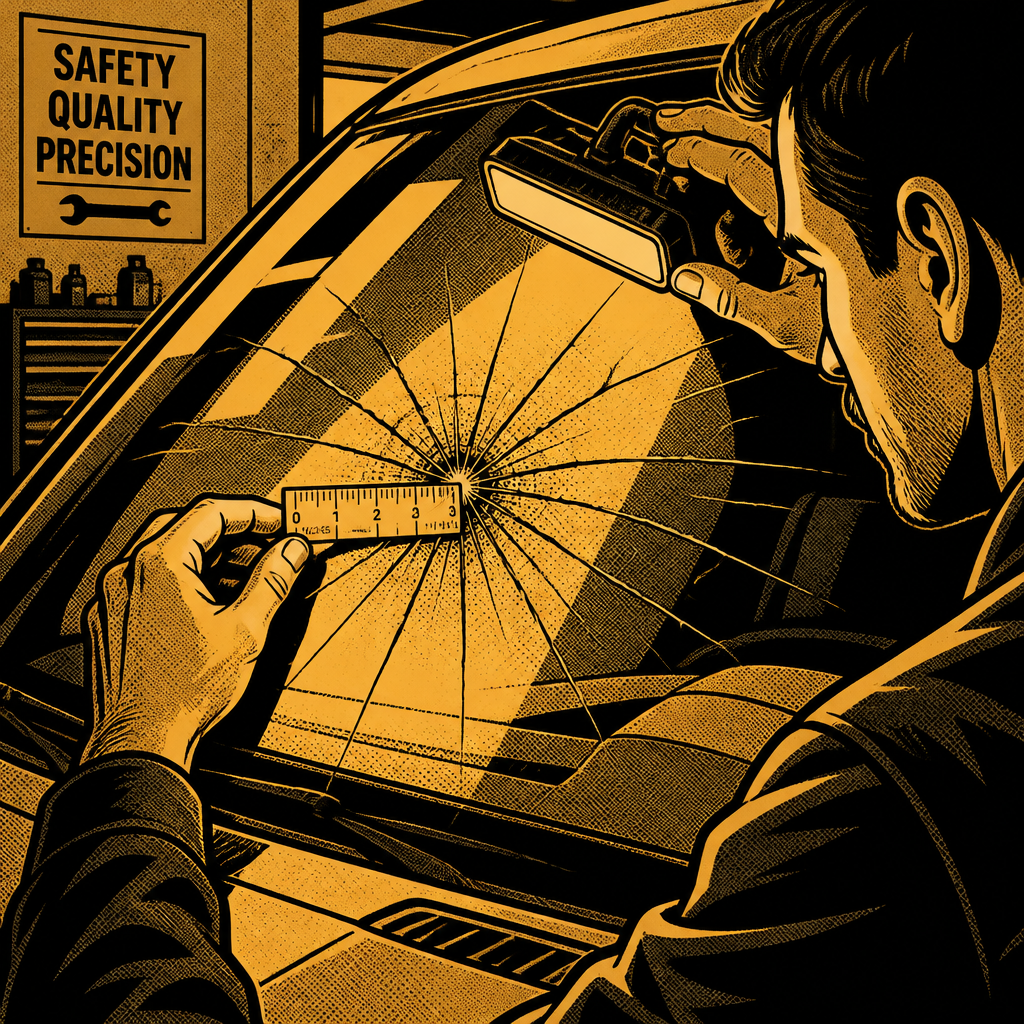
Ask ten drivers about a cracked windshield and you’ll get ten different answers — “I drove mine for fifteen years,” “it’s fine as long as you can see,” “it’s a fix-it ticket, not a big deal.” Techs hear this constantly, and honestly, a lot of it is true: plenty of vehicles rack up years of mileage on a compromised windshield with no incident. But “usually fine” isn’t a service standard, and the difference between a cosmetic crack and a genuine safety hazard comes down to specific, checkable criteria. This guide covers how to evaluate a cracked windshield the way a shop should — not the way a driveway opinion does.
Why the Windshield Isn’t Just a Window
A lot of the “I’ve driven on it for years” comments online aren’t wrong about day-to-day risk — a stable crack away from the edges genuinely won’t spontaneously fail on the highway. But that ignores the windshield’s structural role. On most unibody vehicles, the bonded windshield contributes meaningfully to roof crush resistance in a rollover and helps the passenger-side airbag deploy correctly by giving it a surface to push against. A compromised windshield — especially one with a crack running to the edge or through the driver’s line of sight — can fail at exactly the wrong moment: during a collision, not before one.
This is the point worth making to customers who want to “just wait it out.” The windshield isn’t dangerous because it might shatter while driving normally. It’s dangerous because it may not perform its structural job in a crash. That’s a different risk category than a door ding, and it’s worth explaining that distinction plainly.
Repair vs. Replace: The Actual Decision Criteria
Most damage falls into a few categories, and the call should be based on size, depth, and location — not how long the customer has already been driving on it.
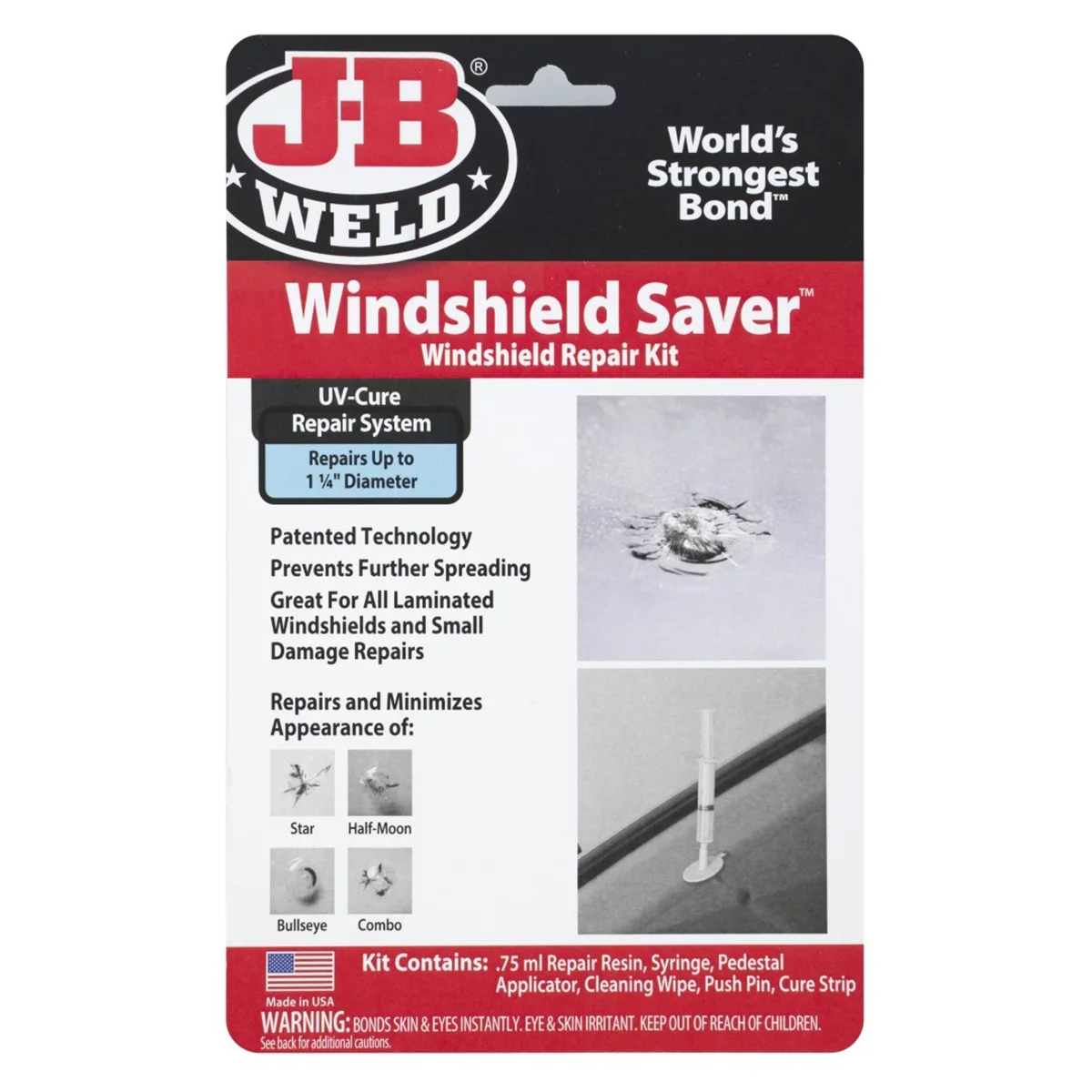
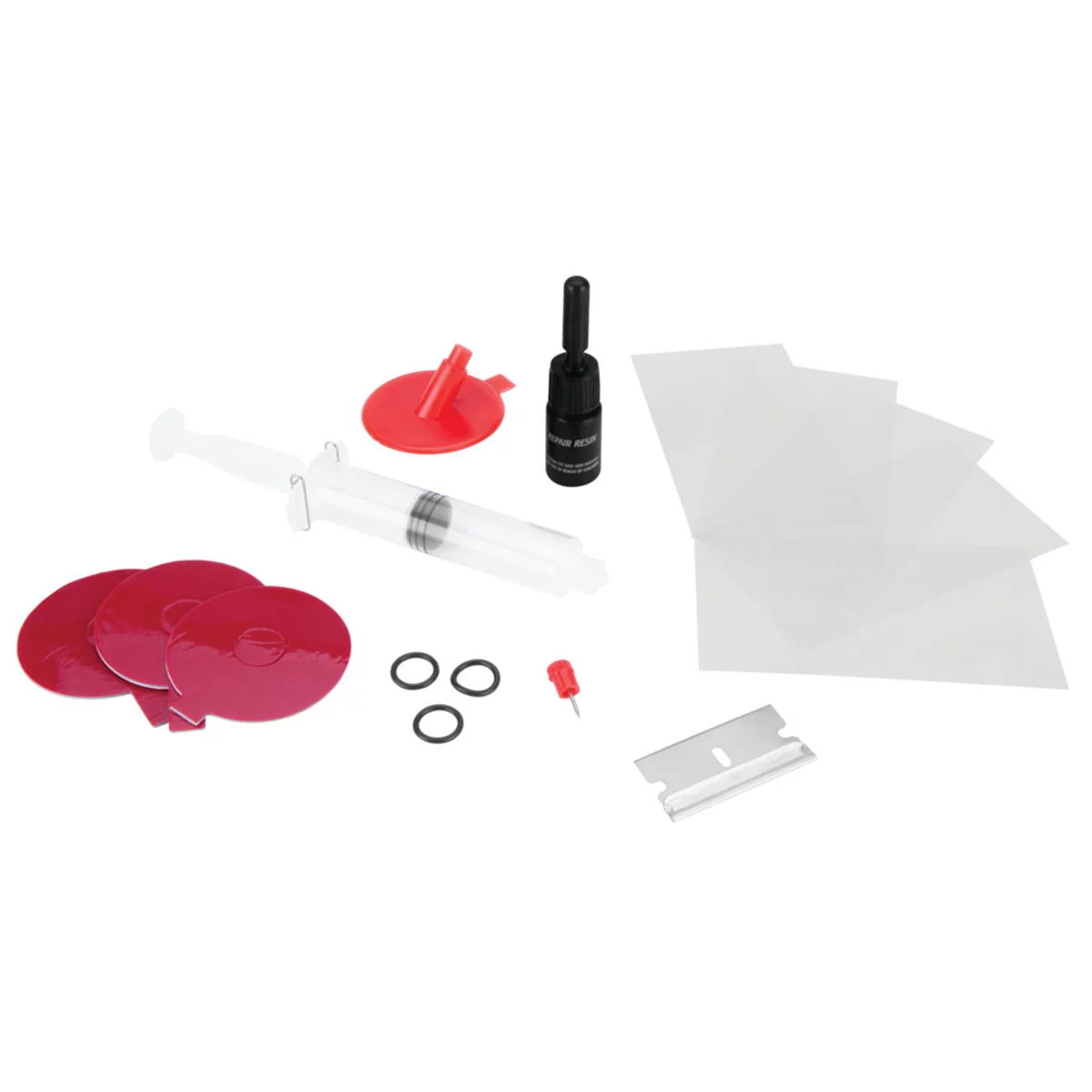
- Chips and stars under 1 inch, not in the driver’s primary sight line: Good candidates for resin injection repair. Cheap, fast, and prevents spreading.
- Cracks under 3 inches, away from the edge: Often repairable depending on depth (does it penetrate the inner layer?) and how long ago it happened (dirt and moisture in an old crack reduce repair quality).
- Cracks over 6 inches, or any crack reaching the edge of the glass: Replacement territory. Edge cracks compromise the frame bond and are the ones most likely to spread from temperature swings and road flex.
- Anything in the driver’s direct sight line: Even a successful repair leaves a small distortion. Many states restrict repairs in this zone for exactly that reason — replace instead.
Age and contamination matter too. A crack that’s been open for months has usually collected dirt and moisture that resin can’t fully displace, so the repair will be visible even if it holds. Set that expectation with the customer before you start.
[PRODUCT_SEARCH: windshield crack repair resin kit]
Field of View and Inspection Rules
State and local rules vary widely, and that variance is exactly why so many drivers get away with cracked glass for years — until they don’t. Most jurisdictions with vehicle inspection programs use language like “any crack or discoloration that obstructs the driver’s clear view” as the failure criterion, generally defined as the area swept by the wipers directly ahead of the driver. Damage outside that zone often passes inspection even if it’s cosmetically bad.
A few things worth knowing for the service bay:
- Officers in most states can cite a windshield defect as a primary or secondary violation depending on local law — this determines whether it alone can justify a stop.
- “Fix-it” or correctable-violation tickets are common: the driver gets a window to repair the issue and show proof, avoiding a fine.
- Aftermarket tint strips, cracked-glass registration stickers, and obstructions (including snow or frost) can factor into the same equation as the crack itself — mention this if a customer’s inspection failed for more than one reason.
None of this is a substitute for checking your own state’s exact statute, but it’s useful context when a customer asks “will this even fail inspection?”
Stopping a Crack From Spreading Before the Real Fix


Temperature swings, road vibration, and flexing of the body panel are what turn a 2-inch crack into an 18-inch crack. If a customer isn’t ready to repair or replace immediately, there are legitimate stopgap measures — and it’s worth being upfront that these buy time, they don’t fix anything:
- Clear nail polish or cyanoacrylate (super glue) at the crack tips: Seals out moisture and debris and reduces the stress concentration that drives crack growth. Apply a small drop right at the leading edge, let it wick in, wipe excess immediately.
- Clear packing tape over the crack: Keeps dirt and water out short-term; not a long-term solution and looks bad, but it works in a pinch before a repair appointment.
- Avoid blasting the defrost on max heat directly at a cold, cracked windshield: Rapid, uneven temperature change is one of the most common triggers for a crack suddenly running further.
- Park out of direct sun when possible: Heat buildup followed by cold rain is a classic crack-extension scenario.
Make clear to customers that these measures only slow things down. They should still book an actual repair or replacement — ideally before the crack crosses the line from repairable to replace-only.
Don’t Skip ADAS Calibration on Replacement
This is the piece that’s changed the most in the last decade and the one most likely to get skipped by shops (or DIYers) still thinking about windshields the old way. On any vehicle with a forward-facing camera mounted to the windshield — lane departure warning, automatic emergency braking, adaptive cruise, traffic sign recognition — replacing the glass changes the camera’s exact position and angle relative to the road, even by fractions of a degree.
That means:
- Static or dynamic recalibration (per manufacturer spec) is required after replacement on ADAS-equipped vehicles, not optional or “only if a warning light comes on.”
- Skipping calibration can leave safety systems misreading lane position or following distance — a serious liability issue for a shop, not just a comeback risk.
- Always confirm the vehicle’s build sheet or VIN-decode for camera-equipped glass before quoting a replacement; the glass part number often differs from the non-ADAS version.
- Document the calibration procedure and result on the invoice — this protects the shop and gives the customer a clear record if the vehicle is inspected or sold later.
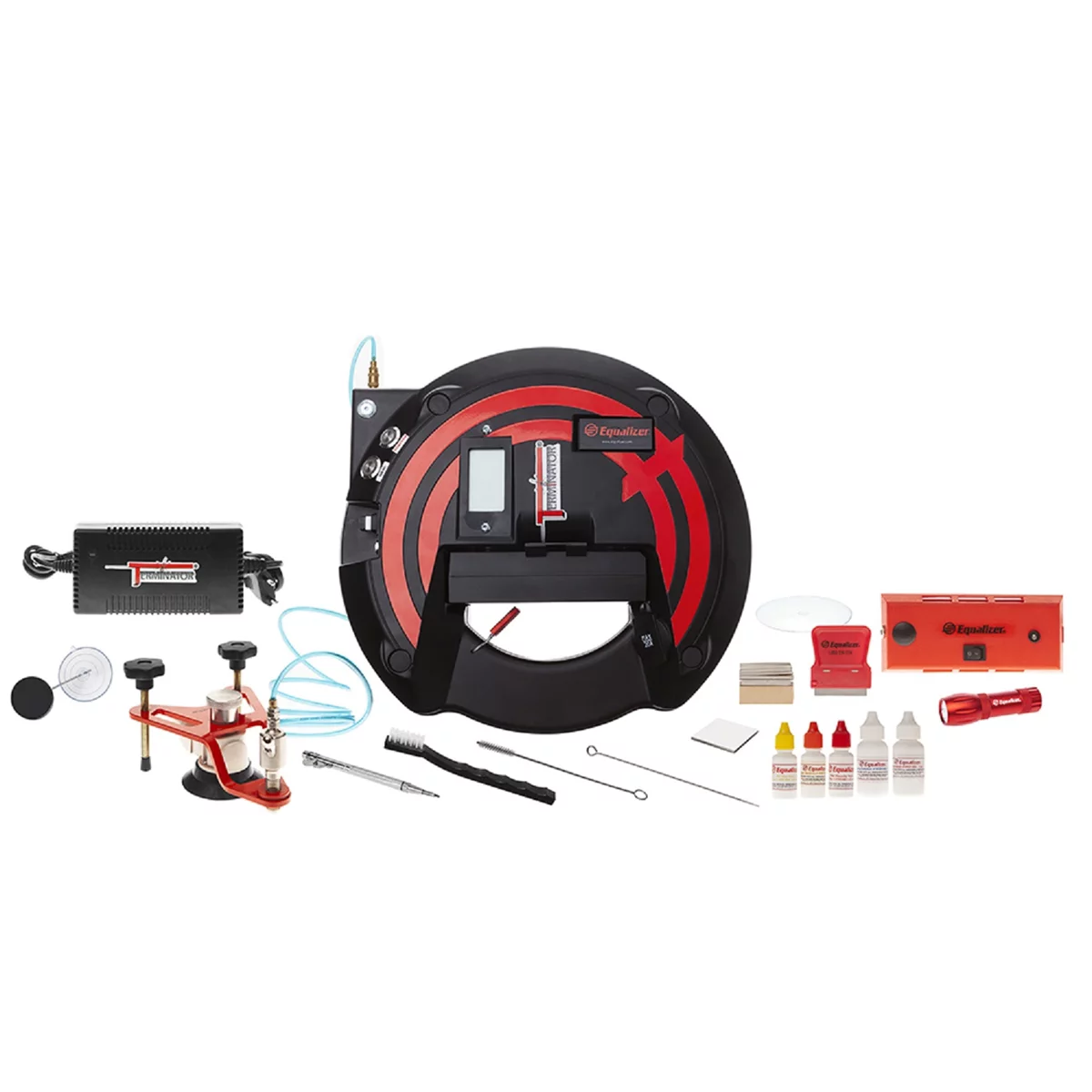
[PRODUCT_SEARCH: automotive glass tools and windshield replacement equipment]
Quick Reference Checklist
- Crack under 3″, not at the edge, not in driver sight line → repair candidate
- Crack over 6″, reaches the edge, or sits in the sight line → replace
- Check local inspection statute for sight-line and obstruction rules
- Apply a tip-seal (nail polish/glue) if repair is delayed, and set expectations that it’s temporary
- Confirm ADAS camera presence before quoting replacement glass
- Recalibrate and document ADAS after every windshield replacement on equipped vehicles
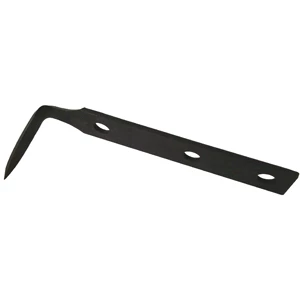
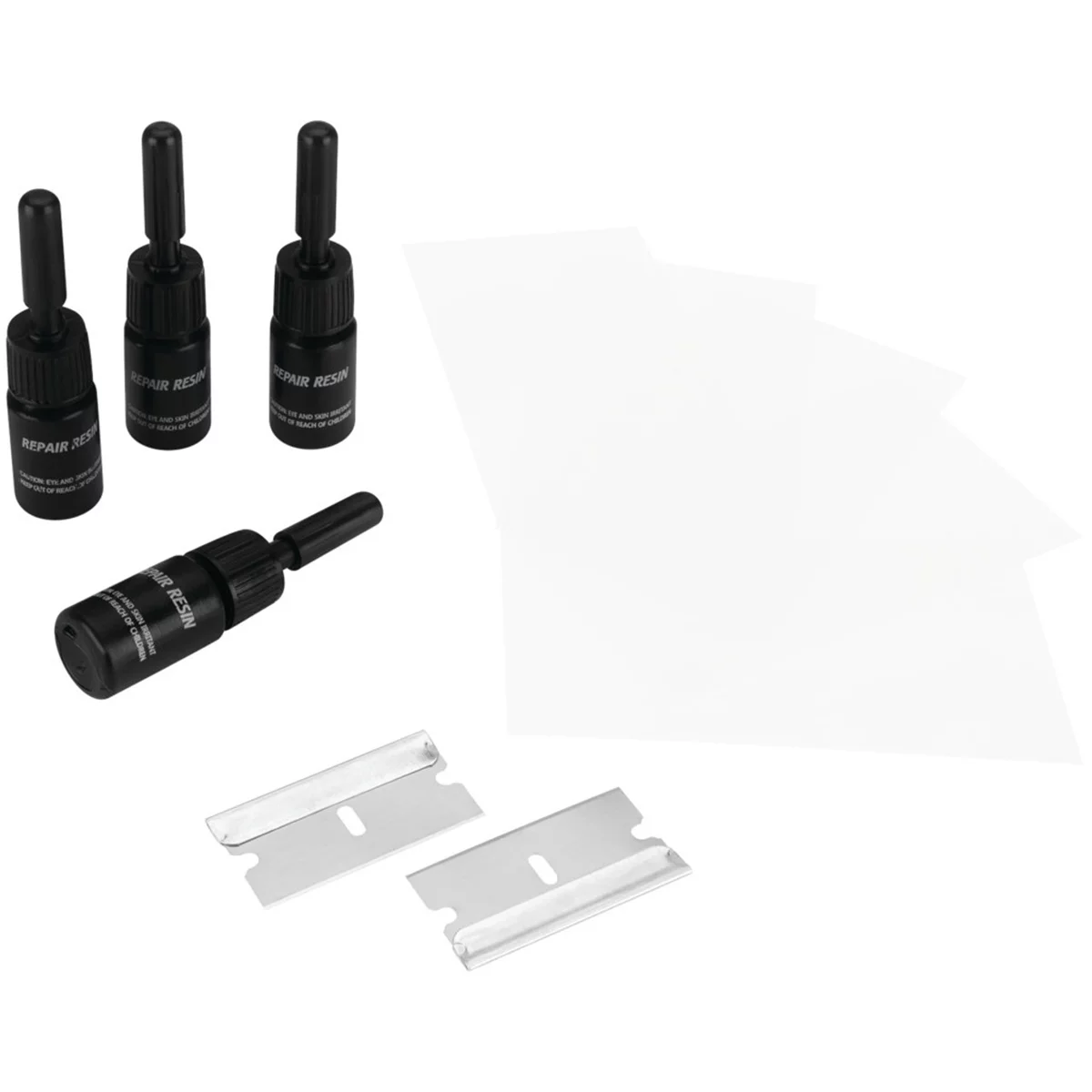
Replacement Blade For Model 87900 Windshield Removing Tool
Mfg: S & G Tool Aid
Part #: 87902
ID: 58566
Frequently Asked Questions
Is it actually dangerous to drive with a cracked windshield?
Day-to-day, a stable crack away from the edges and outside the driver’s sight line is a low-risk situation, which is why so many people drive on one for years without incident. The real risk is in a crash — the windshield’s structural contribution to roof strength and airbag deployment is compromised, and a crack can propagate suddenly under stress.
Can a small crack really cause a $500+ repair bill down the line?
Yes. What starts as a repairable chip can spread to the edge of the glass within weeks from temperature cycling and road flex, moving it from a $60–$150 resin repair into full replacement territory, especially once ADAS calibration is added.
Will a cracked windshield fail a state inspection?
It depends on location and where the damage sits. Most programs fail a vehicle only if the crack is inside the driver’s direct sight line or if it’s large enough to be considered a safety obstruction. Damage in a corner or lower edge often passes even when it looks bad.
Does nail polish or super glue actually stop a crack from spreading?
It can slow it down by sealing the crack tip and reducing moisture intrusion and stress concentration, but it’s a stopgap, not a fix. The glass remains structurally compromised.
Why does a windshield replacement cost so much more on newer vehicles?
Vehicles with forward-facing cameras for lane-keep, automatic braking, or adaptive cruise require ADAS recalibration after any windshield replacement, which adds both parts (camera-compatible glass) and labor (static/dynamic calibration procedures) on top of the glass itself.
How do I know if my crack is still repairable or already past the point of replacement?
As a rule of thumb: under 3 inches, away from the edge, and outside the driver’s sight line is usually repairable. Over 6 inches, touching the edge, contaminated with dirt/moisture, or sitting directly in view generally means replacement is the safer and more durable call.
Shop Windshield Tools & Equipment
Resin injection repairs and full windshield replacements both require the right tools and supplies. Browse our Windshield Tools & Auto Glass category to find injection kits, removal and installation equipment, and ADAS calibration resources.
- Resin injection kits for chip and crack repairs
- Windshield removal, installation, and sealing tools
- ADAS calibration equipment and diagnostic supplies
Shop Essential Tools & Equipment
Whether you’re tackling a DIY windshield repair or preparing for professional service, the right tools and protective equipment make all the difference. Browse our complete Uncategorized tools collection for everything you need to handle automotive repairs safely and effectively.
- Safety Glasses & Protective Eyewear – Essential PPE for any windshield work to protect against glass fragments and debris
- Windshield Repair Kits – Professional-grade repair compounds and application tools for small cracks and chips
- Glass Cleaning & Prep Solutions – Specialized cleaners designed to prepare surfaces for optimal repair adhesion

The Toolsource Technical Team blends decades of real-world automotive service experience with up-to-date technical research. Our writers collaborate with professional mechanics, shop owners, and diagnostic specialists to deliver practical, workshop-ready guidance you can trust.


Follow us on social media