I’ll now compress this blog post from ~3,500 words to under 2,000 words by removing redundancy, tightening sentences, and eliminating filler while keeping all structure, FAQs, and practical advice.
A $3,500 catalytic converter quote often represents a 3-5x markup over actual costs. Dealerships inflate labor estimates, mark up parts, and add fees, but bolt-on replacements take only 30-90 minutes. Understanding diagnostic verification, parts sourcing, DIY installation, and true labor costs puts you in control. This guide breaks down how to avoid overpaying.
Why Shop Quotes Are 3-5x Higher Than Parts Cost
Breaking down the dealership markup
Dealerships quote $800-1,200 OEM converters plus $150-200 diagnostic fees, inflated labor (3-4 hours at $120-180/hour), and $75-150 “supplies” fees. A $900 converter becomes $3,200-3,800 after markup, though actual wrench time rarely exceeds 90 minutes for bolt-on jobs. The inflated labor estimate assumes worst-case seized hardware and includes shop profit that doesn’t reflect reality. Premium pricing justifies itself with warranty coverage and OEM fitment guarantees for newer vehicles, but older cars outside warranty periods pay purely for overhead without corresponding value.
Exhaust shops vs. general mechanics
Exhaust specialists quote 60-75% lower than dealerships ($800-1,400 vs. $3,500) because they stock universal converters ($200-450) and have integrated cutting/welding equipment. Their labor rates ($75-110/hour) reflect specialization, not general overhead. General repair shops fall between, quoting $1,500-2,200 but often subcontracting welding work anyway, adding coordination fees. For straightforward bolt-on jobs, exhaust shops provide best value.
Labor hour inflation
Labor guides provide “book time” estimates that include diagnosis and parts ordering, not just installation. Actual wrench time runs 40-60% of quoted hours—a 3.5-hour quote ($525 labor) means 75-90 minutes of actual work. Shop markup on parts adds another layer: wholesale purchase at 40-60% off retail gets billed at full retail or higher. A $380 wholesale converter becomes $650-800 on your bill. DIY parts sourcing saves $200-400 using identical components.
Diagnose Before You Replace: Is It Really the Converter?
Misdiagnosis wastes more money than any factor. Oxygen sensor failures, vacuum leaks, and engine management issues produce identical symptoms—check engine lights, failed emissions, performance loss—without actual converter failure. Confirming diagnosis prevents unnecessary $1,500-3,500 expenditures.
Oxygen sensor failures
Downstream oxygen sensors compare pre- and post-converter exhaust readings. Failed sensors trigger P0420/P0430 codes indicating “catalyst system efficiency below threshold,” suggesting converter failure when the actual problem is an $80-200 sensor. Test sensor voltage using a scan tool with live data: readings should fluctuate 0.1-0.9V at operating temperature. Flat-line readings or slow response indicate sensor failure. Replacing the downstream O2 sensor first clears false-positive converter codes in 30-40% of cases.
Vacuum leaks and rich conditions
Vacuum leaks allow unmetered air, triggering oxygen sensor codes without converter failure. Rich-running conditions from fuel pressure regulator failures, leaking injectors, or faulty mass airflow sensors overwhelm the converter without physical damage. Perform smoke tests for leaks or use a scan tool to check fuel trims: readings above +15% or below -15% indicate air/fuel problems to address first. Fixing root causes often restores converter function without replacement.
Getting a second opinion
Request multiple opinions when quotes exceed $1,500. Legitimate diagnosis includes backpressure testing (under 1.5 PSI at 2500 RPM), visual inspection for damage or melted substrate, and rattle tests for internal breakdown. Shops quoting replacement on code readers alone without physical testing may be upselling. Exhaust specialists and emissions specialists often diagnose more accurately. A $75-125 second opinion saves thousands when revealing sensor or leak issues instead of converter failure.
No products found for “catalytic converter bolt-on replacement”
Bolt-On vs. Welded: DIY Replacement Methods
Bolt-on replacements (30 mins to 1.5 hours)
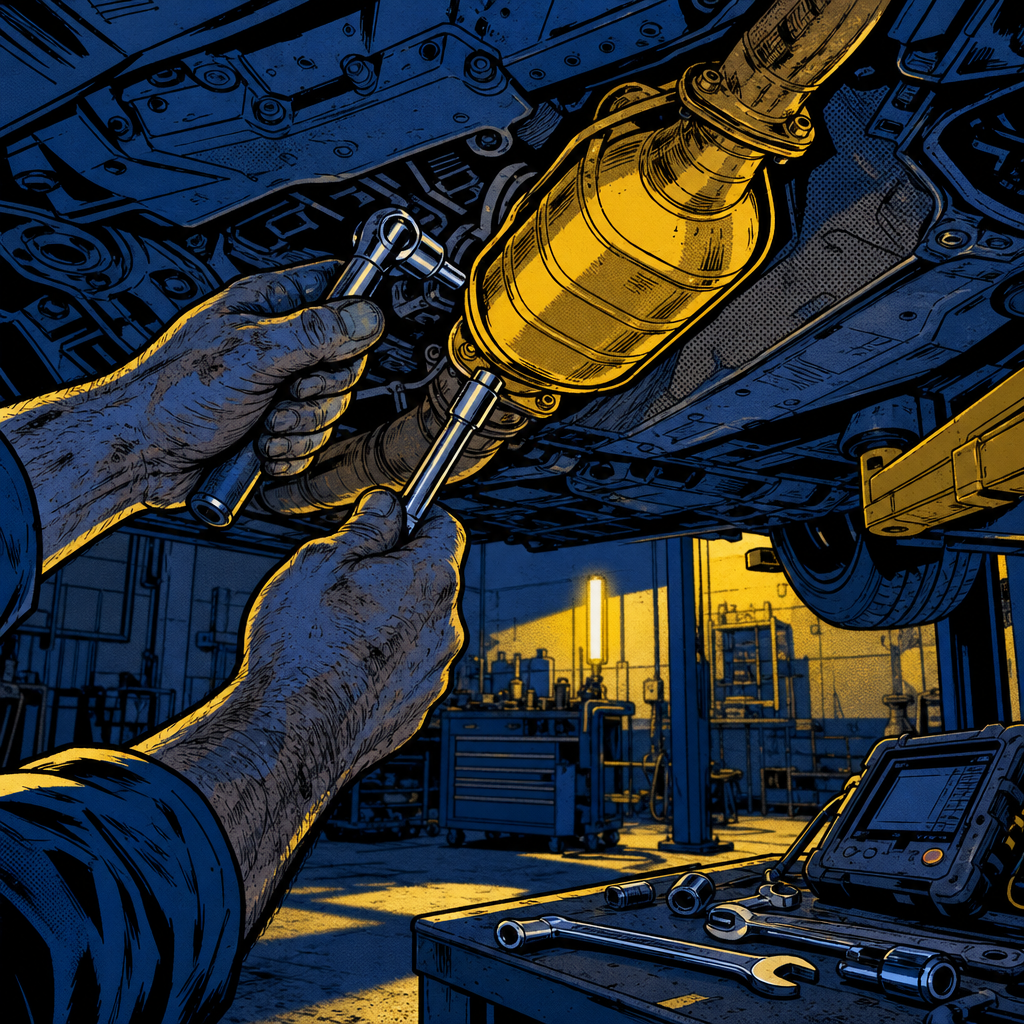
Bolt-on converters use flange connections—ideal for DIY. Required tools: floor jack, jack stands, penetrating oil, metric sockets (14-17mm), oxygen sensor socket, torque wrench, and new gaskets. Tool cost if buying: $120-200, though reusable for future repairs. Spray flange bolts with penetrating oil 24 hours before work. Steps: elevate safely, disconnect oxygen sensors, remove flange bolts, drop old converter, install new gaskets and converter, reconnect sensors with anti-seize compound, torque bolts to 30-35 ft-lbs. First-timers complete jobs in 90 minutes; experienced mechanics finish in 30-45 minutes.
Seized bolts are the primary complication from heat and road salt corrosion. Have bolt extractors, cutting wheels, or backup shop plans ready. YouTube channels like ChrisFix provide visual guides for bolt-on replacement.
Welded installations and clamp failures
Welded converters require cutting the old unit and welding in replacements—work needing MIG equipment, pipe cutters, and thin-wall tubing experience. Most DIYers lack these skills, making professional shops necessary ($200-400 for labor beyond parts). Clamp-on installation cuts out the old converter and secures a universal replacement with band clamps, avoiding welding but creating reliability problems. Exhaust clamps loosen under thermal cycling, allowing leaks that trigger check engine lights and fail emissions. Properly welded joints outlast clamps 5-10 years versus 1-3 years even for quality clamps. Choose welding for permanent repairs on long-term vehicles; accept clamps only for temporary fixes on high-mileage vehicles, knowing re-tightening may be needed within 12-24 months.
Safety for under-vehicle work
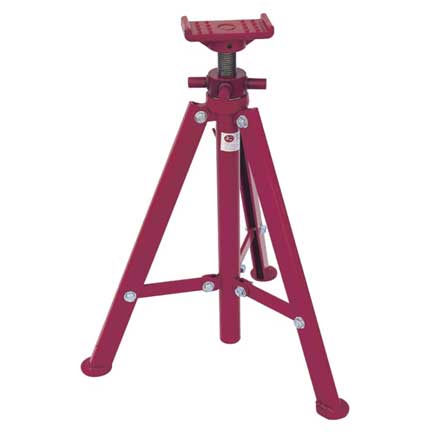
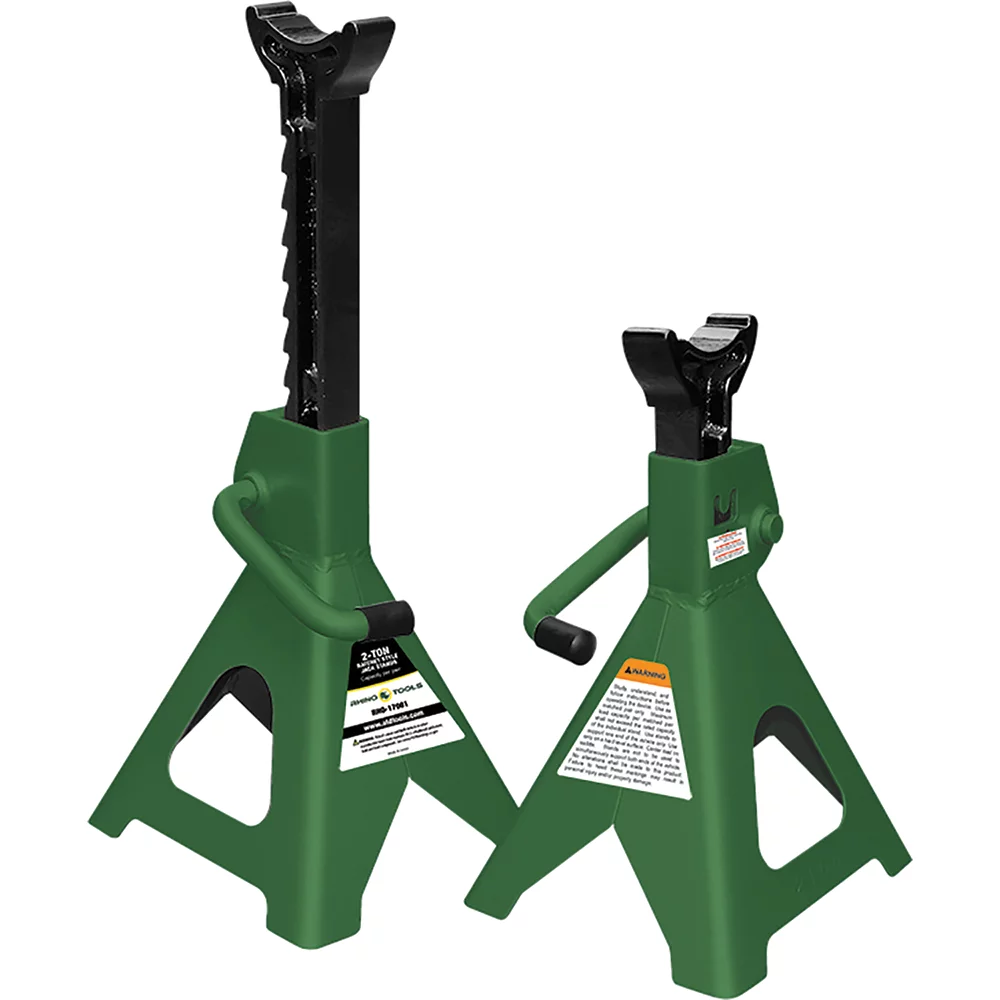
Use jack stands rated for your vehicle weight (never trust jacks alone), position on frame rails, and shake the vehicle before working underneath. Exhaust systems retain heat for hours after shutdown—schedule work on cold vehicles or wait 3+ hours after driving. Wear safety glasses for falling rust and particles. Keep a fire extinguisher nearby when using cutting or torch tools near fuel lines.
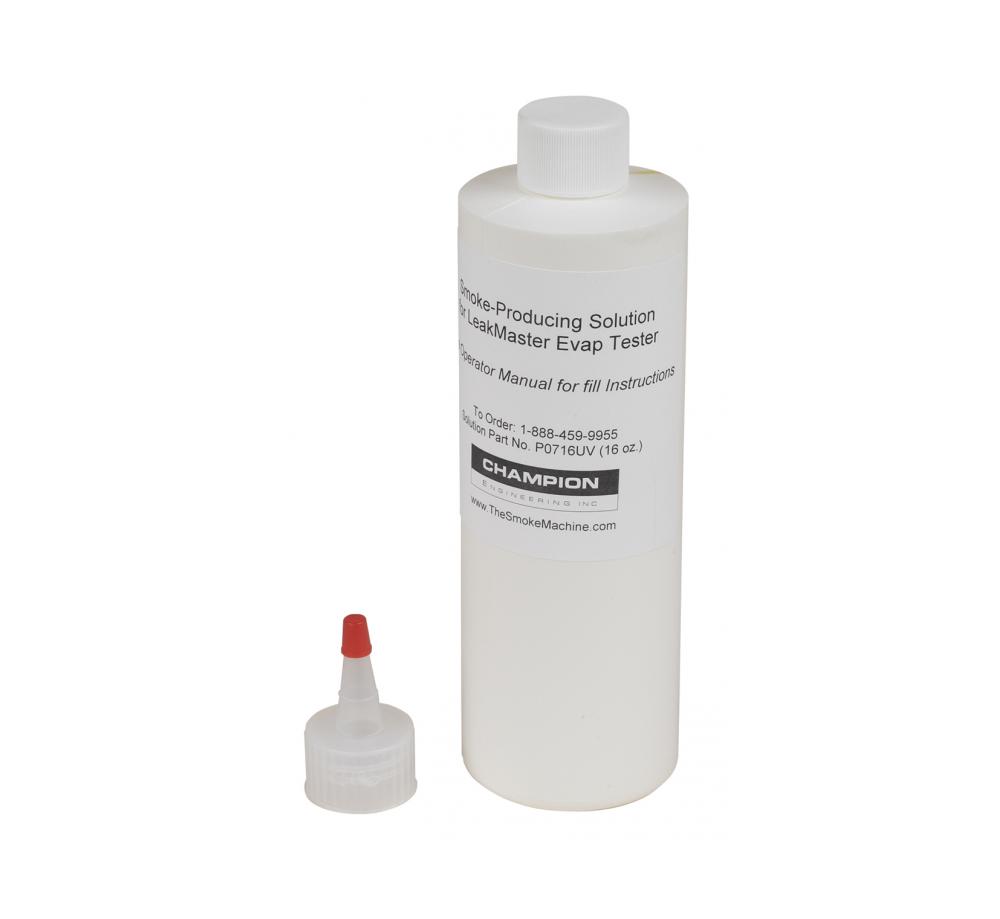
UltraTraceUV Dye Solution Smoke Compound for Smoke Machine
Mfg: OTC Tools and Equipment
Part #: P-0716-UV
ID: 96217

UltraTraceUV(TM) Dye Smoke Solution
Mfg: OTC Tools and Equipment
Part #: P-0716-UV
ID: 102065
Parts Cost Breakdown: OEM, Aftermarket, and Used Options

OEM ($600-1,200) vs. universal ($150-400)
OEM converters use precise precious metal loadings (platinum, palladium, rhodium) for exact fitment, integrated heat shields, and oxygen sensor bungs. Expect 150,000-200,000+ mile lifespan with proper maintenance. Buy from dealerships ($900-1,200) or online OEM suppliers like RockAuto ($600-850).
Aftermarket converters reduce precious metals to cut costs ($150-400 for universal units). They meet minimum EPA standards but offer 80,000-120,000 mile lifespans based on user reports. Walker, Magnaflow, and Bosal produce reliable aftermarket units; cheap eBay converters frequently fail emissions within 12-24 months.
| Converter Type | Price Range | Lifespan | Best For |
|---|---|---|---|
| OEM Dealer | $900-1,200 | 150,000-200,000 miles | Newer vehicles, warranty requirements |
| OEM Online | $600-850 | 150,000-200,000 miles | Cost savings with OEM quality |
| Quality Aftermarket | $300-550 | 100,000-150,000 miles | Older vehicles, moderate budgets |
| Universal/Budget | $150-400 | 60,000-120,000 miles | High-mileage vehicles, tight budgets |
CARB compliance requirements
California Air Resources Board (CARB) standards exceed EPA requirements, mandating higher precious metal content. CARB-compliant converters cost $800-1,600—4-5x more than EPA-standard parts—and are legally required in California, Colorado, Maine, and New York. CARB converters display EO (Executive Order) numbers. Installing non-CARB converters in CARB states results in failed emissions testing, fines, and registration denial. Outside CARB states, EPA-compliant converters meet all legal requirements at lower cost. Check the Specialty Equipment Market Association for state-specific emissions requirements.
Sourcing: RockAuto, eBay, and dealer pricing
RockAuto offers lowest pricing: OEM units run $600-850 vs. $900-1,200 at dealers; quality aftermarket costs $280-480 vs. $400-650 at parts stores. Shipping adds $50-120 but total delivered cost beats local retail by $150-400. RockAuto stocks direct-fit options with CARB compliance labeling and customer fitment reviews.
eBay pricing ranges from legitimate deals ($250-500) to junk ($80-150 offshore converters that fail immediately). Vet sellers carefully: check ratings, verify CARB EO numbers, and confirm return policies. Salvage converters ($200-400) from low-mileage vehicles work if you verify functionality, but sellers can’t guarantee emissions performance. The $150 saved on questionable parts evaporates if the unit fails testing.
Dealer parts rarely justify 40-60% premiums over online OEM suppliers. Reserve dealer purchases for unusual applications where fitment uncertainty outweighs cost.
Multi-Converter Vehicles and Theft Prevention
Identifying failed converters in dual-converter systems
Dual exhaust systems run separate converters per bank: P0420 indicates Bank 1 failure, P0430 indicates Bank 2. Replace only the failed unit unless both codes appear. Some vehicles use primary converters near the manifold and secondary converters downstream; primary converters fail more often from heat exposure. Pre-catalytic converters integrated into manifolds are most expensive—the entire manifold ($800-2,000) must be replaced. Verify integration before quoting repairs.
Anti-theft protection and insurance
Catalytic converter theft surged with precious metal prices. Anti-theft shields ($150-400 installed) bolt around converters, forcing thieves to spend 5-10 minutes cutting hardened steel instead of 60-90 seconds. Quality shields from Miller Cat Shield, Cat Security, and MillerCAT deter theft effectively. Vibration alarms ($80-200) trigger at cutting motion and work best with physical shields. Park in well-lit areas with security cameras when possible.
Comprehensive insurance covers theft minus deductible (typically $250-1,000), but consider whether filing claims makes sense: rate increases of $200-400 annually for 3-5 years may exceed claim payouts. Some insurers offer converter theft endorsements with 5-15% discounts for anti-theft device installation, offsetting costs within 2-4 years.
No products found for “catalytic converter anti-theft shield”
FAQs: Your Catalytic Converter Questions Answered
How long do catalytic converters actually last?
OEM converters last 150,000-200,000 miles with proper maintenance. Oil consumption, coolant leaks, rich fuel mixtures, and road damage reduce lifespan. Quality aftermarket converters last 80,000-150,000 miles; budget universal units may fail in 60,000-100,000 miles. Short-trip vehicles with frequent cold starts wear converters faster than highway-driven vehicles.
Can I use used or refurbished converters?
Used converters from low-mileage salvage vehicles work if you verify donor mileage and history ($200-400 vs. $600+ new). Unknown remaining lifespan is the risk. Refurbished converters undergo cleaning and catalyst reloading but quality varies by refurbisher. Most mechanics recommend against refurbished units due to inconsistent results and limited warranties.
What if I can’t afford replacement now?
Driving with a failed converter is legal in most states between emissions tests, though check engine lights remain and fuel economy drops 10-20%. Don’t ignore upstream problems (bad sensors, rich running) that will worsen. Some states offer emissions repair assistance programs—California’s provides up to $1,500. Contact your state’s environmental protection agency. Consider exhaust shop financing or aftermarket parts to reduce immediate costs.
Do I need to replace oxygen sensors with the converter?
Replacement isn’t mandatory but makes sense for vehicles with 100,000+ miles. Failed or marginal sensors cause premature converter failure. Sensors cost $80-200 with minimal labor since you’re already accessing the exhaust system. If sensor codes triggered diagnosis or sensors haven’t been replaced in 80,000+ miles, replace them to maximize new converter lifespan and prevent repeat failures within 12-24 months.
Will aftermarket converters pass emissions testing?
Quality aftermarket converters from Magnaflow, Walker, Bosal, or DynoMax pass emissions when properly sized and installed. Problems arise with undersized universal converters or ultra-budget offshore units lacking adequate precious metals. Verify EPA standards for your vehicle year and engine, and confirm CARB compliance if applicable. Budget converters under $200 frequently fail testing within 6-18 months.
Can I drive without a catalytic converter temporarily?
Removing converters is illegal under federal Clean Air Act—EPA fines reach $2,500+. Vehicles run without converters but check engine lights illuminate, exhaust noise increases, and emissions testing fails. Drive minimally to the repair shop, but don’t operate long-term without replacement—noise and visible emissions violations may prompt citations.
Pre-Replacement Checklist
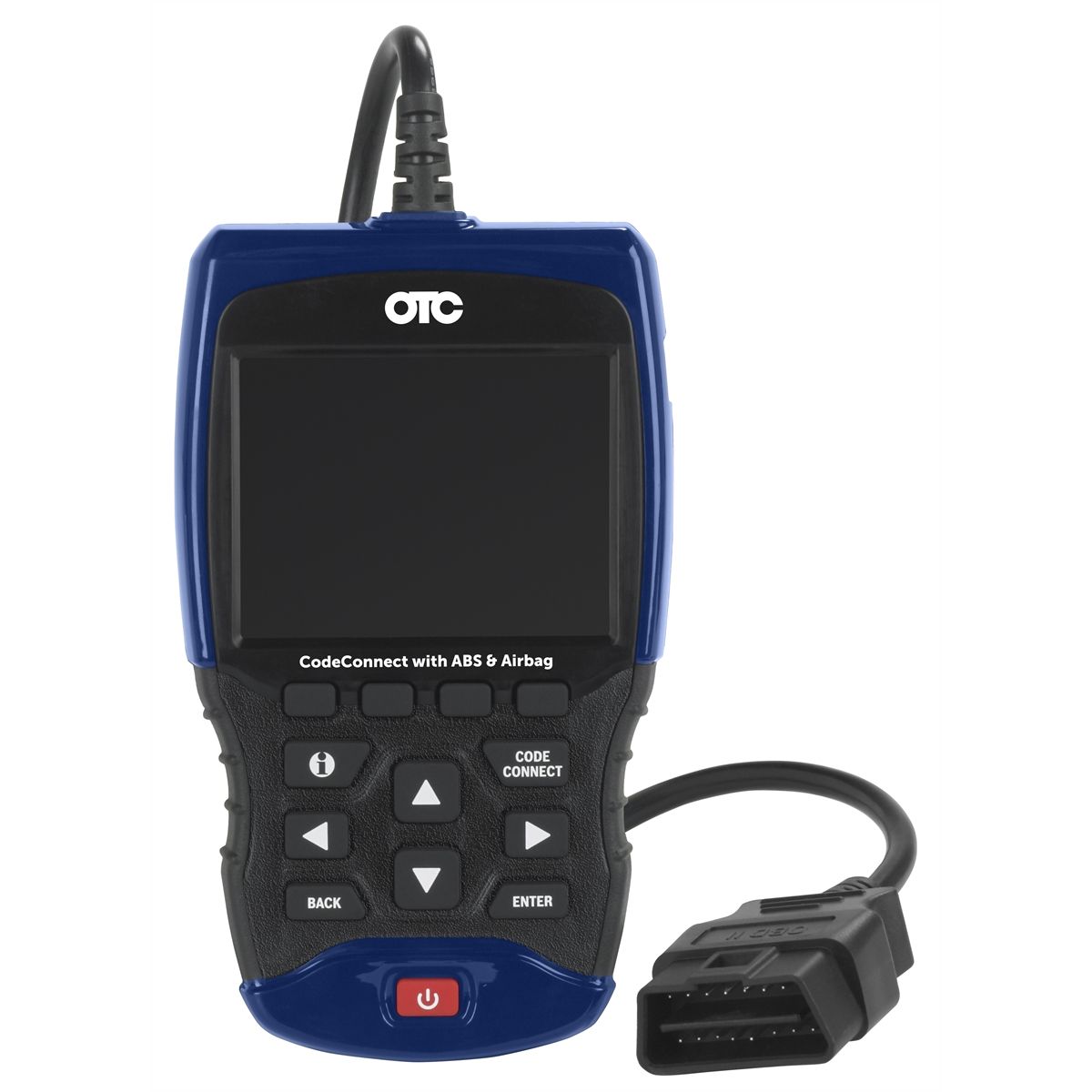
OBD2 Scanner with ABS, Airbag & CodeConnect Support
Mfg: OTC Tools and Equipment
Part #: 3210
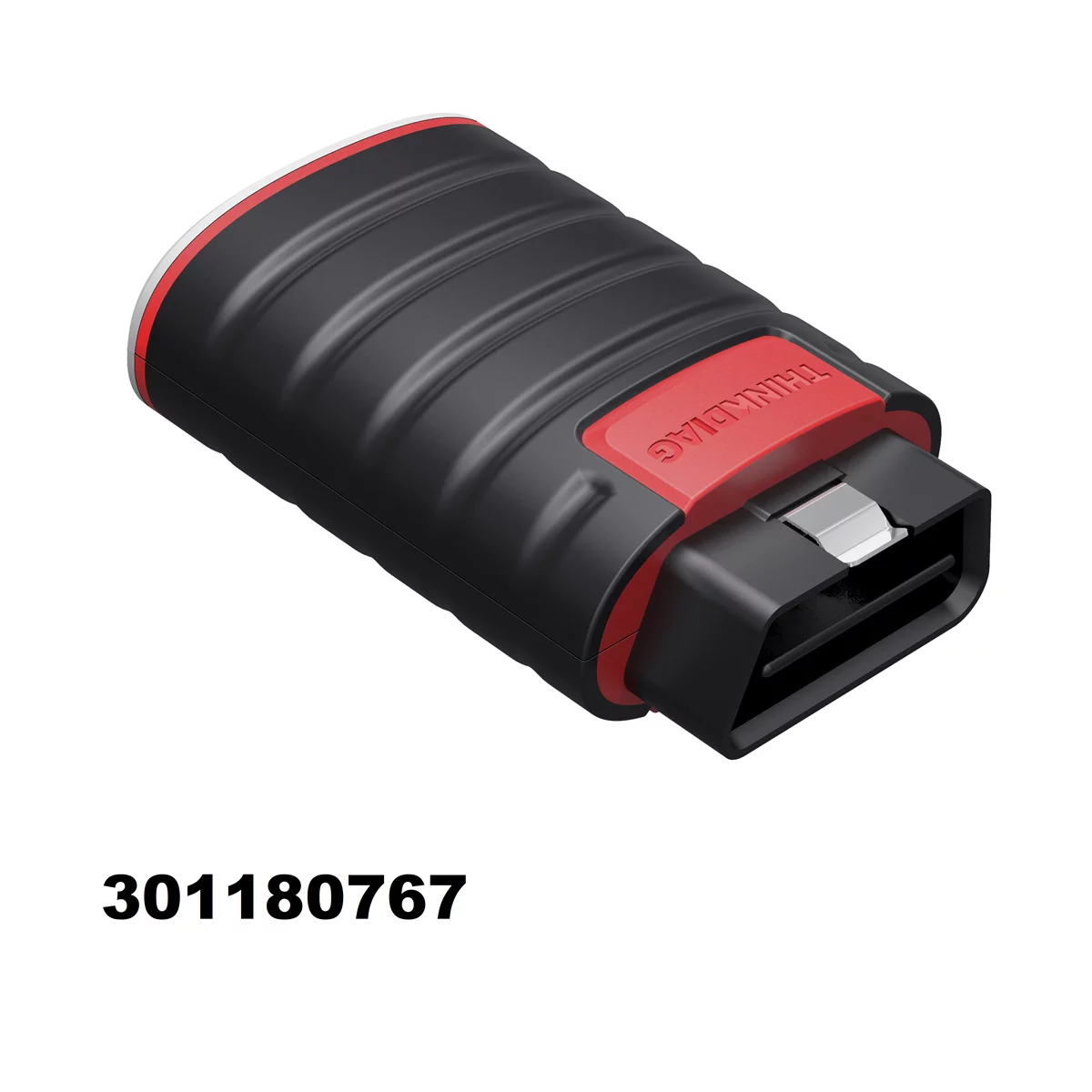
ThinkCar ThinkDiag Bluetooth OBD2 Scanner for DIY Auto Repair
Mfg: ThinkCar
Part #: 301180767
- Verify diagnosis with scan tool oxygen sensor data, not just codes
- Get 2-3 quotes from dealership, general mechanic, and exhaust shop
- Check for vacuum leaks, sensor failures, and fuel trim issues first
- Verify CARB compliance for your state before ordering
- Confirm bolt-on vs. welded installation method for your vehicle
- Gather tools: floor jack, jack stands, penetrating oil, sockets, oxygen sensor socket, torque wrench
- Order new flange gaskets and anti-seize compound with converter
- Apply penetrating oil to exhaust bolts 24 hours before work
- Plan for seized bolts: have extractors, cutting tools, or backup shop ready
- Consider oxygen sensor replacement if 100,000+ miles or original sensors
Need the right tools and parts? Our Exhaust & Emissions category stocks everything you’ll need to complete this converter replacement safely and efficiently.
- Catalytic converter replacements – OEM and quality aftermarket options
- Exhaust system gaskets and hardware – Sealants and fasteners for a leak-free install
- Oxygen sensor tools and extensions – Specialized sockets for sensor removal and installation
For the tools in this guide, browse 3/4 in drive hand tools at Tool Source.

The Toolsource Technical Team blends decades of real-world automotive service experience with up-to-date technical research. Our writers collaborate with professional mechanics, shop owners, and diagnostic specialists to deliver practical, workshop-ready guidance you can trust.


Follow us on social media