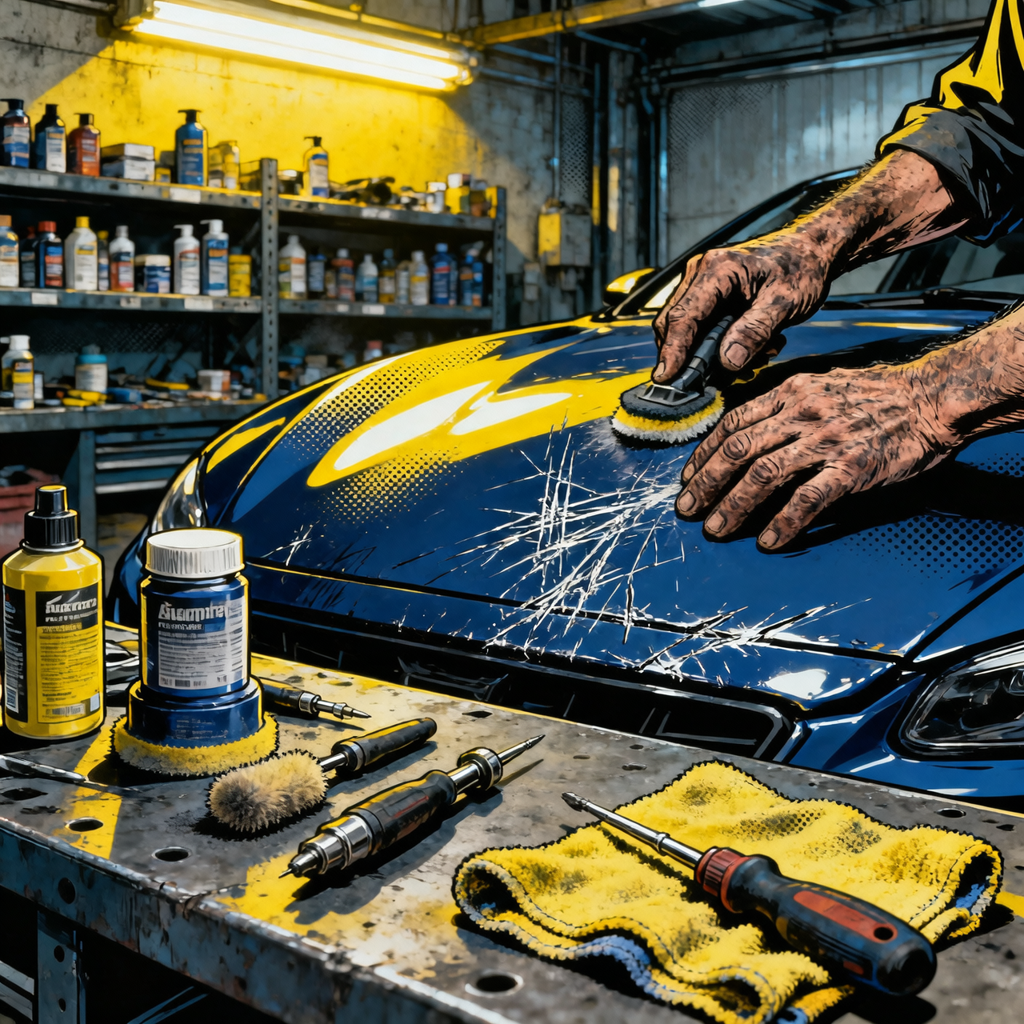
Car scratches significantly impact appearance and resale value. The market offers everything from $10 paint pens to $60+ kits, but success depends on accurate damage assessment and proper technique. This guide provides a technician’s perspective on fixing scratches yourself.
Assess Your Scratch Depth First
Modern car paint has three layers: primer for corrosion protection, colored base coat, and clear coat for gloss and UV protection. Understanding which layers are damaged determines whether you need a $15 polishing compound or professional repainting ($500+).
Clear coat-only scratches vs paint layer damage
Clear coat-only scratches (60-70% of minor damage) appear white or light-colored and can be polished out completely. If you see a different color underneath—gray, brown, or bare metal—the scratch penetrates the base coat and requires touch-up paint, not just polishing.
Visual inspection and touch test
Drag your fingernail perpendicular to the scratch. If it glides smoothly, it’s shallow clear coat damage. If it catches, the scratch is deeper. For precision, clean with isopropyl alcohol and examine under bright light. Clear coat scratches appear white; base coat damage reveals different colors.
When DIY works and when to hire a professional
DIY kits work for shallow clear coat scratches and minor chips under 3-4mm. They fail on long scratches through to primer, rust formation, areas larger than a quarter, or textured plastic bumpers. Professional repair ($150-400 per panel) makes sense for panel-wide damage, metallic/pearl finishes, or insurance coverage.
Choosing the Right Repair Kit
Paint pen vs squeegee applicator vs drill tools
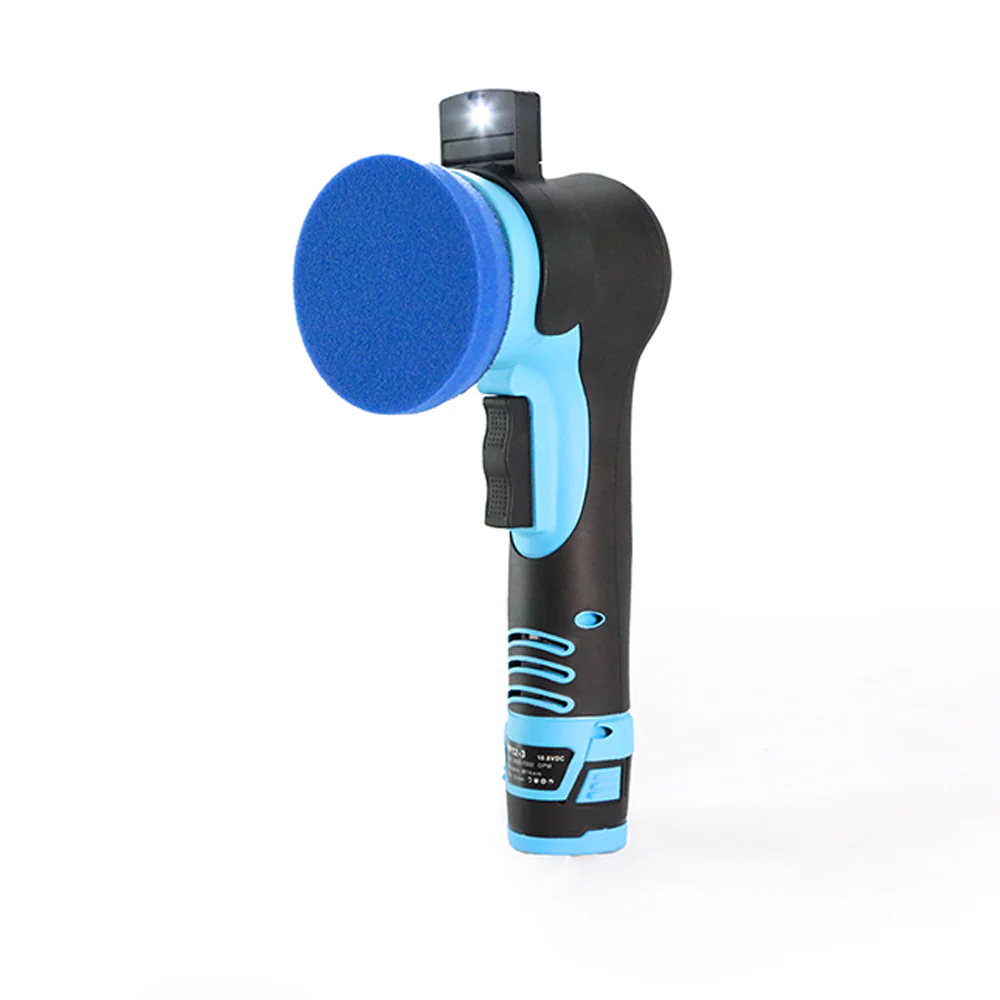
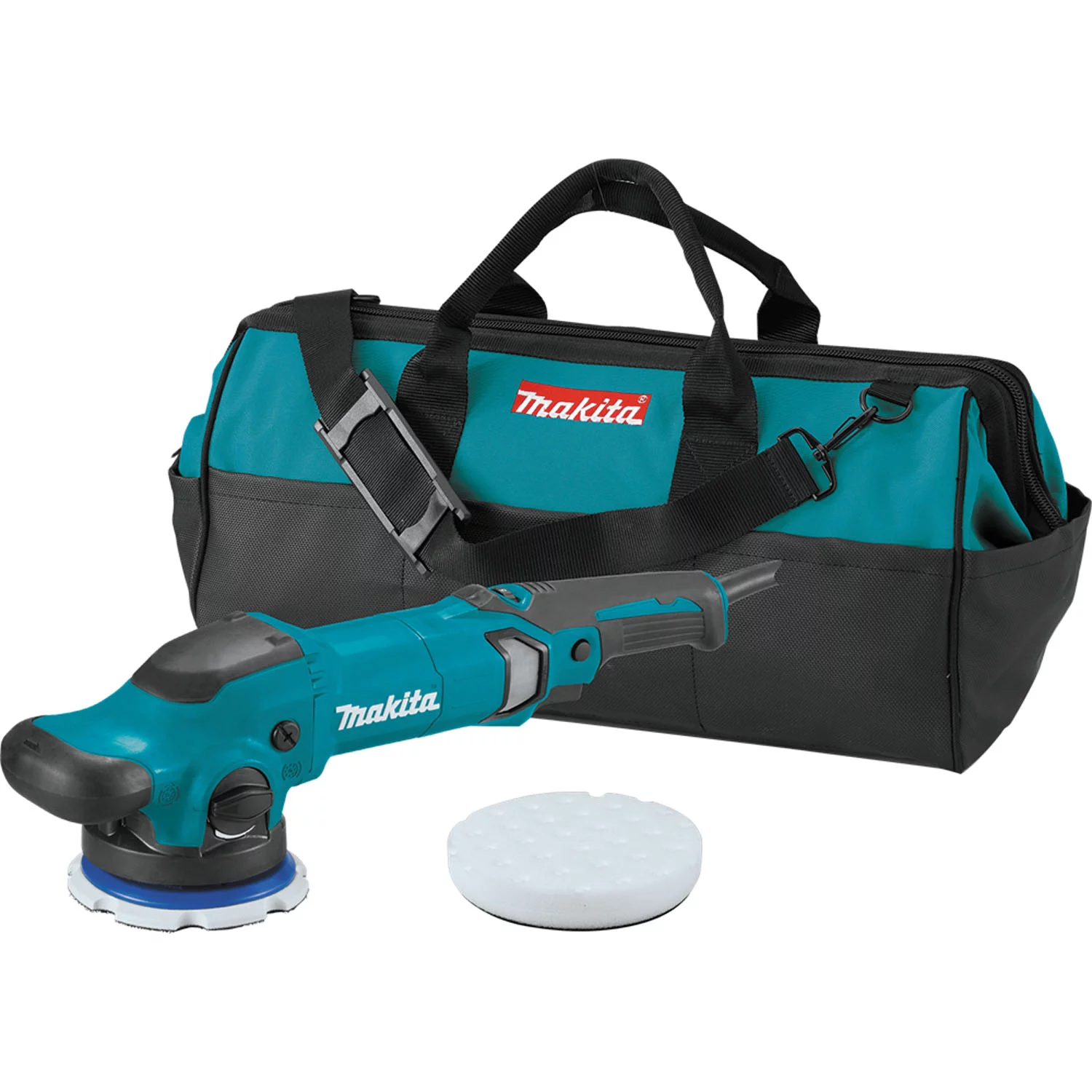
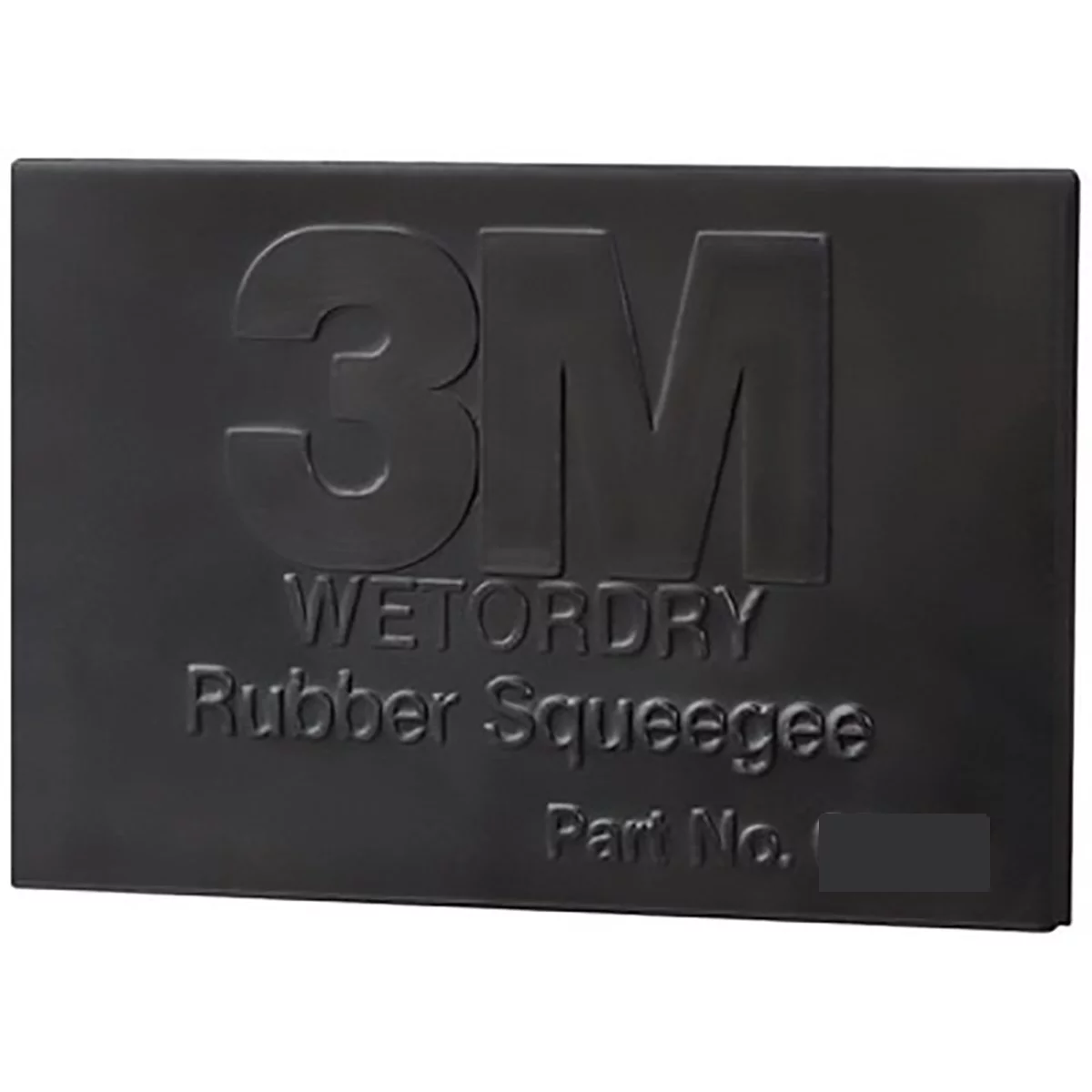
Paint pens produce uncontrolled globs and work only for tiny chips. Squeegee-based systems (like Dr. Colorchip) apply thin, level coats precisely. Drill-mounted pads work faster but risk burning clear coat—hand polishing offers better control for small repairs.
Dr. Colorchip vs alternatives
Dr. Colorchip ($60-70) includes color-matched paint and blending solution for scratches 1-4 inches deep into the base coat. The blending solution re-liquefies surrounding clear coat for seamless integration. Professional alternatives like Langka cost 30-40% less with similar results if you master the technique.
Budget vs premium products
Budget compounds ($8-12) like Meguiar’s Ultimate eliminate shallow scratches perfectly. Manufacturer touch-up paint ($12-18) ensures color accuracy for deeper damage. Premium kits reduce the learning curve for multiple repairs or visible areas.
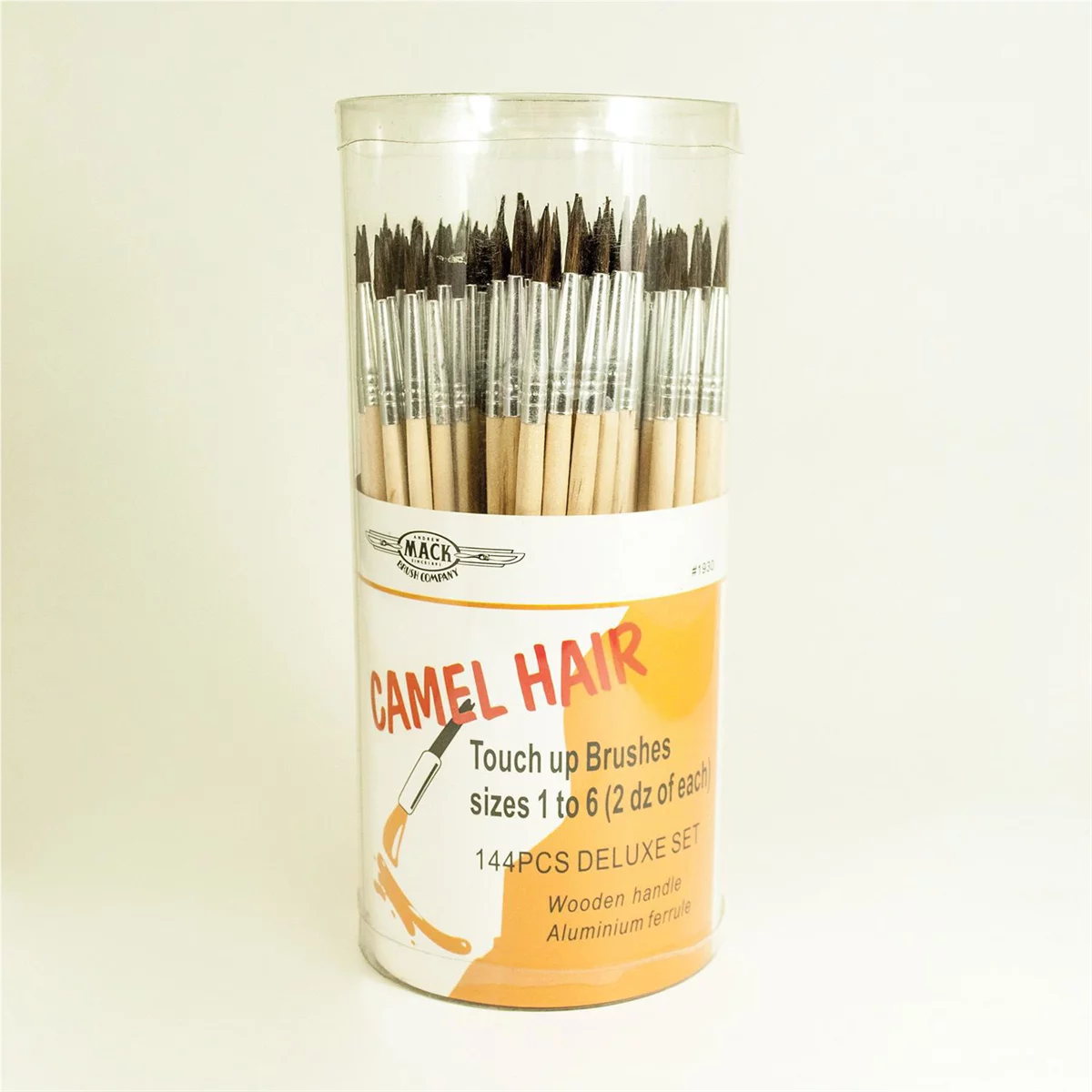
1930 Camel Hair Open Stock Watercolor Touch-Up Brush Set, #1
Mfg: Mack Brush Company
Part #: 1930
Step-by-Step Application
Prep work
Wash thoroughly and remove loose paint with a razor blade at shallow angle. Use a clay bar across a 6-inch radius to remove embedded contaminants. Clean with isopropyl alcohol—paint won’t bond to contaminated surfaces.
Apply multiple thin coats
Multiple thin coats outperform one thick application. Wait 24-48 hours between coats (48 hours in humid conditions). Touch-up paint must fully cure between applications, or solvents trap and cause shrinkage.
Wet sanding and polishing
After 48-72 hour final cure, wet sand with 3000-grit sandpaper using light pressure and constant lubrication until level. Apply Meguiar’s M105 cutting compound to remove sanding haze, then M205 finishing polish for gloss. Total time: 30-45 minutes for 2-3 inches.
Professional-Grade Finishing
M105 and M205 compounds
M105 removes 3000-grit scratches and orange peel with a foam pad in 2-foot sections. M205 removes haze and restores gloss with lighter pressure. Both cost $15-20 at auto parts stores and deliver showroom clarity.
Ceramic coating and wax timing
Touch-up paint feels dry after 24 hours but requires 30-60 days full cure. Use carnauba or synthetic wax for the first month to protect without trapping solvents. Wait 60 days before ceramic coating, though it’s overkill for spot repairs on non-coated finishes.
Durability by climate
DIY repairs last 2-4 years with regular wax protection. High-UV climates see fading in 18-24 months. Cold climates risk incomplete cure below 50°F. Optimal temperatures: 60-75°F with wax reapplication every 3-4 months.

DIY vs Professional Cost Analysis
DIY repair costs: touch-up paint ($15-20), compounds ($25-35), sandpaper ($10-15), clay kit ($15-20) = $65-90 total for multiple repairs. Professional costs $150-400; panel repainting $400-1000+. DIY makes financial sense for multiple scratches on lower-value vehicles; professional repair suits high-value cars or complex color matching.
Properly executed DIY repairs deliver 85-90% of professional durability at 20-30% cost. Professional repairs last 5-7 years versus 2-4 years for DIY.
Hire a professional if: scratches are on textured bumpers, on flexible panels, on pearl/tri-coat finishes, involve rust formation, exceed 6-8 inches, or you’ve already botched an attempt.
| Repair Method | Cost | Best For | Skill Required | Durability |
|---|---|---|---|---|
| Polishing Compound | $10-15 | Shallow clear coat scratches | Beginner | Permanent |
| Paint Pen Touch-Up | $8-15 | Tiny chips under 2mm | Beginner | 1-2 years |
| Premium DIY Kit | $60-75 | 1-4 inch scratches into base coat | Intermediate | 2-4 years |
| Professional Detail Shop | $150-400 | Multiple scratches, metallic finishes | N/A | 4-6 years |
| Professional Repaint | $400-1000+ | Severe damage, full panel correction | N/A | 8-10+ years |
Essential Repair Checklist
- Assess depth: Fingernail test and visual inspection under bright light
- Gather materials: Touch-up paint, isopropyl alcohol, clay bar, 3000 and 5000-grit sandpaper, M105, M205, foam pads, microfiber towels
- Prep: Wash, clay bar, isopropyl alcohol wipe
- Remove loose material: Razor blade for paint flakes
- Apply paint: 3-5 thin coats with 24-48 hour cure between
- Level: Wet sand with 3000-grit after final 48-72 hour cure
- Polish: M105 cutting compound, then M205 finishing polish
- Protect: Carnauba wax every 3-4 months; wait 60 days for ceramic
- Expect: 85% invisible results for 1-4 inch scratches through clear coat
Frequently Asked Questions
Will scratch removal kits work on deep scratches?
Only on clear coat—the top protective layer. If you see a different color (primer or bare metal), removal kits won’t work. Deep scratches require touch-up paint to fill, not polish to remove.
Can I use these products over ceramic coating?
No—ceramic coatings prevent touch-up paint from bonding. For shallow scratches, polishing may work, then reapply ceramic. For deeper scratches, strip the coating, repair, allow 60 days cure, reapply ceramic. Professional repair is often more cost-effective.
How long does touch-up paint take to cure?
Dry to touch in 2-4 hours; 24-48 hours between coats; 48-72 hours after final coat before sanding. Full chemical cure takes 30-60 days. Avoid washing, automatic car washes, and ceramic coatings during cure. Apply traditional wax after 48 hours.
What’s the difference between cutting and polishing compounds?
Cutting compounds (M105) have large aggressive abrasives for quick material removal but leave haze. Polishing compounds (M205) use fine abrasives to remove haze and restore gloss. Use both in sequence for professional results.
Hand polish or drill-mounted buffer?
Hand polishing gives beginners better control and prevents burning paint on edges—the most common drill mistake. For repairs under 4-6 inches, hand polishing takes only 10-15 minutes longer. If using a drill, keep speeds under 1500 RPM with light pressure.
How do I find my car’s paint code?
Check the driver’s door jamb, glove box, or under the hood for a sticker showing 2-4 characters like “NH-731P” (Honda) or “8555” (Toyota). Order from dealer parts, TouchUpDirect, AutomotiveTouchup, or Dr. Colorchip. Avoid generic colors—exact matches are critical for metallic finishes.
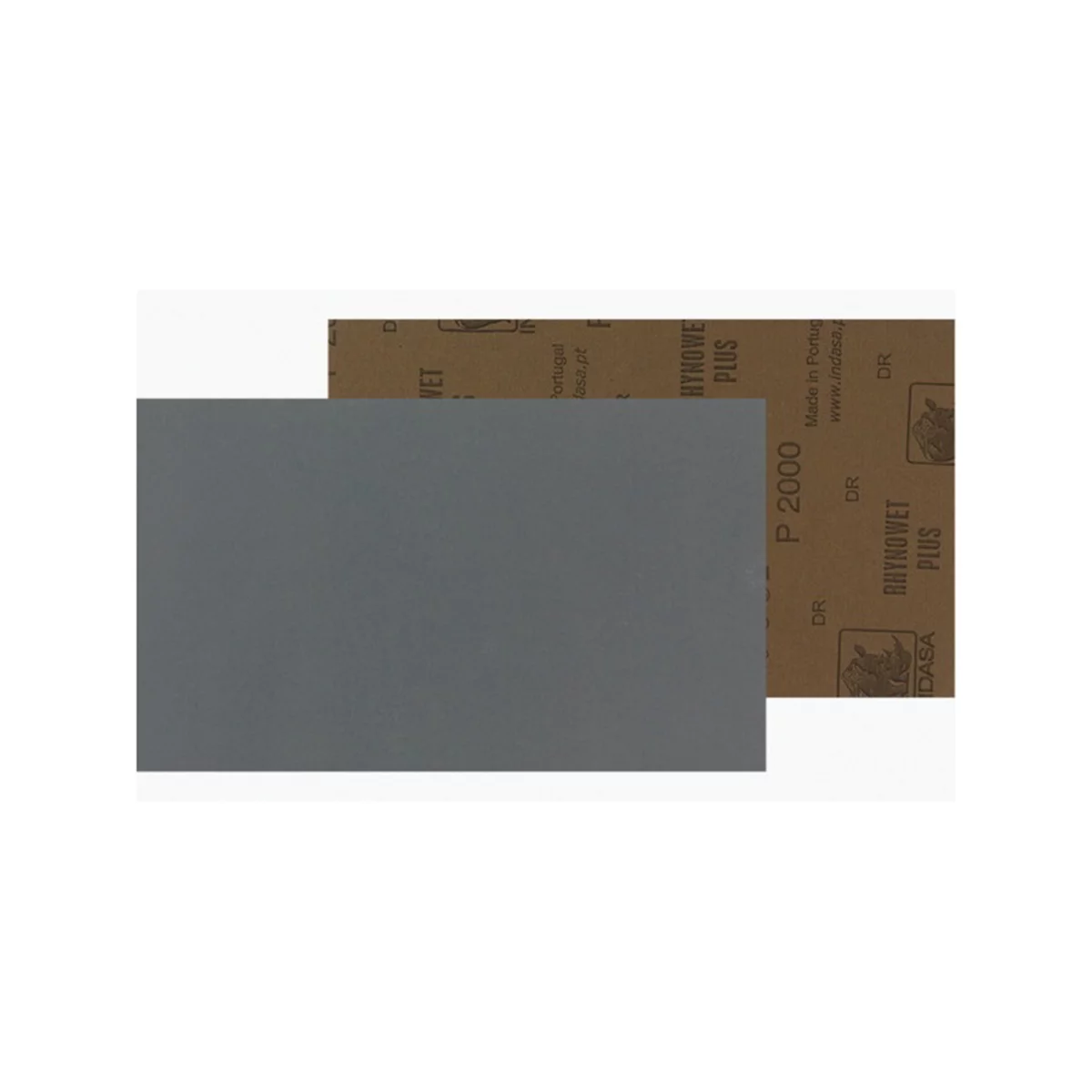
2-2000 Rhynowet Plus Line Half Sanding Sheet, 9 in L x 5-1/2
Mfg: Indasa Abrasives
Part #: 2-2000
Essential Tools in Our Other Category
Whether you choose DIY or professional repair, having the right tools on hand makes all the difference. Our Other category features a curated selection of automotive essentials that complement any repair project. Explore our Other category for complete solutions.
- Professional-grade scratch repair compounds and applicators for precise results
- Protective equipment and safety gear for safe DIY work
- Specialty automotive cleaning and finishing products for optimal outcomes
For the tools in this guide, browse Gun Cleaning Kits at Tool Source.

The Toolsource Technical Team blends decades of real-world automotive service experience with up-to-date technical research. Our writers collaborate with professional mechanics, shop owners, and diagnostic specialists to deliver practical, workshop-ready guidance you can trust.


Follow us on social media