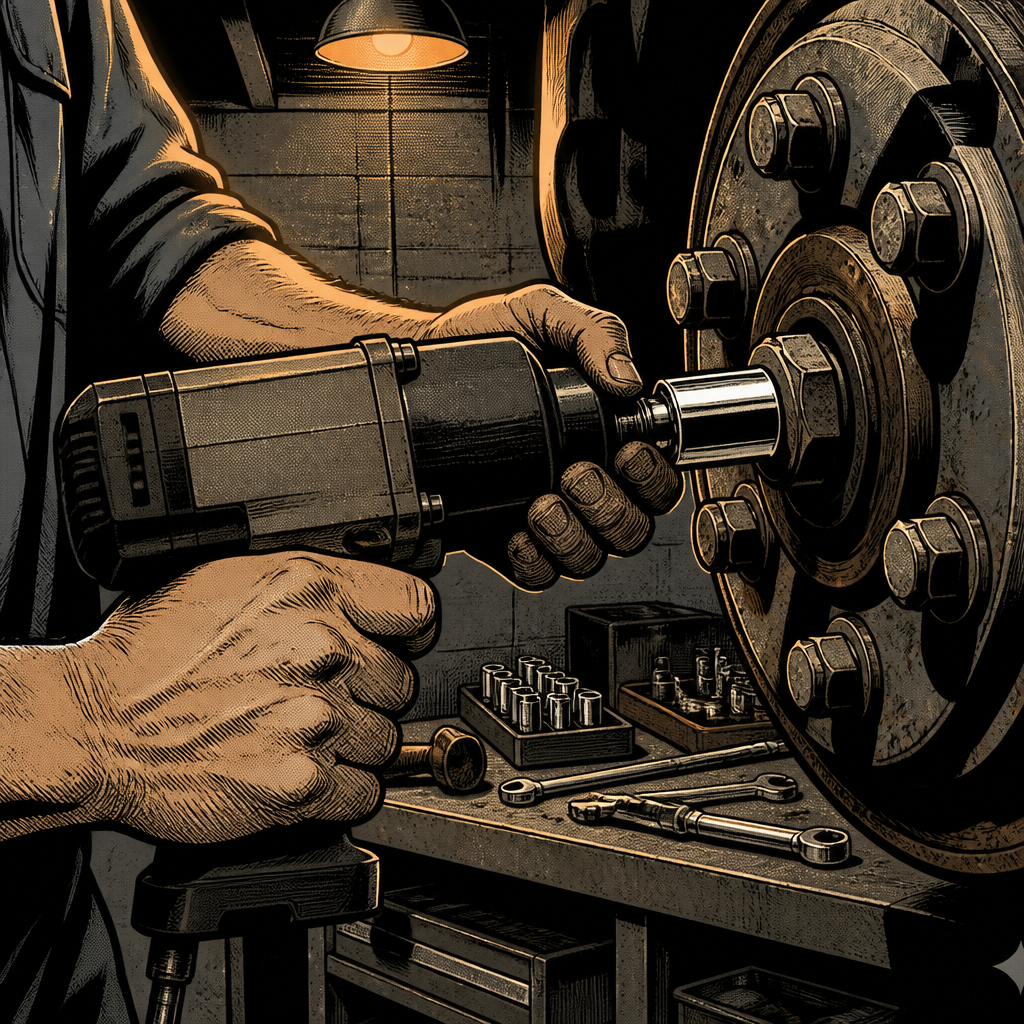
Ask ten technicians what sockets they actually reach for and you’ll get the same answer for 90% of the range, then a wildly different list of oddball outliers—an axle nut socket the size of a coffee can, a 2mm socket for an odometer screw, a 46mm wrench for a pitman arm nut that gets used twice a year. Building a socket collection that covers real-world work means knowing where the common range ends and where specialty purchases start, so you’re not overspending on sizes you’ll never touch or caught without the one you need on a Friday afternoon.
The Core Range Most Techs Actually Use
For general automotive work, the bulk of daily fasteners fall inside a predictable window. On the metric side, that’s roughly 5mm to 36mm, and on SAE, roughly 3/16″ to 1-1/4″. Spread across 1/4″, 3/8″, and 1/2″ drive, that range covers the overwhelming majority of interior trim screws, engine bay fasteners, suspension components, and wheel hardware you’ll encounter on passenger cars and light trucks.
A few practical notes on building this core set:
- Buy 6-point sockets for anything you’ll put an impact or breaker bar on—12-point rounds off worn or corroded fasteners faster.
- Duplicate your most-used sizes (8mm, 10mm, 13mm, 15mm, 17mm are classic examples) across drive sizes so you’re not constantly swapping adapters.
- Don’t skip the deep-well versions of your common sizes—spark plug wells, long studs, and recessed nuts come up constantly.
This core range is also where quality matters most, since it’s what takes the daily abuse. Cheap chrome sockets in these sizes round off fast under repeated impact use.
When You Need to Go Big: Oversized Hub and Axle Sockets
Once you move into medium and heavy-duty work, the range expands fast. Rear hub nuts on Class 8 trucks (Freightliner, Kenworth and similar) commonly run in the 90-95mm range—about 3-3/4″ in SAE terms—and these sockets are large enough that new techs sometimes assume the size is a joke until they hold one. Other common oversized applications include:
- Pitman arm and control arm nuts on GM heavy-duty trucks, often 41-46mm
- Wheel-end and spindle nuts on agricultural and off-highway equipment, sometimes exceeding 100mm on specialty axles
- Hydraulic cylinder rod nuts and large pistons, which can call for 2″ to 5-1/2″ sockets in 3/4″ or 1″ drive
These sockets are specialty purchases, not set fillers—expect to pay significantly more per socket as size increases, and expect limited resale or reuse outside the specific application. If your shop regularly services heavy trucks or off-highway equipment, it’s worth keeping a dedicated tray of these oversized sockets rather than mixing them into a standard set, since they don’t stack or store the same way.
[PRODUCT_SEARCH: 95mm impact socket 1 inch drive]
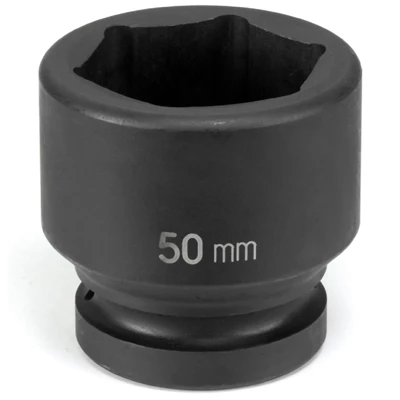
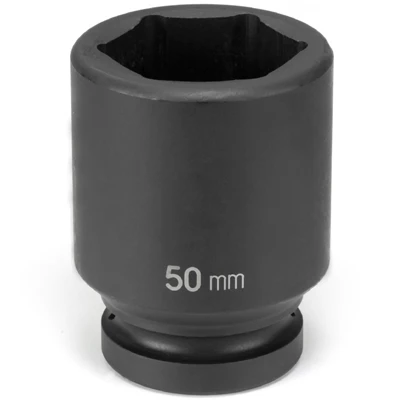
Grey Pneumatic 4050MD 1" Drive 50mm Deep Impact Socket
Mfg: Grey Pneumatic
Part #: 4050MD
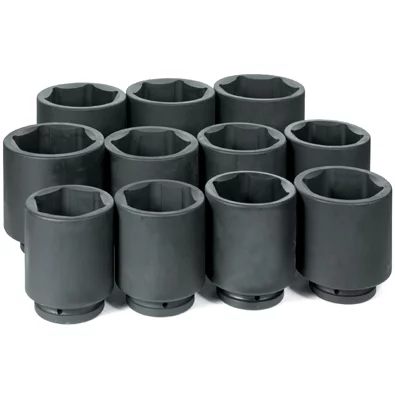
1 Inch Drive Deep Length Metric 6 Pt Impact Socket Set 11 Pc 76-
Mfg: Grey Pneumatic
Part #: 9011MD
Small and Oddball Sockets for Precision Work
On the opposite end, small-diameter work shows up more often than techs expect—instrument clusters, odometer housings, eyeglass and small-appliance repair, and delicate trim fasteners. Sizes down to 2-2.5mm and 5/32″-3/16″ cover most of this. A dedicated small driver-bit set with a low-torque ratcheting handle is usually a better investment here than trying to force standard 1/4″ drive sockets down to that scale, since the fasteners themselves are often soft brass or aluminum and strip easily.
A few sizes worth keeping on hand even if they’re rarely used:
- 2mm and 2.5mm hex or socket bits for electronics and odometer work
- 3-4mm sockets for small screws on trim, mirrors, and interior hardware
- 36mm crow foot wrenches for oil filter caps and large fill plugs where a standard socket can’t clear surrounding components
Matching Drive Size and Torque to the Fastener
Drive size isn’t just about socket compatibility—it’s about torque capacity and leverage. As a rough guideline:
- 1/4″ drive: fine work, low torque, small fasteners under roughly 13mm
- 3/8″ drive: the daily-driver size for most automotive work, up to about 19-22mm comfortably
- 1/2″ drive: standard for wheel hardware, suspension, and anything requiring real torque, typically up to 32-36mm
- 3/4″ and 1″ drive: heavy truck, industrial, and hydraulic work, generally 32mm and up
Using an undersized drive on an oversized fastener is a common way to strip a socket or snap a breaker bar. If you’re stepping up into truck or industrial work, budget for the larger drive impact or breaker bar alongside the sockets themselves—the socket is only half the tool. Adapters exist to step a large socket down to a smaller drive, but they concentrate stress at a single point and aren’t a substitute for the correctly sized tool when you’re breaking loose a fastener that’s been torqued to spec and sitting for years.
Keeping the Set Organized (So the 10mm Doesn’t Vanish)
Every tech has a story about losing the most commonly used size in the set—it’s a running joke for a reason, since the most-used socket gets pulled, set down, and misplaced more than any other. A few habits that actually help:
- Use foam-cutout organizers or socket rails instead of loose trays—a missing socket leaves a visible gap
- Label drawers by drive size and range, not just “metric” or “SAE”
- Keep specialty oversized and undersized sockets in a separate case from the daily set, since they get used rarely and stored differently
- Do a quick visual count at the end of a job before closing the box, not at the end of the week
Buying Strategy: Sets vs. Individual Sockets
A quality mid-range set (roughly 5mm-32mm metric, 1/4″ drive through 1/2″ drive) covers day-to-day work and is worth buying as a matched set for consistency and warranty coverage. Beyond that core range, buy individually and only when a job requires it. Oversized hub sockets, large crow feet, and sub-5mm precision bits are expensive enough, and specific enough to a given make or application, that stocking them speculatively rarely pays off. Ask around the shop first—there’s a good chance someone already owns the 95mm socket you need once a year, and pooling specialty tools across a shop is standard practice for exactly this reason.
Quick Checklist Before You Buy
- Do you already have 90% coverage in the 5mm-32mm / 3/16″-1-1/4″ range across 1/4″, 3/8″, and 1/2″ drive?
- Is the fastener you’re chasing a one-time job or a recurring part of your work?
- Do you have the correct drive size and torque capacity for the socket you’re buying, not just the size match?
- Is a 6-point socket available for anything going under an impact?
- Does your shop already own a specialty tool you can borrow before buying?
[PRODUCT_SEARCH: socket set]
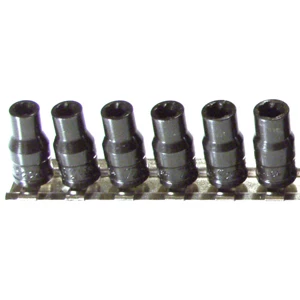
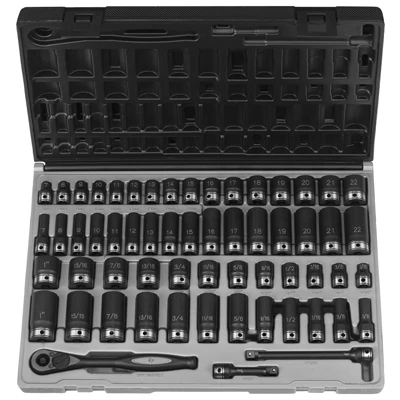
3/8 In Dr 12-Pt Std/Deep Fractional & Metric Duo-Socket Set - 59
Mfg: Grey Pneumatic
Part #: 81259CRD
FAQs
What socket sizes should every technician have as a baseline?
Roughly 5mm-32mm metric and 3/16″-1-1/4″ SAE, spread across 1/4″, 3/8″, and 1/2″ drive, covers the large majority of automotive work. Add deep-well versions of your most common sizes.
Do I need both metric and SAE sockets?
Yes, for general shop work. Domestic and imported vehicles both show up in a mixed shop, and specialty or aftermarket parts frequently use whichever standard is cheaper to source, regardless of the vehicle’s origin.
What’s the real difference between impact sockets and standard chrome sockets at large sizes?
Impact sockets are made from a softer, more flexible alloy designed to absorb shock without shattering, while chrome sockets are hardened and can crack under impact torque. At oversized diameters this matters more, since the forces involved are higher and a cracked socket at that size is both expensive and dangerous.
Why are large hub and axle nut sockets so expensive?
They require thicker wall material to handle high torque, are lower volume/lower demand than common sizes, and are often keyed or shaped for a specific nut profile rather than a universal hex, all of which drive up manufacturing cost.
What drive size do I need for a 95mm socket?
Typically 3/4″ or 1″ drive. The torque required to break loose a heavy truck hub nut exceeds what a 1/2″ drive impact or breaker bar is rated for.
How do I stop losing small or commonly used sockets?
Foam organizers with visible cutouts, labeled drawers by drive and range, and a habit of counting sockets back into place at the end of each job are the most effective low-cost fixes.
Shop Sockets & Ratchets
To build the complete socket range described in this guide, browse our Sockets & Ratchets collection for the core sizes, deep-well options, and specialty sockets you need.
- Metric and SAE sockets across 1/4″, 3/8″, and 1/2″ drive sizes
- Impact-rated and 6-point options for breaker bar and impact tool work
- Deep-well and oversized sockets for specialized applications

The Toolsource Technical Team blends decades of real-world automotive service experience with up-to-date technical research. Our writers collaborate with professional mechanics, shop owners, and diagnostic specialists to deliver practical, workshop-ready guidance you can trust.


Follow us on social media