Every technician eventually snaps a bolt mid-job, and the thirty-minute repair that was supposed to wrap up before lunch turns into an afternoon spent arguing with a stub of hardened steel. Broken bolt extraction is a skill that rewards patience and punishes shortcuts — grab the wrong bit, run the drill too fast, or skip a step, and a simple fastener problem becomes a full teardown. The process itself is well understood and repeatable if you work it in order. This guide covers the sequence shops actually use, the tools worth owning, and the point at which it makes more sense to hand the job to a specialist.
Assess the Break Before You Touch Anything
Before any metal gets removed, look at what you’re actually dealing with. Is the bolt broken flush with the surface, recessed below it, or does it have a stub you could grab with vise grips or a stud extractor socket? Do you have access from both sides, or are you working blind and upside-down through a wheel well or frame rail? Is the surrounding material mild steel, aluminum, or a cast housing that cracks or strips easily if you get aggressive with it?
This is also the moment to check what’s nearby that heat or a slipped drill bit could damage. Plastic wheel well liners, wiring harnesses, carpet, brake lines, and fuel lines have all been casualties of a rushed extraction — more than one tech has learned the hard way that there’s carpet sitting directly behind a panel they were about to torch. Pull back or remove anything flammable or heat-sensitive before bringing a torch anywhere near the area. A few minutes of prep here prevents the kind of secondary damage that turns a simple bolt job into a full front-end rebuild.
Center Punch, Penetrant, and the Pilot Hole
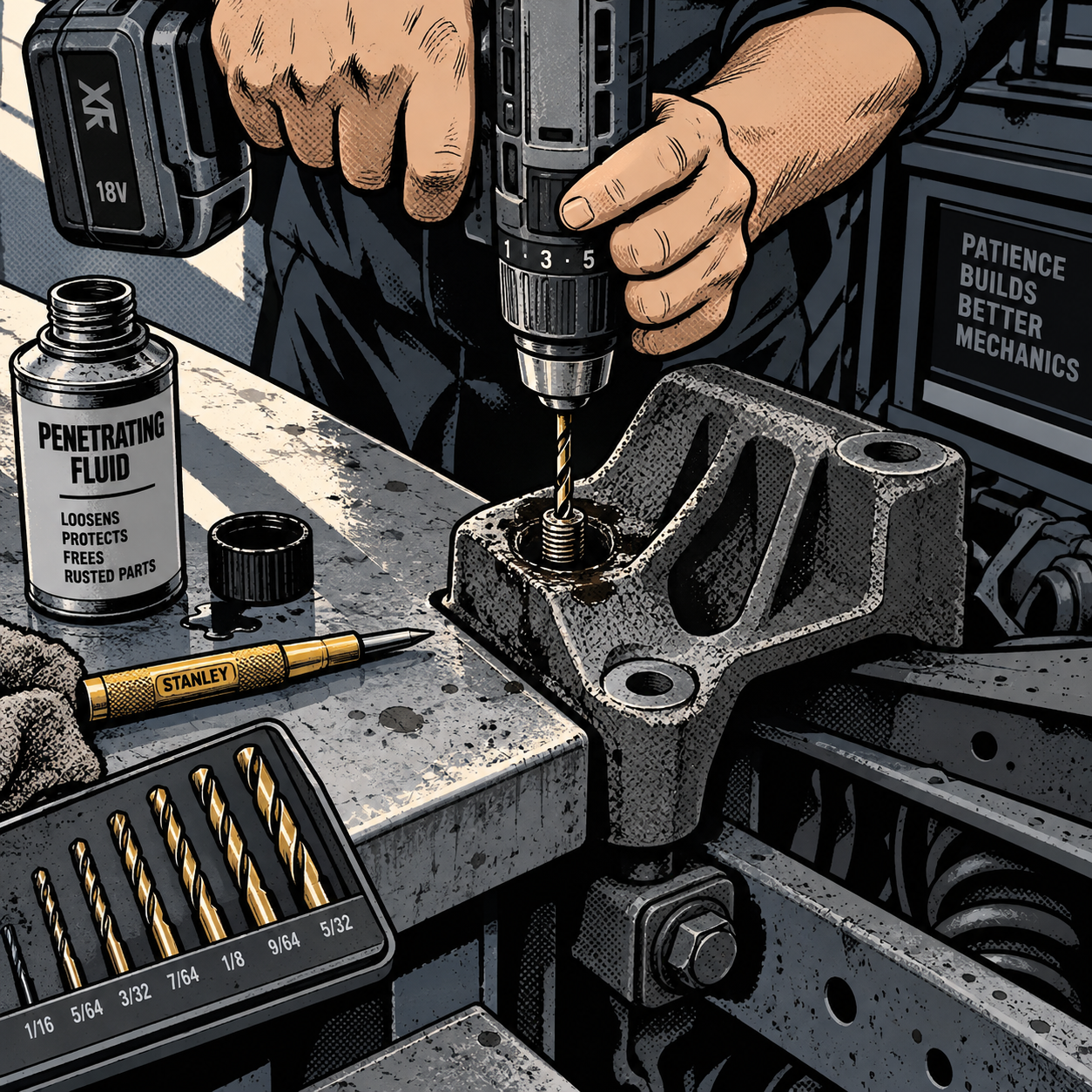
Start by saturating the broken bolt with penetrating fluid. A dedicated penetrant or deep-creep formula outperforms plain WD-40, though WD-40 will do in a pinch. If you have access to the backside of the hole, bend the spray straw so you can angle it through an access point and soak the threads from both directions while you gather tools. This single step resolves more stuck fasteners than people give it credit for, and it costs nothing but a few minutes of patience.
Next, use a sharp center punch to put a solid, centered dimple in the broken face of the bolt. This does two things: it keeps your drill bit from wandering, and if the metal work-hardened when the bolt snapped, it roughens the surface enough for a bit to actually bite instead of skating across it. Skipping the punch is the single most common reason a bit wanders off-center and starts chewing up good threads instead of the bolt itself.
Start the pilot hole small — 1/8″ is the standard starting point regardless of the bolt’s final diameter — and drill straight, with light, steady pressure, keeping the bit as close to perpendicular as possible. This is not a job for high RPM. Low speed with consistent downward pressure keeps a small bit from grabbing, wandering, or snapping off inside the hole, which only compounds the problem.
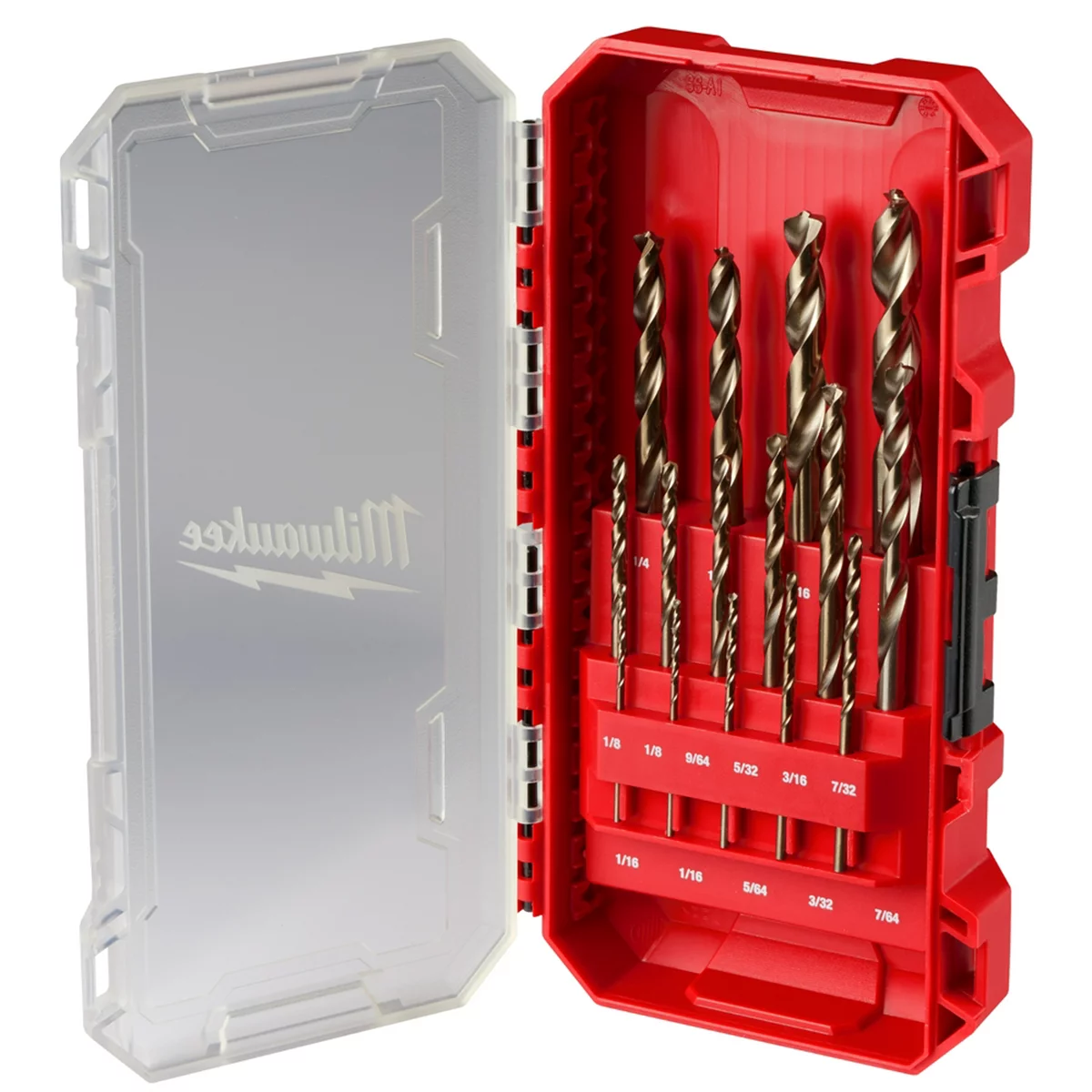
RED HELIXâ„¢ Cobalt Drill Bit Set " 15PC
Mfg: Milwaukee Electric Tools
Part #: 48-89-2370
29 Pc RED HELIX Cobalt Drill Bit Set
Mfg: Milwaukee Electric Tools
Part #: 48-89-2332
Choosing the Right Drill Bit for Hardened Steel
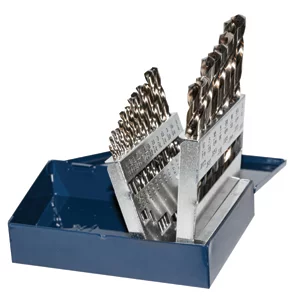
Bit selection is where most DIY attempts fall apart. A standard high-speed steel bit can struggle against a bolt that work-hardened when it snapped, and it will do essentially nothing against a broken extractor — extractors are hardened specifically so they won’t deform, which also means an ordinary bit won’t touch them. Cobalt bits are the practical minimum for this kind of work and handle most hardened fasteners without drama. If an extractor has already snapped off inside the bolt, step up to solid carbide bits; carbide will cut through extractors, taps, and hardened bolts that laugh at cobalt, but the bits are brittle and not cheap, so technique matters even more once you’re using them.
Run cutting fluid or cutting paste on the bit and the workpiece throughout the process, especially if you’re drilling upside-down where gravity won’t keep fluid in place. Increase bit size gradually, stepping up one size after each successful pass rather than jumping straight to the bolt’s major diameter. The goal is to thin the remaining wall of the bolt until it either spins free, collapses inward, or gets thin enough to pick out with a small punch or pick. Never force a bit sideways to correct its path — straighten your approach and start fresh rather than risk snapping it off inside the hole.
Heat, Extractors, and When to Use a Torch
Heat is one of the most effective tools for a stubborn bolt, because thermal expansion and contraction breaks the corrosion bond between the bolt and the surrounding threads better than almost anything else. Use a propane or acetylene torch rather than butane — butane doesn’t get hot enough to make a real difference. Heat the bolt until it’s glowing, then let it cool, and hit it with penetrant while it’s still warm so the fluid gets drawn into the threads as the metal contracts. Repeat if needed before attempting to turn it.
Spiral or square bolt extractors work well once you’ve drilled an appropriately sized hole, but they have a reputation for snapping off inside the bolt if you force them — and a broken extractor is significantly harder to deal with than the original broken bolt, since you’ll need carbide bits just to get through it. Go slow, use steady pressure with a tap handle rather than a ratchet, and back off immediately if it stops turning rather than cranking harder. If the extractor does snap, don’t panic — it’s a setback, not a dead end, and the carbide bit approach described above still applies.
Backup Methods When Drilling Isn’t the Answer
Not every broken bolt needs to come out as a bolt. If the fastener threads into a captive nut or weld nut behind a panel, an air chisel with a punch tip can knock the nut loose from its spot welds entirely, leaving a clean hole. From there, a new nut can be fed in through an access slot and either tack-welded in place or held with a backing plate, avoiding the extraction fight altogether.
Another reliable option when extraction fails completely: drill and clean out the hole, then re-tap it to the next standard size and install an oversized bolt. This works well in cast housings and frame rails where the surrounding material can support a slightly larger thread. For bolts broken flush in sheet metal or thin brackets, some shops weld a nut directly onto the exposed stub, then back it out using the welded nut as a grip — effective, but it requires a welder and a steady hand to avoid blowing through thin material.
Know When to Call a Specialist
Extraction is genuinely a craft, and some technicians specialize in nothing else — shops that do a high volume of this work can often remove a bolt that’s eaten two hours of your day in fifteen minutes, because they’ve seen the exact failure mode before and know which method it needs. If you’re several attempts in, have already broken an extractor, or are working in a spot where a mistake means replacing an expensive casting, it’s worth getting a second opinion before continuing. A machine shop, welding shop, or a mobile mechanic who specializes in extractions can usually solve it faster and cheaper than the cumulative cost of your own trial and error. A broken bolt is also never, on its own, a reason to scrap a vehicle — the cost of extraction is almost always a small fraction of the vehicle’s value, even on an older daily driver.
Quick Checklist Before You Start
- Protect nearby plastic, wiring, carpet, and fuel or brake lines from heat and debris
- Soak the bolt in penetrant and let it work before drilling
- Center punch a clean dimple before the first pilot hole
- Drill slow, straight, and small-to-large with cutting fluid throughout
- Have cobalt and carbide bits on hand before you start, not after you need them
- Know your fallback — re-tap, weld a nut, or call a specialist — before you’re three hours in
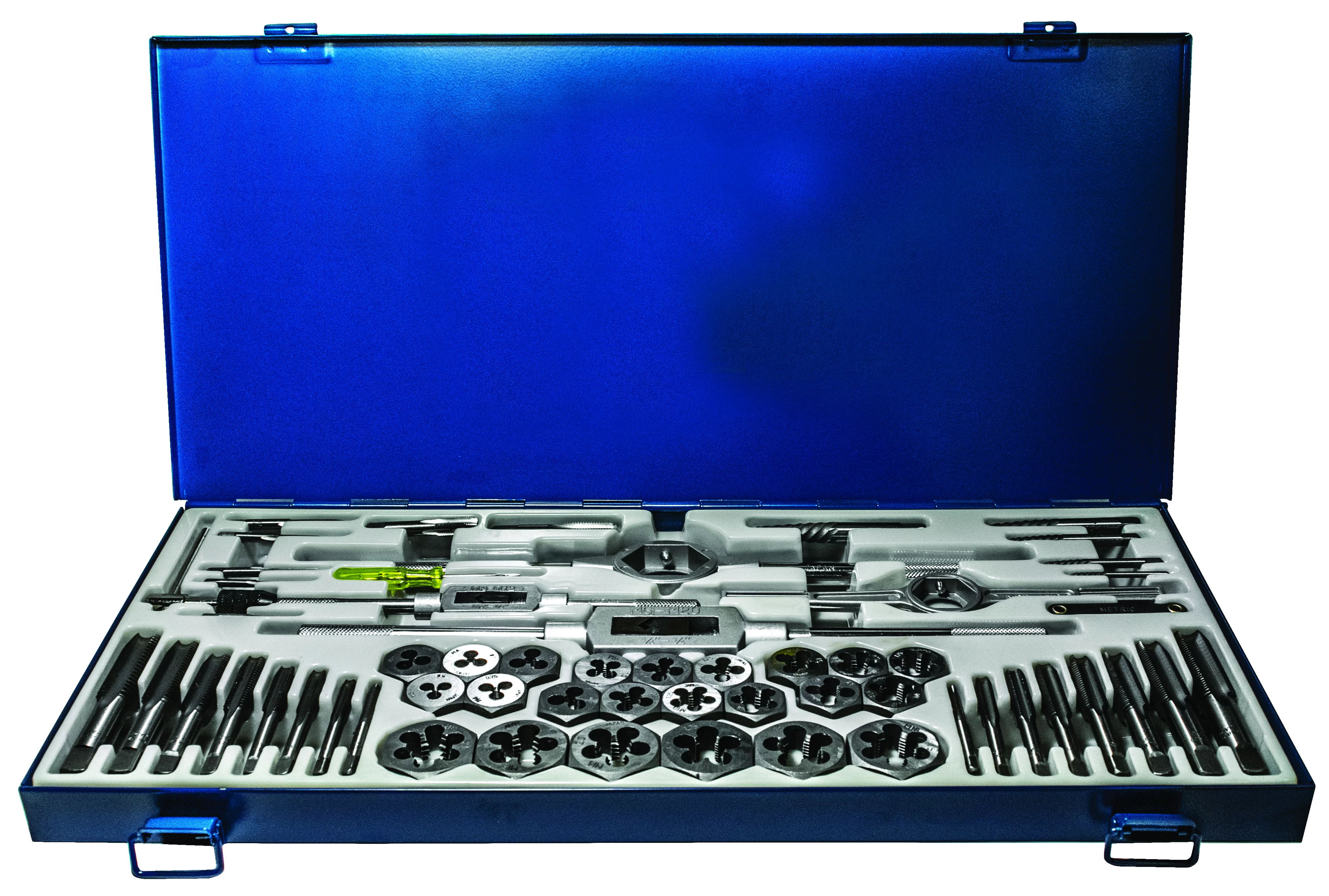
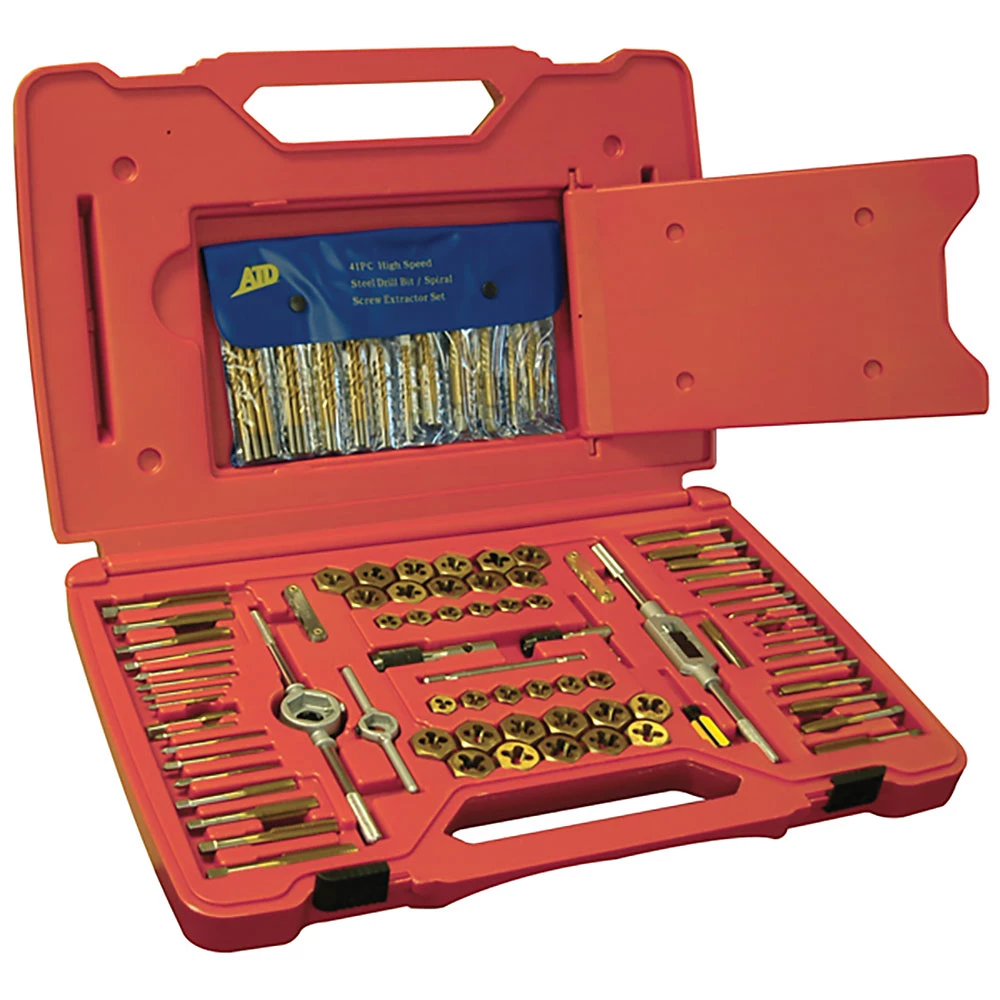
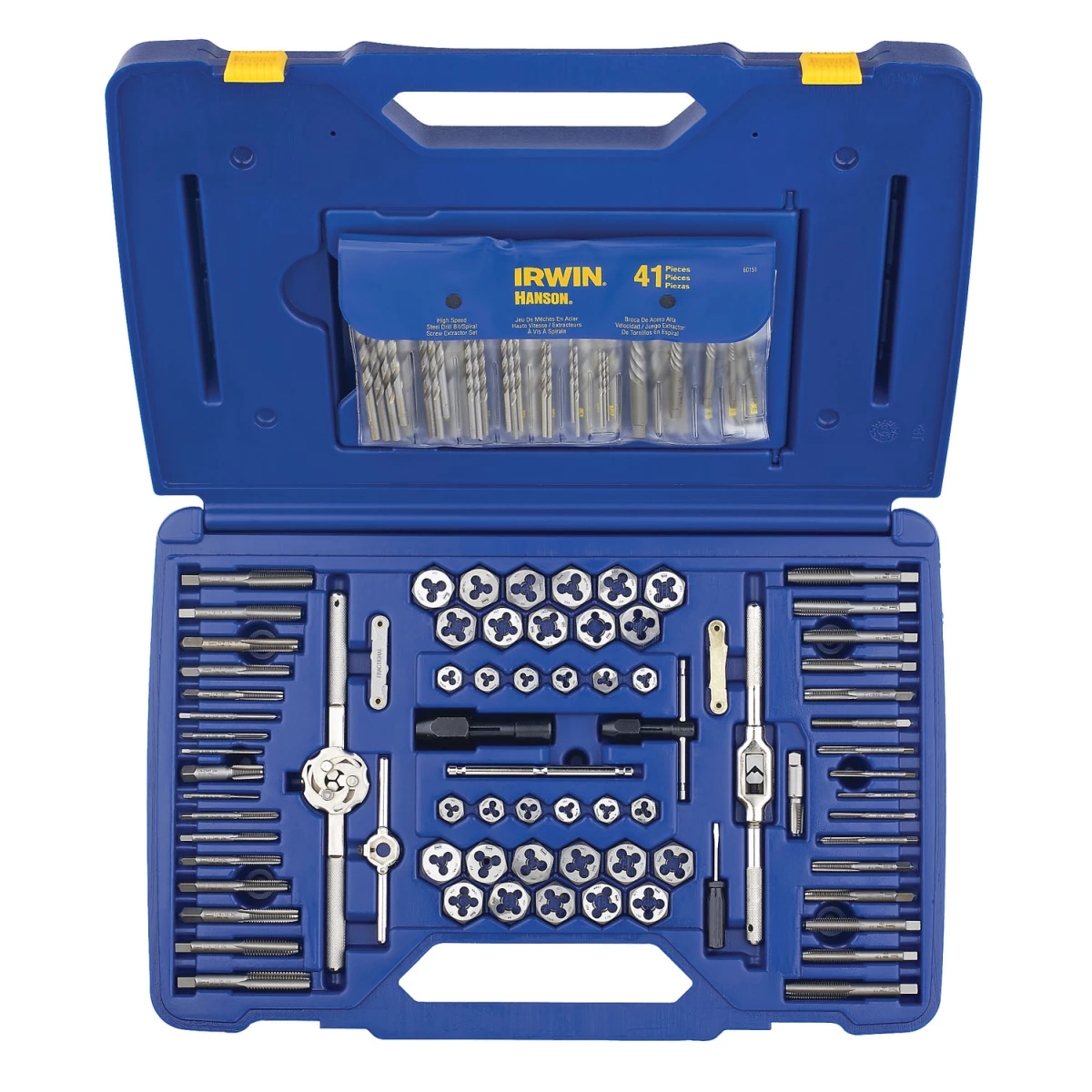
117-Pc Deluxe Combo Set - Taps & Dies, HSS Drills, Extractors
Mfg: Hanson
Part #: 26377
Frequently Asked Questions
What size drill bit should I start with on a broken bolt?
Start with a 1/8″ bit regardless of the bolt’s final diameter, center it with a punch mark, and step up gradually in small increments until you reach a size that allows an extractor or re-tap.
Is it safe to use heat on a broken bolt?
Heat is effective and commonly used, but only after you’ve confirmed there’s nothing flammable or heat-sensitive directly behind or beneath the area — carpet, wiring, and fuel lines have all caused damage when this step was skipped.
What’s the difference between cobalt and carbide drill bits for this job?
Cobalt bits handle most hardened bolts and are the practical starting point. Solid carbide bits are necessary if you need to drill through a broken extractor, tap, or unusually hardened fastener, but they’re brittle and require slow, straight, wobble-free drilling.
Can I just drive the vehicle if a suspension bolt is broken?
A missing or improvised fastener on a non-critical suspension component can sometimes be driven short distances cautiously, but this depends entirely on which component and bolt are affected. When in doubt, have it inspected before driving rather than assuming it’s fine.
What should I do if my extractor breaks off inside the bolt?
Switch to a solid carbide bit, since standard and cobalt bits won’t cut through a hardened extractor. Go slow, keep the bit perfectly straight, and use cutting fluid throughout to avoid breaking the carbide bit as well.
When does it make sense to pay a shop instead of continuing myself?
If you’ve made several unsuccessful attempts, broken an extractor, or risk damaging an expensive casting or frame component, it’s usually cheaper overall to bring it to a specialist shop that handles extractions regularly rather than continuing to invest time and tools into it yourself.
Shop Extractors and Stud Removers
With the broken bolt assessed and the area prepped, you’ll need the right extractor tools and stud removers to complete the job. Spiral and square extractors, sized appropriately and used with controlled technique, handle most broken fasteners.
- Spiral and square bolt extractors in various sizes
- Extraction handles and tap wrenches for controlled removal
- Tools for both shop and roadside work

The Toolsource Technical Team blends decades of real-world automotive service experience with up-to-date technical research. Our writers collaborate with professional mechanics, shop owners, and diagnostic specialists to deliver practical, workshop-ready guidance you can trust.


Follow us on social media