Spline-drive and factory-aluminum lug nuts look fine for years until the day they don’t — a wrench slips, the drive splines round off, or a lug shears clean off the stud. What should be a ten-minute wheel pull turns into a drilling-and-extraction job, and if it’s handled wrong, it turns into a ruined wheel or a scrapped hub assembly. This guide walks through how techs actually diagnose, remove, and repair stripped or broken lug nuts and wheel studs, plus what customers should expect to pay for it.
Why Spline-Drive and Aftermarket Lugs Fail
Spline-drive lug nuts (common on rotary-engine Mazdas and a handful of other factory wheel packages) aren’t anti-theft locks — they’re just a styling choice, and any parts store sells a master key socket set to remove them. The real problem isn’t the drive pattern, it’s the material. Many OEM and aftermarket lugs use a soft aluminum outer sleeve over a steel insert, or are aluminum through and through. Combine that with an impact gun, a seized thread, or a wheel that’s been over-torqued at a tire shop, and the drive faces round off almost instantly. Once the splines or hex points are gone, a standard socket has nothing to grip.
Corrosion compounds the issue. Steel studs rust inside aluminum lug bores, aluminum wheels gall against steel hubs, and anti-seize that was never applied at the last tire change means the nut galls onto the stud threads. By the time a stripped lug gets attention, it’s often also seized — which is why straightforward “just use a bigger socket” advice frequently fails on these wheels.
Diagnose Before You Touch a Tool
Before extracting anything, confirm a few things:
- Front or rear? Front stud replacement is usually straightforward — knock the old stud out, press a new one in. Rear studs on many vehicles are pressed into a hub that’s shielded by the backing plate and parking brake hardware, so there may not be enough clearance to drive the stud out without pulling the hub or knuckle.
- How many lugs are affected? One rounded-off nut is a 15-minute fix. A full set of corroded, rounded aluminum lugs (as commonly seen on high-mileage RX-8s and similar cars) is a different job entirely and should be quoted per-stud, not as a single flat fee.
- Is the stud still threaded, or sheared? A shear break at the hub face means the remaining shank has to be driven out with a hammer — there’s nothing to grab.
- Deflate the tire first if there’s any chance of using heat or a cutting wheel near the rim. A pressurized tire next to a torch is not a risk worth taking.
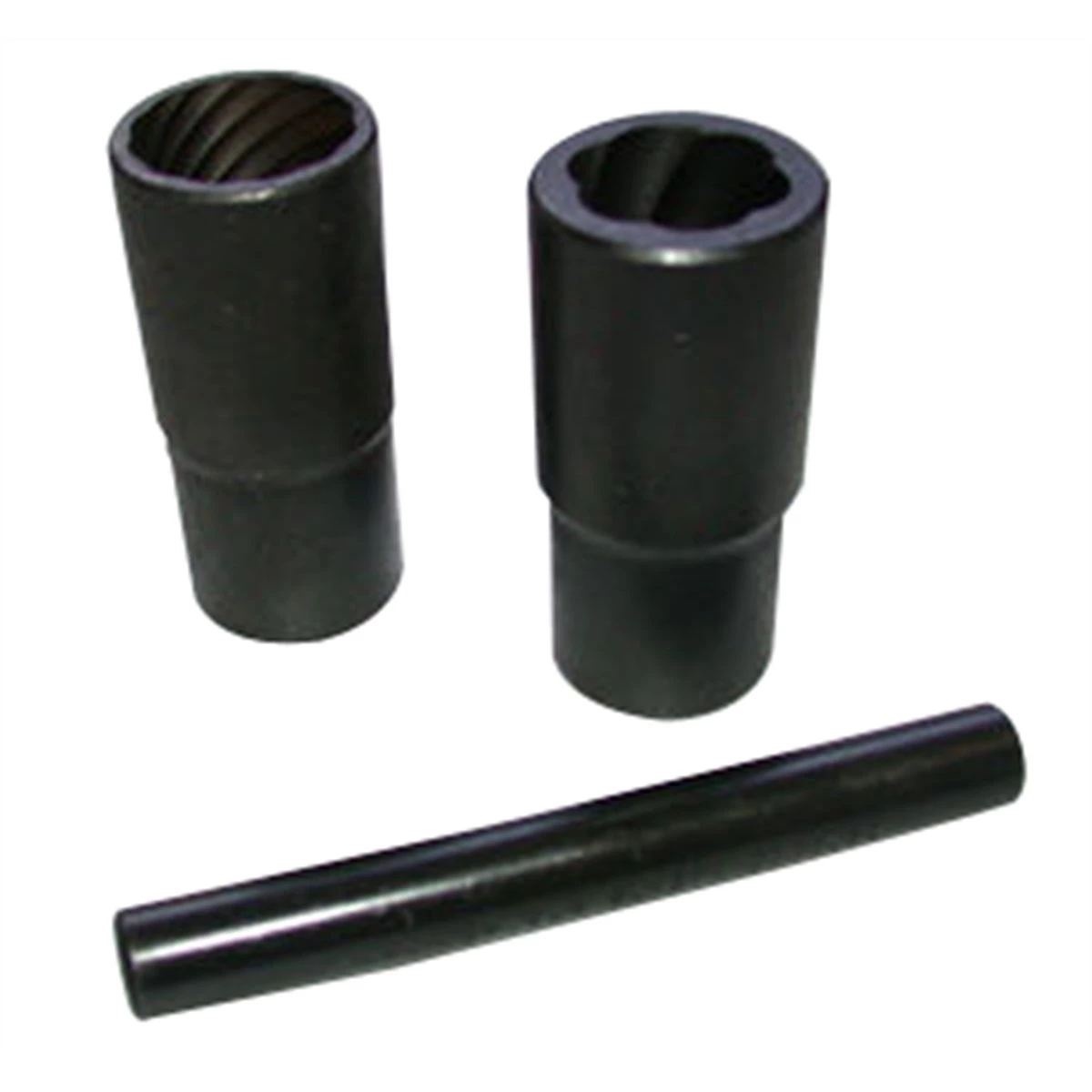
3 Pc Twist Socket Lugnut Removal System
Mfg: Lock Technology LTI by Milton
Part #: 4300


Extraction Methods That Don’t Wreck the Wheel
Start with the least destructive option and escalate only as needed.
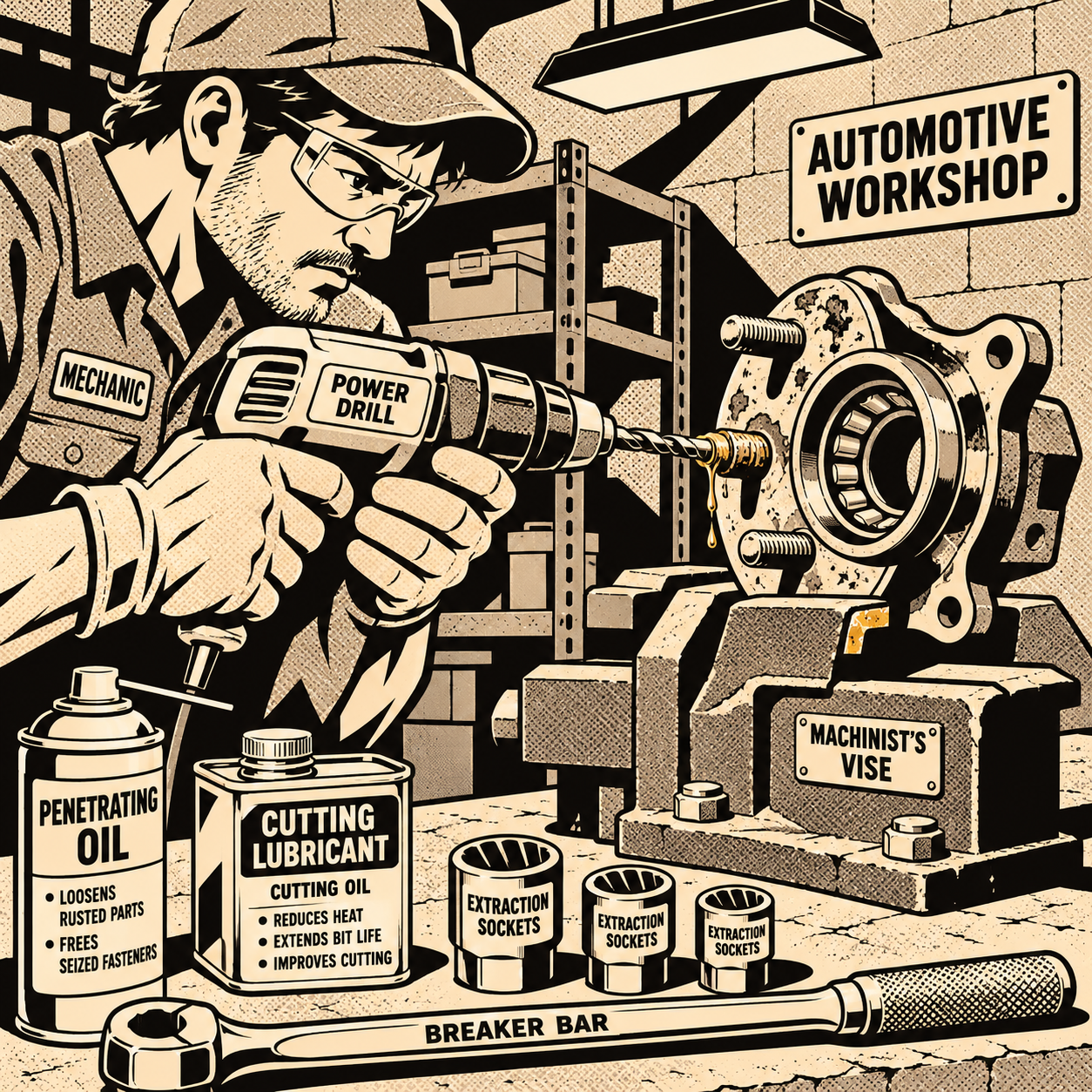
- Twist sockets / lug nut extractor sockets. These bite into the rounded nut as they turn and are the first thing to try on a stripped-but-intact lug. A deep-well twist socket paired with a breaker bar or impact gun removes most rounded steel lugs in minutes.
- Hammer-on six- or twelve-point sockets. Select a socket slightly undersized, hammer it onto the remaining lug material so it bites, then remove with an impact gun. Works well on partially rounded nuts that still have enough material to grip.
- Dremel/die grinder with a carbide bit, then a chisel. Grind two flat relief points into the nut, then split it with a cold chisel. Slower than a twist socket but very controlled and low risk to the wheel finish.
- Heat. If penetrating oil and mechanical extraction aren’t moving a seized nut, heating the lug until it shows a light orange color before hitting it with a socket can break the corrosion bond. Deflate the tire first and keep heat off the wheel finish and tire bead.
- Reverse-thread extractor sockets. These tighten onto the broken nut as they back it off — useful when there’s enough remaining material to grab but normal sockets won’t seat.
Avoid grabbing a generic bolt extractor set on soft aluminum lugs — the extractor’s hardened flutes can tear straight through aluminum before it gets any purchase, wasting the attempt and chewing up the bore.
Search for: deep-well twist socket lug nut extractor set
When Extraction Fails: Drilling Out the Stud
If the nut is gone and the stud itself is rounded, seized, or sheared, drilling becomes the fallback:
- Center-punch the stud face to keep the bit from wandering.
- Step up through progressively larger bits, or go straight to a carbide-tipped or cobalt bit sized for the stud, running slow with cutting oil or gear lube to keep the bit from overheating and snapping.
- A carbide stud grinder/removal tool (used with a strong corded drill, not a cordless) is purpose-built for this and is faster than a generic bit progression once you’ve done a few.
- Expect roughly 30–60 minutes per stud under normal conditions, longer if access is tight or the stud is a cone-style design that leaves nothing to grab once it shears.
- On rear hubs with limited clearance, pulling the hub/knuckle assembly first — even though it adds labor — is often faster overall than trying to drill in place.
If a stud’s threads are already trashed below the point where the nut sheared, there’s rarely a reason to preserve it: knock the remainder out with a hammer once the wheel is off, since the stud is press-fit, not threaded into the hub.
Replacing the Stud
Once the old stud is out:
- Press-fit studs typically drive out and press back in from the back side of the hub flange.
- With the hub still on the vehicle, a stack of washers and a long bolt, or a large box-end wrench against the hub face, can be used to draw a new stud into place by tightening a lug nut against it — no press needed in most cases.
- Always install fresh lug nuts with any new stud; a nut that’s already been stressed or partially stripped is not worth reusing.
- Torque to factory spec once everything is seated — this is the detail that gets skipped under time pressure and causes the next failure.
What It Costs and How Shops Quote It
Pricing depends heavily on whether the shop bills straight time (hourly, with a minimum) or flat rate (published book time per stud). A single stud extraction and replacement commonly runs $150–$300 including parts, with straight-time shops typically quoting a one-hour minimum even for a quick job. Multiple broken studs, rear-axle jobs requiring hub or knuckle removal, or wheels where drilling damages the bore push costs toward $300–$500+ per corner. Get a dollar estimate up front, not just a labor-hour figure — ask what the shop’s hourly rate is so you can sanity-check the total.
Quick Checklist
- Deflate the tire before applying heat or a cutting tool near the wheel
- Try a twist/extractor socket before drilling
- Confirm front vs. rear access before quoting time
- Use cutting oil or gear lube when drilling to protect bits
- Replace lug nuts whenever a stud is replaced
- Torque to factory spec after installation — don’t guess
Search for: wheel stud removal and installation tool kit



FAQs
Are spline-drive lug nuts a security feature?
No. They’re a factory styling choice. Standard master key socket sets sold at any parts store remove them — they offer no real theft deterrence.
Can I reuse a lug nut that’s been rounded off but still comes loose?
No. Once the drive faces are compromised, the nut’s clamping reliability is in question. Replace it along with the stud if one was damaged.
Is it safe to use a bolt extractor set on aluminum lug nuts?
Generally no — hardened extractor flutes tend to tear through soft aluminum before gaining purchase. A dremel-and-chisel approach or a twist socket is more reliable on aluminum.
How long does drilling out one broken stud actually take?
Usually 30–60 minutes with the right carbide bits and cutting lubricant, longer if access is restricted or the stud shears flush with the hub.
Do rear wheel studs require extra labor compared to front?
Often yes. Many rear hubs have limited clearance behind the backing plate, sometimes requiring hub or knuckle removal just to drive the old stud out — plan for more labor time on rear jobs.
What should I ask a shop before approving the repair?
Ask for a dollar estimate (not just hours), whether they bill flat rate or straight time, whether the quote includes new studs and lug nuts, and what happens if drilling damages the wheel.
Shop Lug Nut Extraction Sockets
Removing a stripped or rounded lug nut starts with the right socket — a twist socket or specialized extractor saves time and protects the wheel finish. Browse our lug nut sockets and wrenches for the tools described in this guide.
- Deep-well twist sockets for rounded lug nuts
- Lug nut extractor sockets for seized or corroded studs
- Impact-rated socket sets and wrenches

The Toolsource Technical Team blends decades of real-world automotive service experience with up-to-date technical research. Our writers collaborate with professional mechanics, shop owners, and diagnostic specialists to deliver practical, workshop-ready guidance you can trust.


Follow us on social media