Every detail shop eventually gets the call: a vehicle so packed with trash, food waste, standing water, or worse that it bears no resemblance to a “normal” interior job. These extreme cases show up more often than most shops plan for, and treating them like a routine $160 interior detail is how techs end up five hours deep in a biohazard with no extra pay and ruined gear. The fix isn’t to refuse every messy car — it’s to build a protocol for these jobs before one lands in your bay: clear policies, separate pricing, the right PPE, and equipment rated for what you’re actually dealing with.
Set Drop-Off Policy Before the Car Arrives
Most of these disasters are preventable at intake. A written drop-off policy — posted at the counter, included in your booking confirmation, or read aloud at check-in — gives you leverage before you’re committed to the job. At minimum, your policy should state that personal belongings and loose trash must be removed before drop-off, and that vehicles left in extreme condition will either be refused or subject to a documented upcharge.
Practical points to include:
- Customers must remove valuables and personal items; the shop is not responsible for sorting, storing, or safeguarding anything left behind.
- Seat covers, pet barriers, and aftermarket protective liners left in the vehicle may be cut out or discarded if they interfere with extraction.
- A liability waiver for items left in the car, signed at drop-off, removes ambiguity if something goes missing or gets thrown out with a bag of trash.
This isn’t about being difficult with customers — it’s about setting the expectation that a detail shop is not a storage unit or a biohazard disposal service by default.
Photograph and Quote Before You Touch Anything
Never quote a hoarder or biohazard job sight-unseen, and never quote it off a phone description. Walk the vehicle, open every door, check under seats and in footwells, and take photos before giving a number. A car that “just needs a good vacuum” over the phone can turn out to have standing water under the carpet or mold colonies in the seat foam — problems that change the job completely.
Use photos for two things: setting an accurate price, and protecting yourself if the customer disputes the final invoice. If you discover something mid-job that wasn’t visible at intake (soaked carpet padding, rodent activity, biological waste), stop, photograph it, and get approval for a revised quote before continuing.


Price Trash-Out and Biohazard Work as a Separate Line Item
A standard interior detail price assumes a car with normal daily wear — some crumbs, dust, maybe a coffee stain. It does not assume filling two or three trash bags before you can even start cleaning, let alone dealing with mold, standing water, or unknown biological contamination. Folding that labor into your base price trains customers to expect it for free and undercuts what the job actually costs you in time, chemicals, and PPE.
A few pricing guidelines that hold up across shops:
- Trash/item removal upcharge: A flat fee (commonly $50–$100, more for vans or full interiors) once belongings exceed “a few loose items.” Communicate this before starting, not after.
- Biohazard/hoarder tier: Treat mold, sewage, animal waste, needles, or unknown biological material as a separate category entirely, priced well above a standard detail — these jobs often run 4-8+ hours once you add extraction, drying time, and ozone treatment.
- Set-expectations clause: Make clear that a severely neglected interior won’t come back to “like-new” condition in one pass, even at a premium price. Permanent staining, odor in foam, and worn fabric may need multiple visits or simply can’t be fully reversed.
If a customer balks at the upcharge, that’s useful information — it’s generally a job you’re better off not doing at your base rate.
Protect Yourself: PPE and Documentation
Unknown substances, mold, and biological waste are a real occupational hazard, not just an unpleasant smell. Treat any car you can’t fully account for as contaminated until proven otherwise.
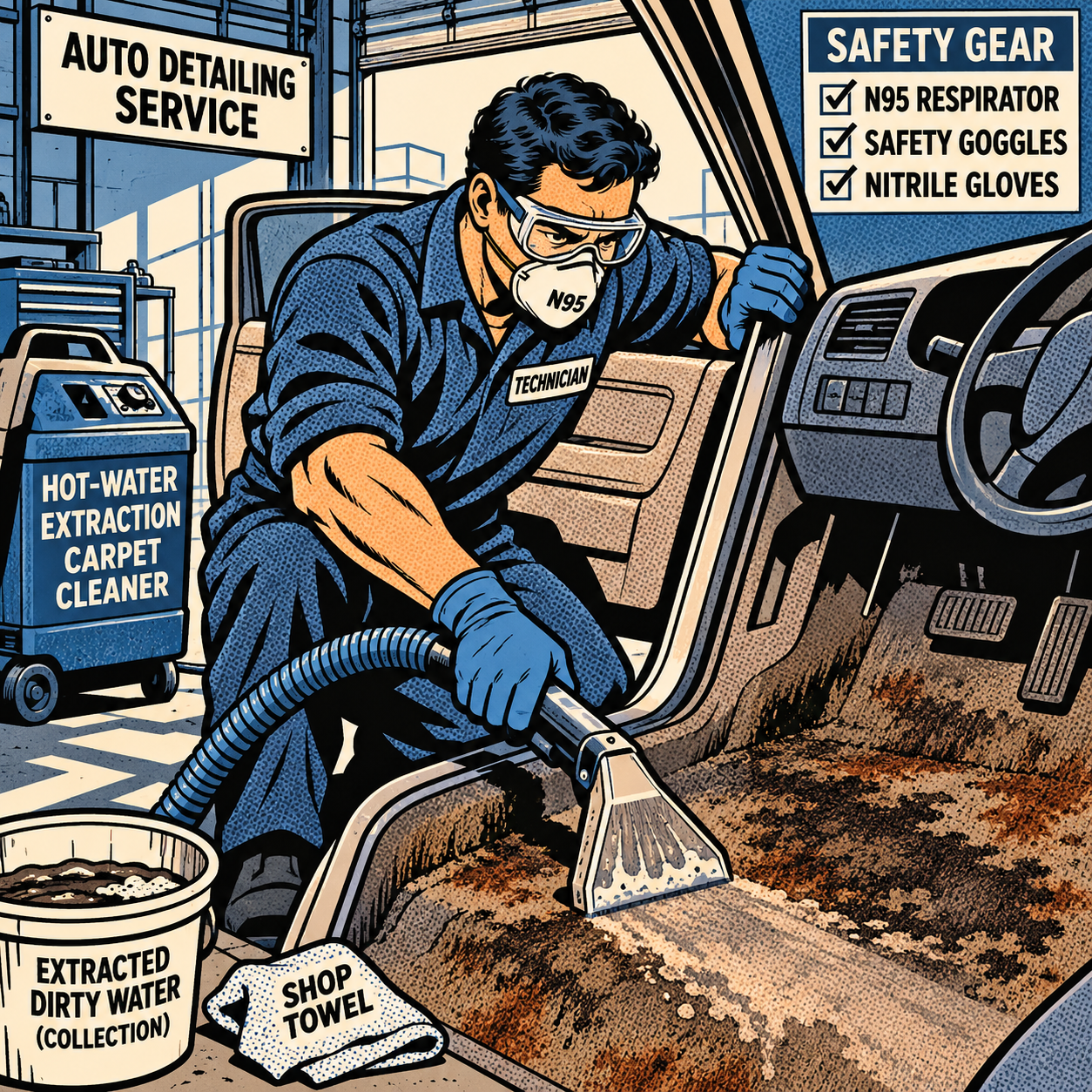
- Nitrile gloves (doubled up for heavy jobs), an N95 or better respirator, and eye protection are non-negotiable minimums for mold, rodent droppings, or unidentified fluids.
- Disposable coveralls for extended extraction work keep contamination off your regular clothes and out of your vehicle.
- Ventilate the bay — open doors, run fans, and don’t work a sealed interior in a closed space for hours at a time.
- Keep a dedicated biohazard waste bag and dispose of it per local regulations; don’t mix it with your normal shop trash.
Equipment and Workflow for Extreme Interiors
Standard detailing tools are often undersized for these jobs. A shop vac and a bottle of all-purpose cleaner won’t touch saturated carpet padding or ground-in filth that’s been baking in a car for months.
A workflow that holds up on the worst interiors:
- Remove and bag all trash and belongings first — don’t try to clean around debris. Photograph the vehicle before and after this step.
- Dry vacuum thoroughly, including under seats, in seat tracks, and door pockets, before introducing any liquid.
- Pre-spray and agitate carpet, seats, and mats with a dedicated interior cleaner and a drill brush or stiff detailing brush to break up embedded soil.
- Extract with a proper upholstery/carpet extractor rather than a shop vac — you need real suction and hot water injection to pull contamination out of foam and padding, not just surface debris.
- Use a Tornador-style air tool and a steam cleaner for vents, seams, and tight upholstery folds where biological matter and odor sources hide.
- If carpet or padding is saturated (standing water, long-term moisture), pull the carpet and check the padding underneath — cleaning over wet padding just reseals the mold source.
- Run an ozone or odor-neutralizing treatment after extraction and full drying, not before — ozone on a still-wet interior won’t permanently kill odor sources hiding in foam and headliner material, and smell often returns within days if this step is skipped or rushed.
Short Checklist for Extreme-Condition Jobs
- Written drop-off policy on belongings and liability, shared before booking
- Photos taken and quote confirmed before any cleaning starts
- Separate upcharge for trash/item removal, documented in the invoice
- PPE on before opening doors: gloves, respirator, eye protection
- Dry removal and vacuum before any wet work
- Extractor and steam/air tool used on seats, carpet, and tight seams
- Padding checked for saturation; ozone run only after full drying


FAQ
How much should I charge extra for a car full of trash or personal items?
Most shops add a flat $50–$100 for removing and sorting a significant volume of belongings (roughly a trash bag or more), on top of the standard detail price. Larger vehicles or multiple bags justify more. Communicate the upcharge before you start, not on the invoice afterward.
Should I ever refuse a job outright?
Yes. If a vehicle shows signs of active mold colonization, sewage, needles, or a smell/condition you’re not equipped to handle safely, it’s reasonable to decline or refer it to a specialist. Protecting your health and your equipment takes priority over any single job.
What’s the difference between a “dirty car” detail and a biohazard job?
A dirty car has excess dust, stains, or clutter but no biological contamination. A biohazard job involves mold, bodily fluids, animal waste, standing water with organic growth, or unknown substances that pose a health risk — these need PPE, separate waste handling, and should be priced and scheduled as a distinct job type.
Why does the smell come back a few days after I thought I removed it?
Odor sources often sit in seat foam, carpet padding, and headliner material, not just the visible surface. If you ozone or deodorize before those layers are fully dry and extracted, the smell can reappear once trapped moisture or residue reactivates. Full extraction and drying before odor treatment is the fix.
Is it legal or advisable to throw away a customer’s belongings left in the car?
Only do so with clear, documented consent — ideally a signed waiver at drop-off stating the shop isn’t responsible for items left behind and may dispose of trash/belongings to complete the job. Without that, bag and set items aside rather than discarding them, even if they look like garbage.
What should I do if I find something unexpected mid-job, like saturated padding or mold?
Stop work, photograph the issue, and contact the customer with a revised quote before continuing. Treating it as part of the original price sets a bad precedent and may mean doing hours of extra labor for free.
Get the Right Equipment for Extreme Interior Work
As covered in this guide, extreme interior jobs demand professional-grade extraction equipment, proper PPE, and specialized cleaning chemicals. Our Shop Equipment and Supplies carries the tools and protection gear needed to handle these jobs safely and effectively.
- Upholstery and carpet extractors with hot water injection for saturated padding and mold
- Nitrile gloves, respirators, coveralls, and eye protection for contaminated interiors
- Ozone generators and disinfectants for odor elimination and final sanitation

The Toolsource Technical Team blends decades of real-world automotive service experience with up-to-date technical research. Our writers collaborate with professional mechanics, shop owners, and diagnostic specialists to deliver practical, workshop-ready guidance you can trust.


Follow us on social media