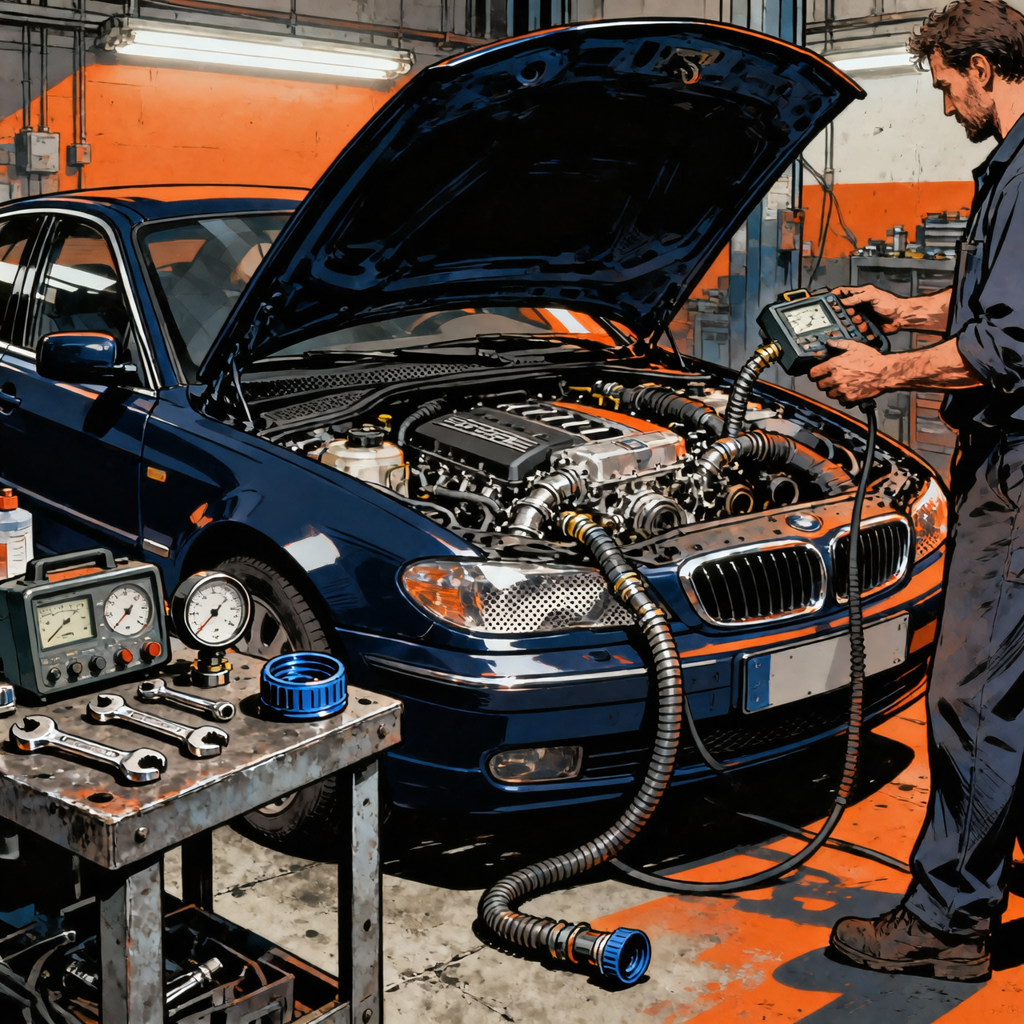
Many Audi/VW 2.0T (TFSI/TSI, EA888 family) owners are surprised to find that removing the oil fill cap with the engine idling causes rough running or a stall. On some variants this behavior is normal due to how crankcase ventilation is engineered. On others, it points to a failed positive crankcase ventilation (PCV)/oil separator assembly or a blocked breather. This guide outlines how the system works, what symptoms matter, and a step-by-step diagnostic approach that avoids inducing false faults or damaging seals.
How the 2.0T crankcase ventilation works (and why the oil cap matters)
The 2.0T uses an integrated oil separator/PCV module on the valve cover that manages crankcase pressure across idle, cruise, and boost conditions. Key elements:
- Regulated vacuum path: At idle and light load, intake manifold vacuum draws crankcase vapors through a diaphragm-regulated valve inside the separator. The diaphragm limits crankcase vacuum to a small, controlled value.
- Turbo-inlet path: Under boost (when manifold pressure is positive), a one-way valve routes vapors to the turbo inlet (pre-compressor), preventing boost from entering the crankcase.
- Fresh air path: A breather line between the air intake (post-filter, pre-throttle) and the separator allows make-up air into the crankcase.
What this means at idle: the crankcase runs under slight vacuum. If you remove the oil cap, you open the crankcase to atmosphere and the engine ingests a large amount of unmetered air. Depending on generation and calibration, that can cause a stumble, major idle quality issues, or a stall. Some late EA888 designs pull a relatively high crankcase vacuum at idle by design and will stall with the cap off even when everything is healthy.
Where it goes wrong: if the diaphragm tears or internal check valves fail, the manifold can pull excessive vacuum on the crankcase. This leads to strong suction at the oil cap, lean trims, whistle noises, and in severe cases the rear main seal (RMS) being pulled inward and leaking. A completely blocked fresh-air breather can also elevate crankcase vacuum and mimic PCV failure.
Symptoms: normal vs fault indicators
Use the behavior matrix below to decide whether you have a fault or normal operation for your specific 2.0T variant.
- Oil cap removed, engine stumbles or stalls: Can be normal on some late EA888 engines. Treat as a data point, not a standalone test.
- Oil cap hard to remove at idle, strong hiss or whistle: Often indicates excessive crankcase vacuum from a failed PCV diaphragm or stuck valve; also possible with a blocked breather.
- Fuel trims: Positive short-term/long-term trims at idle (unmetered air), which normalize under load, point to a vacuum-side leak or PCV over-scavenging.
- Rough idle/high idle: Unmetered air through PCV can cause rough or high idle; some ECUs set P0507 (Idle higher than expected).
- Oil consumption or new external leaks: Excessive vacuum can increase oil pull-over into the intake and may implode the RMS, causing a large leak.
- DTCs commonly associated: P2279 (Intake air system leak), P0171 (System too lean, bank 1), P052E (PCV regulation performance), misfire codes at idle.
Context matters. If trims are normal, there are no related DTCs, and vacuum measurements are within spec, a stall with the oil cap removed may be normal behavior. If trims are lean at idle, there are PCV-related codes, and crankcase vacuum is high, suspect the oil separator.
Don’t diagnose by removing the oil cap: use these tests instead
Opening the oil cap is a crude test that can set false faults and mask the root cause. Use a structured diagnostic path:
1) Scan first
- Pull codes and freeze frame before touching anything. Look for P052E, P2279, P0171, P0507, and misfires. Note coolant temp and load in freeze frame.
- Monitor idle STFT and LTFT. A healthy engine will have near-zero trims at hot idle. Significant positive trims at idle that improve under load suggest unmetered air on the vacuum side.
2) Measure crankcase vacuum

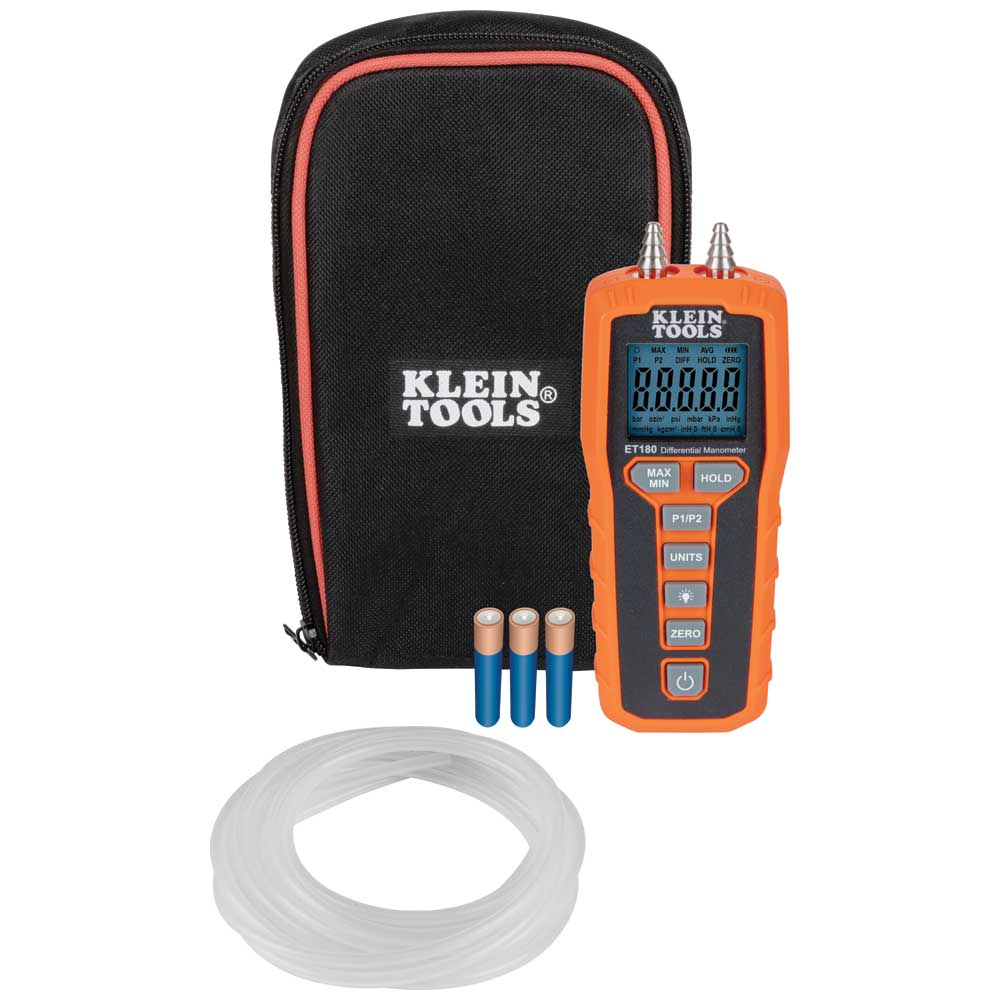
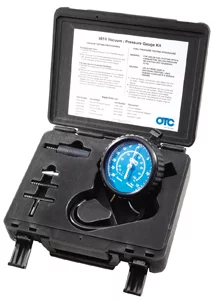
Use a low-pressure gauge or a U-tube manometer on the dipstick tube (preferred) or an adapter at the oil cap:
- Warm engine, fully closed PCV paths (no hoses disconnected). Read crankcase vacuum at hot idle in inches of water (inH2O) or mbar.
- Interpretation: You should see a slight, steady vacuum. Excessive vacuum indicates a failed diaphragm, stuck-open internal valve, or a blocked fresh-air breather. Because calibration varies by generation, compare to service information or baseline a similar known-good engine. As a rule of thumb, a large increase from slight vacuum to a strong, sustained vacuum at idle is suspicious, especially if accompanied by lean trims and whistling.
- Pinch test: Briefly pinch the hose from the separator to the intake manifold (use line pinch-off pliers). If crankcase vacuum drops toward zero and idle smooths, the PCV is likely over-scavenging. If vacuum doesn’t change, check for a blocked breather path from the air intake to the separator.
3) Visual and audible checks
- Listen for high-pitched whistle at the separator/valve cover—often a torn diaphragm.
- Inspect separator housing and connections for oil residue, cracks, and collapsed hoses, especially the fresh-air breather line to the intake tract.
- Check the rear main seal area. Excessive crankcase vacuum can invert the RMS; fresh oil leak after onset of vacuum issues warrants immediate attention.
4) Intake and crankcase smoke testing
- With the engine off, cap the intake and smoke the intake tract; check for external vacuum leaks that could skew trims and mimic PCV faults.
- Smoke the crankcase via the dipstick tube at very low pressure. Look for smoke escaping at gaskets/seals. Excessive flow into the intake through PCV paths with the engine off can indicate failed internal check valves.
5) Bench testing the separator (if removed)
- Apply handheld vacuum to the diaphragm port (where applicable). It should hold vacuum and move smoothly; failure to hold indicates a torn diaphragm.
- Verify check-valve function by gently applying vacuum/pressure at the manifold and turbo-inlet ports. Air should flow only in the intended directions.
Repair: replacing the PCV/oil separator correctly

If diagnostics point to the separator, replace it and re-verify trims and vacuum. General guidance (refer to model-specific service information for exact procedures and torque values):
- Prep and safety: Disconnect the negative battery terminal if required by service info. Work on a cool engine. Remove engine cover and related intake ducting for access.
- Label and disconnect: Mark and disconnect the manifold vacuum line, turbo-inlet breather hose, and any electrical connectors or vacuum lines on the separator.
- Remove separator: Unbolt the separator from the valve cover. Some designs integrate a gasket; others require a separate gasket—replace every time. Carefully clean the mating surface.
- Inspect related components: Check the fresh-air breather hose and ports for blockage. Ensure the manifold port is free of debris. Inspect the valve cover PCV passages for sludge.
- Install updated part: Audi/VW often revise these units. Use the latest supersession for your VIN. Install a new gasket, torque fasteners per spec in a cross pattern to avoid warping.
- Reconnect lines: Ensure hose clamps seat fully and are oriented to avoid chafing. Replace any brittle plastic connectors.
- Post-repair verification: Clear codes. Warm the engine fully. Recheck idle trims, crankcase vacuum, and listen for whistling. Perform a short road test, then re-check for leaks.
Note: Some vehicles may require basic settings or throttle body adaptation after extensive air path work; follow service instructions. If oil consumption was a symptom, inspect the charge pipes and intercooler for oil accumulation and clean as needed.
Preventing repeat failures: shop tips
- Use OEM or high-quality OE-supplier separators. Low-cost copies often fail early under the 2.0T’s vacuum conditions.
- Inspect and replace the fresh-air breather hose if it’s oil-soaked, soft, or collapsed. A blocked breather will increase crankcase vacuum and can mimic a bad separator.
- Advise customers about behavior: Opening the oil cap at idle can stall some engines even when healthy and may set temporary fault codes. It’s not a diagnostic test.
- Watch the RMS: If you repaired an over-vacuum condition, closely monitor the rear main seal area for leaks on follow-up. Excessive vacuum can invert the seal lip.
- Oil quality and intervals matter. Sludge accelerates PCV issues. Stick to the correct spec oil and reasonable service intervals.
- Oil consumption complaints: If trims and vacuum are normal after PCV service but oil consumption persists, evaluate rings/cylinder condition, valve stem seals, and turbo seals.
Quick checklist (before replacing parts)
- Scan and record DTCs/freeze frame; monitor idle and 2500 rpm fuel trims.
- Measure crankcase vacuum at hot idle with a low-pressure gauge or manometer.
- Pinch PCV-to-manifold hose briefly; observe vacuum and idle changes.
- Inspect and, if needed, replace the fresh-air breather hose.
- Smoke test intake and crankcase to rule out external leaks.
- Confirm separator diaphragm/check valves with handheld vacuum if removed.
FAQs
Is it normal for an Audi/VW 2.0T to stall when the oil cap is removed?
On some late EA888 variants, yes. Their PCV strategy can pull relatively high crankcase vacuum at idle, so removing the cap creates a large unmetered air leak and the engine may stall. Treat this as a behavior note, not a diagnosis. Verify with scan data and a crankcase vacuum measurement.
What codes point to a PCV/oil separator problem?
Common DTCs include P052E (positive crankcase ventilation regulation performance), P2279 (intake air system leak), P0171 (system too lean), and P0507 (idle higher than expected). Misfires at idle may also appear. Always read freeze frame to understand the operating conditions when the code set.
Can excessive crankcase vacuum damage seals?
Yes. A failed separator can drive crankcase vacuum high enough to invert the rear main seal, creating a significant oil leak. Correct the vacuum problem first, then reassess seal condition. After repair, verify vacuum is within a small, steady range at idle.
Will a catch can fix oil consumption on these engines?
Catch cans can reduce oil ingestion into the intake on high load/boost, but they are not a fix for a failed separator, worn rings, valve stem seals, or turbo issues. For street-driven, emissions-equipped cars, follow local regulations. Start with proper PCV diagnosis and repair.
How often should the PCV/oil separator be replaced?
There is no universal interval. Failures are common enough on some 2.0T generations that proactive replacement around 60–90k miles is reasonable in high-failure regions, especially if symptoms appear. Always install the latest superseded part and evaluate the fresh-air breather path.
What’s the best way to measure crankcase vacuum?
Use a dedicated low-pressure gauge or a U-tube manometer connected to the dipstick tube. Avoid using high-range vacuum gauges intended for manifold vacuum—they lack resolution for the small pressures involved in crankcase measurements. Compare results to service information or a known-good vehicle.
Essential Tools for VW/Audi Diagnostics
Proper diagnosis of PCV and crankcase vacuum issues requires the right diagnostic equipment. Explore our complete range of automotive diagnostic tools to master complex European engine systems:
- Digital Manometers & Vacuum Gauges – Precisely measure crankcase pressure and vacuum levels to identify PCV failures before they cause stalling
- OBD2 Scanners with Live Data – Monitor real-time sensor readings from your VW/Audi’s engine control module to correlate vacuum loss with engine performance
- Smoke Testers & Leak Detectors – Pinpoint vacuum leaks in PCV lines and gaskets that could trigger the exact symptoms described in this guide

The Toolsource Technical Team blends decades of real-world automotive service experience with up-to-date technical research. Our writers collaborate with professional mechanics, shop owners, and diagnostic specialists to deliver practical, workshop-ready guidance you can trust.


Follow us on social media