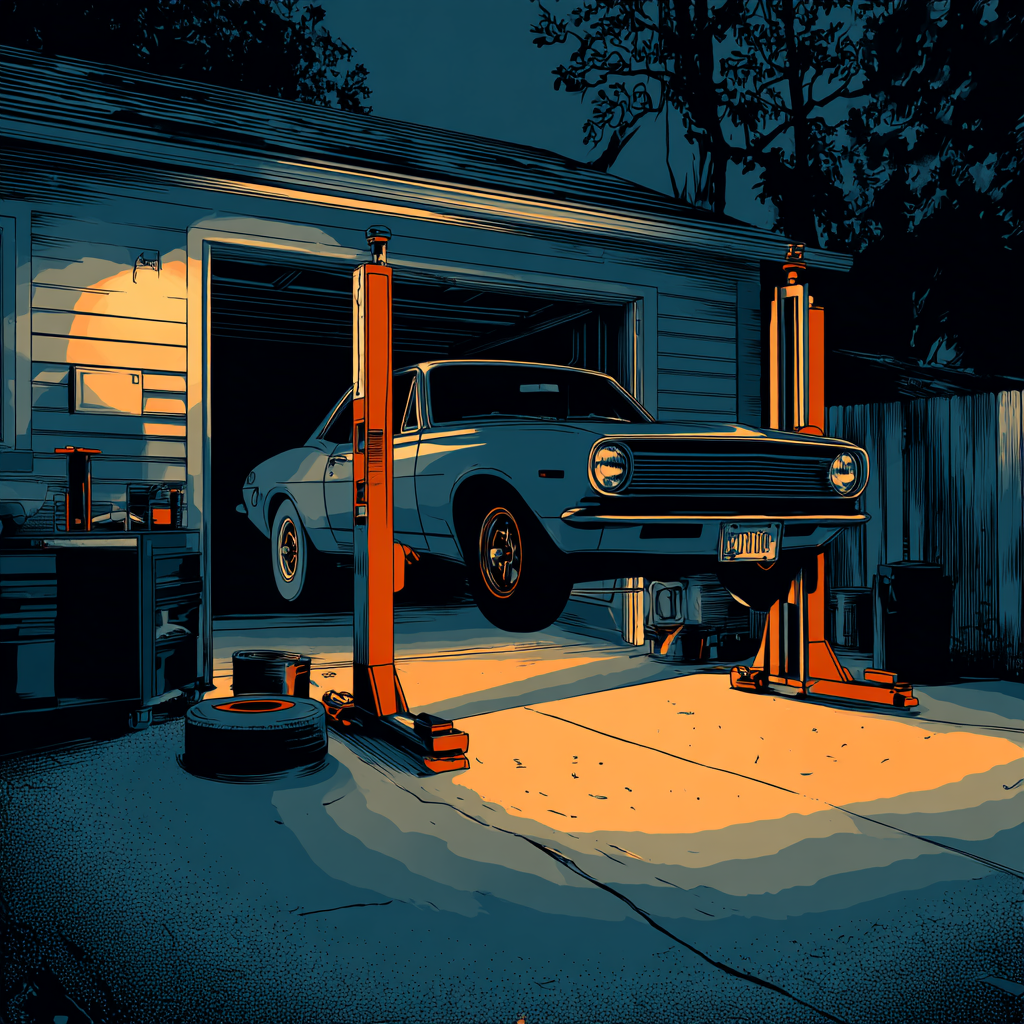
Finding trustworthy lift points is often the most stressful part of any job under a vehicle. Modern unibody construction, plastic undertrays, and thin body panels leave fewer obvious spots than older body-on-frame trucks. This guide explains where to position a floor jack and jack stands on common designs, the components to avoid, how to verify stability, and when ramps are the safer choice.
Understand the Load Path: Where Your Vehicle Is Strong
Before lifting, identify the structures that carry vehicle weight in normal operation. These are the best candidates for jacking and support:
- Body-on-frame trucks and SUVs: The frame rails, front crossmembers, rear axle (axle tubes near spring perches), and differential housing (if cast and manufacturer-approved) are primary lift points. Avoid thin sheet metal body sections and bolt-on covers.
- Unibody cars and crossovers: The front and rear subframes/cradles (where engine/suspension mount), reinforced pinch weld jack points, and some central service jack points (often deep under the nose or tail) are intended for lifting. The owner’s manual or factory service manual will show these locations.
- Suspension members that carry spring/strut load: If a spring or strut loads directly into a component, that component is designed to carry significant weight (e.g., a lower control arm with a coil spring seat). These can be used as secondary lift/support points with proper pads and placement.
Always confirm with the owner’s manual or service data. Many vehicles specify a center front and rear jack point for use with a floor jack, plus four pinch-weld stand points. Some models support the radiator support or rear tie-bar; others specifically forbid it.
What to Lift From—and What to Avoid
Use the following as a practical rule set when a manual isn’t handy:
Generally safe lift points (verify on your model)
- Front subframe or front crossmember: A central, flat portion that ties into both frame rails/subframe legs. Center your jack cup; use a rubber pad.
- Rear subframe or central rear crossmember: Similar to the front; avoid thin bridging plates or hollow sections.
- Differential center section: Only if the housing is cast and the manufacturer permits jacking there. Never jack on a stamped steel or thin aluminum cover.
- Reinforced pinch welds: Look for notches or thicker sections indicated in the manual. Use a pinch-weld adapter or slotted puck to prevent seam crush.
- Solid axle tubes near spring perches (trucks/RWD cars): Place stands as close to the spring perch as possible to minimize bending loads.
Do not lift from
- Oil pans or transmission pans as a primary lift point. Thin steel or aluminum can deform or crack. Exception: once the vehicle is already supported on stands, a jack with a wide wooden block may be used lightly under a flat steel pan to relieve load on an engine mount during service.
- Floor pan, rocker skins, or cosmetic panels. These are not structural and will crush.
- Sway bars, tie rods, control arm links, or small brackets/tubes. Not designed for vertical loading.
- Exhaust, catalytic converters, plastic undertrays, or aero shields.
- Rust-compromised areas. If there is significant corrosion, choose alternate support points and reassess the job plan.
Step-by-Step Procedures: Front, Rear, and Single Corner
Use a solid, level surface (concrete preferred). Avoid soft asphalt in hot weather unless using cribbing plates.
Tools and materials
- Floor jack (2–3 ton for cars; 3–4 ton for trucks). Long-reach/low-profile helps reach deep center points.
- Rated jack stands (always use in pairs), with rubber pads or pinch-weld adapters.
- Wheel chocks (at least two). Rubber or urethane preferred.
- Jack pads: rubber puck, slotted pinch-weld adapter, or hardwood block.
- Optional: crossbeam adapter, anti-slip jack mat, creeper, work light, gloves, eye protection.
Lift the entire front end
- Chock both rear wheels. Set parking brake; transmission in Park (auto) or 1st gear (manual).
- Locate the front center jack point. Typically a reinforced pad on the front subframe, crossmember, or a specifically molded boss deep under the nose. Consult the manual.
- Position the jack so the cup is centered on the jack point. Use a rubber pad to prevent marring and slippage.
- Lift smoothly until desired height clears for stand placement.
- Place jack stands at the left and right reinforced pinch welds or frame rails. If using pinch welds, use slotted adapters. Aim for symmetrical height.
- Lower the vehicle onto the stands slowly. Keep hands clear; verify both stands take load evenly.
- Set redundancy: Raise the jack back up to just contact the center point without lifting off the stands. Close the valve so the jack holds position as a backup.
Lift the entire rear end
- Chock both front wheels. Transmission in Park or 1st gear; release parking brake if the rear brakes are drum-style and you need them free.
- Primary jack point: The differential center section (cast only, and only if manufacturer approves). Alternative: a rear subframe crossmember with a flat reinforced pad.
- Lift and place stands at the reinforced rear pinch welds or at axle tubes near the spring perches on solid axle vehicles. Avoid placing stands near the differential cover seam.
- Lower onto stands and set the jack as a light-contact backup.
Lift a single side or corner
- Chock the opposite-side wheel(s).
- Select a local lift point: the pinch weld jack point for that corner or a control arm spring seat if the spring/strut loads into the arm.
- Lift just enough to remove the wheel or access the component.
- Place a stand adjacent to the jack at the designated pinch weld or frame rail; lower onto the stand.
Tip: If you plan to remove both front wheels, lifting the front centrally once is faster and reduces setup repeats. The same applies to the rear.
Setting Jack Stands Correctly and Verifying Stability
- Surface matters: Use concrete. If you must work on asphalt or pavers, add wide plywood or purpose-built stand pads under each stand and the jack to spread load.
- Stand placement: Keep stands under reinforced points only. On pinch welds, orient a slotted adapter so the seam sits in the slot; avoid crushing the seam.
- Height and symmetry: Match stand heights left-to-right. Two stands (front or rear) provide good stability; four stands provide maximum stability for jobs needing all four wheels off.
- Redundancy layers: After lowering onto stands, raise the jack until it just kisses the lift point. Place removed wheels laid flat beneath the body rails/pinch welds between stands as a tertiary catch.
- Push test: Before crawling under, give the vehicle a firm shove at the corners. There should be no rocking, creeping, or audible shifting. If anything moves, reset until rock-solid.
Special Conditions: Rust, Low Cars, and Unusual Suspensions
- Rusty pinch welds or sills: Inspect first. If the seam is swollen, perforated, or previously crushed, do not support there. Use subframe points or suspension members that carry spring load. Place a wide rubber/wood block to spread load on a flat subframe plate, not a hollow opening. Consider temporary cribbing under a solid structure if service data allows.
- Low ground clearance: Use a low-profile, long-reach jack. If you can’t reach the center point, drive onto low-rise ramps or wood planks to gain 1–2 inches, then re-approach with the jack. Some front air dams deflect ramps—use anti-slip mats and a spotter.
- Control arm jacking: Safe only when the spring or strut loads into that arm (e.g., double wishbone with coil spring seat on the lower arm). On MacPherson strut cars where the spring/strut loads into the knuckle, many stamped steel lower arms are thin and can deform if jacked far from the ball joint pocket. If you must, position the jack at the arm’s reinforced pocket near the ball joint and use a wide pad.
- Differentials and covers: Never jack on a sheet-metal diff cover or the cover bolts. Only lift on the cast center section and only if procedures permit. For aluminum housings, use a rubber pad and lift slowly.
- Composite or aluminum subframes: Many modern subframes are alloy or composite-reinforced. Only use locations explicitly designated in the manual. A crossbeam adapter that spans two points can reduce point-loading.
Ramps vs. Jacks: When and How to Use Ramps Safely
Drive-on ramps are a viable, fast option when the wheels will remain installed (oil service, exhaust work, visual inspections). They are not useful for brake jobs or suspension work that requires wheel removal.
- Pros: Simple, quick, inherently stable if used on a level surface. No need to locate precise jack points.
- Cons: Approach angle issues on low cars; ramps can slide if the surface is slick; you cannot remove wheels.
Safe ramp use
- Use textured anti-slip mats under ramps on smooth floors.
- Approach straight and slow; stop immediately when the tires seat against the ramp stop. Use a spotter if visibility is limited.
- Set parking brake and chock the opposite axle.
- When descending, ease off the brakes smoothly to prevent hopping off the ramp. Ensure nothing obstructs ramp exit (e.g., a garage threshold lip).
Quick Pre-Lift Checklist
- Read the owner’s manual for designated jack and stand points.
- Inspect lift areas for rust, damage, or thin/hollow sections.
- Set wheel chocks and verify the surface is level and solid.
- Select the correct jack pad/adapter for the chosen point.
- Plan stand locations before you pump the jack.
- After lowering onto stands, perform a firm push test and add redundancy.
Common Mistakes and How to Prevent Them
- Lifting by the oil pan: Avoid entirely as a primary lift. Only use a wide wood block for light support on a steel pan when the vehicle is already on stands and you’re unloading a mount.
- Crushing pinch welds: Use a slotted adapter or rubber puck. Verify you’re on the reinforced section marked by notches, not a random section of the seam.
- Standing the vehicle on a hollow crossmember: Tap-test or inspect: reinforced pads are thick and flat; hollow boxes may oilcan. Use service data to confirm.
- Working on an uneven or soft surface: Move the job or use cribbing plates. Stability is non-negotiable.
- Relying on a hydraulic jack alone: Jacks can leak down. Always support with stands and add a redundant contact with the jack.
- Poor stand orientation: Keep the stand head centered under the structure. For frame rails, the saddle should straddle the rail with a rubber pad to prevent marring and slip.
FAQs
Can I jack under the oil pan to change engine mounts?
Do not use an oil pan as a primary lift point. If the vehicle is already safely supported on stands, you may use a floor jack with a wide wooden block to lightly support a flat steel oil pan to unload an engine mount. Never jack on an aluminum pan or lift the vehicle off the ground by any pan.
Is it safe to lift by the lower control arm?
Only when the control arm carries spring or strut load and the arm has a reinforced pocket (often near the ball joint). Many stamped arms on MacPherson strut cars are thin and can bend if jacked mid-span. When in doubt, use subframe points or the designated pinch welds with proper adapters.
Can I lift by the differential?
Yes, if the differential center section is a solid cast housing and the manufacturer permits it. Use a rubber pad and avoid diff covers, seams, and bolts. If the rear diff is aluminum with thin walls or not approved as a jack point, use the rear subframe crossmember instead.
Where should jack stands go after I lift from a front or rear center point?
Place stands at the reinforced pinch welds indicated by the manual, or on frame rails (body-on-frame). On solid rear axles, stands can go under axle tubes near the spring perches. Always use pads/adapters that match the surface.
My pinch welds are rusty or crushed. What are my options?
Avoid loading damaged seams. Use subframe/crossmember pads or suspension points that carry spring load, with wide pads to distribute force. Consider professional rust repair or weld-in service points if you routinely service the vehicle. For simple maintenance with wheels on, ramps are often safer.
Do I need a long-reach or low-profile jack?
Many cars place the front center jack point deep behind the front fascia. A long-reach, low-profile jack makes access realistic without lifting incrementally. If your jack cannot reach, drive onto thin planks/low ramps first, then reposition the jack to the center point.
When in doubt, defer to the owner’s manual or factory service information. Proper lift points and stable setup save time, protect components, and most importantly, keep you safe.
Shop Jacks & Stands
Ready to put these techniques to work? Browse our Lifting Equipment for the floor jacks, stands, and pads suited to the lift points covered here.
- Low-profile and long-reach floor jacks for central lift points.
- Rated jack stands with rubber pads and pinch-weld adapters.
- Accessories like jack pads and wheel chocks for added stability.

The Toolsource Technical Team blends decades of real-world automotive service experience with up-to-date technical research. Our writers collaborate with professional mechanics, shop owners, and diagnostic specialists to deliver practical, workshop-ready guidance you can trust.


Follow us on social media