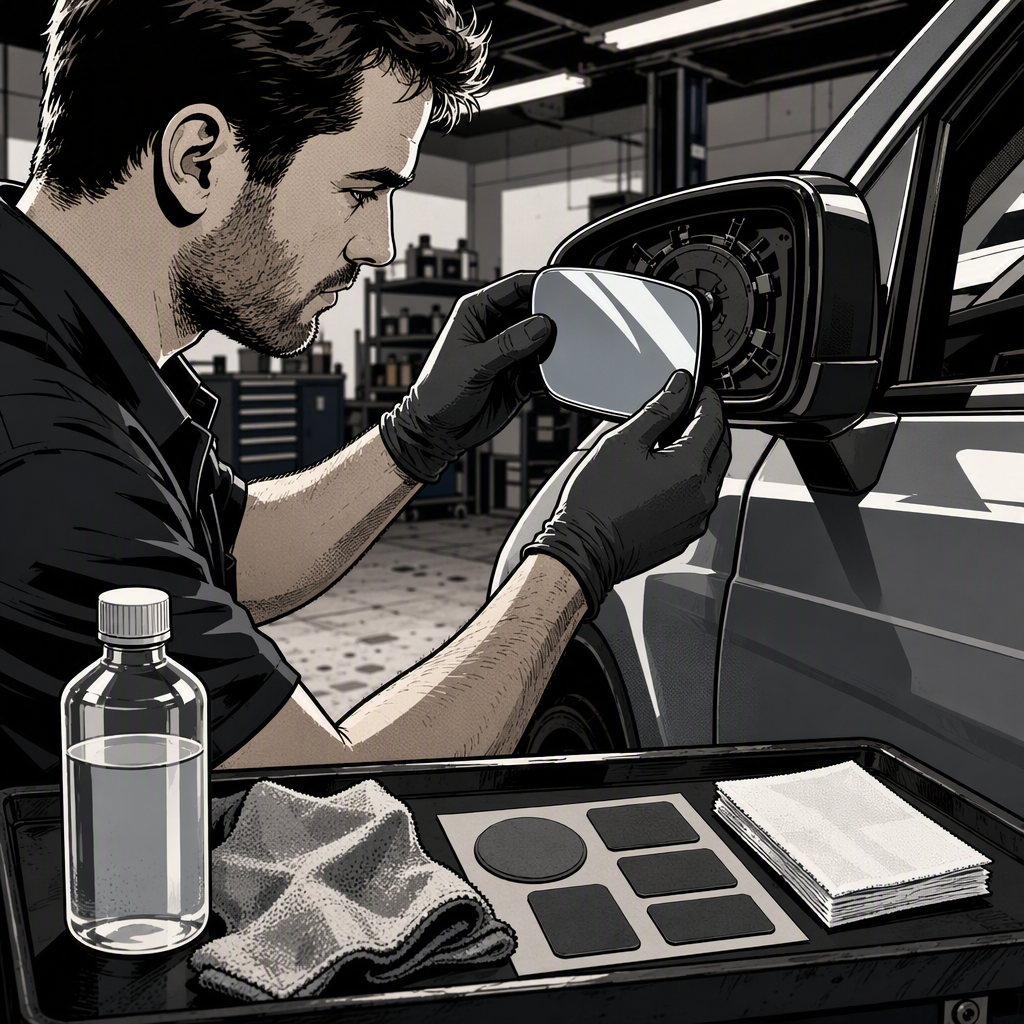
Customers bring up side mirrors more often than most techs expect — usually after a near-miss lane change, a rental car trip abroad, or a forum thread claiming “European mirrors are better.” There’s a real optical difference between US flat mirrors and the aspherical (part-flat, part-convex) mirrors common in Europe and most other markets, and it directly affects blind spot size. This post breaks down the actual difference, the correct adjustment procedure to hand customers, and what a technician needs to check before swapping glass, adding convex spot mirrors, or touching anything near a blind spot monitoring (BSM) sensor.
Why US and Euro mirrors are built differently
US federal regulation (FMVSS 111) requires the driver’s side mirror to be flat (planar) so that objects appear at their true distance — hence the familiar “objects in mirror are closer than they appear” etched onto the passenger side, which is the only side permitted to be convex in the US, and only mildly so. Euro-market regulation (UNECE Reg. 46) permits aspherical mirrors on both sides: a flat inner section for accurate distance judgment plus a more sharply curved outer section that widens the field of view. The result is that a Euro-spec mirror shows meaningfully more of the lane next to and behind the car, at the cost of making distant objects look slightly smaller than they are.
This isn’t a manufacturing defect or a cheap part — it’s a deliberate regulatory choice in both regions, and it’s why a factory US mirror glass and a factory Euro mirror glass for the “same” car can look and perform noticeably differently, even when the housing is identical.
The adjustment procedure that actually closes the gap
Before recommending any hardware change, walk the customer through proper mirror adjustment — most blind-spot complaints are fixable with zero parts cost. The common mistake is setting mirrors so the driver can see the rear quarter panel of their own car; that wastes 15-20 degrees of field of view that should be pointed further outboard.
- Have the driver lean their head against the side window (or center console for the passenger mirror) and adjust the mirror outward until the edge of their own car just barely disappears from view.
- Set the interior rearview mirror to frame the full rear window — this should be the only mirror showing the back of the vehicle.
- Check for overlap: a car passing through the driver’s rear peripheral vision in the rearview mirror should already be entering the edge of the side mirror before it vanishes from the rearview.
- Confirm with a second person walking a vehicle-width path behind and beside the car, or by tracking traffic on a test drive — there should be no gap where a car disappears entirely.
This is sometimes called the BGE (blind spot elimination) method. It won’t fully replicate a Euro aspherical mirror’s field of view, but it removes the classic “car parked at my rear quarter panel invisible in every mirror” blind spot that flat US mirrors are notorious for. Emphasize to customers that even with mirrors set correctly, a head check before a lane change is still standard practice — mirrors reduce reliance on it, they don’t eliminate the need for it.
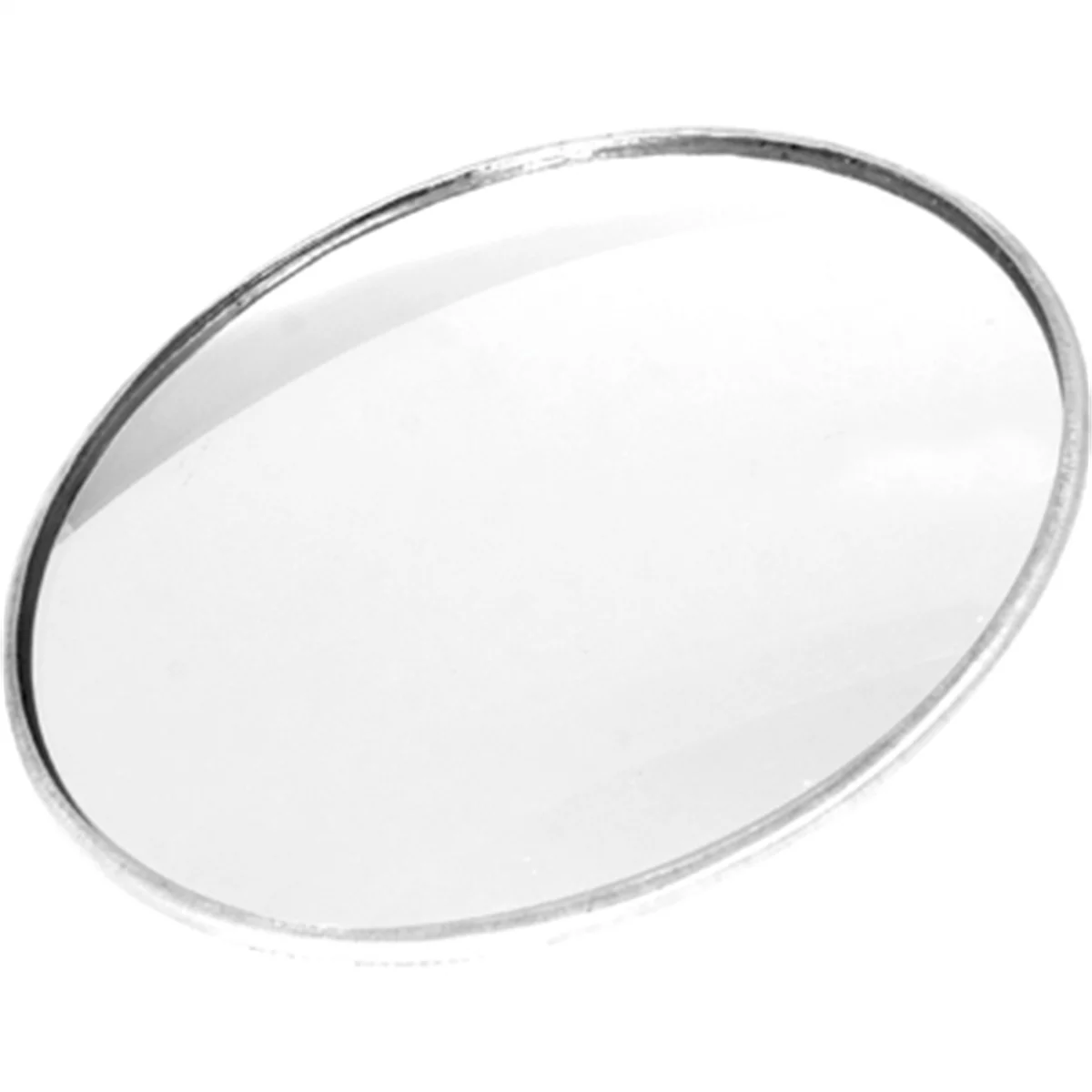
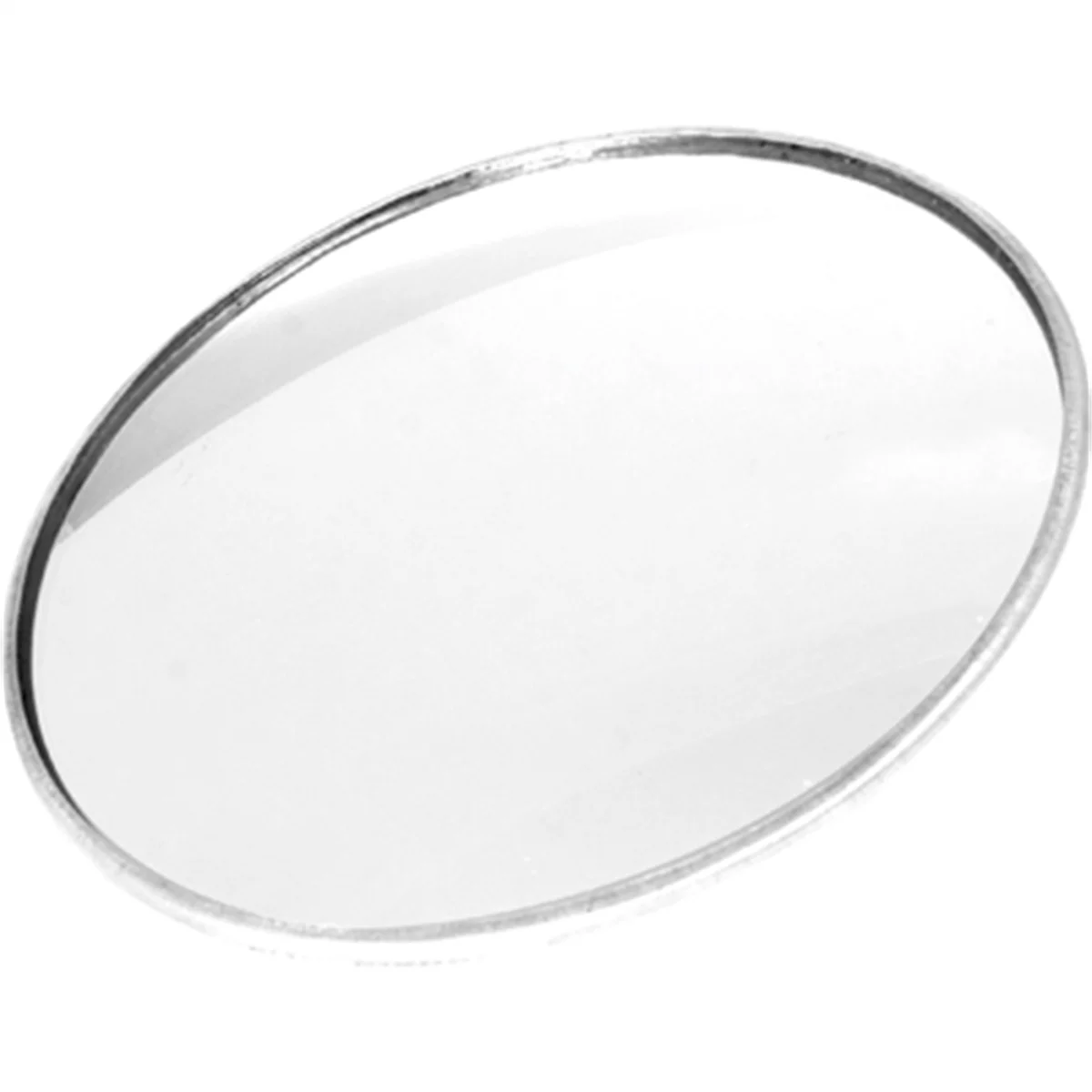
Replacement Head for Inspection Mirror - 3-1/4 In Diameter
Mfg: Ullman Devices Corp.
Part #: S-2HD
Retrofitting Euro-spec or aspherical mirror glass
Some customers want to go further and source Euro-spec mirror glass or full mirror assemblies for their US-market vehicle. This is mechanically straightforward on many platforms since the housing is often shared globally, but there are several things to check before ordering parts or booking the job:
- Heating element and connector pinout. Heated mirror glass has a resistive element bonded to the back; confirm the wiring pattern matches, since Euro and US parts aren’t always interchangeable even on the same platform.
- Auto-dimming and puddle lamp features. Mirrors with auto-dimming glass or integrated turn signal/puddle lights have additional wiring that must match the vehicle’s harness, not just the mirror’s shape.
- Blind Spot Monitoring (BSM) sensors. These live in the rear bumper corners on most vehicles, not in the mirror housing, so mirror glass swaps generally don’t affect them. However, if the job involves a full mirror housing/assembly replacement that touches wiring near the A-pillar or door module, verify no BSM-related wiring or camera (some vehicles route a blind-spot camera through the mirror housing) is disturbed. If a camera-equipped mirror is replaced, expect to need a camera alignment or ADAS recalibration procedure per OEM service data.
- Adhesive prep on glass-only swaps. Failed adhesive is the most common comeback on a mirror glass replacement — clean the mounting tab and glass back thoroughly with isopropyl alcohol and use the OEM-spec adhesive pad or approved mirror adhesive, not general-purpose glue.
- DOT/legal marking. A non-DOT-marked mirror installed on a US title vehicle can be flagged in some state inspections. This is rarely enforced but worth mentioning to customers who ask about resale or inspection concerns.
Add-on convex spot mirrors: what still works and what’s banned
The small stick-on convex “blind spot mirrors” that used to be common in US aftermarket aisles have been restricted or banned in several European countries, and some manufacturers have discontinued them in favor of the integrated aspherical section built into the mirror glass itself. For US vehicles, they’re still legal and widely available, and they remain a low-cost way to shrink a blind spot on a car that will never get a mirror glass swap.
When installing one for a customer:
- Position it in the upper outboard corner of the mirror, not the center — the goal is to supplement the flat mirror’s field of view at the point where objects would otherwise disappear, not to replace the main view.
- Keep it small (1-2 inch) and mounted consistently across left and right mirrors if both get one, so the driver’s scanning habit stays symmetrical.
- Warn customers that a large convex add-on distorts distance judgment significantly and should never be used as the primary reference for a lane change — same caveat applies with full aspherical Euro mirrors, just less severely since the flat inner section remains dominant.
Diagnosing “my blind spot mirror doesn’t work” complaints on BSM-equipped vehicles
On newer vehicles, customers sometimes conflate a physical mirror blind spot with a malfunctioning electronic Blind Spot Monitoring system. Separate these before doing any mirror work:
- Check for a BSM/BLIS warning light or DTC first — a fault code points to a bumper sensor, wiring, or a system disabled by a recent bumper repair/repaint, not a mirror geometry issue.
- If there’s no fault code and the complaint is “I don’t get a warning until the car is already visible,” confirm the sensor’s detection zone against OEM specs — this is a design limit, not a defect, and mirror adjustment or add-on mirrors won’t change sensor behavior.
- After any rear bumper cover replacement, sensor removal, or reinstallation, follow the OEM static/dynamic BSM calibration procedure before returning the vehicle — misaligned sensors are a common comeback source.
Quick checklist for the service bay
- Adjust both side mirrors using the BGE method before recommending any hardware change
- Confirm rearview mirror frames the rear window only, with side mirrors picking up where it leaves off
- For glass swaps: verify heating element pinout, auto-dim wiring, and puddle lamp wiring match before ordering
- For camera-equipped mirror housings: check OEM procedure for post-install calibration
- For add-on convex mirrors: mount in the upper outboard corner, keep it small, apply symmetrically
- For BSM complaints: check DTCs and sensor calibration status before touching the mirror at all
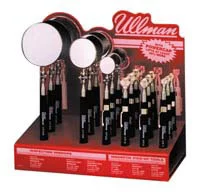
Pick Up Tool & Inspection Mirror Counter Top Display
Mfg: Ullman Devices Corp.
Part #: HTDISP
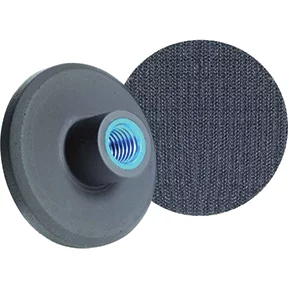
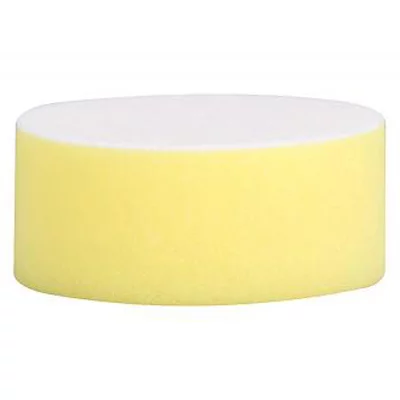
FOAM CUTTING PAD 3"
FAQs
Why don’t US mirrors show as much as European mirrors?
US regulation requires the driver’s side mirror to be flat so distances read accurately; Euro regulation allows an aspherical curve that widens the field of view but makes distant objects look slightly smaller.
Is it legal to install Euro-spec mirrors on a US car?
Generally yes for personal use, though the mirror won’t carry a US DOT certification mark, which can occasionally come up in state safety inspections. It’s not a common enforcement point, but flag it for customers who care about resale or inspection history.
Will swapping mirror glass affect the Blind Spot Monitoring system?
Usually not — BSM sensors are almost always in the rear bumper, not the mirror. Only a full mirror housing swap involving a camera or additional wiring near the door module warrants a calibration check.
Do add-on convex mirrors actually help?
Yes, when sized and positioned correctly (small, upper outboard corner) they reduce the blind spot at the point where a car disappears from a flat mirror. Oversized or centered convex mirrors distort distance judgment too much to use reliably.
Does proper mirror adjustment replace the need for a head check?
No. Even a well-adjusted mirror setup or a full aspherical Euro mirror still has a residual blind spot. A head/shoulder check before lane changes remains standard advice regardless of mirror type.
What’s the most common comeback on a mirror glass replacement job?
Adhesive failure from inadequate surface prep. Clean both mounting surfaces with isopropyl alcohol and use the correct adhesive pad or approved mirror adhesive rather than a generic glue.
Recommended Tools
Mirror adjustment and replacement work requires proper adhesives, trim tools, and mounting hardware. Browse our Door & Mirror Tools for products that support both routine maintenance and Euro-spec mirror retrofits.
- Mirror glass adhesive pads and removal tools
- Trim removal tools for door panel access
- Blind spot mirror attachments and hardware

The Toolsource Technical Team blends decades of real-world automotive service experience with up-to-date technical research. Our writers collaborate with professional mechanics, shop owners, and diagnostic specialists to deliver practical, workshop-ready guidance you can trust.


Follow us on social media