Every shop has a version of this story: a customer walks in holding a greasy chunk of metal they found under their car, convinced something just fell off. More often than not, it didn’t come from their vehicle at all — it’s debris from someone else’s driveline failure that ended up in a parking lot, driveway, or roadside shoulder. Knowing how to quickly identify what you’re looking at, and rule a customer’s car in or out, saves diagnostic time and keeps you from chasing a problem that doesn’t exist. This guide covers how to read a slip yoke or U-joint at a glance, the quick checks that confirm whether it belongs to the vehicle in the bay, and the real warning signs of a driveshaft or U-joint that’s actually on its way out.
FWD vs. RWD: Why That Part Might Not Belong to the Car in Front of You
The single fastest filter is drivetrain layout. Front-wheel-drive cars — most compact and midsize sedans, including Kia Rio, Forte, Civic, Corolla, and the like — don’t have a driveshaft or slip yoke at all. Power goes from the transaxle straight out through CV (constant velocity) axles to each front wheel. There’s no long steel shaft running down the center of the car, no U-joint, and no slip yoke to shed in the first place. If a customer’s daily driver is FWD and they’re holding a yoke with a U-joint cross and bearing caps still in it, that part physically cannot have come from their car.
Rear-wheel-drive and most 4×4/AWD platforms are different. They run a driveshaft from the transmission (or transfer case) back to the rear differential, and that shaft needs a slip yoke on the transmission end to accommodate suspension travel and length changes as the truck moves. The slip yoke splines into the transmission’s output shaft and has a U-joint pressed into its other end connecting it to the shaft tube. This is almost exclusively a truck, SUV, or older RWD car part. Full-size pickups (GM, Ford, Ram) and larger SUVs are the most common source of yokes found loose on roads, because driveshaft and U-joint failures on these vehicles are relatively common and the parts are heavy enough to survive getting run over without disintegrating.
Anatomy of a Slip Yoke and U-Joint: What You’re Actually Looking At
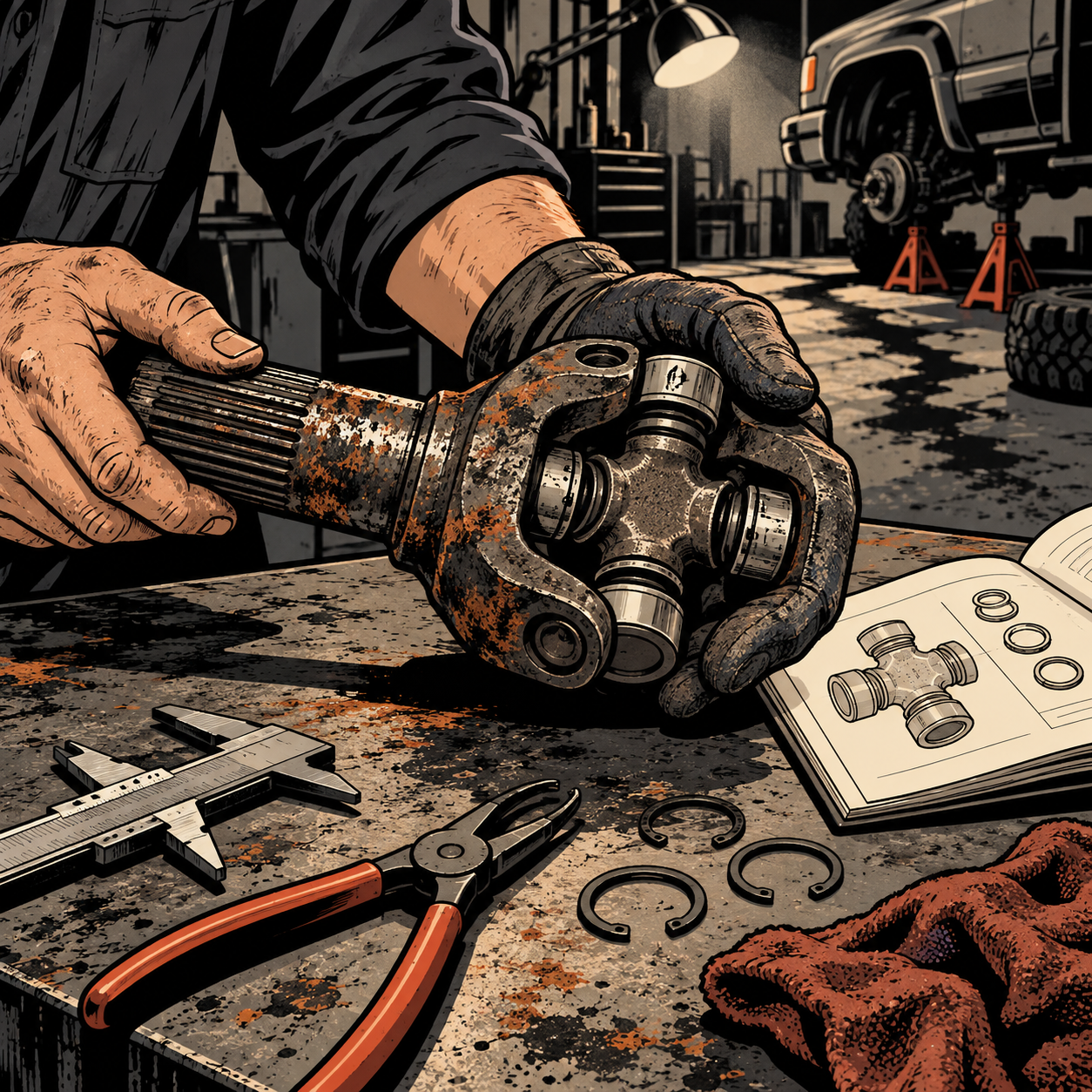
When you pick up one of these parts, you’re typically looking at three components in varying states of completeness:
- The yoke itself — a forked steel piece with a splined or threaded bore on one end (where it slides into the transmission tailshaft or bolts to a flange) and two ears with cross-holes on the other end.
- The U-joint cross — a cross-shaped steel piece with four trunnions, each one riding in a needle-bearing cap.
- The bearing caps — cylindrical cups pressed into the yoke ears, held in with either snap rings (internal or external) or U-bolts/straps, depending on the OEM.
Spline count and yoke size tell you a lot. A 1/2-ton pickup typically runs a smaller yoke than a 3/4-ton or 1-ton, and 4×4 transfer-case output yokes are usually larger than 2WD transmission output yokes. GM trucks are notable for using internal snap rings to retain the U-joint caps, which is a quick visual tell if you’re trying to narrow down the source. If the part you’re holding has internal snap-ring grooves machined into the yoke ears, you’re very likely looking at a GM-sourced truck yoke rather than a Ford or Chrysler part, which more commonly use U-bolts or external retainers.
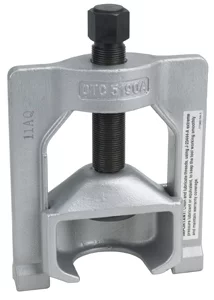
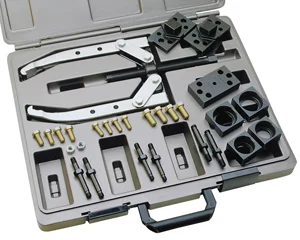
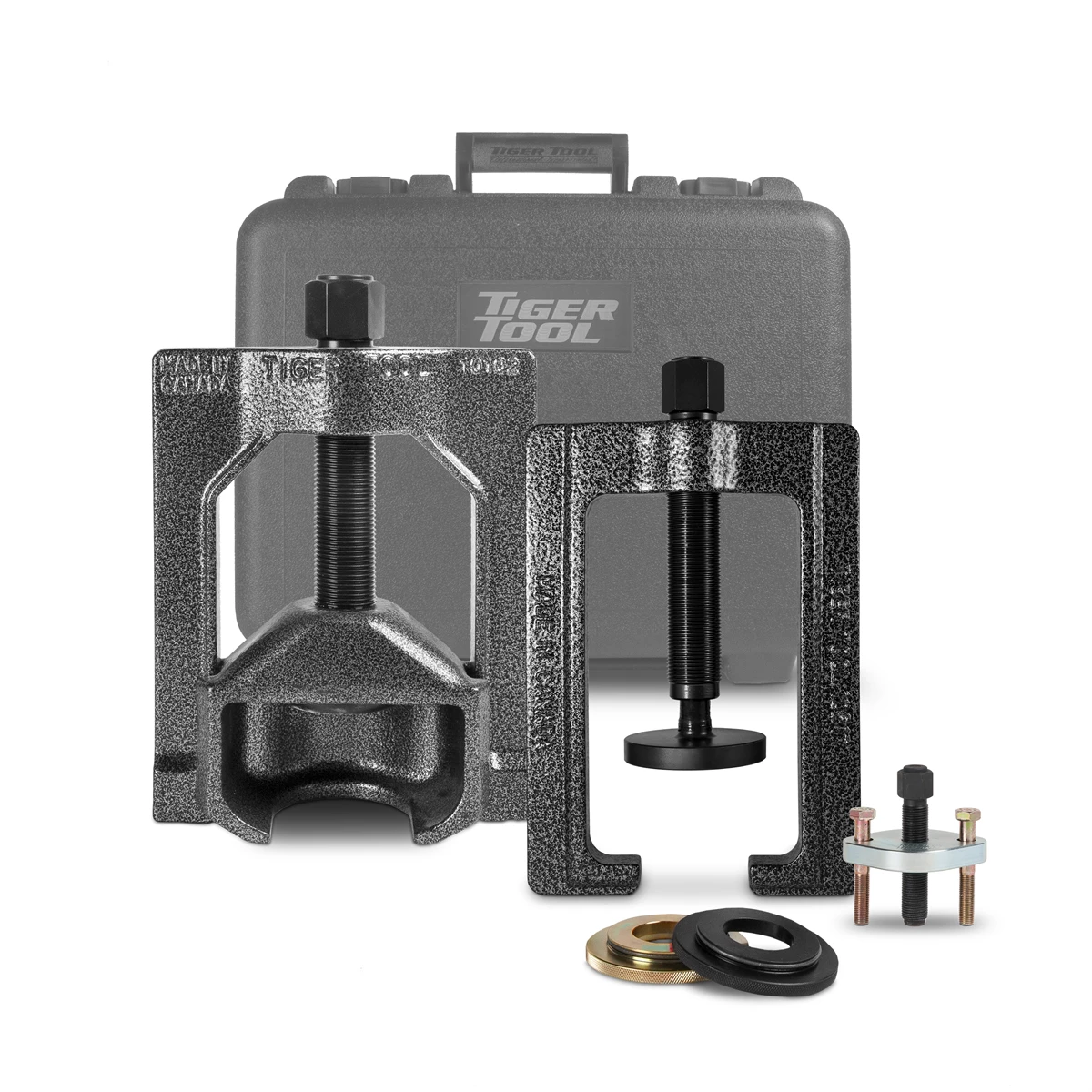
Looking for the right driveline tools to inspect or service a yoke like this once you’ve got it on the bench? Search our catalog for a U-joint press and removal tool kit sized for 1/2-ton and 3/4-ton truck driveshafts.
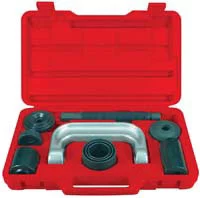
Ball Joint Service Tool with 4-wheel Drive Adapters AST7865
Mfg: Astro Pneumatic
Part #: 7865
Quick Diagnostic Steps to Confirm (or Rule Out) the Vehicle in Front of You
Before you tell a customer the part isn’t theirs — or worse, start tearing into their car looking for a corresponding failure — run through this short process:
- Confirm drivetrain layout first. Check the vehicle’s build sheet or just look underneath. No center driveshaft tunnel and no visible shaft running front-to-back means FWD, and the part in question is automatically ruled out.
- If it’s RWD or 4×4, check for drivability symptoms. A vehicle that just shed its slip yoke or U-joint will not move under power — if the driveshaft came apart, the transmission has no connection to the rear wheels. If the customer drove the car into your bay under its own power, their driveshaft is still intact.
- Visually inspect the existing driveshaft. Look at the transmission tailshaft for a yoke that’s present and properly seated, check both U-joints for witness marks, rust staining, or play, and confirm the tailshaft seal isn’t weeping fluid where a yoke would have ripped out.
- Compare spline count and yoke dimensions against the vehicle’s actual driveshaft if there’s any doubt — a mismatch confirms the part came from somewhere else.
In the vast majority of “found this under my car” situations, the part is simply road debris — either knocked loose from another vehicle’s failing driveshaft or discarded during a repair — that ended up under a parked car by coincidence.
Signs of an Actual Failing Driveshaft or U-Joint
Driveline debris in a parking lot is a good reminder to check for the real thing on vehicles that do have a driveshaft. Catching a bad U-joint before it separates saves a customer from exactly the scenario above — minus the part conveniently landing somewhere safe. Watch for:
- Clunking on shift from park to drive/reverse, or on initial acceleration — classic worn U-joint slack.
- Vibration that scales with vehicle speed, not engine RPM, pointing to an out-of-balance or worn shaft rather than an engine/transmission mount issue.
- Squeaking from underneath at low speed — dry needle bearings in a U-joint cap that’s losing grease.
- Visible rust bleed or play when grabbing the shaft and trying to twist it by hand with the vehicle safely supported and in neutral.
- Grease flung around the shaft or caps, indicating a failed seal and bearings running dry.
- Movement at the slip yoke/transmission interface beyond normal in-and-out slip travel — excessive play here often means a worn transmission bushing or output shaft, not just the U-joint.
Tools for Driveshaft and U-Joint Service
Once a genuine issue is confirmed, having the right equipment makes the job faster and safer. A full driveline service bay typically needs: a hydraulic U-joint press (bench or C-clamp style) for removing and installing joints without hammering caps out of true; a driveshaft support stand or transmission jack to hold the shaft steady during R&R; snap-ring pliers in both internal and external configurations; a torque wrench rated for yoke strap or U-bolt fasteners; and a balance-check setup or at minimum paint-mark indexing tools to keep yoke-to-shaft phasing correct on reassembly. Phasing matters — reinstalling a slip yoke 180 degrees off from its original index can reintroduce vibration even with brand-new U-joints.
If you’re stocking or replacing driveline service equipment for the shop, browse our selection of driveshaft and universal joint service tools for trucks and RWD vehicles.
Quick Reference Checklist
- FWD vehicle (no center driveshaft) = part cannot be from this car, period.
- Vehicle drove in under its own power = its driveshaft/U-joints are still connected.
- Internal snap rings on the yoke ears = likely GM-sourced part.
- Compare spline count and yoke OD against the actual vehicle shaft before assuming a match.
- Clunk on shift + speed-related vibration + grease sling = inspect U-joints now, don’t wait.
- Always index-mark yoke and shaft before disassembly to preserve phasing.
FAQs
Q: Can a FWD car have anything that looks like a slip yoke?
A: No. FWD vehicles use CV axles with tripod or ball-type joints at each end, not a yoke-and-U-joint assembly. Some FWD cars do have a short intermediate shaft on one side, but it doesn’t use a splined slip yoke or a traditional cross-style U-joint.
Q: How can I tell if a found part is from a half-ton or a 3/4-ton truck?
A: Measure the yoke ear spacing and the U-joint cross width. Half-ton driveshafts commonly use a 1310 or 1330-series U-joint, while 3/4-ton and 1-ton trucks step up to 1350 or larger. A parts reference chart or caliper comparison against known joint series will narrow it down quickly.
Q: If my driveshaft or U-joint actually failed while driving, would I notice before it fully came apart?
A: Almost always, yes. Failing U-joints give warning through clunking, vibration, and noise well before total separation. A shaft that fully drops usually follows a known rattle or vibration complaint that went unaddressed.
Q: Is it safe to keep driving if I hear a clunk when shifting into gear?
A: Get it inspected soon rather than immediately panicking, but don’t ignore it. A worn U-joint can progress to full failure, which can drop the shaft, damage the transmission tailhousing or transfer case, or in rare cases allow the shaft to contact the ground at speed.
Q: Do U-joints need grease maintenance, or are they sealed for life?
A: Many replacement U-joints come with a grease fitting and should be serviced at regular intervals per the manufacturer’s schedule. OEM-sealed joints on some vehicles are not greaseable and are replaced as a unit when worn.
Q: Why do people find random truck parts like this on roads so often?
A: Heavy steel driveline components can survive impact with the road and getting run over multiple times without breaking down, unlike plastic trim or lighter components. Combined with the fact that U-joint failure is one of the more common drivetrain issues on higher-mileage trucks, it’s a part that turns up on roadways more than most.
Recommended Tools for Driveshaft and U-Joint Service
Keep the right equipment on hand for diagnosing and servicing slip yokes and U-joints. Our Drive Shaft & U-Joint tools include presses, removal kits, snap-ring pliers, transmission jacks, and support stands for truck and RWD drivelines.
- U-joint presses and removal kits sized for 1/2-ton and 3/4-ton trucks
- Snap-ring pliers and bearing cap removal tools
- Transmission jacks and driveshaft support stands for safe R&R work

The Toolsource Technical Team blends decades of real-world automotive service experience with up-to-date technical research. Our writers collaborate with professional mechanics, shop owners, and diagnostic specialists to deliver practical, workshop-ready guidance you can trust.


Follow us on social media