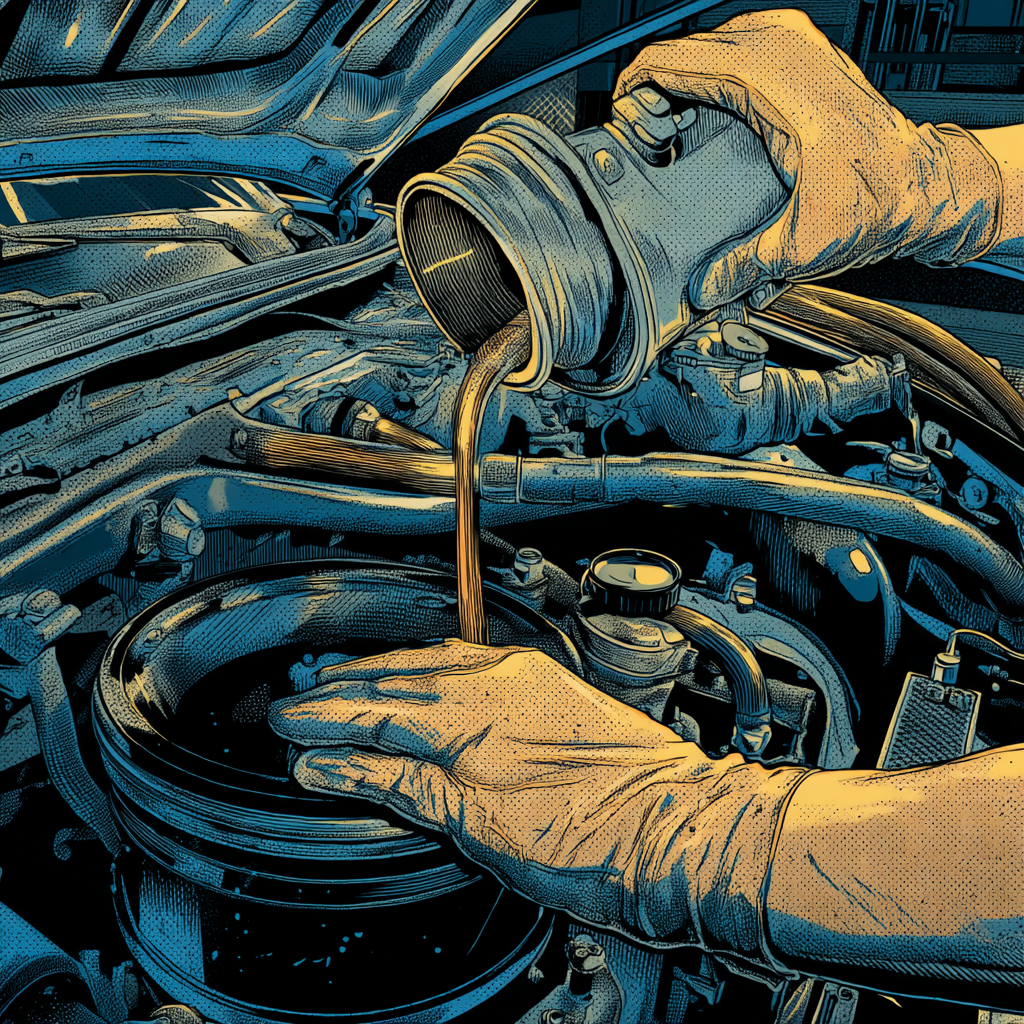
If your oil drain plug washer is nylon and it split or wept after an oil change, you are not alone. Most modern vehicles, including the 2020 Honda Pilot 3.5L V6, are engineered to use a metal crush washer. The washer material affects the torque spec and seal reliability. This article explains what to use, how to install it correctly, how to swap a washer without dumping fresh oil, and how to diagnose the sealing surface if you suspect a leak.
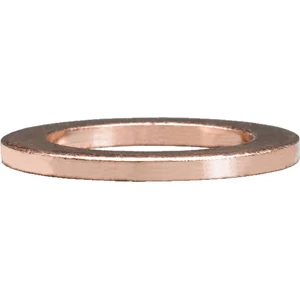
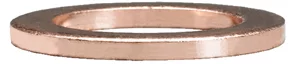
183187 BRC227 S.U.R. and R Auto Parts SRR-BRC227 SRRBRC227 SRRBRC227 SRRBRC227 10MM COPPER WASHER (10)
Mfg: S.U.R. and R Auto Parts
Part #: BRC227
183184 BRC287 S.U.R. and R Auto Parts SRR-BRC287 SRRBRC287 SRRBRC287 SRRBRC287 16MM COPPER WASHER (10)
Mfg: S.U.R. and R Auto Parts
Part #: BRC287
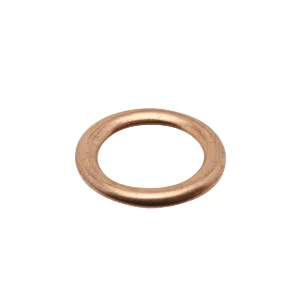

1) What a Crush Washer Does and Which Material to Use
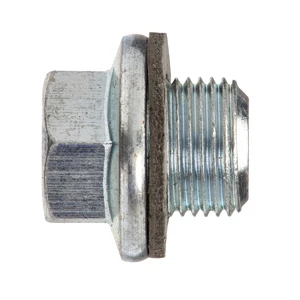
A crush washer is a sacrificial gasket designed to plastically deform under torque. That controlled deformation fills microscopic imperfections between the drain plug head and the oil pan sealing face, creating a reliable seal without sealant.
Material choices you will encounter:
- Aluminum: Common OEM choice for Honda/Acura and many Asian vehicles. Predictable crush, compatible with aluminum and steel pans, and it matches factory torque data. Generally one-time use.
- Copper: Excellent seal, more ductile; can be annealed (softened) and reused if done correctly. Not typically the OEM spec for Honda but works if sized correctly. Some copper washers are serrated or cupped to assist crush.
- Brass or metal with bonded rubber: Also seals well; used in some aftermarket plugs and certain OE applications. Torque may differ from solid aluminum washers.
- Nylon/plastic/fiber: Not recommended for modern oil drain plugs that specify a crush washer. Tends to cold-flow, split under proper torque, and can relax after heat cycles leading to loosening or seepage. Many generic parts bins include these because they fit dimensionally, not because they match OE spec.
Bottom line: If the service information calls for a crush washer, use a metal crush washer of the correct size and type. On late-model Honda/Acura oil pans, that is an aluminum washer.
2) Correct Spec for a 2020 Honda Pilot (and Many Hondas)
Vehicle: 2020 Honda Pilot 3.5L (J35-series V6)
- Drain plug thread: M14 x 1.5
- Hex size: 17 mm (typical for Honda M14 drain plugs)
- Washer: Aluminum crush washer, 14 mm inner diameter (ID)
- Typical Honda washer part number: 94109-14000 (Washer, Drain Plug, 14 mm). Many aftermarket equivalents exist.
- Dimensional note: Many 14 mm aluminum washers will be approximately 14 mm ID x ~20 mm outer diameter (OD). Do not confuse OD with ID—buy by the ID that matches the plug shank.
- Torque (with OEM aluminum washer, clean and dry threads and faces): ~29 ft-lb (39 N·m)
Why the torque matters: The published torque is validated with the OEM aluminum washer and clean, dry threads. If you change the washer material or install with oiled threads, the clamping force achieved at the same torque changes. That is how nylon washers end up split or loose: the torque number does not translate.
3) Installation and Torque: Doing It Right
Correct installation is just as important as the correct washer. Follow this process to avoid leaks and stripped threads.
- Prep the parts:
- Wipe the drain plug threads and flange clean with brake cleaner and a lint-free rag.
- Clean the oil pan sealing face around the drain port. Ensure it is flat, smooth, and free of nicks or burrs.
- Verify the washer size: 14 mm ID for Honda Pilot. The washer should slip over the plug shank without slop.
- Dry-fit and orientation:
- Most solid aluminum and plain copper washers are symmetrical and can be installed either way. Some cupped designs have a beveled side—face the bevel toward the plug head unless otherwise specified by the manufacturer.
- Thread in by hand:
- Start the plug by hand to avoid cross-threading. It should spin several turns freely.
- Do not apply thread sealant or oil to the threads unless the manufacturer explicitly calls for it (Honda does not).
- Torque correctly:
- With a torque wrench set to the OEM value (Honda Pilot: 29 ft-lb) tighten until it clicks. This value assumes a clean, dry plug and aluminum crush washer.
- If threads are oily and you cannot dry them, reduce target torque approximately 20–30% to avoid over-clamping. Better practice is to clean/degrease and use the factory spec.
- Heat cycle and recheck:
- Warm the engine until the radiator fan cycles, shut down, and inspect for seepage.
- A properly installed metal crush washer should not require retorque. If seepage appears, replace the washer and re-inspect the sealing face.
Quick checklist (short)
- M14 aluminum crush washer in hand (14 mm ID; Honda PN 94109-14000 or equivalent)
- Clean, dry drain plug and pan face
- Torque wrench (3/8 inch drive) set to 29 ft-lb
- Brake cleaner and lint-free cloth
- New oil filter and correct oil grade (0W-20 for 2020 Pilot)
4) How to Swap a Washer Without Draining Your Fresh Oil
Need to replace a suspect washer immediately after an oil change? Two field-proven methods minimize oil loss.
Method A: Shop-vac vacuum assist
This uses slight negative pressure in the crankcase to slow or stop drainage while you swap the washer.
- Warm the engine briefly, then shut down. Allow oil to settle for several minutes.
- Remove the oil fill cap. Wrap a clean rag around a wet/dry vac hose and hold it over the filler opening. You want a soft seal that draws air without excessive vacuum.
- Set the vac to suction (not blow). Do not obstruct the PCV or create pressure. The goal is light negative pressure.
- With the vac running, position a drain pan under the plug. Crack the drain plug loose, remove it, catch any drips, swap the washer, and reinstall. Work efficiently but do not rush to the point of cross-threading.
- Torque to spec. Remove the vac hose and reinstall the fill cap. Check level and leaks.
Notes and cautions:
- Use suction only. Never pressurize the crankcase.
- Maintain a hand seal with the rag to prevent debris ingestion. Keep the area clean.
- This trick is for short swaps; do not leave the plug out for extended periods.
Method B: Clean-catch and refill
- Position a very clean drain pan and pull the plug.
- Swap the washer and reinstall/torque the plug.
- Pour the clean oil back through a paint strainer or fine filter into the engine.
If you work quickly with either method, the loss is typically a few ounces. Verify oil level afterward.
5) Reuse vs Replace: Practical Guidance and Copper Annealing
Officially, crush washers are single-use. Practically, technicians sometimes reuse metal washers when in a bind, but it carries risk. Here is how to think about it:
- Aluminum washers: Treat as single-use. They are inexpensive. Reusing can work, but sealing reliability drops, especially if the washer shows grooves or is visibly flattened.
- Copper washers: Can be annealed to restore softness. Heat the washer uniformly to a dull red with a propane torch and quench in water. After cooling, clean the oxide layer. Inspect for deep grooves, nicks, or deformation—discard if damaged. Reanneal before each reuse.
- Nylon/fiber: Avoid for modern oil pans that call for crush washers. They are prone to splitting when torqued to OEM specs and can loosen after heat cycling.
Torque adjustments when reusing (if you must):
- An already-crushed metal washer may require a touch more rotation to seal. Do not exceed reasonable values. For Honda aluminum washer applications, best practice is to replace and stick with 29 ft-lb on clean, dry threads.
- If a non-OE copper crush washer is used, many technicians find 22–27 ft-lb adequate on M14 plugs; always verify sealing with a heat cycle and check for drips. When in doubt, follow the component manufacturer’s guidance.
Economics: A multi-pack of the correct aluminum M14 washers costs very little. Keeping them on hand eliminates guesswork and rework.
6) Troubleshooting Leaks, Surface Issues, and Upgrade Options
Leak checks and heat-cycle validation
- After installation, wipe the area clean and dry.
- Warm the engine until the radiator fan comes on, then shut off. Inspect the plug and pan face for fresh oil.
- Take a short drive (5–10 miles), park on a clean surface, and recheck. A proper seal should remain dry.
Inspect the sealing face
- Look for raised casting marks near, but not on, the sealing face. Many aluminum pans have visible casting lines that can be mistaken for cracks. True cracks propagate irregularly; casting parting lines are uniform and often raised rather than open.
- Feel the sealing land around the drain port. If you detect a burr or gouge, dress it lightly with a flat abrasive pad (Scotch-Brite on a flat block) and brake-clean the area. Avoid removing significant material or changing flatness.
- Inspect the plug flange. If grooved or dished, replace the plug; a damaged flange will not load a washer evenly.
- Verify the washer is not too large in OD and contacting a step or radius; it must seat fully on the machined land.
Thread and plug condition
- Hand-thread the plug. Any resistance suggests thread damage. If the pan threads feel weak or stripped, stop. Consider a thread repair insert (e.g., M14x1.5 solid bushing insert) performed with the pan in place if access allows. Timesert-style repairs offer better long-term reliability than coil inserts for drain plugs.
- Consider a magnetic drain plug in M14x1.5 to capture ferrous particles and provide a fresh flange surface.
Upgrade options and considerations
- Magnetic M14x1.5 drain plug: Adds debris capture, uses the same aluminum washer and torque. Simple upgrade.
- Drain plug with bonded gasket (integrated rubber): Convenient, but torque may differ from OE. Follow the plug manufacturer’s spec and inspect rubber condition regularly.
- Ball-valve drain systems (e.g., F-style valves for M14x1.5): Enable tool-free oil changes and eliminate washer changes. Considerations:
- Ground clearance and impact risk. Use a locking clip if provided.
- Valve adds length; verify it does not sit below crossmembers or skid plates.
- Follow supplied torque and sealing washer guidance (often a fiber or copper gasket specific to the valve).
If the current installation with a nylon washer is dry after multiple heat cycles and short drives, you can defer rework until the next oil change. If you see even a slight drip, replace the washer immediately using one of the quick-swap methods above.
FAQs
What is the correct drain plug washer for a 2020 Honda Pilot?
An aluminum crush washer with 14 mm inner diameter. Honda’s common part number is 94109-14000 or an equivalent aftermarket aluminum M14 washer. Torque the plug to about 29 ft-lb on clean, dry threads.
Can I use a nylon drain plug washer?
Not recommended. Nylon does not crush the way metal does at OEM torque and can split or relax after heat cycles. Use aluminum (Honda spec) or copper of the correct size.
Do I really need to replace the crush washer every time?
Best practice is yes—replace at each oil change. It is a low-cost part that prevents weeps and rework. If you must reuse a copper washer, anneal it properly and inspect carefully. Aluminum is best treated as single-use.
Why did my washer leak even though I torqued to spec?
Common reasons: wrong material (nylon), oiled or dirty threads altering clamping force, debris or a burr on the pan sealing face, damaged plug flange, or an incorrect washer size that hangs on a radius instead of the machined land.
How can I change the washer without dumping new oil?
Use the vacuum-assist method with a wet/dry shop vac on the oil filler neck to create slight negative pressure, then swap quickly. Alternatively, catch the oil in a clean pan and pour it back through a strainer.
Is that a crack by my drain plug or a casting line?
Many aluminum pans have raised casting parting lines that look like cracks in photos. Clean the area and inspect: a casting line is usually uniform and raised; a crack will have an opening and may show wetness along its length. If in doubt, dye penetrant testing can help confirm.
Shop Crush Washers & Drain Plug Gaskets
If you’re replacing a nylon washer, use a metal crush washer sized for your drain plug—browse Oil Drain Tools options.
- Aluminum M14 washers for common Honda/Acura applications.
- Copper choices for serviceability and reuse after proper annealing.
- Assorted packs to keep correct IDs and ODs on hand.

The Toolsource Technical Team blends decades of real-world automotive service experience with up-to-date technical research. Our writers collaborate with professional mechanics, shop owners, and diagnostic specialists to deliver practical, workshop-ready guidance you can trust.


Follow us on social media