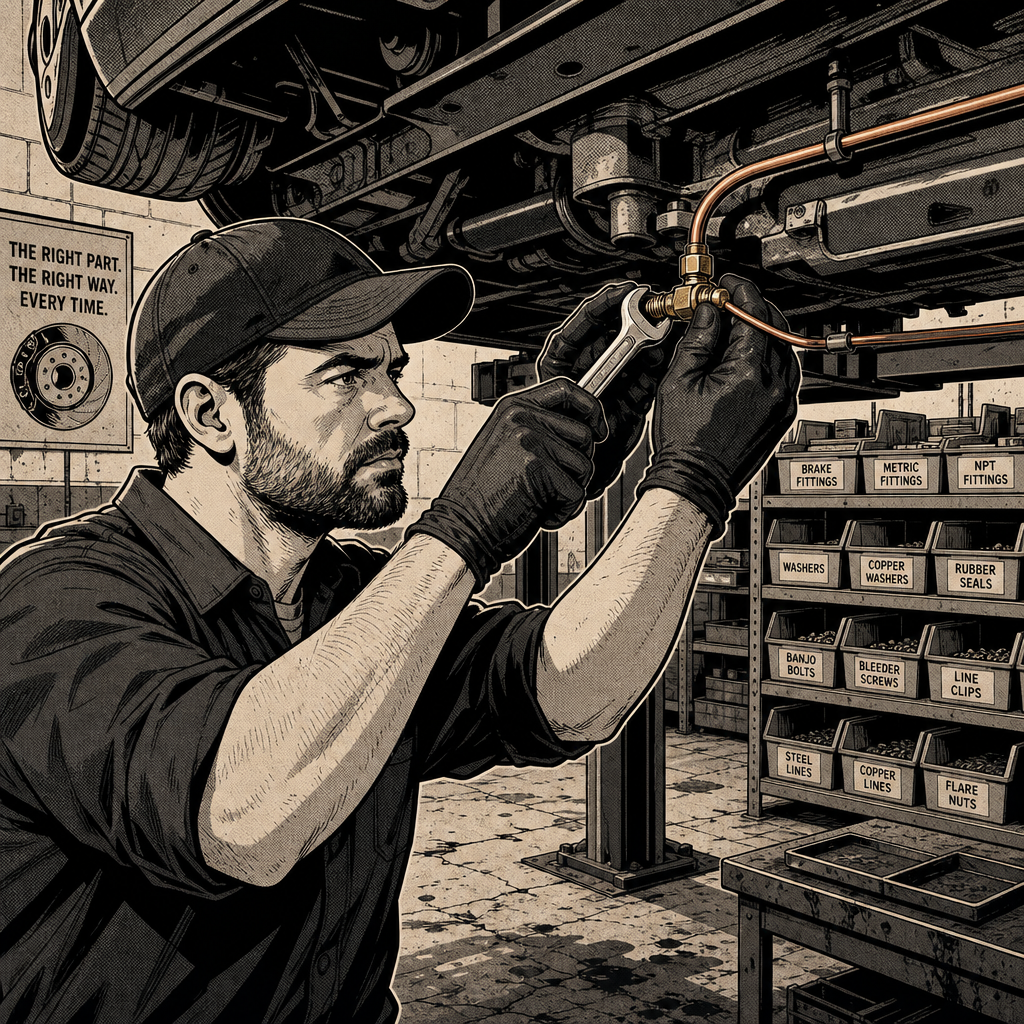
Ask any maintenance tech about their biggest time-waster and you’ll hear some version of the same story: a repair that should take ten minutes turns into an hour because nobody has the right fitting. What starts as a straightforward job — swap a leaking coupler, extend a line, cap off a port — becomes a scavenger hunt through bins of mismatched 1/4″ and 3/8″ pipe fittings, ending with three couplers, two elbows, and a length of air tube jammed together to make something that technically holds pressure. It works, until it doesn’t, and six months later you’re back at the same machine fixing the same leak. This isn’t a skills problem. It’s an inventory and process problem, and it’s fixable.
Why “Good Enough” Repairs Keep Coming Back
When a fitting isn’t available, techs adapt — that’s the job. But cobbled-together repairs made from whatever’s in the scrap bin rarely match the original spec for pressure rating, thread engagement, or material compatibility. A reducer bushing threaded into a coupler threaded into an elbow has three extra joints, three extra seal points, and three extra chances to leak. Every one of those joints is a future work order.
The math is brutal when you add it up over a decade: a five-minute “make it work” fix that fails every few months costs far more in cumulative labor than doing it right once would have. The problem is that cost is invisible in the moment. Nobody tracks “hours lost to re-fixing the same leak” as a line item, so the short-term save on parts looks like a win even when it’s a long-term loss.
The Real Source: A Disorganized or Incomplete Fitting Stock
The scavenger hunt happens because most shops don’t stock fittings systematically — they accumulate them. Leftover pieces from old jobs get tossed in a bin, nobody standardizes on a thread series, and the shop ends up with a pile of near-matches instead of a working inventory. When a tech needs a straight 3/8″ NPT-to-push-to-connect fitting, “near enough” isn’t good enough, but it’s often all that’s on hand.
The fix isn’t buying more fittings — it’s buying the right fittings and organizing them so the correct part is faster to grab than a cobbled-together workaround. That distinction matters. A shop can have thousands of dollars in fittings sitting in bins and still send techs on a hunt if nothing is labeled or sorted by thread type and size.
No products found for "1/4 inch and 3/8 inch NPT brass fitting"
Building a Fitting Inventory That Actually Works
Start by auditing what your equipment actually uses. Most shops run a narrow band of thread types and sizes across their pneumatic and fluid lines — commonly NPT in 1/8″, 1/4″, and 3/8″, sometimes BSPP or metric depending on imported equipment. Pull work orders from the last year and tally which fittings show up repeatedly. That list becomes your core stock.
- Standardize on one thread series per system where possible (don’t mix NPT and BSPP fittings in the same air lines).
- Stock a full range within each size: straights, elbows, tees, reducers, caps, and quick-connects — not just the pieces that happened to be left over from old jobs.
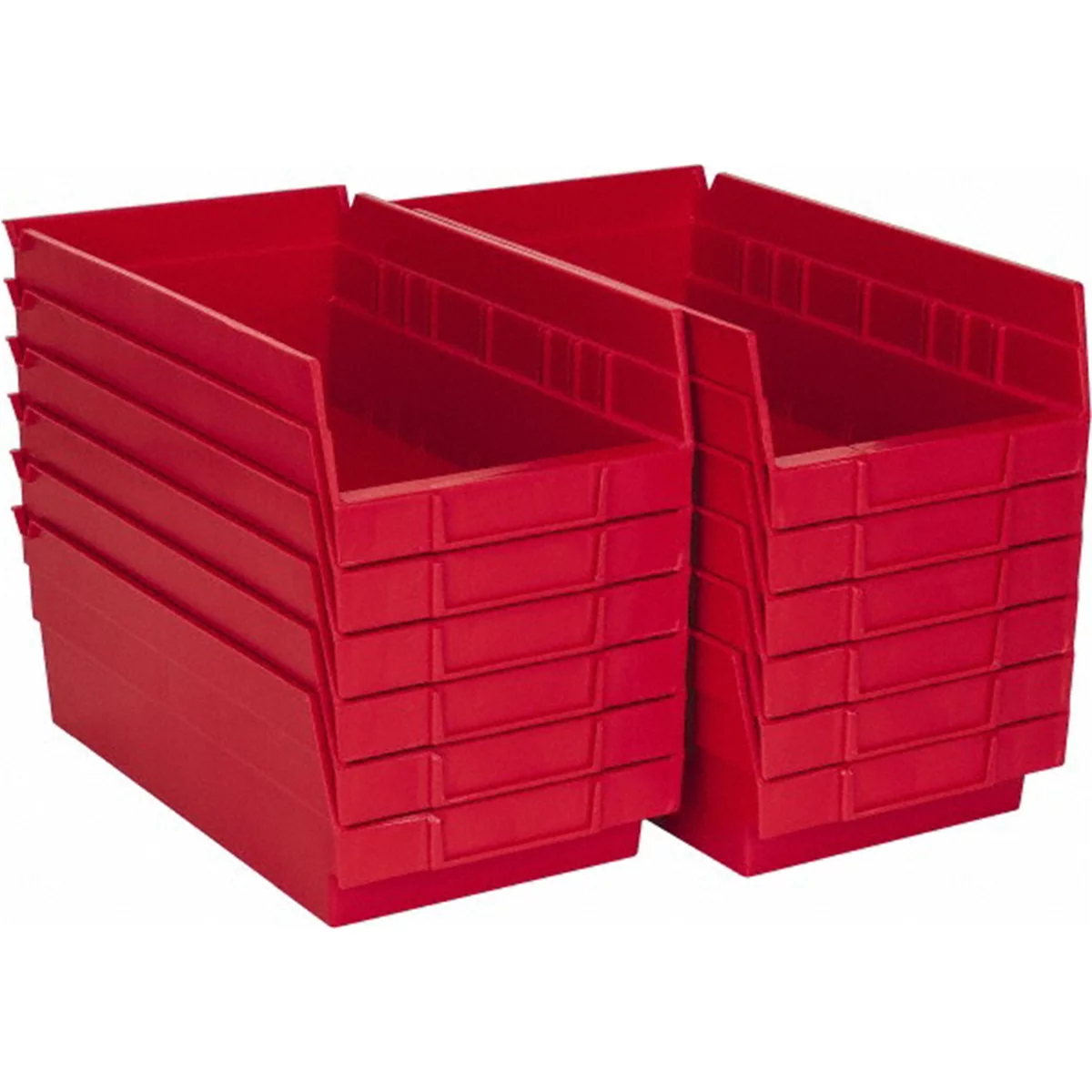
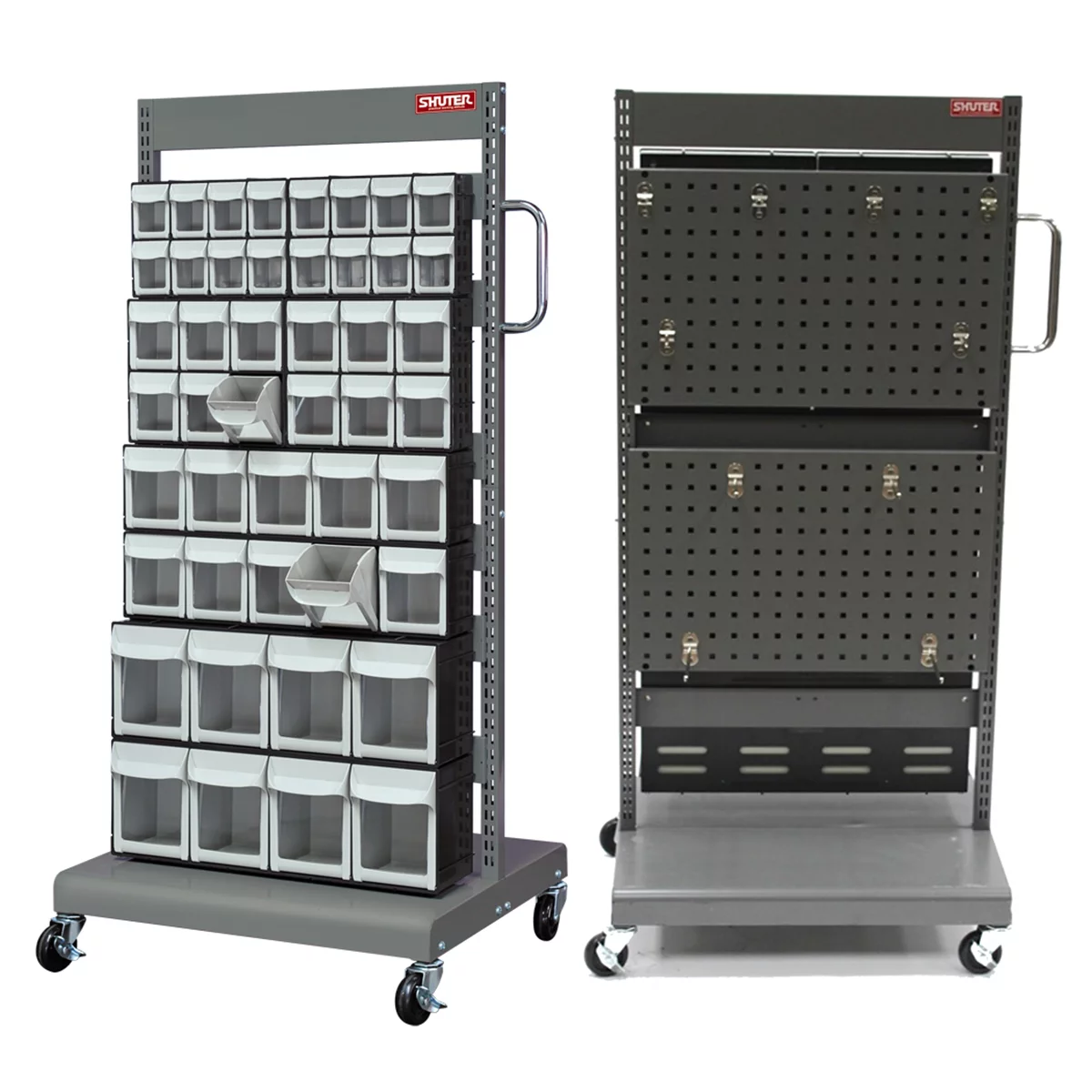
- Sort bins by size and thread type, not by “fittings, misc.” Label every bin.
- Keep an assortment kit of common brass and push-to-connect fittings on the cart for field repairs, so techs aren’t walking back to the parts room mid-job.
- Set a par level and reorder point for each bin so it’s restocked before it’s empty, not after.
This is also where it’s worth separating pipe fittings (NPT, tapered thread, sealed with thread sealant or tape) from tube fittings (push-to-connect or compression, sized by tube OD). Mixing the two mental models is a common source of the “coupler-elbow-tube” Frankenstein repair — a tech grabs whatever thread happens to fit instead of the correct fitting family for that line.
[PRODUCT_SEARCH: 1/4 inch and 3/8 inch NPT brass fitting assortment kit]
When to Adapt and When to Wait for the Right Part
Sometimes adapting is the right call — a production line down for a shift costs more than a temporary fix that buys time until the correct part arrives. The problem isn’t adapting; it’s adapting silently and never following up. If a repair uses a substitute fitting, treat it as a flagged, temporary state, not a finished job.
Practical rule of thumb: if the substitute changes the joint count, the pressure rating, or introduces a dissimilar material (steel fitting on an aluminum port, for example), it needs a follow-up ticket to swap in the correct part. If it’s a true like-for-like swap — same thread, same rating, different brand — it can stand as the permanent fix.
Document the substitution on the work order with enough detail that the next tech (or you, in six months) knows exactly what’s there and why. “Repaired leak” tells nobody anything. “Replaced failed 3/8″ NPT elbow with compression fitting + adapter — schedule correct elbow, PO #1234” tells the next person what to expect and what to fix properly next time.
Making the Case to Management
Getting budget approval for a better-stocked parts room is easier with data than with frustration. Pull maintenance records for repeat failures on the same equipment or the same line type and total the labor hours spent on them. Compare that number to the cost of stocking the correct fittings in bulk — brass and push-to-connect fittings are cheap relative to labor, especially skilled labor billed at shop rate.
Framing it as “this scrap-bin fix will keep failing and costing labor” lands better than “we need more parts.” Management responds to a labor-hours-saved argument, not a parts-count argument. If you can show that a $40 fitting kit addition prevents a recurring two-hour repair four times a year, that’s an easy approval.
Preventing Repeat Failures Long-Term
Once the inventory is fixed, close the loop with tracking. Tag any repair that used a substitute part so it surfaces on a recurring maintenance report — most CMMS platforms support a custom field or flag for this. Review that list monthly and knock out the backlog of “temporary” fixes before they become permanent failure points.
It’s also worth doing a periodic walk of the equipment most prone to fitting failures — anything with a lot of vibration, thermal cycling, or exposure to contaminants tends to chew through joints faster. Catching a marginal fitting before it fails outright is cheaper than an emergency repair, cobbled or otherwise.
Quick Checklist: Fixing the Fitting Problem
- Audit last year’s work orders for the most common fitting sizes and thread types used
- Stock full assortments (straights, elbows, tees, reducers, caps) for each size — not leftovers
- Sort and label bins by thread type and size; set par levels and reorder points
- Separate pipe-thread fittings from push-to-connect/tube fittings in storage
- Flag and document any repair using a substitute fitting, with a follow-up ticket
- Track repeat failures and use labor-hour data to justify inventory budget
[PRODUCT_SEARCH: pneumatic fitting storage bins and organizers for shop parts room]
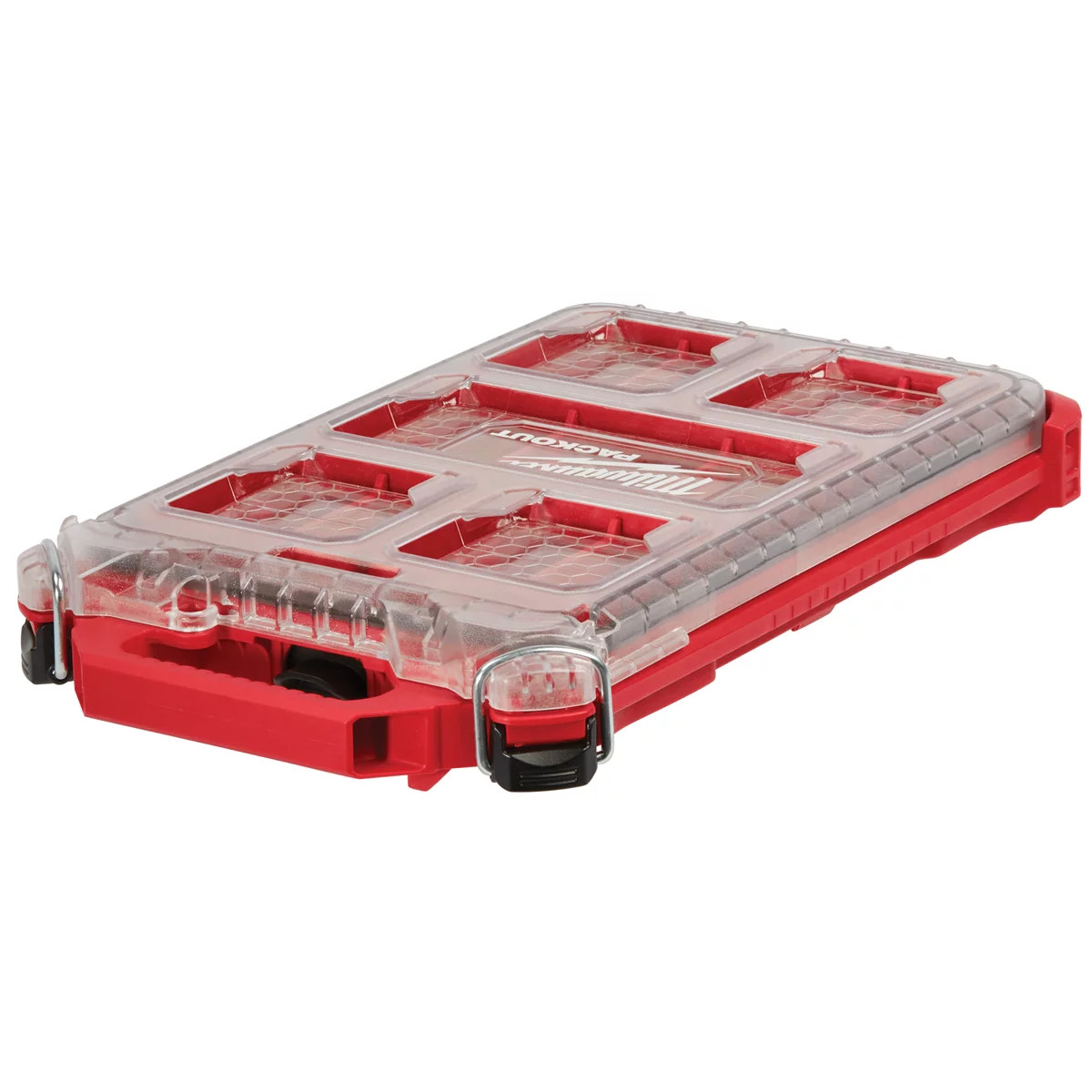
PACKOUT Compact Low-Profile Organizer
Mfg: Milwaukee Electric Tools
Part #: 48-22-8436
FAQs
What’s the difference between NPT and push-to-connect fittings?
NPT fittings use a tapered pipe thread sealed with thread sealant or tape and are sized by nominal pipe size. Push-to-connect fittings grip tubing by outside diameter and seal with an internal O-ring — no thread sealant needed. Mixing the two families with generic adapters is a common source of leaks.
Why do 1/4″ and 3/8″ fittings specifically cause so much trouble?
They’re the most common sizes in shop air and fluid lines, so they get used, cannibalized, and misplaced more than less common sizes. A shop with a thin 1/4″/3/8″ stock feels the shortage constantly because those are also the sizes techs reach for most often.
Is it ever acceptable to cobble together a repair with couplers and adapters?
As a temporary bridge to keep equipment running until the correct part arrives, yes — but it should be documented and flagged for follow-up, not treated as the final fix. Extra joints mean extra leak points and extra long-term risk.
How do I know which fittings to stock if my shop runs mixed equipment?
Pull a year of work orders and tally fitting sizes and thread types by frequency. Imported equipment often uses metric or BSPP threads alongside NPT domestic equipment — audit before you standardize so you don’t leave a whole equipment class unsupported.
How do I convince management to invest in a better parts inventory?
Use labor-hour data, not general complaints. Show the repeat cost of a recurring “good enough” fix compared to the one-time cost of stocking the correct fitting — the labor savings case is usually stronger than the parts cost alone.
What’s the fastest way to reduce time lost hunting for fittings mid-repair?
Sort and label bins by thread type and size, and keep a compact assortment kit on the service cart so common sizes are within reach without a trip back to the parts room.
Recommended Air Couplers and Fittings
Building an organized inventory of the right air couplers and fittings is the fastest way to stop losing hours to hunting for parts mid-repair. Check our Air Couplers and Fittings selection for the full range of sizes and thread types you need.
- NPT and BSPP thread fittings in standard sizes (1/8″, 1/4″, 3/8″)
- Straights, elbows, tees, reducers, caps, and quick-connect styles
- Brass and push-to-connect assortment kits ready to stock or carry on the service cart

The Toolsource Technical Team blends decades of real-world automotive service experience with up-to-date technical research. Our writers collaborate with professional mechanics, shop owners, and diagnostic specialists to deliver practical, workshop-ready guidance you can trust.


Follow us on social media