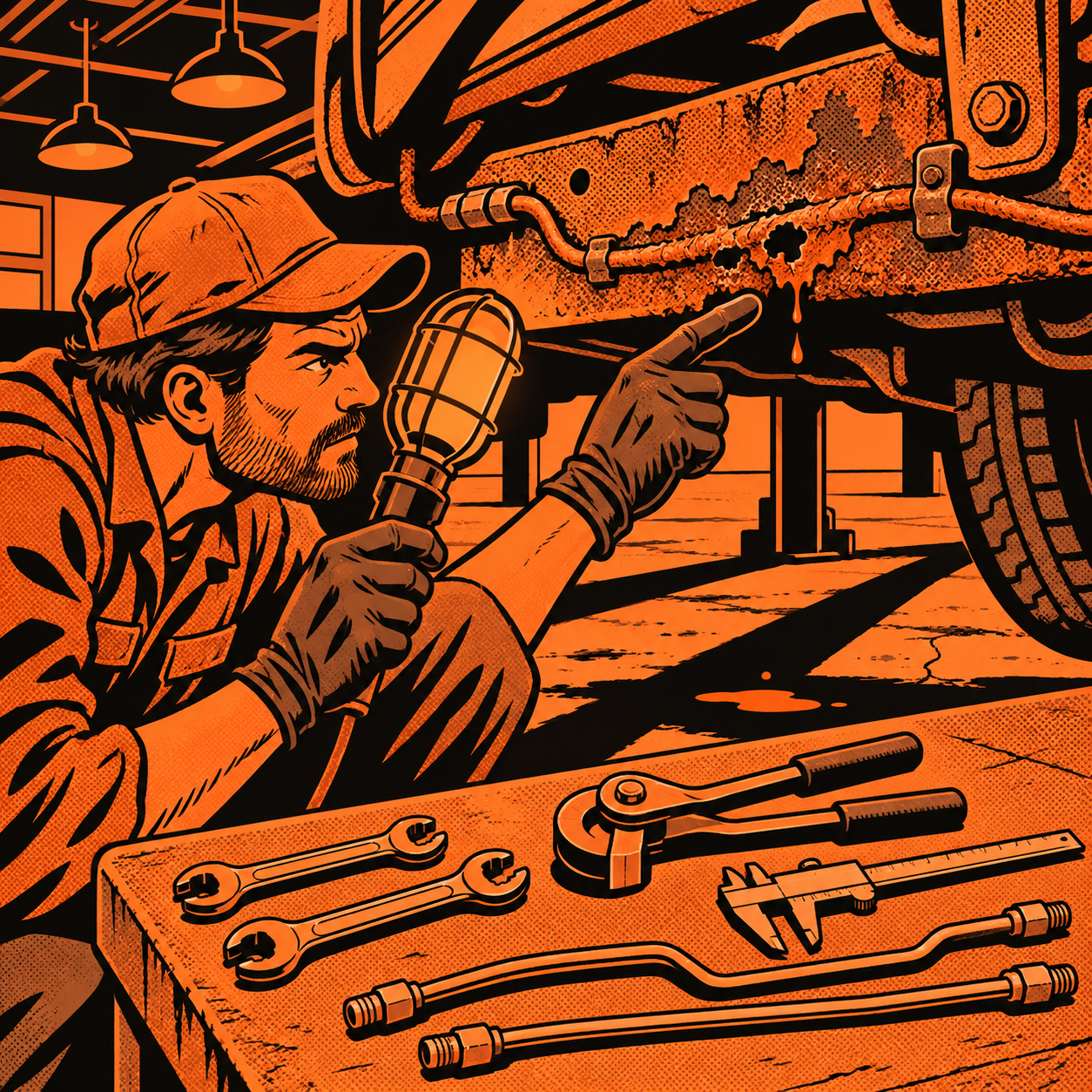
A puddle of fluid under the rear wheel and a line that looks more like a rusted-out exhaust pipe than a brake component is one of the most common “is this safe to drive” posts in any automotive forum — and for good reason. Corroded, perforated steel brake lines are a top cause of sudden, partial, or total brake failure, especially on trucks and SUVs that see road salt, mud, or coastal air. This guide covers how to properly inspect a suspect line, why a single leak often means more rot nearby, what a realistic repair bill looks like, and the right way to replace lines and bleed the system afterward — whether that’s in your own driveway or at a shop.
How to Identify a Rotted or Leaking Brake Line
Rust rarely attacks brake lines in one convenient spot. Steel brake lines are run along the frame rail and rear axle where they’re constantly exposed to road spray, salt brine, and moisture that gets trapped between the line and its mounting clips. That trapped moisture eats through the line from the outside in, so by the time you see a wet, crusty orange section weeping fluid, the line has usually been thinning for a long time.
Look for these signs during inspection:
- Flaking, scaly orange-brown corrosion on any hard line, especially near clips, bends, or where the line crosses the axle
- Wet or oily residue (brake fluid is typically clear-to-amber and feels slick, not greasy like oil) along the line or pooling under the vehicle
- A soft or spongy pedal, or a pedal that sinks slowly to the floor under steady pressure
- A low brake fluid warning light or a reservoir that keeps needing fluid added
- Visible rust-through or a pinhole with fluid actively seeping or spraying
If you find one section this far gone, treat it as a sign the rest of the system needs a full check, not just a spot repair. Lines of the same age and exposure corrode at roughly the same rate, so a shop finding one rotted section often finds two or three more once they get a lift and a flashlight on the rest of the system.
Why You Should Never Drive on a Compromised Line
This is not a “baby it to the shop” situation. Hydraulic brake systems rely on fluid being incompressible — the moment air enters the system through a breach, that pressure gets absorbed by compressible air instead of being transmitted to the caliper or wheel cylinder. A line that’s actively leaking will only get worse under the sudden high pressure of hard braking, and pumping the pedal repeatedly to “find” braking force drives the master cylinder reservoir level down and pulls air further into the system.
Every vehicle built after the early 1980s uses a dual-circuit (split) master cylinder, meaning the front and rear brakes operate on separate hydraulic circuits. A failure on a rear line generally will not eliminate front braking — but you’ve still lost a meaningful percentage of your stopping power, and you’ve also lost the margin of safety that circuit was providing. Pair that with reduced rear brake force on a loaded truck, wet roads, or a panic stop, and the outcome can be a lot worse than a shop bill.
There’s also a mechanical risk beyond stopping distance: if the master cylinder reservoir runs dry because fluid has leaked out, air gets pulled into the ABS hydraulic control unit. Many ABS modules require a scan tool capable of running a bi-directional bleed procedure to fully purge that air — a basic two-person manual bleed often isn’t enough once air is in the ABS valves and pump. That turns a simple line repair into a job that needs shop-level diagnostic equipment, which is a major reason these repairs get expensive fast.
Bottom line: if a line is actively leaking, have the vehicle towed. Don’t drive it, even a short distance.

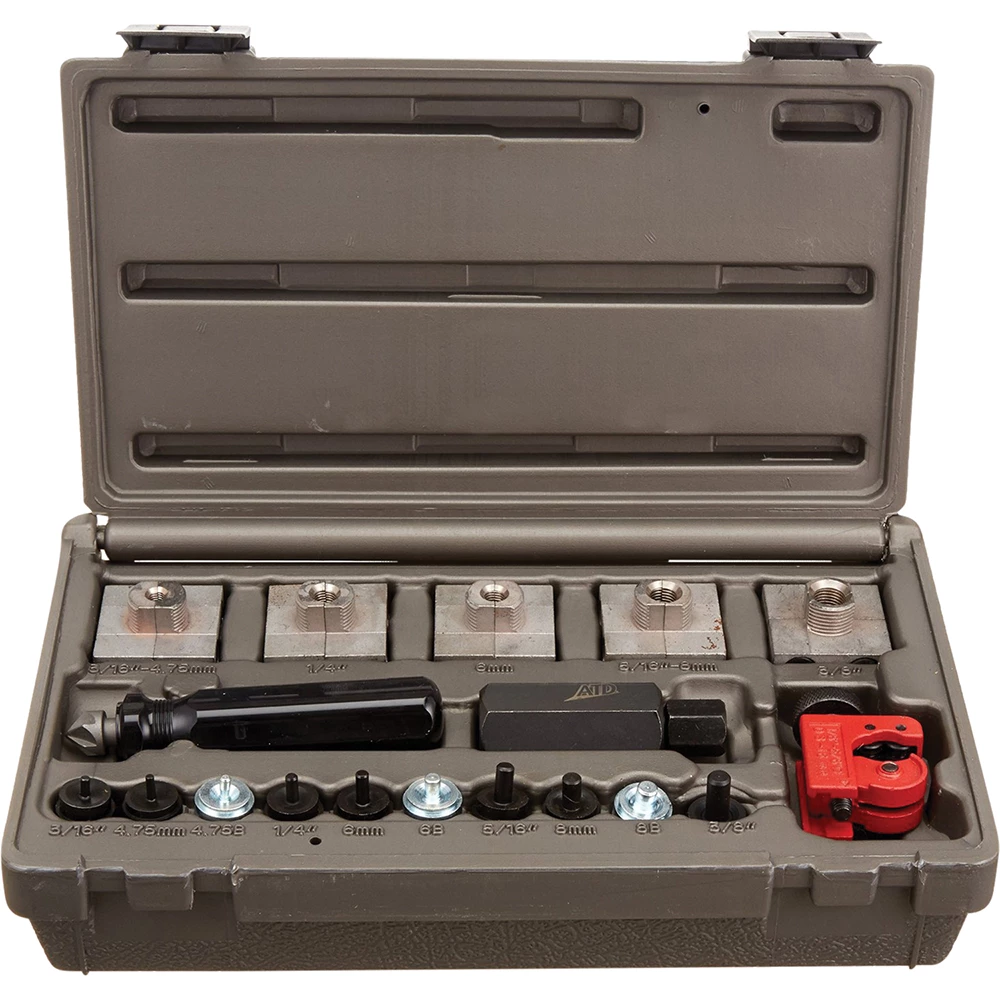

Find the Right Tools for a Brake Line Job
If you’re going to tackle this yourself or just want shop-grade tools on hand for brake work, start by comparing dedicated kits before improvising with whatever is in the drawer.
{{PRODUCT_SEARCH_1}}
What Brake Line Repairs Actually Cost
The confusion usually comes from people seeing “it’s just a tube” and assuming the job should be cheap. In isolation, the parts are inexpensive: a pre-bent or straight steel brake line runs roughly $15–$50 depending on length and fittings, and a quart of fresh DOT 3 or DOT 4 fluid is $10–$20. Labor is where the bill grows.
A single accessible line replacement with a straightforward bleed might run 1–2 hours of labor. But rusted lines are rarely cooperative — corroded fittings seize, lines break off in the fitting instead of unthreading, and techs often have to cut out sections, re-flare new line, or fabricate a replacement when an exact pre-bent part isn’t available. Shops may also apply a higher “rust” or “corroded fastener” labor rate because of the added time and risk of damaging adjacent components.
If an inspection reveals multiple compromised lines — which is common once one has rotted through — you’re looking at replacing some or all of the hard lines plus the flexible rubber hoses at each wheel, a full fluid flush, and potentially an ABS bleed with a factory-level or high-end aftermarket scan tool. That combination is why quotes can range from a few hundred dollars for one line to well over $1,000 for a full system replacement on a badly rusted vehicle.
DIY Brake Line Replacement: What to Know Before You Start
Replacing brake lines is within reach for a technician or serious hobbyist with the right tools, but it is not a forgiving job to rush. Key points:
- Use the correct line and flare. Most vehicles use double-flare or ISO (bubble) flare fittings — mixing them up causes leaks under pressure. Pre-bent, vehicle-specific lines save time versus bending your own.
- Replace in sets when corrosion is present. If one rear line failed from rust, inspect and plan to replace both rear hard lines and the rubber flex hoses at the wheels if they’re original or show cracking.
- Protect new lines from the same fate. Clean mounting points, use rust-inhibiting coating or undercoating spray on new steel lines, and make sure retaining clips are intact so the line isn’t rubbing or trapping moisture.
- Bleed thoroughly, in the correct sequence. Standard sequence is typically the wheel farthest from the master cylinder first, moving closer, unless the manufacturer specifies otherwise. A pressure or vacuum bleeder speeds this up and reduces the chance of drawing air back into the system.
- Know your ABS module’s requirements. If the reservoir ran dry or air reached the ABS unit, a manual two-person bleed may not fully clear it. Check whether your vehicle needs a scan tool-driven ABS bleed procedure before calling the job done.
- Torque fittings to spec. Overtightening a flare fitting can crack it; undertightening leaves a slow leak that reappears after the car sits.
Preventing the Next Rust-Through
Brake line corrosion is almost entirely a function of environment and maintenance. Vehicles that see winter road salt, coastal humidity, or regular off-road mud exposure are far more likely to need this repair than those in dry climates. A few habits meaningfully extend brake line life: rinsing the undercarriage after driving on salted roads, applying an undercoating or rust-inhibiting spray to exposed lines and fittings every year or two, and doing a visual brake line check at every oil change or fluid service rather than waiting for a warning light or a puddle in the driveway.
Quick Checklist: Suspect Brake Line Failure
- Soft, sinking, or spongy pedal — stop driving and inspect immediately
- Visible fluid under the vehicle near a wheel or along the frame rail
- Flaking rust or scaling on any visible hard line
- Low fluid warning light or reservoir needing repeated top-offs
- If a leak is confirmed: do not drive, arrange a tow
- Inspect all hard lines and rubber hoses, not just the failed section
- Confirm whether your vehicle’s ABS unit requires a scan-tool bleed after air intrusion
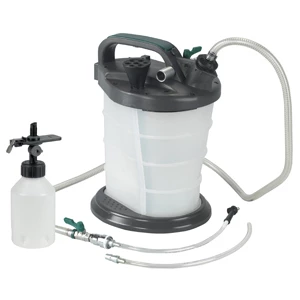
Whether you’re repairing one line or stocking up for brake jobs going forward, it’s worth having reliable tools and fresh fluid on hand rather than making do with worn equipment.
{{PRODUCT_SEARCH_2}}


FAQs
Can I drive a short distance if I just keep an eye on the fluid level?
No. Once a line is actively leaking, pressure loss can progress quickly, especially under hard or repeated braking. Any driving risks losing braking capacity on that circuit and pulling air into the system. Tow the vehicle instead.
If one brake line is rotted, will I lose all my brakes?
Not necessarily. Vehicles built since the early 1980s use a split (dual-circuit) master cylinder, so a rear-line failure typically leaves front braking intact. You will still have significantly reduced stopping power and should not treat the vehicle as safe to drive.
¬Why do some shops charge so much more than the parts cost?
Rusted fittings are time-consuming and risky to work with — they can snap, require cutting, or need custom-bent lines. Shops may also need specialized scan tools to bleed the ABS module if air entered the system, which adds diagnostic time and equipment cost beyond simple parts and labor.
Do I need to replace all four brake lines if only one failed?
Not automatically, but strongly recommended to inspect all of them. Lines exposed to the same age and road conditions corrode at similar rates, so one failure is often an early warning for the rest of the system.
Can I bleed the brakes myself after replacing a line?
Yes, for a standard manual bleed with a helper or a pressure/vacuum bleeder, provided air hasn’t reached the ABS module. If the reservoir ran dry or air was pulled deep into the system, you may need a scan tool capable of an ABS bi-directional bleed, which many basic code readers cannot perform.
How can I prevent brake lines from rusting out again?
Rinse the undercarriage after exposure to road salt, apply rust-inhibiting coating to lines and fittings periodically, and visually inspect brake lines at every fluid service so early corrosion is caught before it becomes a leak.
Shop Brake Line & Tubing Supplies
If you’re repairing the line yourself or want quality materials on hand, our brake line and tubing selection covers what you need: pre-bent and straight steel tubing in common sizes, replacement fittings, and rust-protective coatings.
- Steel brake tubing with double-flare and ISO flare compatibility
- Fittings, adapters, and connectors for brake system assembly
- Undercoating products to protect new lines from future corrosion

The Toolsource Technical Team blends decades of real-world automotive service experience with up-to-date technical research. Our writers collaborate with professional mechanics, shop owners, and diagnostic specialists to deliver practical, workshop-ready guidance you can trust.


Follow us on social media