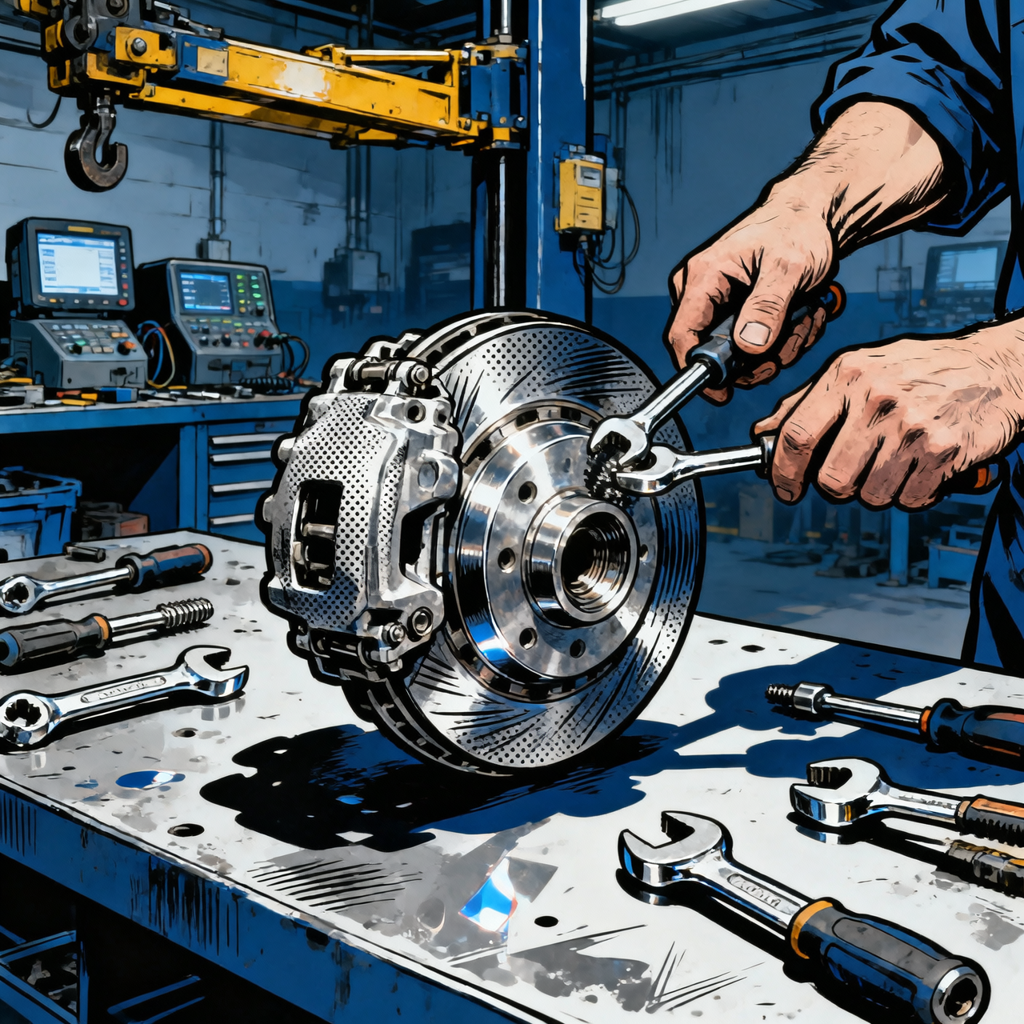
Rear calipers with electronic parking brakes (EPB) don’t retract like traditional push-in pistons. If you try to compress the rear piston without first backing off the EPB screw, the piston can overextend, cock, or even pop past the square-cut seal. This guide explains how EPB rear calipers work, how to safely retract them using service mode or manual methods, what to do if the piston has come out, and how to finish the job with proper bleeding and calibration.
How EPB Rear Calipers Work (and Why Pistons Overextend)
Most EPB rear calipers have two systems:
- Hydraulic circuit: Activated by the brake pedal, it pushes the piston out to clamp the rotor.
- EPB drive: An electric motor turns a worm/screw that applies the parking brake mechanically, pressing the piston via a gear/screw mechanism.
When you try to push the piston back without first releasing/retracting the EPB screw, you’re pushing against a locked mechanism. The piston won’t retract, or it will cock sideways and force the dust boot out. If the piston travels far enough, it can slip past the square-cut seal and dump fluid, leaving you with a compromised seal and a difficult reseat.
Key takeaway: Always retract the EPB mechanism before compressing the piston. Depending on make/model, this can be done via vehicle service mode, a scan tool, or by removing the motor and winding the screw back manually.
Tools and Setup
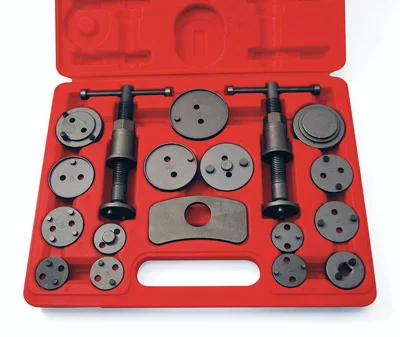
165774 1462 CTA Manufacturing Corp. CTA1462 CTA-1462 18pc Disc Brake Caliper Tool
Mfg: CTA Manufacturing Corp.
Part #: 1462
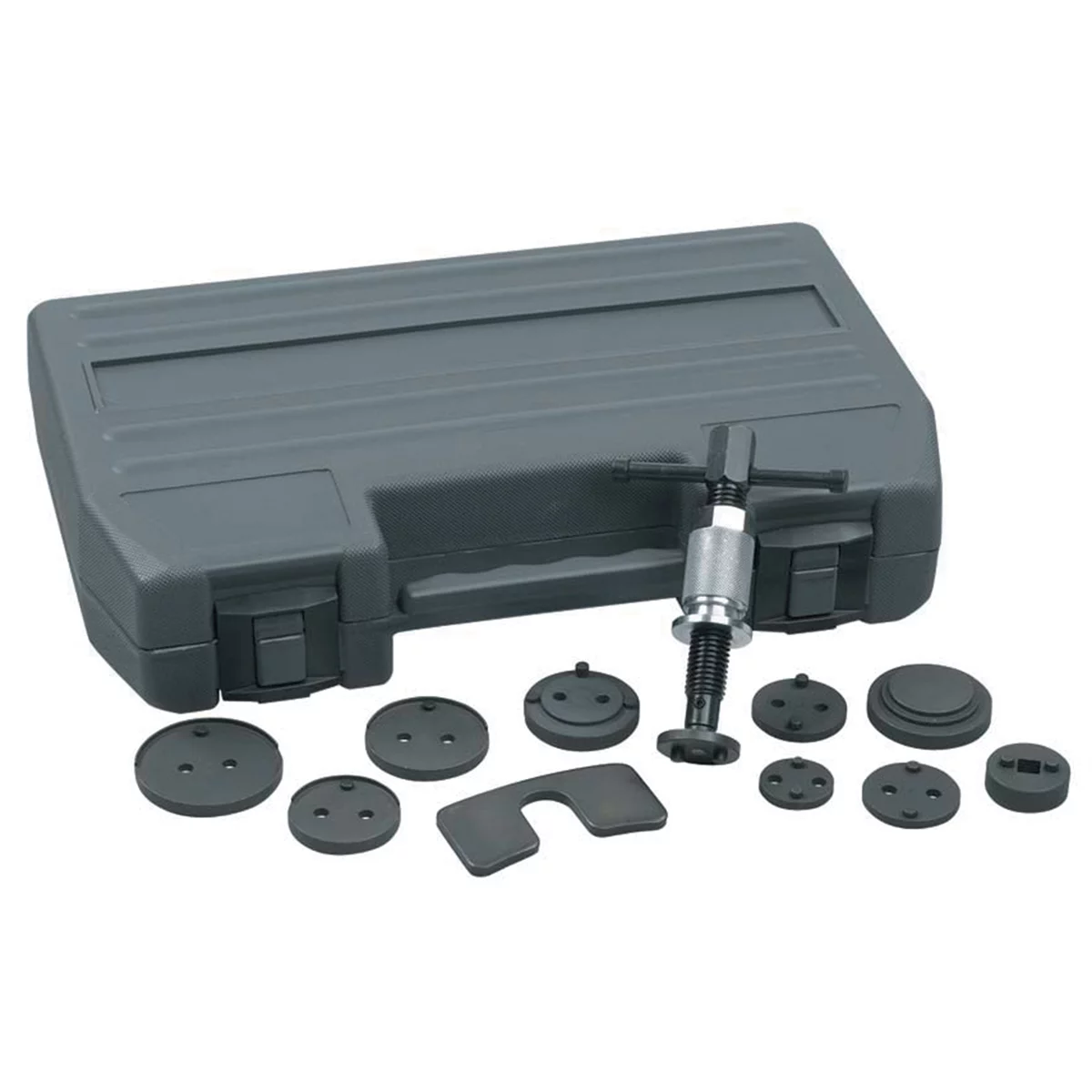
169732 5165 ATD Tools ATD-5165 18PC REAR DISC BRAKE CALIP SET
Mfg: ATD Tools
Part #: 5165
Gather the right tools before you start. Not every tool below is required for every method, but having them on hand prevents delays:
- Scan tool with EPB service function (or vehicle-specific service mode procedure)
- Brake caliper rewind kit (push/turn plates) and/or pad spreader or C-clamp
- Torx bits (commonly T25–T30) or 5 mm hex for EPB motor fasteners, model-dependent
- 9 mm box-end wrench (often fits the EPB reduction gear when motor is removed) or suitable driver bit
- 12 V power source and jumper leads (or 9 V for test/no-load checks) with small probes for EPB connector
- DOT 3/4 brake fluid (as specified), bleeder bottle/tube, or vacuum/pressure bleeder
- Line wrench for brake hose/bleeder, hose pinch-off tool (if removing caliper)
- Torque wrench (caliper bracket, slider pins, brake hose banjo bolts)
- Brake cleaner, nylon brush, picks for dust boot groove cleaning, silicone brake grease
- Jack, stands, wheel chocks; safety glasses and gloves
Quick checklist before compressing an EPB rear caliper
- Battery charged, ignition OFF (unless entering service mode via switch procedure)
- EPB fully released and caliper placed in service mode or EPB screw backed off
- Correct tools: rewind kit, Torx/hex bits, torque wrench
- Dust boot and sealing surfaces clean
- Brake fluid reservoir cap loosened and fender/paint protected
Method 1: Use Service Mode or a Scan Tool to Retract the EPB
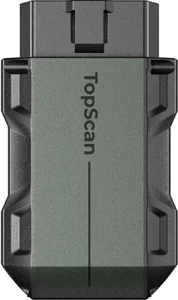
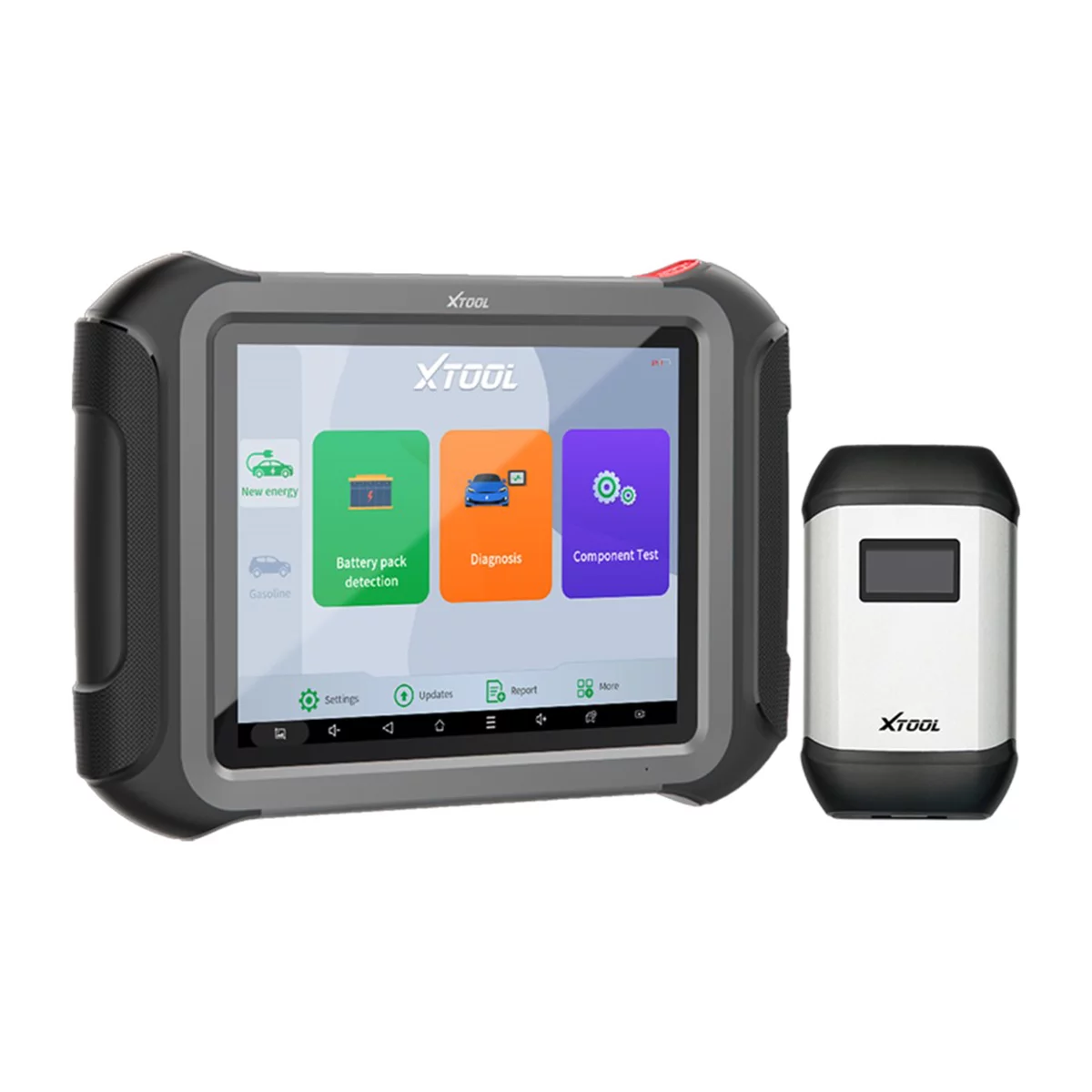
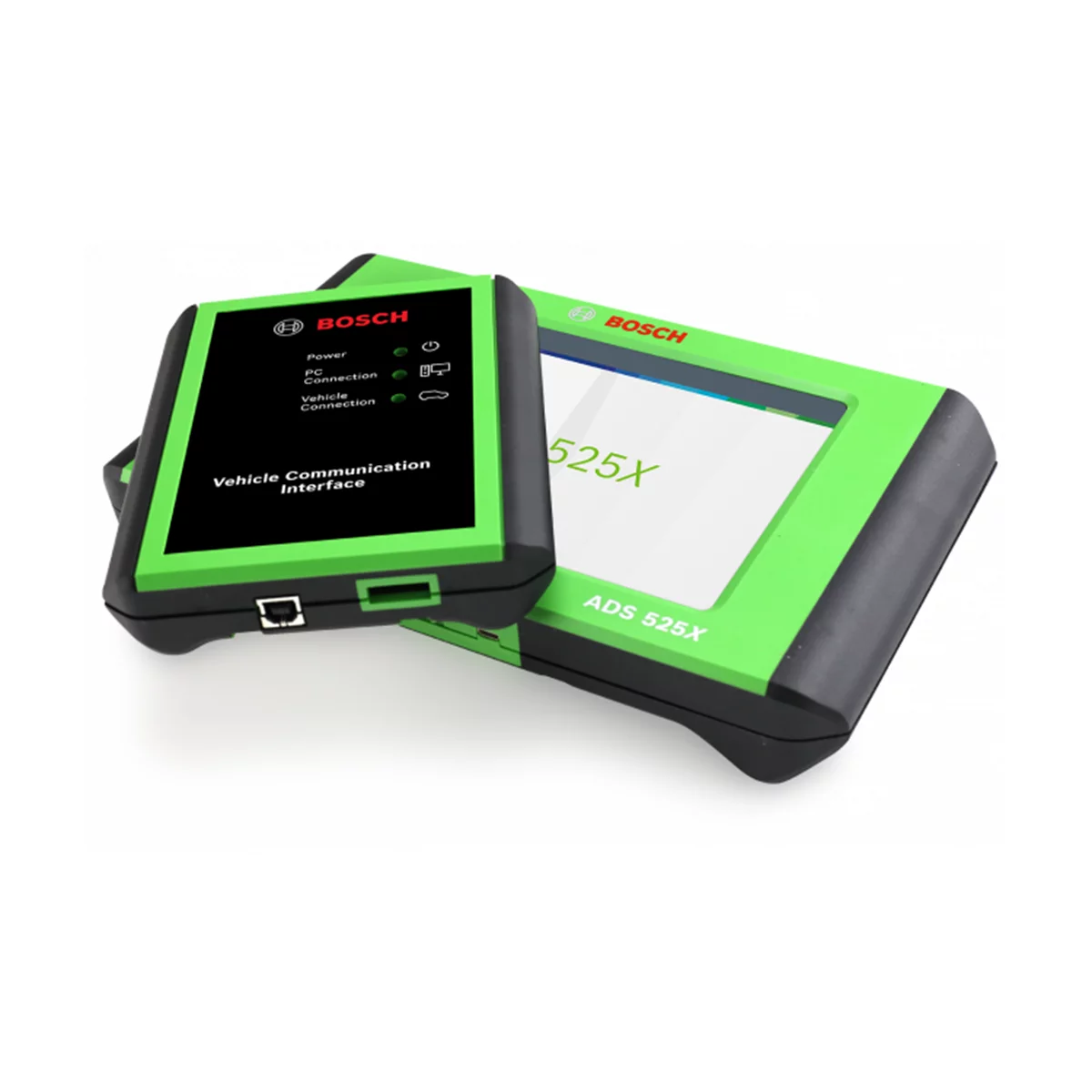
The preferred approach is to use the vehicle’s built-in service mode or a scan tool to drive the EPB actuators to the maintenance position. The exact sequence varies by brand, but the general process looks like this:
- Enter EPB service/maintenance mode. Some vehicles use an ignition ON (engine off) routine with brake pedal holds and EPB switch pulls/pushes. Others require a scan tool command. Follow service information for your year/make/model.
- Wait for the rear motors to fully unwind. You’ll often hear the motors run for several seconds.
- Ignition OFF (if applicable) and verify the EPB is not applying. The dash may show a maintenance message or a flashing indicator depending on model.
- Compress the piston: Use a caliper rewind tool if the piston face has slots/dimples and requires rotation while compressing. If it’s a pure push-in design, a pad spreader or C-clamp with the old pad as a load plate typically works.
- Monitor reservoir level and consider cracking the bleeder if fluid contamination is suspected. Avoid pushing debris upstream on high-mileage systems.
- Reassemble pads, hardware, and caliper. Torque slide pins and bracket bolts to spec.
- Exit service mode via the prescribed sequence or scan tool. Apply and release the EPB to confirm operation.
Notes:
- If the piston resists movement, stop. Confirm the EPB screw is fully retracted. Some systems still require a slight manual wind-back after the service command.
- Never force a cocked piston. Realign and rotate as needed with the correct plate adapter.
Method 2: Remove the EPB Motor and Wind Back Manually
If you lack a scan tool or the service mode won’t engage, remove the EPB motor and retract the internal screw by hand. This isolates the hydraulic piston from the parking brake screw:
- Ensure the EPB is released. Disconnect the battery as needed for safety on sensitive systems.
- Unplug the EPB motor connector. Remove the motor cover/motor by extracting the two fasteners (often T25/T30 Torx or 5 mm hex).
- Back out the worm/screw. Depending on design, insert a Torx/hex into the exposed drive or use a 9 mm box wrench on the reduction gear. Turn in the direction that retracts the internal screw until it stops freely spinning and begins to bottom out. It can take more turns than you expect.
- Compress the piston. With the EPB screw retracted, use a rewind tool to rotate/push the piston back into the bore. Keep it square to avoid damaging the square-cut seal. If the piston face has notches, use the correct adapter plate and rotate as you compress.
- Clean and lightly lubricate slider pins and pad abutments (use proper brake lubricant).
- Reinstall the EPB motor and torque fasteners. Reconnect the electrical plug.
- Cycle the EPB several times with the battery connected to let the system self-adjust. Clear EPB codes if present.
Alternate retraction via external power: On many two-wire EPB motors, you can briefly apply 12 V across the motor pins to retract. Reverse polarity to change direction. Use light, controlled taps and listen for the motor to stop. Do not keep powering the motor at stall; you can damage it or miscalibrate the system.
If the Piston Has Popped Out: Reseating vs. Replacing
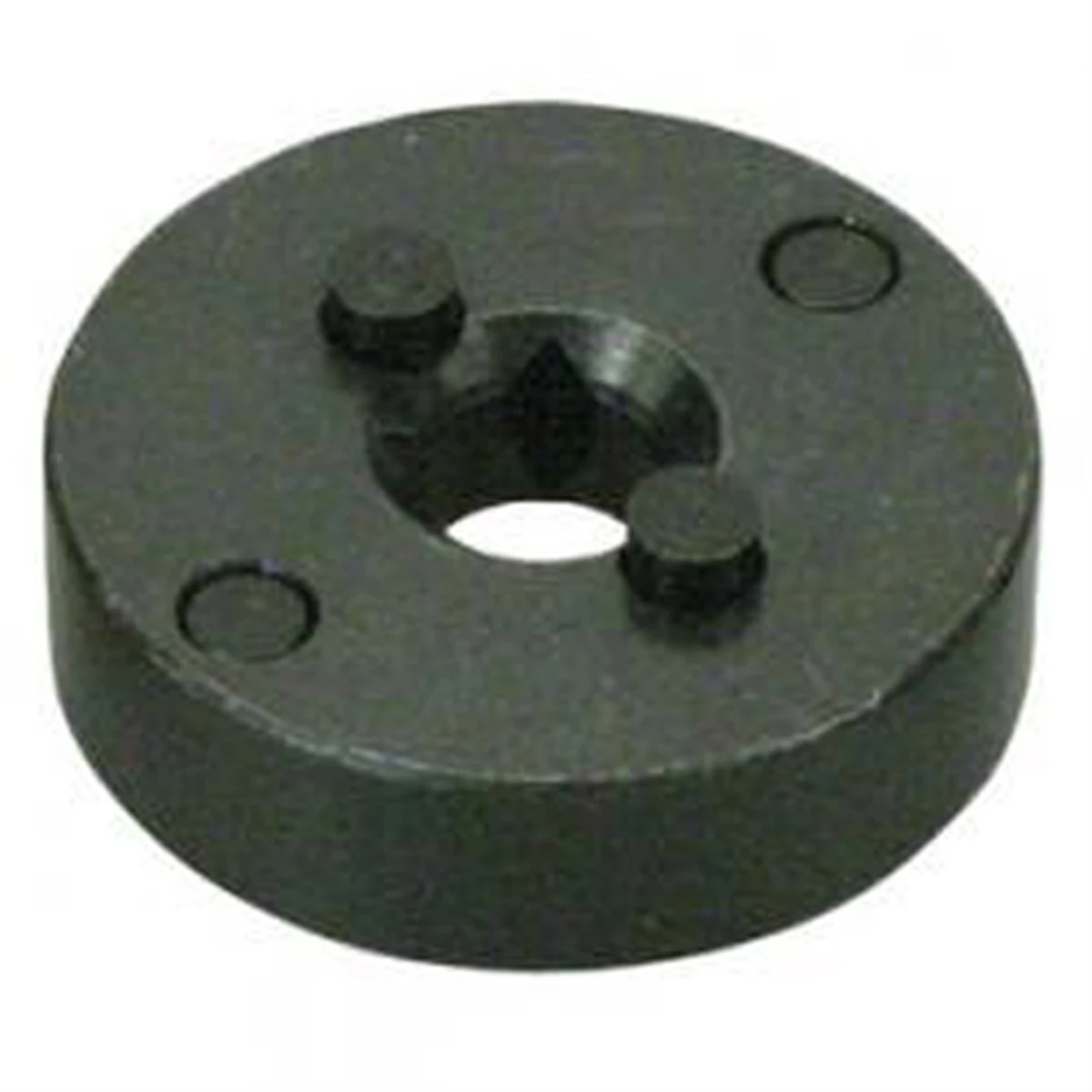
GM Rear Disc Brake Caliper Tool Adapter - two and one eight inch
Mfg: Lisle
Part #: 25150
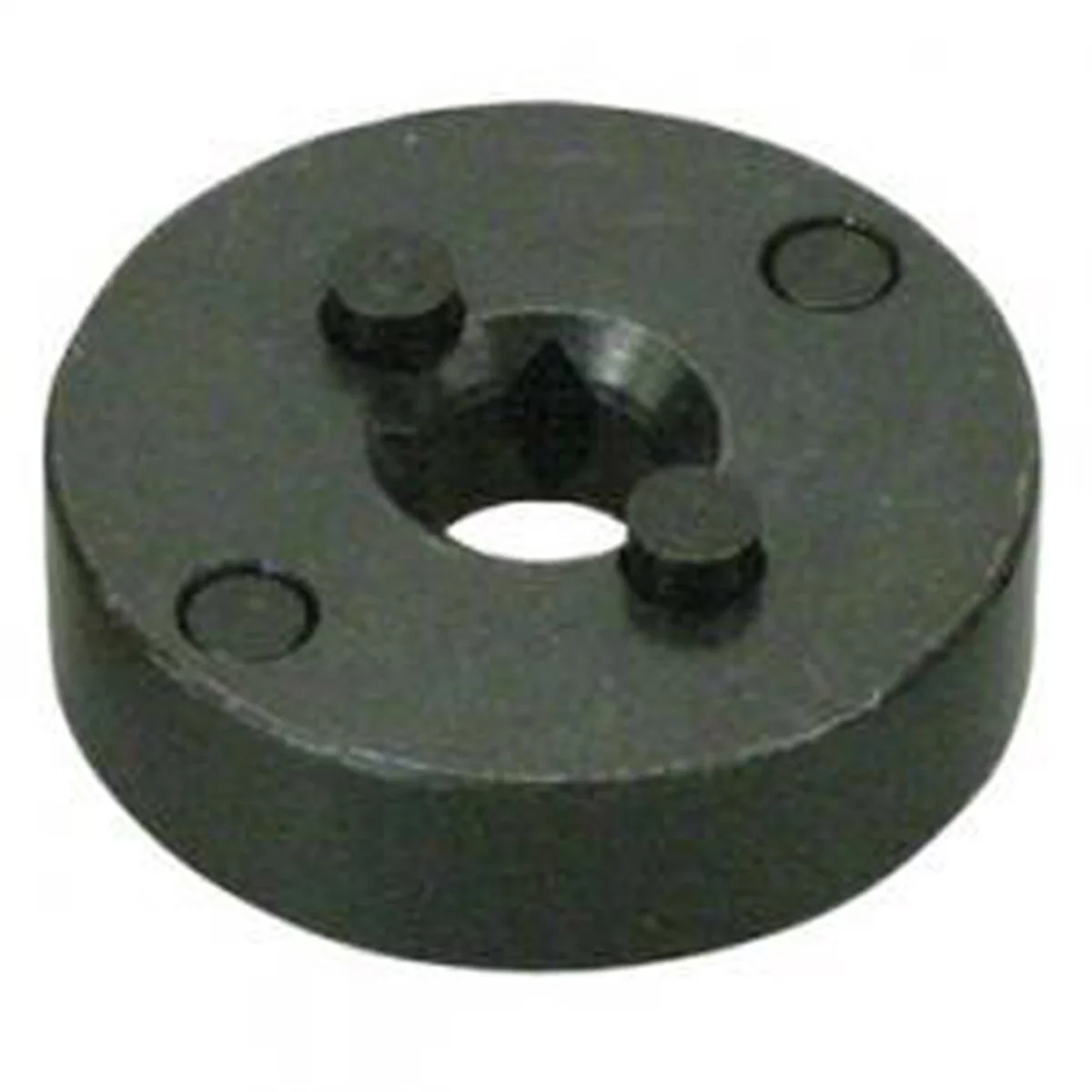
GM Rear Disc Brake Caliper Tool Adapter - two and one two inch
Mfg: Lisle
Part #: 25170

When a piston moves past the square-cut seal, fluid escapes and the dust boot may deform or tear. You have two options:
- Reseat and rebuild on the bench (if seal/boot are undamaged and you’re confident).
- Replace the caliper (recommended if the seal lip is compromised, the boot is torn, the bore is scored, or you can’t get the piston started squarely).
Reseating procedure (bench recommended):
- Remove the caliper from the bracket. Hang the brake hose or pinch it off and disconnect the banjo (use new crush washers on reassembly). Cap the hose to limit fluid loss.
- Remove the EPB motor and fully retract the internal screw as above.
- Inspect the piston, dust boot, and seal groove. Clean the groove and bore with brake cleaner and a nylon brush. Do not scratch sealing surfaces.
- Carefully remove the dust boot from its groove if it’s displaced. Inspect the square-cut seal inside the bore. If nicked, hardened, or swollen, install a caliper rebuild kit or replace the caliper.
- Lubricate the piston and seal lightly with clean brake fluid. Position the boot on the piston and partially seat it in the caliper groove per service manual orientation.
- Start the piston squarely by hand. Rotate slightly as needed while pressing. A block of wood and a C-clamp or a brake piston tool helps apply uniform force. Do not force a crooked piston; back up and realign.
- Once the piston clears the seal, continue compressing until it bottoms to the service position. Final-seat the dust boot into its groove all around.
- Reinstall the caliper, reconnect the brake hose with new crush washers, and torque to spec. Clean spilled fluid immediately to protect paint.
When to replace instead of reseat:
- Boot torn or won’t seat; seal damaged or rolled
- Piston cocked and won’t start square after careful alignment
- Excessive corrosion or scoring in the bore or on the piston
- Persistent fluid weeping after reseat
- Time/cost tradeoff: new/reman calipers are often economical and reduce risk
Bleeding, Final Assembly, and EPB Calibration
Any time a piston pops past the seal or the hose is opened, you must bleed the brakes. Even if you didn’t open the system, compressing pistons can push fluid backward through the ABS modulator; on high-mileage vehicles, some techs prefer cracking the bleeder during compression to avoid sending debris upstream.
- Bleeding sequence: Follow OEM procedure. Common patterns are RR, LR, RF, LF, but some vehicles differ, especially with diagonal split or specific ABS/EPB routines.
- Method: Use a pressure bleeder, vacuum bleeder, or manual two-person method. Keep the reservoir above the MIN line at all times.
- Check for leaks: Inspect banjo fittings (new crush washers), bleeders, hose connections, and the EPB motor seal.
- Pad and hardware install: Clean and lubricate pad ears/abutments, torque caliper bracket bolts and slide pins to spec, ensure pad wear indicators are positioned correctly.
- Rotor runout and hub cleanliness: Clean the hub face; rust or debris can cause DTV and pulsation.
- Initial pedal: With ignition OFF and EPB released, slowly pump the brake pedal to seat pads and piston before driving.
- EPB calibration: Exit service mode and apply/release the EPB several times. A scan tool can perform an EPB calibration on some models to set correct clamp positions. Clear any stored EPB/ABS codes if triggered.
Common torque references (verify per vehicle):
- Caliper bracket bolts: often 70–100+ N·m (52–74+ lb-ft)
- Caliper guide pins: often 25–35 N·m (18–26 lb-ft)
- Brake hose banjo bolt: commonly 25–35 N·m (18–26 lb-ft) with new crush washers
- Wheel lug nuts: follow OEM spec and use a torque wrench
After a road test, recheck for leaks, verify EPB engagement and release, and confirm the parking brake holds on a grade.
Pro Tips, Pitfalls, and Safe Shortcuts
- Service mode first: Enter service mode before removing pads or applying any compression. Some cars will auto-apply or self-test the EPB if you open a door or cycle ignition, which can extend the piston unexpectedly.
- Manual retraction patience: When winding back the EPB screw, keep turning until it stops—and then verify by gently testing piston movement. It often takes more turns than you think.
- External power: Applying 12 V directly to a two-wire EPB motor can retract or extend it. Short bursts only, and reverse polarity to change direction. Don’t hold power at stall.
- Keep it square: Whether reseating or compressing, unequal force will cock the piston and tear the seal. Rotate while compressing if your piston face has slots/dimples.
- Boot hygiene: Clean the boot and groove. Any grit dragged past the boot becomes abrasive inside the bore.
- Don’t hang calipers: Support the caliper; don’t stress the hose.
- Know when to replace: New/reman calipers (Aisin/Advics for many Toyotas) can be faster and more reliable than struggling with a damaged seal.
- Bleeding with EPB: Some platforms require battery disconnected or scan-tool routines during bleeding to prevent codes. Follow OEM guidance.
FAQs
Can I just crack the bleeder and push the piston back on an EPB caliper?
Not until the EPB screw is retracted. Opening the bleeder reduces backpressure to the master/ABS but does nothing if the parking brake worm screw is still engaged. First retract the EPB (service mode, scan tool, or manual wind-back), then compress the piston. Cracking the bleeder is optional and situational.
How do I know which way to turn the EPB screw when the motor is off?
It varies by design, but generally one direction will turn freely for many rotations, retracting the mechanism. If resistance builds immediately in both directions, reassess: you might still be connected to the motor gear or not fully engaged on the correct drive. Reference service data or observe piston freedom as you wind.
Is it safe to power the EPB motor with a 12 V battery at the connector?
On two-wire motors, brief, controlled 12 V pulses can move the mechanism. Reverse polarity to change direction. Stop as soon as you hear the motor reach its end. This is a workaround—not a substitute for proper service mode on vehicles that require calibration. Intelligent systems may log a code that you’ll need to clear.
My piston popped out. Can I reseat it on the car?
It’s possible but harder. Best practice is to remove the caliper, retract the EPB screw fully, clean the seal groove, and reseat the piston squarely on a bench. If you attempt on-car, ensure the piston is perfectly aligned and use a tool that applies even force. Replace the caliper if the seal or boot is compromised.
Do I need a special brake rewind kit, or can I use a C-clamp?
Many EPB rear pistons require rotation as they’re compressed. A proper rewind kit with adapter plates prevents seal damage and makes it easier to keep the piston square. A C-clamp can work on push-only designs or for final seating, but it’s not ideal where rotation is needed.
Will I need to bleed the brakes after retracting the EPB and pushing the piston back?
If the hydraulic system remained closed and you didn’t overextend the piston, you may not need a full bleed. However, if the piston popped past the seal, the hose was disconnected, or the reservoir ran low, bleeding is mandatory. Follow OEM bleed order and procedures.
Shop Automotive Paint & Finishing Tools
Finishing calipers, shields, or brackets after brake work? See our Automotive Paint & Finishing Tools for surface prep and coating tools that help prevent corrosion and restore a clean appearance.
- Abrasives and surface prep tools for rust removal and smoothing.
- Masking, mixing, and applicators for primers, paints, and clear coats.
- HVLP/touch-up spray equipment and polishers for small refinishing jobs.
Essential Brake Caliper Tools for Your Project
Working on rear EPB calipers requires the right specialized equipment to avoid costly mistakes. Our brake caliper tools collection has everything you need to safely retract, reseat, and replace calipers with confidence.
- Caliper Retraction Tools – Precision instruments designed to safely retract EPB calipers without damaging pistons or seals
- Caliper Reseating Kits – Complete kits with adapters for multiple caliper types to ensure proper piston positioning
- Diagnostic & Removal Tools – Professional-grade tools for inspection, removal, and replacement of brake calipers

The Toolsource Technical Team blends decades of real-world automotive service experience with up-to-date technical research. Our writers collaborate with professional mechanics, shop owners, and diagnostic specialists to deliver practical, workshop-ready guidance you can trust.


Follow us on social media