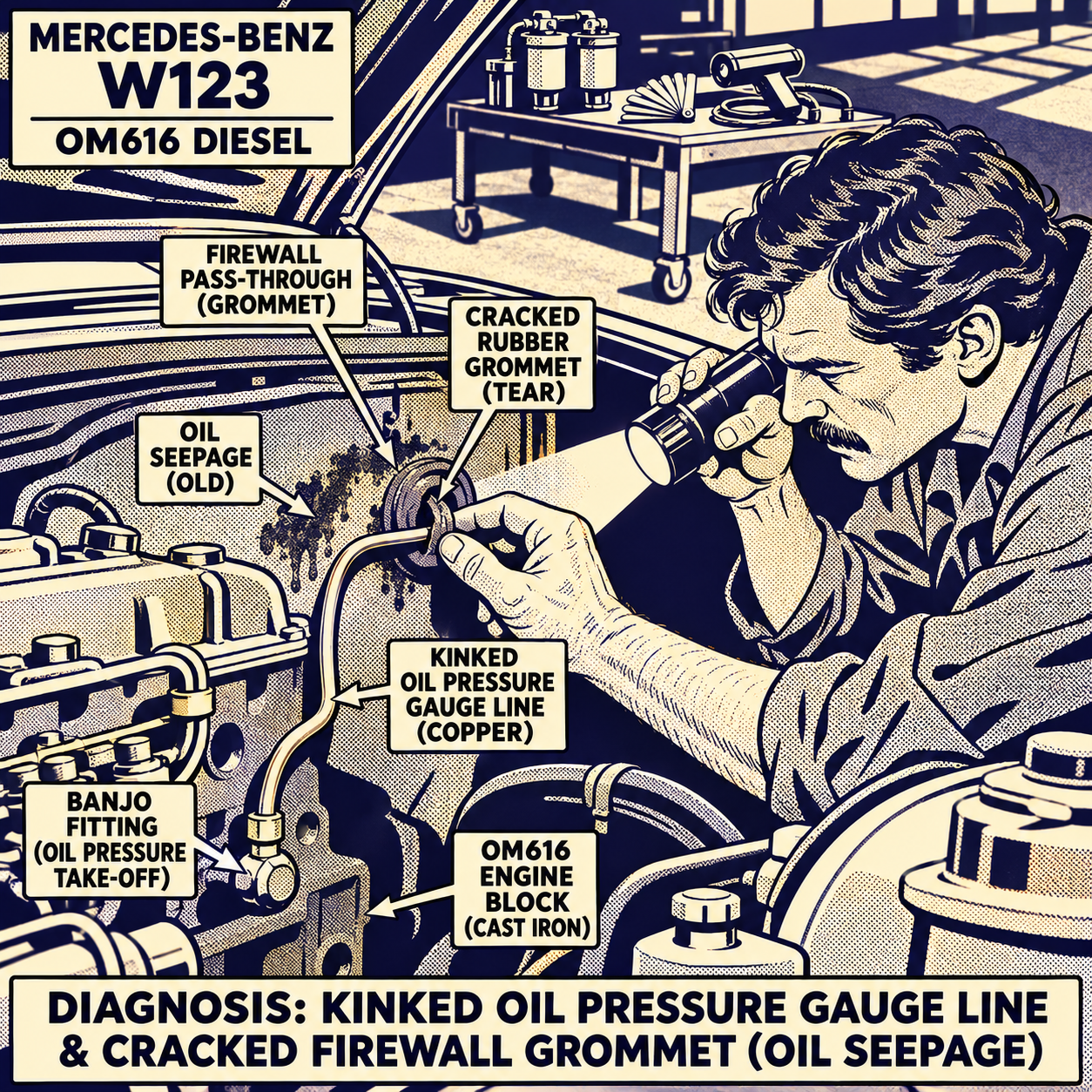
The Mercedes W123 diesel — sold as the 240D and 300D through the late 1970s and 1980s — has a well-earned reputation among owners and shops alike for running past 280,000 miles on nothing but routine oil changes. That reliability comes from an overbuilt mechanical diesel platform (the OM616 four-cylinder and OM617 five-cylinder), but “simple” doesn’t mean “maintenance-free.” These cars have a handful of design quirks that catch technicians off guard if they’re used to modern common-rail diesels or even newer Mercedes gas engines. This guide covers the systems that actually fail, in the order you’re likely to see them on a shop floor.
Why the OM616/OM617 Engines Outlast Everything Else
The OM616 (2.4L four-cylinder) and OM617 (3.0L five-cylinder) are naturally aspirated, mechanically injected, indirect-injection diesels with cast iron blocks, forged steel crankshafts, and low compression-ratio tolerances built into the design from the start. There’s no turbo to fail, no emissions aftertreatment to clog, and no electronic engine control to throw false codes. Wear items are limited almost entirely to the timing chain, injection pump seals, and standard wear-and-tear components (belts, hoses, water pump).
The practical implication for a shop: diagnostic time on these engines should go toward mechanical inspection, not scan tools. A compression test, a look at exhaust smoke color, and a stethoscope on the injection pump and injectors will tell you more than any code reader. Budget time for valve adjustments (solid lifters, not hydraulic) every 15,000–20,000 miles — this is the single most commonly skipped service on these cars and the one most likely to cause a drivability complaint.
Diagnosing the Mechanical Oil Pressure Gauge Line Leak
This is the W123’s most infamous quirk, and it surprises every technician who hasn’t worked on one before: the factory oil pressure gauge isn’t electrical. It’s a true mechanical gauge fed by a small-diameter oil line routed from the engine block, through the firewall, and up to the back of the instrument cluster. Oil under full engine pressure is sitting in that line at all times.
Failure points to check, in order of frequency:
- Firewall grommet — the rubber grommet where the line passes through the firewall dries out and cracks, letting the line chafe against sheet metal.
- Banjo fitting at the block — the copper or aluminum crush washer at the block-side fitting hardens over decades and needs replacing, not just re-torquing.
- Gauge-side fitting — the compression fitting behind the cluster loosens with vibration and drips directly onto the driver’s footwell carpet, which is the complaint you’ll hear almost verbatim from owners (“oil on my foot every time I drove it”).
- Line itself — look for a kinked or corroded section anywhere along the routing; the original steel line can rust from the inside out.
The permanent fix most shops use today is a conversion kit that replaces the mechanical line with an electric oil pressure sender and matching gauge, eliminating the pressurized line inside the cabin entirely. If the customer wants to keep it original for concours purposes, replace the full line, both fittings, and the firewall grommet as a set rather than patching one leak point — the rest of the line is the same age and will leak again within a season.
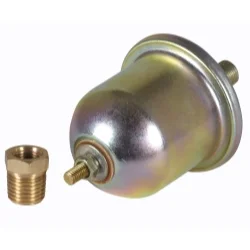
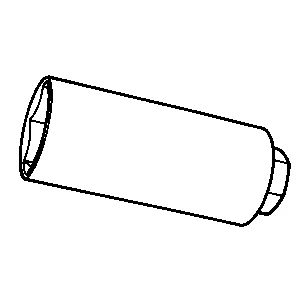
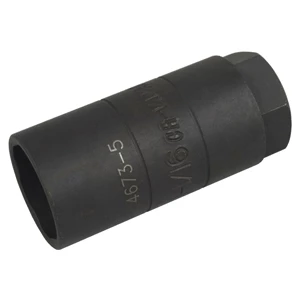
1 Inch & 1-1/16 Inch Oil Pressure Sending Unit Socket
Mfg: OTC Tools and Equipment
Part #: 4673-5
Injection Pump and Fuel System Care
These engines run Bosch inline mechanical injection pumps (M- or A-type depending on model year), which are durable but intolerant of fuel contamination and dry running. A few points specific to this platform:
- Fuel filter interval: Replace both the primary and secondary filters every 10,000 miles, tighter if the car has sat unused for long periods — these pumps are sensitive to the water and sediment that accumulate in long-stored diesel.
- Biodiesel compatibility: B5 is generally fine; higher blends (B20+) accelerate seal degradation in the original rubber fuel lines and injector seals. If a customer runs higher biodiesel blends regularly, inspect fuel lines annually rather than on the standard interval.
- Injection pump timing: A pump that’s even a few degrees off timing shows up as hard starting, knocking under load, or excessive smoke. This is a mechanical adjustment, not something a scan tool will surface — verify with a dial indicator and timing light procedure specific to the pump type before condemning injectors.
- Injectors: Pop-tested injectors with eroded or carboned nozzles cause the classic “diesel knock” at idle. Pull and bench-test before replacing wholesale; many W123 injectors just need new tips and washers.
Glow Plug System and Cold-Start Troubleshooting
Cold-start complaints are the most common service visit for these cars in winter climates. Work through this sequence:
- Check the glow plug relay/time-delay relay first — on earlier W123s this is a frequent failure point and is often misdiagnosed as a bad glow plug set.
- Test each glow plug individually for resistance rather than relying on the dash indicator light, which only confirms current flow to the circuit, not plug condition.
- Confirm battery and starter draw — these are high-compression-ratio diesels that need a strong, fully charged battery and clean, tight ground connections to crank fast enough for compression ignition in cold weather.
- If the car starts fine warm but struggles cold even with good glow plugs, suspect injection pump cold-start advance mechanism or a weak compression cylinder from valve or ring wear.
Driveline and Manual Transmission Notes
A meaningful share of surviving 240Ds were ordered with the four-speed manual, which is mechanically simple but has its own wear pattern: clutch hydraulic lines perish with age just like the oil pressure line, and the clutch master/slave cylinder seals are a common source of a soft or failing pedal. Inspect the clutch linkage and throw-out bearing noise under load before assuming the clutch disc itself is worn — on a car this age, hydraulic or linkage failure is just as likely as friction material wear. Automatic-equipped cars (the more common configuration) hold up well if fluid and filter service isn’t skipped, but the transmission mount bushings deteriorate and cause a noticeable shift clunk that’s often blamed on the transmission internals instead.
Rust and Long-Term Preventive Care
The mechanicals outlast the sheet metal on most surviving examples. Focus inspection on the rear subframe mounting points, floor pans under the carpet (especially around that oil pressure line routing), and the battery tray, which is a known rust-through spot on this chassis. For a car a customer intends to keep long-term, recommend an annual undercarriage inspection and rust-proofing touch-up rather than waiting for visible perforation.
Quick Service Checklist
- Oil and filter change every 5,000 miles; valve adjustment every 15,000–20,000 miles
- Inspect mechanical oil pressure gauge line, firewall grommet, and fittings for seepage
- Replace fuel filters every 10,000 miles; inspect fuel lines annually if running biodiesel blends above B5
- Test glow plug relay and individual plug resistance before cold-weather season
- Check clutch hydraulic lines/seals (manual) or transmission mounts (automatic) for age-related wear
- Annual rust inspection of subframe mounts, floor pans, and battery tray

Revolver Diesel Engine Stand w/o Adapter, 6,000 Lb
Mfg: OTC Tools and Equipment
Part #: 1750


FAQs
Is the oil dripping on the driver’s floor actually from the gauge line?
On a W123 or W115, yes, almost always. Trace the oil-soaked carpet back toward the firewall penetration behind the brake pedal — that’s where the mechanical gauge line enters the cabin.
Can I just cap off the mechanical oil pressure line instead of fixing it?
You can disconnect it to stop the leak, but the dash gauge will then read zero or erratic, masking a real low oil pressure condition. If originality isn’t a priority, convert to an electric sender/gauge setup instead.
How many miles can I expect from an OM616 or OM617 with proper maintenance?
300,000+ miles is common and well documented among owners, provided valve adjustments, timing chain service, and fuel filtration aren’t skipped.
Is biodiesel safe to run in these engines?
B5 blends are generally safe. Higher blends accelerate rubber seal and fuel line wear, so inspect those components more frequently if a customer runs B20 or higher regularly.
Why does the car smoke more when cold?
Some white smoke on cold start is normal for an indirect-injection diesel. Persistent heavy smoke after warm-up points to injector condition, injection timing, or glow plug/relay failure — check those before assuming engine wear.
What’s the biggest maintenance item shops typically miss on these cars?
Valve adjustments. These engines use solid lifters with no self-adjusting mechanism, so skipped adjustments directly cause rough idle, reduced power, and accelerated valve train wear.
Recommended Tools for Diesel Engine Work
Maintaining the OM616 and OM617 engines requires proper diagnostic equipment and specialized service tools. Check our Diesel & Truck Tools selection for everything you need.
- Compression testers and diesel-specific gauges for combustion and injection diagnosis
- Fuel system tools including fuel pressure gauges, filter wrenches, and injector pullers
- Glow plug testers and cold-start diagnostic equipment

The Toolsource Technical Team blends decades of real-world automotive service experience with up-to-date technical research. Our writers collaborate with professional mechanics, shop owners, and diagnostic specialists to deliver practical, workshop-ready guidance you can trust.


Follow us on social media