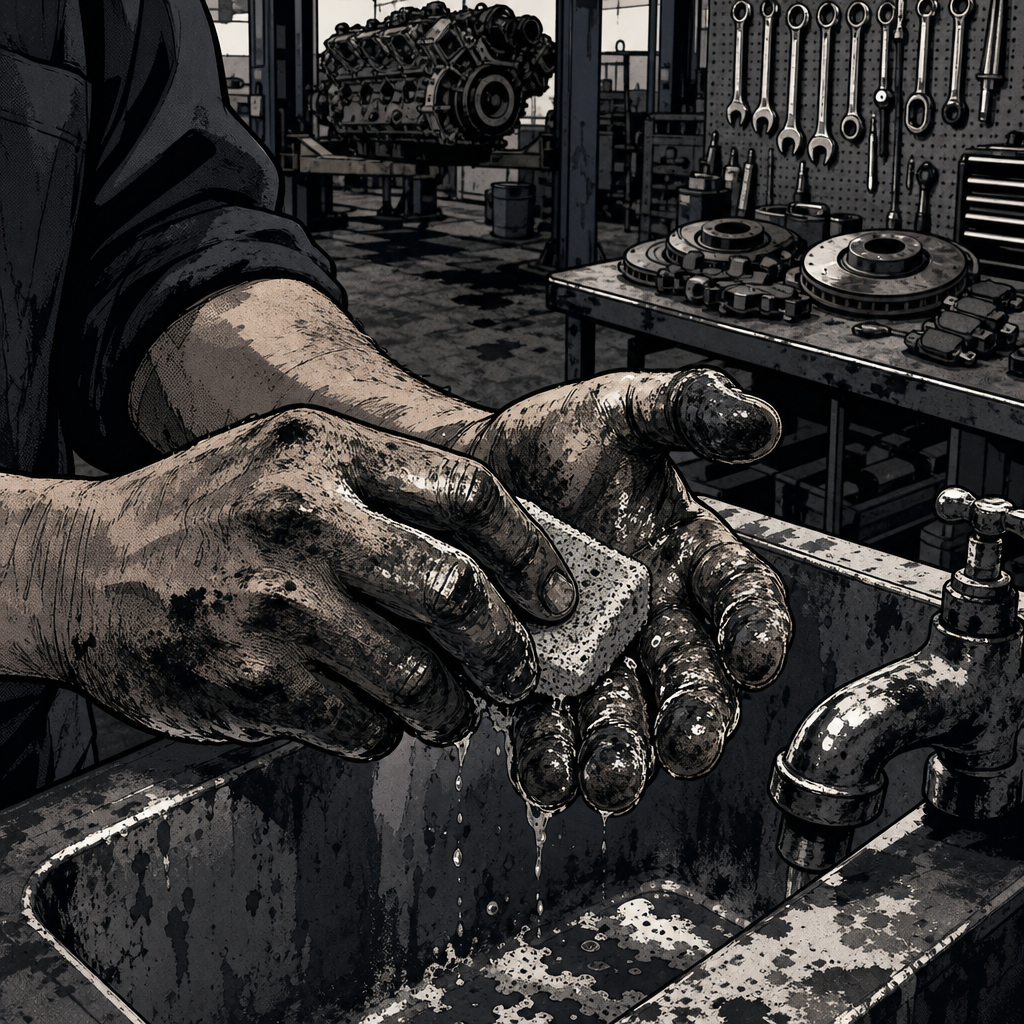
Every tech has a routine for getting a shift’s worth of grease, oil, and brake dust off their hands, and most of those routines were handed down rather than researched. A recent shop-talk thread comparing old-school lye bars, pumice cleaners, and kitchen-cabinet hacks like sugar and dish soap turned into a surprisingly useful rundown of what actually works, what’s just folklore, and what you should stop using. Here’s the practical version, organized so you can pick a system instead of guessing.
Why Regular Soap Doesn’t Cut It
Standard bar or liquid soap is built to lift water-soluble dirt and body oils. Automotive grease, motor oil, and carbon-based grime are hydrophobic — they don’t bond well with plain soap and water, which is why you can scrub for a minute with hand soap from the bathroom and still see gray in your knuckle creases. Two things close that gap: mechanical abrasion (grit, pumice, sugar, wood flour) that physically breaks the grease film apart, and solvent or surfactant action strong enough to emulsify petroleum-based residue so water can rinse it away. Most effective shop hand cleaners combine both. Anything that skips the abrasive side usually needs a longer contact time or a scrub pad to get comparable results.
Pumice and Grit-Based Cleaners: The Shop Standard
Pumice-loaded hand cleaners — the thick, pumpable kind sold in shop dispensers — remain the baseline for a reason. The pumice or ground walnut shell provides the abrasion, while the surfactant base handles the oil emulsification. These products work on dry or slightly damp hands and rinse clean without leaving the greasy residue that some citrus-based cleaners can. Bar versions of the same concept (gritty bar soaps marketed for mechanics and industrial use) work almost identically and are worth keeping at a shop sink or in a toolbox for jobs away from a dispenser. If you’re outfitting a bay or a mobile rig, look for a heavy-duty pumice hand cleaner in a pump tub rather than a squeeze bottle — the pump dispenses a controlled amount and doesn’t require you to touch a greasy cap.
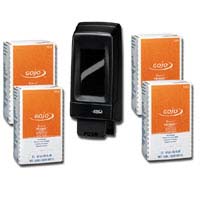
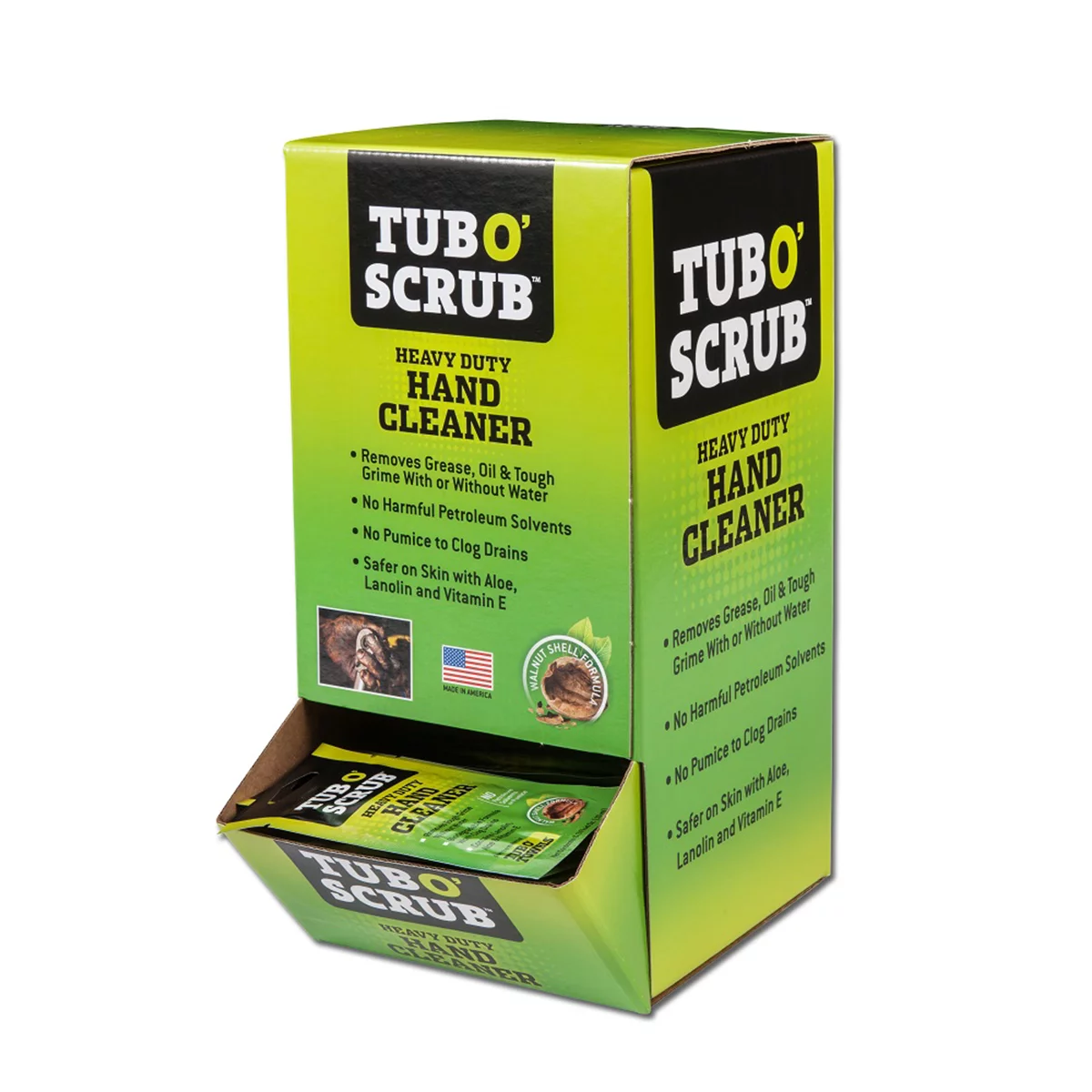
Tub O' Towels Tub O' Scrub Single Pack Gravity Feed, 100 in a bo
Mfg: TUB O' TOWELS
Part #: TS01-GR

DIY and Budget Alternatives
Not every job happens near a stocked parts counter, and several low-cost substitutes hold up well:
- Dish soap plus sugar: A small amount of granulated sugar mixed into dish soap (blue Dawn is the most commonly cited brand) creates an improvised grit cleaner. Scrub dry or slightly wet, then rinse with warm water. This is a legitimate technique, not just a home remedy — the sugar dissolves during rinsing so it doesn’t clog drains the way sand or shop grit can.
- Castile soap: Liquid or bar castile soap (Dr. Bronner’s is the most frequently mentioned brand) is milder on skin than detergent-heavy shop soaps and works reasonably well for daily grime, though it generally needs more product and more scrubbing than a dedicated pumice cleaner for heavy grease days.
- Liquid laundry detergent: Concentrated laundry detergent rubbed into dry hands before rinsing is another commonly used trick — it’s formulated to break down oil-based stains on fabric, and the same chemistry works on skin. Keep it separate from the laundry room if you don’t want grease-stained bottles showing up in the wash.
- Borax: Straight borax has enough natural abrasiveness to cut through heavy grime, but it’s more aggressive on skin than dedicated hand cleaners and shouldn’t go near open cuts or cracked knuckles.
None of these DIY options are wrong choices, but they trade convenience and skin-friendliness for cost savings. For daily heavy use, a purpose-built cleaner is usually less hard on skin over a full career.
Technique Beats Product Choice
Several experienced techs pointed out that how you apply a cleaner matters as much as which one you buy. Applying hand cleaner to completely dry hands before adding any water lets the surfactants bind directly to the oil film instead of getting diluted immediately. Work it into knuckles, nail beds, and between fingers for a full 20–30 seconds, then add water gradually to emulsify the grease before rinsing. Adding water first — the instinctive move — cuts the cleaner’s effectiveness and is the most common reason a product gets blamed for not working when the real issue is application order.
Old and Unknown Products: When to Skip Them
The thread included a found decades-old bar of lye soap, which is a good reminder to be cautious with unmarked or very old shop products. Cold-process lye soaps can still be effective cleaners, but many older industrial formulations — including some now-discontinued mechanic’s soaps — used harsher additives than current products, and packaging from that era often lacked ingredient disclosure entirely. If you find an old tin or bar with no legible ingredient list, treat it as unknown rather than nostalgic. Stick to currently manufactured products with visible ingredient and safety information, especially for something used on skin daily.
Protecting Your Skin Long-Term
Repeated exposure to solvents, degreasers, and abrasive cleaners takes a toll on skin barrier health over a career, not just in a single shift. A barrier cream applied before starting work (products like PR-88 were mentioned specifically) forms a protective layer that makes cleanup easier afterward and reduces how much grease actually penetrates skin and nail beds. Nitrile gloves for jobs that don’t require bare-hand feel are the more effective long-term move, since prevention beats cleanup every time. After washing, a fragrance-free hand lotion helps rebuild the moisture barrier that repeated scrubbing strips away — cracked, dry skin absorbs contaminants faster than well-moisturized skin.
Quick Reference Checklist
- Apply cleaner to dry hands first, then add water gradually
- Use a pumice or grit-based cleaner for heavy grease and carbon buildup
- Keep a DIY backup (dish soap + sugar) for jobs away from the shop sink
- Skip unmarked or very old soap products with no ingredient list
- Apply barrier cream before starting dirty work, not just cleaner after
- Moisturize after washing to prevent cracked skin and faster re-soiling
- Wear nitrile gloves for jobs where bare-hand contact isn’t necessary

FAQs
Is pumice soap bad for your skin with daily use?
It can be drying with heavy daily use because the abrasive particles and surfactants strip natural oils along with grease. Follow up with a moisturizing lotion after each wash to offset this, especially in cold or low-humidity conditions.
Does the sugar-and-dish-soap method actually work as well as commercial cleaners?
For light to moderate grease it works comparably well because the sugar provides mechanical abrasion similar to pumice. For heavy, baked-on grime or long-term daily use, a dedicated pumice hand cleaner is generally more effective and gentler on skin over time.
Should I be worried about old shop soap products containing hazardous ingredients?
If a product has no legible ingredient list or safety information, don’t use it regardless of how well older techs remember it working. Stick with currently manufactured, clearly labeled products.
What’s the best way to get grease out from under fingernails specifically?
Apply cleaner dry and work it under the nail edge with a nail brush or an old toothbrush before adding water. A barrier cream applied before starting the job also significantly reduces how much grime gets packed under nails in the first place.
Are citrus-based degreasing hand cleaners a good alternative to pumice cleaners?
They can be effective and often smell better, but some leave an oily residue if not rinsed thoroughly, and they typically lack the mechanical abrasion that helps with heavily embedded grime. They work well as a secondary option rather than a sole daily cleaner.
Do barrier creams actually reduce cleanup time?
Yes — a barrier cream creates a layer between skin and contaminants, so grease and oil sit on top of the cream rather than soaking into skin and nail beds, which noticeably reduces scrubbing time at the end of a shift.
Stock Your Shop for Cleanups
Now that you’ve found a hand cleaner that works for your routine, make sure your bay or mobile rig is equipped with the full range of essentials for effective cleanup and skin care. Browse our shop equipment and supplies to find pumice cleaners, barrier creams, disposable gloves, and other items your workspace needs.
- Pump-dispenser and bar-form hand cleaners for bench-side and on-the-go use
- Barrier creams and hand moisturizers to protect skin between shifts
- Disposable nitrile gloves and nail brushes for targeted cleaning

The Toolsource Technical Team blends decades of real-world automotive service experience with up-to-date technical research. Our writers collaborate with professional mechanics, shop owners, and diagnostic specialists to deliver practical, workshop-ready guidance you can trust.


Follow us on social media