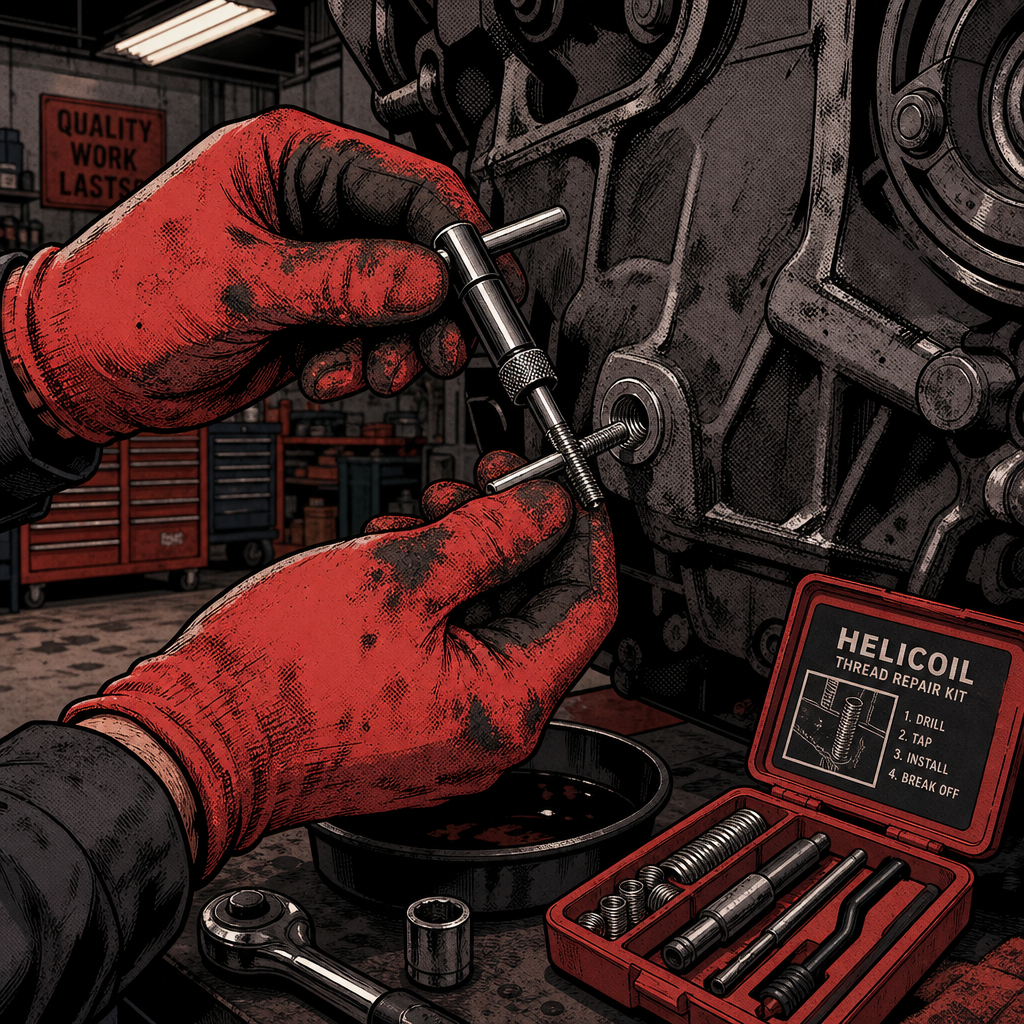
When you pull an oil drain plug and see coiled threads coming out with it, you’re looking at either a factory-installed Helicoil that’s failed or a previous repair gone wrong. Many modern vehicles—particularly those with aluminum oil pans like 6th gen Camaros, LS-equipped vehicles, and various Cadillac models—come from the factory with Helicoil inserts because aluminum threads wear out quickly under repeated removal and installation. The stainless steel inserts provide greater wear resistance than soft aluminum. But whether you’re dealing with a factory insert that finally gave up or someone’s botched repair job, you’ve got work ahead of you. This guide walks through your repair options from simplest to most involved, so you can choose the right approach based on the vehicle, damage severity, and your customer’s budget.
Understanding What You’re Looking At
Before you grab tools, identify exactly what failed. If you see coiled wire threads, that’s a Helicoil or similar thread insert. This doesn’t automatically mean someone screwed up—aluminum pans on LS engines, many GM SUVs, and several other platforms use factory-installed Helicoils specifically because aluminum threads can’t handle repeated torquing. The drain plug typically specs at 18-32 ft-lbs depending on the application, but over dozens of oil changes, even properly torqued fasteners wear aluminum threads.
The real question is whether the parent threads in the pan are still intact. Drop a inspection camera or good light into the drain hole if you can. If you see clean, damaged aluminum threads where the Helicoil was sitting, you’re looking at a re-insert job. If the hole is wallowed out, oversized, or the aluminum is cracked, your options narrow considerably. Some techs inherit these problems from quick-lube shops where impact drivers get used on drain plugs—you can hear that “brrrrr” from across the shop, and it’s rarely good news for the threads.
Helicoil Repair: The Standard Fix
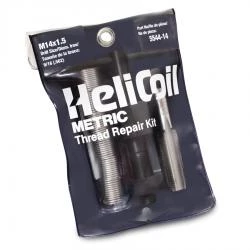
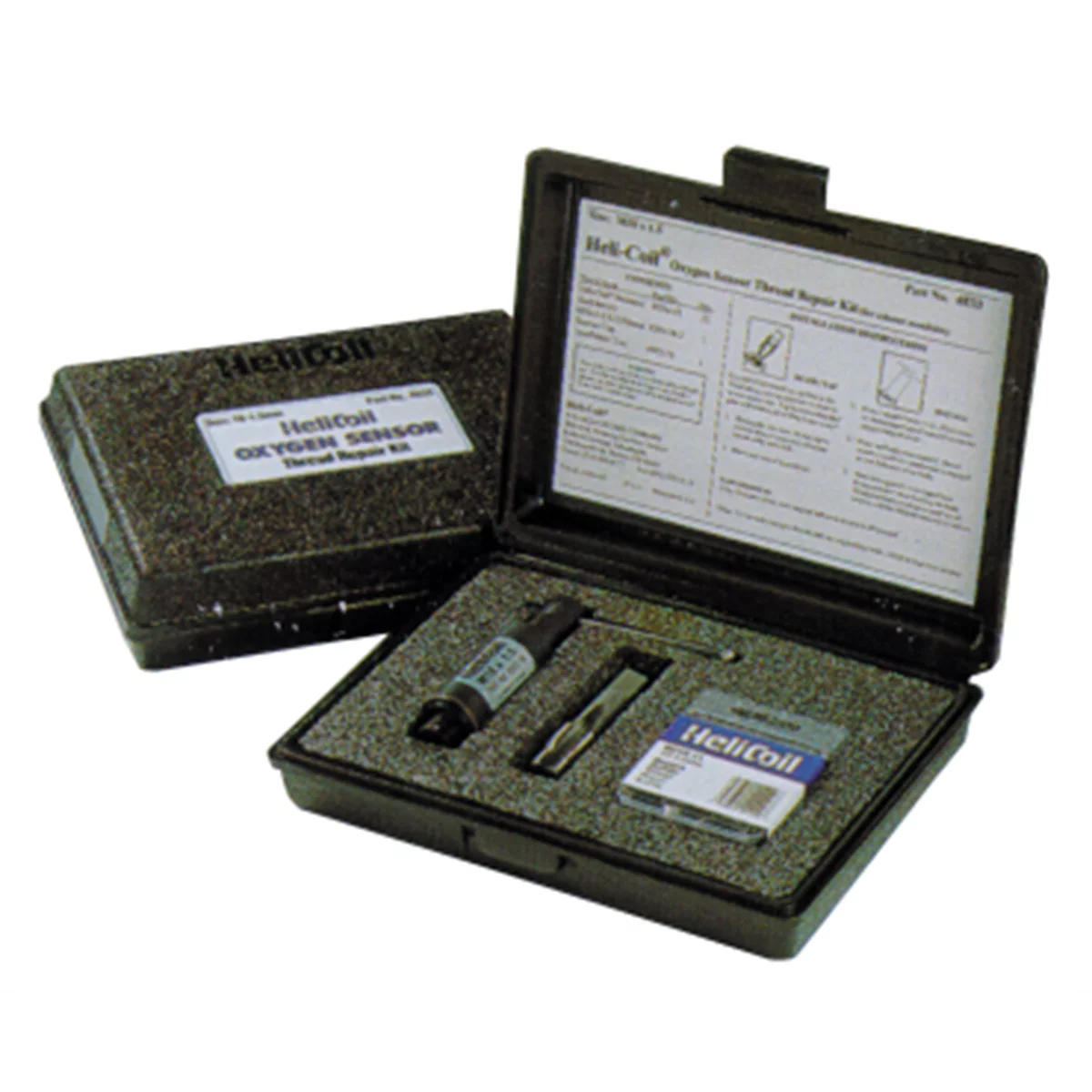
Metric Fine Thread Repair Kit - M14x1.5 x 21.0mm
Mfg: Heli Coil Products
Part #: 5544-14
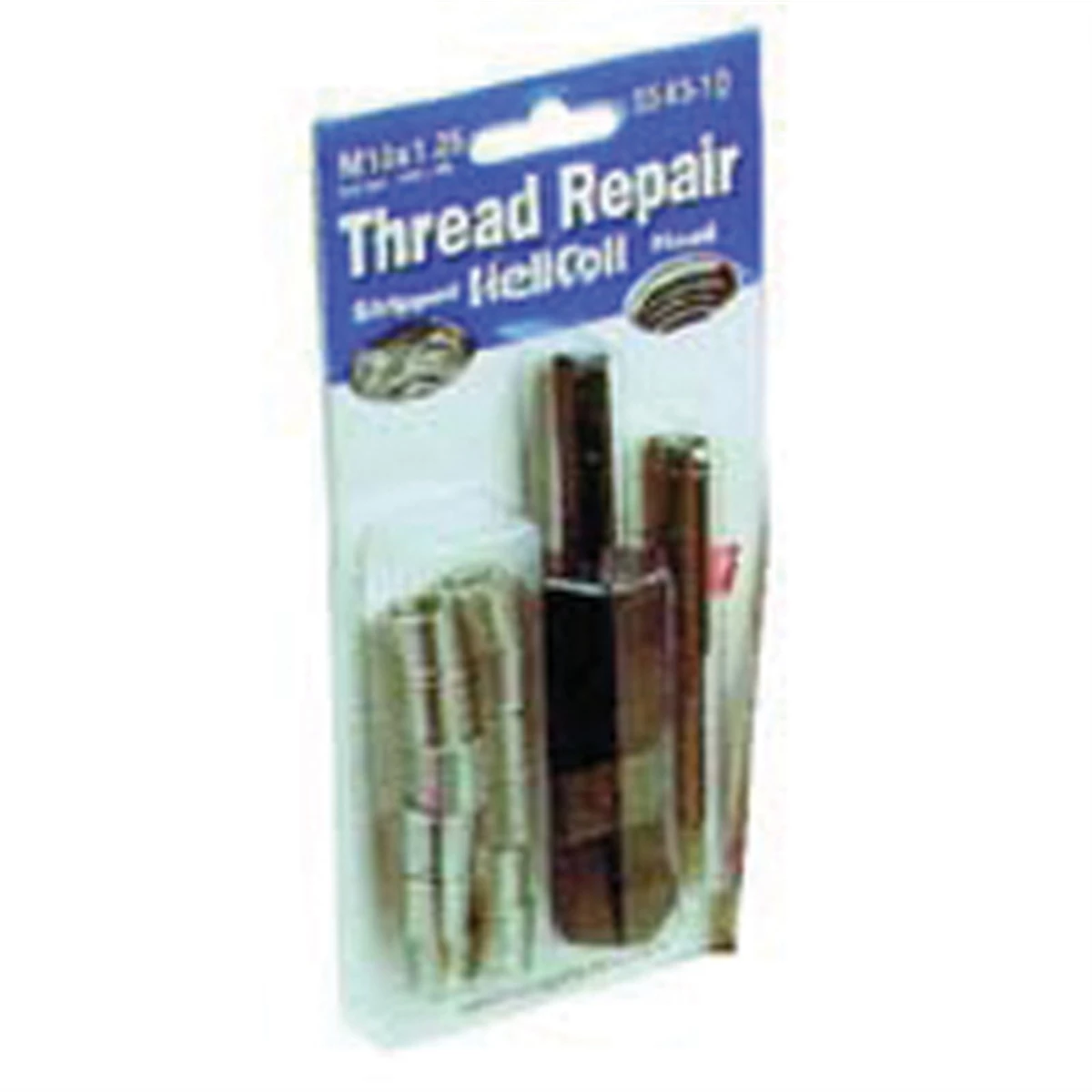
Metric Fine Thread Repair Kit - M12x1.25 x 18.0mm
Mfg: Heli Coil Products
Part #: 5543-12
If the parent threads aren’t too damaged, installing a fresh Helicoil is your most straightforward repair. Here’s the critical part: source the right kit. NAPA discontinued genuine Helicoil kits and replaced them with an off-brand called “Fix a Thread” that doesn’t match the original pitch. Multiple techs have learned this the hard way. O’Reilly still stocks original Helicoil kits, or order directly from Helicoil. Expect to spend $20-40 for a quality kit with the correct insert size.
The process requires precision because you’re working on a horizontal surface with oil residue, and metal shavings fall directly into the pan. Start by thoroughly cleaning the area with brake cleaner. Pack the drain hole temporarily with a lint-free rag. The Helicoil kit includes a specific drill bit sized for the tap—use this exact bit, not something close from your general set. Coat the drill bit heavily with white lithium grease or heavy chassis grease. This catches most of the aluminum shavings as you drill.
Drill perpendicular to the pan surface. Any angle here and your insert won’t seat properly, leading to leaks or another failure down the road. Once drilled, remove the rag carefully and use the included tap to cut threads. Go slow, back out frequently to clear chips, and use cutting oil. The tap must go in straight—this is where the repair lives or dies. After tapping, flush the area with brake cleaner and use a magnet to capture any remaining shavings inside the pan. Some techs pour a half-quart of fresh oil through the drain hole to flush debris, then drain it immediately.
Install the Helicoil using the provided installation tool. The insert should sit slightly below the pan’s outer surface—about a half-turn below flush. Break off the tang according to the kit instructions, retrieve it with a magnet, and you’re ready to install a new drain plug. Use a torque wrench set to manufacturer spec. This repair, done correctly, can outlast the vehicle.
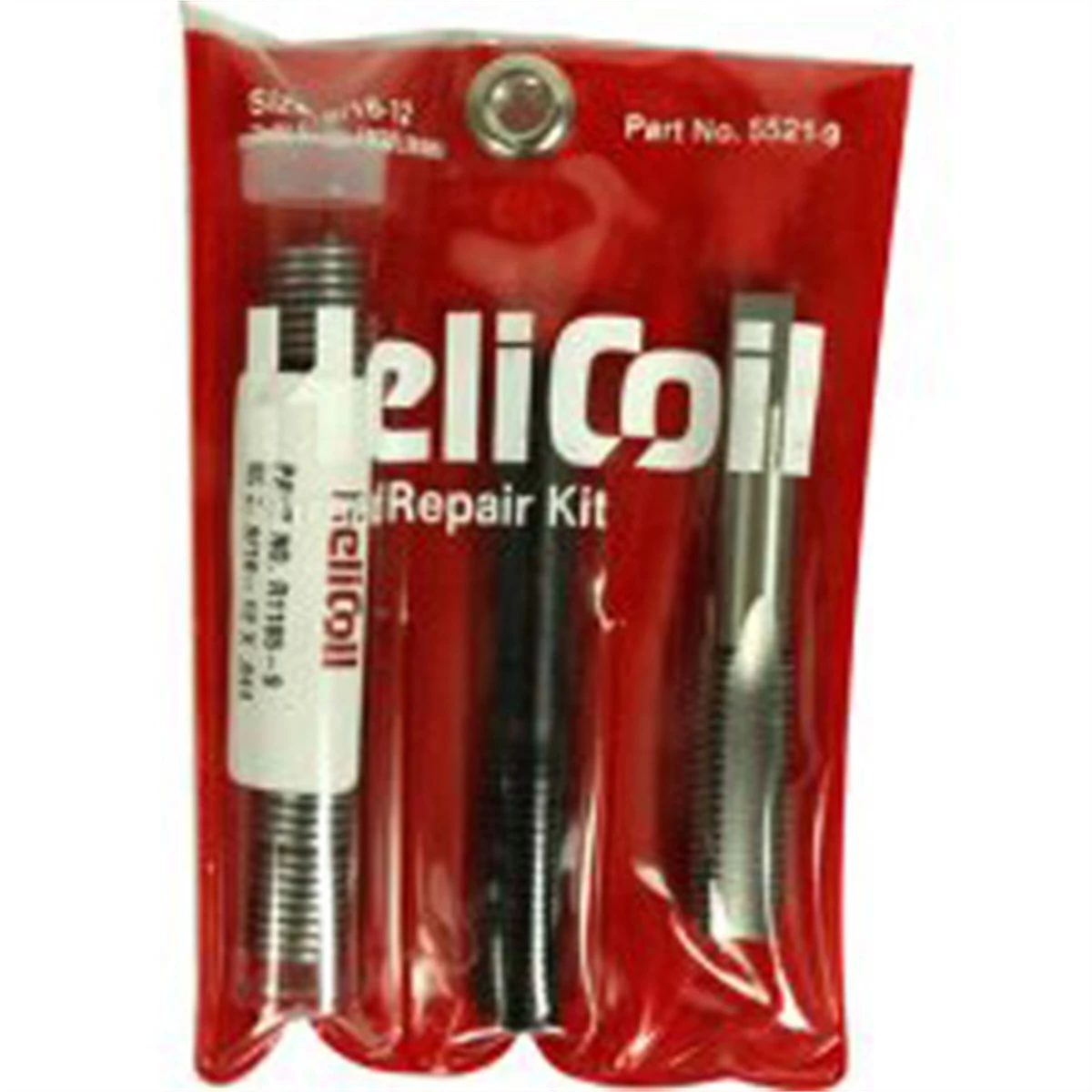
Inch Coarse Thread Repair Kit – 9/16-12 x .844
Mfg: Heli Coil Products
Part #: 5521-9
ID: 72417
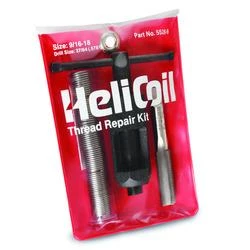
Inch Fine Thread Repair Kit – 9/16-18 x .844
Mfg: Heli Coil Products
Part #: 5528-9
ID: 72431
Time-Sert Inserts: The Premium Alternative
Time-Sert inserts offer advantages over traditional Helicoils, particularly in high-stress applications or when you’re dealing with marginal parent threads. The Time-Sert system uses a solid insert rather than a coiled wire, providing more surface contact with the parent material. The installation process mirrors Helicoil work—drill, tap, install—but the finished insert often holds better in compromised aluminum.
Time-Sert kits run higher in price, typically $40-70 depending on thread size, but many professional techs prefer them for permanent repairs. The same shaving-management rules apply: grease your drill bit heavily, work perpendicular to the surface, and plan to flush the pan. The Time-Sert tap cuts cleaner threads than some Helicoil taps, which helps when you’re working with already-stressed metal. If you’re repairing a high-mileage vehicle or a pan that’s seen multiple drain plug removals, the extra investment in a Time-Sert often pays off in longevity.
One significant advantage: if a Time-Sert fails years down the road, the parent hole is often still in good enough shape to drill and tap for an oversized plug. Helicoils that fail sometimes damage the parent threads beyond simple repair, forcing a pan replacement.
Oversized Drain Plugs: Quick and Effective
When threads are damaged but the hole isn’t completely destroyed, an oversized drain plug offers a faster solution than insert systems. Dorman and other manufacturers make oversize plugs specifically for this application, typically available at any parts store for $5-15. This approach works best when you’re dealing with stripped threads that haven’t been previously Helicoiled or when a Helicoil repair isn’t holding.
The process is straightforward: drill out the existing hole to the size specified for your oversized plug, tap new threads using the correct tap size, and install the larger plug. The same metal-shaving precautions apply—grease your bit, drill straight, and manage debris carefully. The advantage here is simplicity and cost. The disadvantage is that you’re removing more material from the pan, and if this repair fails, you’ve eliminated some future repair options.
Use a proper tap and die set, not bargain-bin tools. A $50 set from a quality manufacturer will cut clean threads that seal properly. Chase the threads carefully, use plenty of cutting oil, and test-fit your plug before final installation. Some techs apply a thin coat of thread sealant on the plug threads (not Teflon tape, which can shed into the oil) for extra insurance, though a properly cut thread and correct torque shouldn’t require it.
Emergency and Temporary Solutions
Sometimes you need to get a vehicle mobile while parts are on order or the customer decides on a repair approach. Rubber expansion plugs, available from Summit Racing and other performance suppliers, can provide a short-term seal. These are marketed “for racing use only,” which means don’t send the customer down the highway for months on this fix. But for getting the vehicle out of your bay while you wait on a pan or for moving it around the lot, they work. Expect maybe one oil change cycle at most from this approach.
Some techs have reported success with Teflon tape wrapped around drain plug threads as a temporary measure—one claimed eight years before the engine died of unrelated issues—but this is playing with fire. Tape can shed into the oil system, and you’re essentially setting up the next tech for a surprise. If you go this route, document it thoroughly and make sure the customer understands it’s temporary.
Fumoto valves deserve mention here as a permanent solution after any thread repair. These are drain plugs with built-in valves—you install them once using your repaired threads, then drain oil through the valve mechanism going forward. The plug itself never gets removed again. For a vehicle with marginal threads or a fresh Helicoil repair, this eliminates future torque cycles on your repair. Fumoto valves run $25-50 depending on size and style, and installation is identical to a standard plug. The customer gets easier oil changes, and you never worry about that drain plug again.
Oil Pan Replacement: When Repair Isn’t Enough
Sometimes the pan is simply done. If the drain hole is wallowed out, cracked, or you’re looking at a third repair attempt on the same threads, bite the bullet and quote a pan replacement. On rear-wheel-drive GM trucks and SUVs—Yukons, Escalades, Tahoes, Suburbans—this job hasn’t changed much in 40 years. Worst case, you’re lowering the front differential, which is four bolts. Drain the oil, pull pan bolts, drop it down, clean gasket surfaces, install new pan with fresh gasket, refill. Budget 1.5-2.5 hours depending on access and whether exhaust or crossmembers complicate removal.
Other vehicles aren’t as friendly. Some require frame drops, engine lifts, or substantial disassembly to access pan bolts. A 2010 Escalade falls into the easier category despite its size, but always check service data before quoting. Customers hate surprises, and “I thought it would be easy” doesn’t reduce your labor bill. Price out the pan before you commit—some aluminum pans run $150-300, while others top $500. Factor in gasket, oil, filter, and any sealer required by the manufacturer.
If you’re replacing the pan anyway, inspect it for other damage. Dents, road rash, and impact damage are common. Check the pickup tube mounting—some pans crack around the tube boss. And verify the new pan comes with a drain plug; some don’t. When you install the fresh pan, torque the drain plug properly and make a note in the service record. The next tech will thank you.
Prevention and Best Practices
Most stripped drain plugs come from one of three scenarios: impact drivers on drain plugs, wrong plugs forced into place, or simply age and repeated cycles. You can’t control what happened before the vehicle reached your bay, but you can prevent creating these problems. Use a torque wrench on drain plugs—yes, every time. Eighteen to 32 ft-lbs is typical depending on application; check service data. Hand-thread the plug before applying tools to ensure you’re not cross-threading. If resistance appears before the plug seats, stop and investigate.
Educate your quick-lube techs or anyone doing oil changes that drain plugs are not lug nuts. Impact drivers have no place on drain plugs. Neither do 18-inch breaker bars. These are aluminum pans with sacrificial threads by design. Treat them accordingly. When you encounter a vehicle with factory Helicoils, note it in the service record so the next tech knows what they’re dealing with.
Keep quality repair kits on hand. A genuine Helicoil or Time-Sert kit for common sizes (M12, M14, M16 are typical drain plug sizes) pays for itself the first time you need it. Having the right tools available means you can offer same-day repairs instead of ordering parts and rescheduling. Stock a few oversized plugs in common sizes as well—they’re cheap insurance against delays.
Pre-Repair Checklist
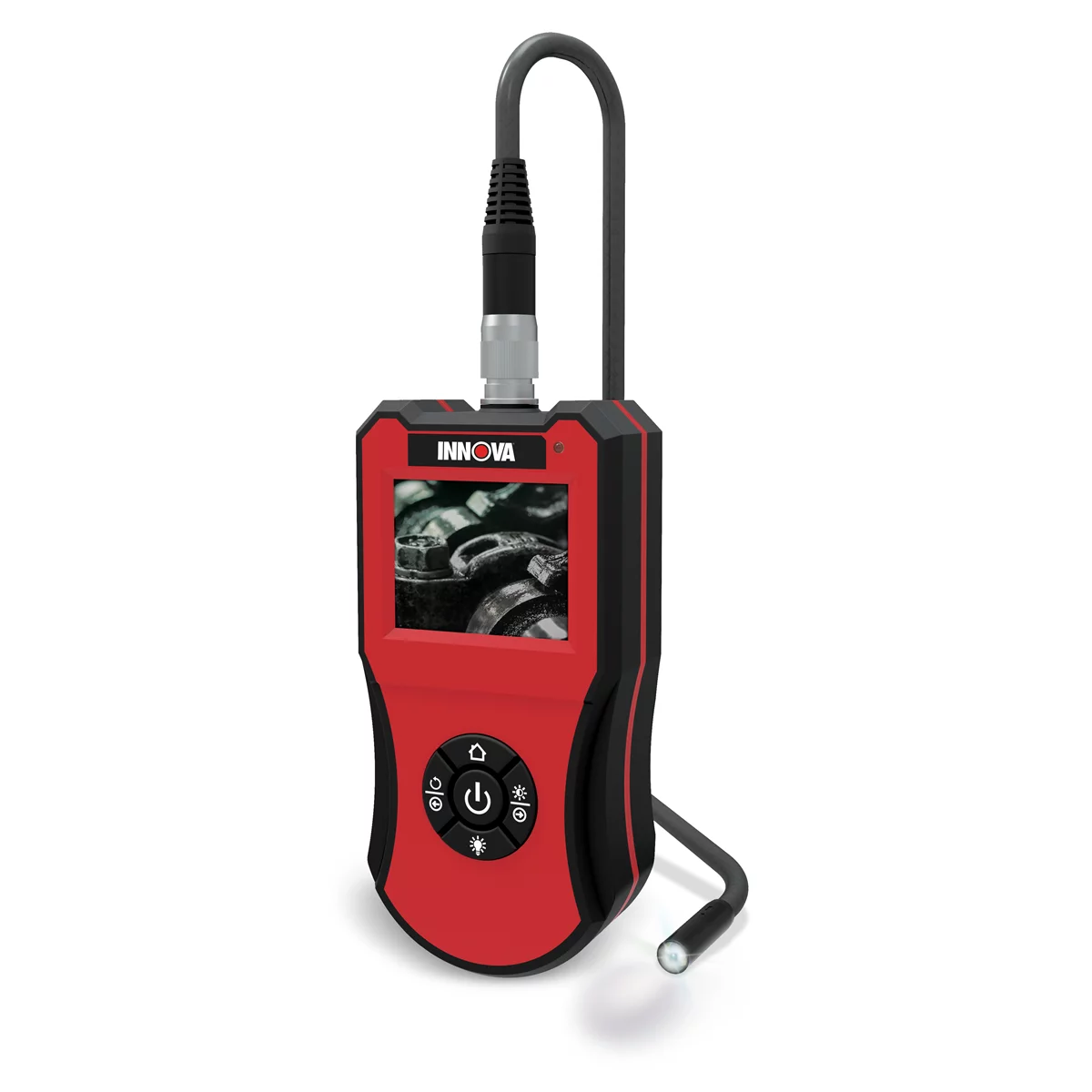
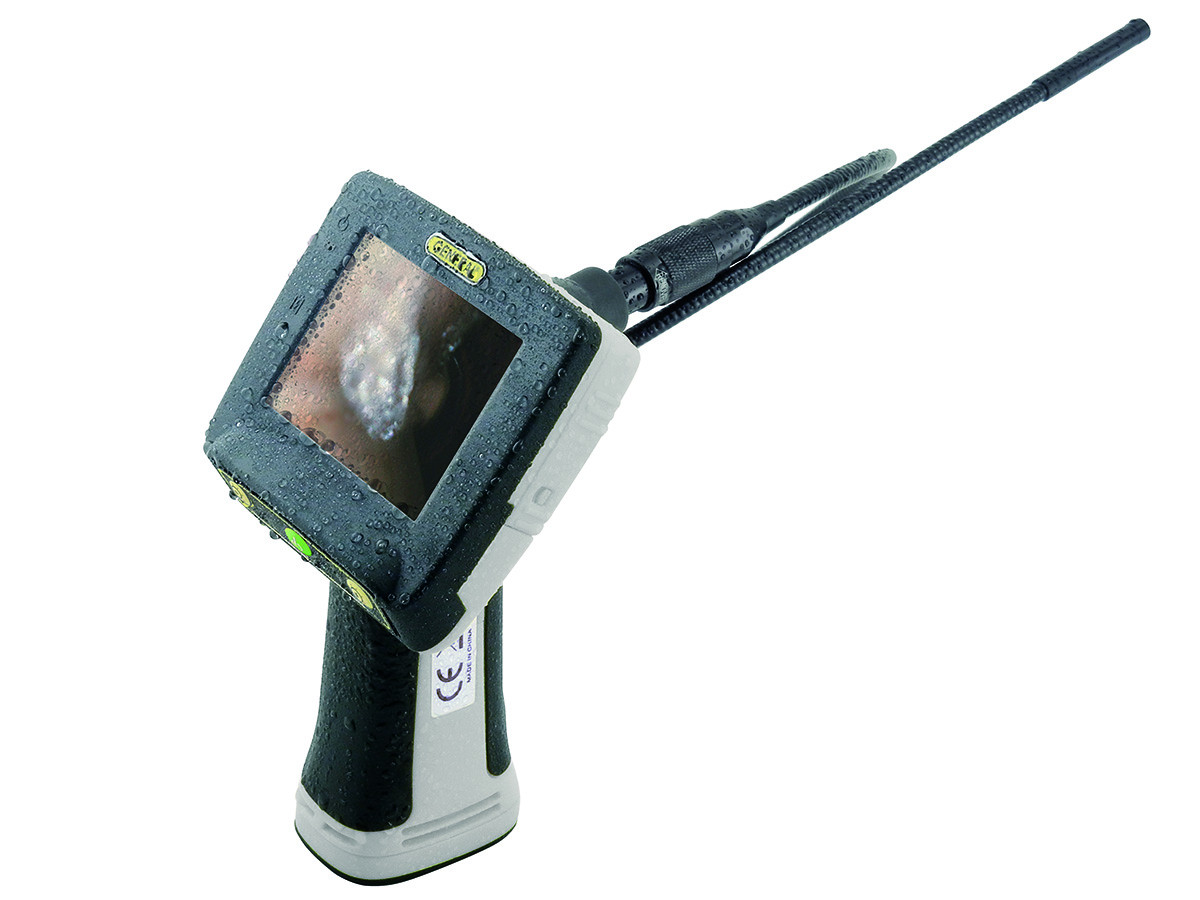
Waterproof Video Inspection Camera/Borescope with 8mm Probe
Mfg: General Tools & Instruments
Part #: DCS600A

- Inspect drain plug and hole with good lighting to identify type of damage
- Verify whether existing Helicoil is factory-installed or previous repair
- Check parent threads in pan for damage severity
- Source correct repair kit (genuine Helicoil from O’Reilly or Time-Sert, not off-brand)
- Gather grease for drill bit, cutting oil for tap, magnets for shaving retrieval
- Confirm new drain plug availability and correct size
- Check pan replacement cost and labor if repair seems marginal
- Document existing damage with photos before starting work
- Test-fit all components before final installation
- Have torque wrench calibrated and set to correct spec

Frequently Asked Questions
Can I install a Helicoil with the pan still on the vehicle?
Yes, but metal shavings are your biggest risk. Use heavy grease on the drill bit to catch shavings, work slowly, and plan to flush the pan with a half-quart of fresh oil immediately after tapping threads. Use a strong magnet to retrieve any loose material. Many techs successfully perform this repair on-vehicle, but dropping the pan eliminates any risk of debris entering the oil system.
What’s the difference between Helicoil and Time-Sert inserts?
Helicoils are coiled wire inserts that provide new threads in a drilled and tapped hole. Time-Serts use a solid bushing design with more surface contact to the parent material. Time-Serts generally hold better in damaged or marginal threads and cost more—typically $40-70 versus $20-40 for Helicoil kits. Both work well when installed correctly; Time-Sert is the premium option for difficult repairs.
Will an oversized drain plug work as well as a thread insert?
When installed properly with correctly tapped threads, an oversized plug provides a permanent repair equal to original equipment. The limitation is that you’re removing more material from the pan, so if this repair fails, you’ve reduced your options. Oversized plugs work best on first-time thread damage where no previous Helicoil was attempted. They’re faster and cheaper than insert repairs.
How do I prevent metal shavings from entering the engine during thread repair?
Coat your drill bit heavily with white lithium grease or chassis grease to catch shavings as they’re created. Work slowly and clear the bit frequently. After drilling and tapping, use a strong magnet inside the drain hole to collect loose material. Flush the area with brake cleaner, then pour a half-quart of fresh oil through the drain hole and let it flow out, carrying any remaining debris. This method captures the vast majority of contaminants.
Are Fumoto drain valves reliable for vehicles with repaired threads?
Fumoto valves are excellent solutions after thread repair because they eliminate future removal of the drain plug. Once installed, you drain oil through the valve mechanism, so the plug never experiences additional torque cycles. This protects your Helicoil or Time-Sert repair from future stress. Fumoto valves have proven reliable across millions of oil changes when properly installed and are particularly valuable on vehicles with aluminum pans or marginal threads.
How much should I torque the drain plug after installing a Helicoil?
Follow the vehicle manufacturer’s specification for drain plug torque, typically 18-32 ft-lbs depending on plug size and pan material. The Helicoil provides the same holding strength as original threads when properly installed, so no adjustment to torque spec is needed. Always use a calibrated torque wrench—overtorquing is how many of these problems start. If manufacturer specs aren’t available, 20-25 ft-lbs is safe for most M12-M16 drain plugs in aluminum pans.
When should I replace the pan instead of repairing threads?
Replace the pan when the drain hole is severely damaged, cracked, wallowed out beyond repair, or when you’re looking at a second or third repair attempt on the same threads. Also consider replacement if the pan shows other damage like severe dents, road rash, or cracks around the pickup tube. Get a firm price on the pan and labor time before deciding—some pans are $150 and two hours of work; others require major disassembly and cost $500. Balance repair cost against vehicle value and expected service life.
Repair Kits and Threading Tools
Whether you’re installing a fresh Helicoil or upgrading to a Time-Sert insert, having the right kit on hand makes the difference between a same-day repair and a customer callback. Our Heli-Coil selection includes genuine Helicoil kits in common drain plug sizes, along with the precision tools needed for proper installation.
- Genuine Helicoil kits with correct drill bits and taps for M12, M14, and M16 plugs
- Installation tools and mandrels to seat inserts at the proper depth
- Tap and die sets for oversized drain plug repairs
Essential Heli-Coil Tools & Supplies
Whether you’re installing a Heli-Coil to repair a stripped oil drain plug or replacing your pan entirely, having the right tools makes the job easier and more successful. Browse our complete Heli-Coil category for everything you need to complete this repair with confidence.
- Heli-Coil Repair Kits: Complete installation kits with inserts, tools, and detailed instructions for DIY drain plug repairs
- Tap and Drill Sets: Precision tools for preparing threads before Heli-Coil installation
- Oil Drain Pans: High-capacity replacement pans for when repair isn’t an option

The Toolsource Technical Team blends decades of real-world automotive service experience with up-to-date technical research. Our writers collaborate with professional mechanics, shop owners, and diagnostic specialists to deliver practical, workshop-ready guidance you can trust.


Follow us on social media