License plate installation might seem like the most straightforward task in automotive maintenance, but choosing the wrong screws can create problems that extend far beyond a loose plate. Standard hardware store screws can strip plastic mounting holes, corrode and leave rust trails down your paint, or make your plates an easy target for theft. This guide breaks down the specifications, materials, and installation considerations that separate a professional job from a comeback repair.
Understanding License Plate Screw Thread Specifications
Most modern vehicles use metric fasteners for license plate mounting, but the specific thread type depends on whether you’re threading into plastic or metal. The most common specification is M6 × 1.0 pitch for metal-threaded holes, which provides secure engagement without stripping the mounting points. For vehicles with plastic mounting holes, M5 coarse thread fasteners are typically the correct choice.
Honda and Acura vehicles, along with many other Asian manufacturers, commonly use both types depending on the model year and trim level. The M6 × 1.0 pitch is a machine thread that requires pre-tapped holes, while the M5 coarse thread features a pointed tip that can cut its own thread in softer materials. Some technicians refer to the coarse thread as “the pointy one” because it’s designed to be self-tapping in plastic mounting bosses.
Sheet metal screws in 3/4-inch length also work for many applications, particularly on older domestic vehicles. However, these should only be used when the original equipment specified sheet metal screws, as forcing them into metric-threaded holes will damage the threads and make future plate changes difficult. When in doubt, check your vehicle’s service manual or examine the original fasteners before replacement.
The 10mm hex head bolt configuration is increasingly common on newer vehicles because it allows for tool installation rather than Phillips or slotted drives that strip easily. This design also supports anti-theft applications by requiring a specific bit size that’s less convenient for opportunistic thieves working without proper tools.
Material Selection for Corrosion Resistance
The material composition of your license plate screws directly impacts the longevity of both the fasteners and your vehicle’s finish. Standard zinc-plated steel screws provide adequate corrosion resistance in dry climates, but they will eventually oxidize in environments with road salt, coastal humidity, or frequent rain exposure. Once corrosion begins, rust will leach from the screw heads and create visible orange streaks down your license plate and trunk lid or bumper cover.
Stainless steel fasteners eliminate this rust-streaking problem entirely. Type 304 stainless steel offers excellent corrosion resistance for automotive applications and costs only marginally more than zinc-plated alternatives. Most auto parts retailers stock stainless steel license plate screw sets for four to ten dollars, making them the practical choice for any installation where appearance matters.
Titanium screws represent the premium option, offering superior corrosion resistance and reduced weight at a higher price point. Major home improvement retailers now carry titanium fastener sets in the eight-dollar range, which may appeal to performance enthusiasts or show car owners. However, for typical service work, stainless steel provides the best balance of cost, availability, and performance.
Avoid using random screws from bulk bins or workshop assortments unless you can verify both the material and thread specification. The money saved by using mismatched hardware is quickly lost when you have to refinish paint damage or replace stripped mounting points. Always confirm that replacement screws are marketed as automotive-grade and corrosion-resistant before installation.
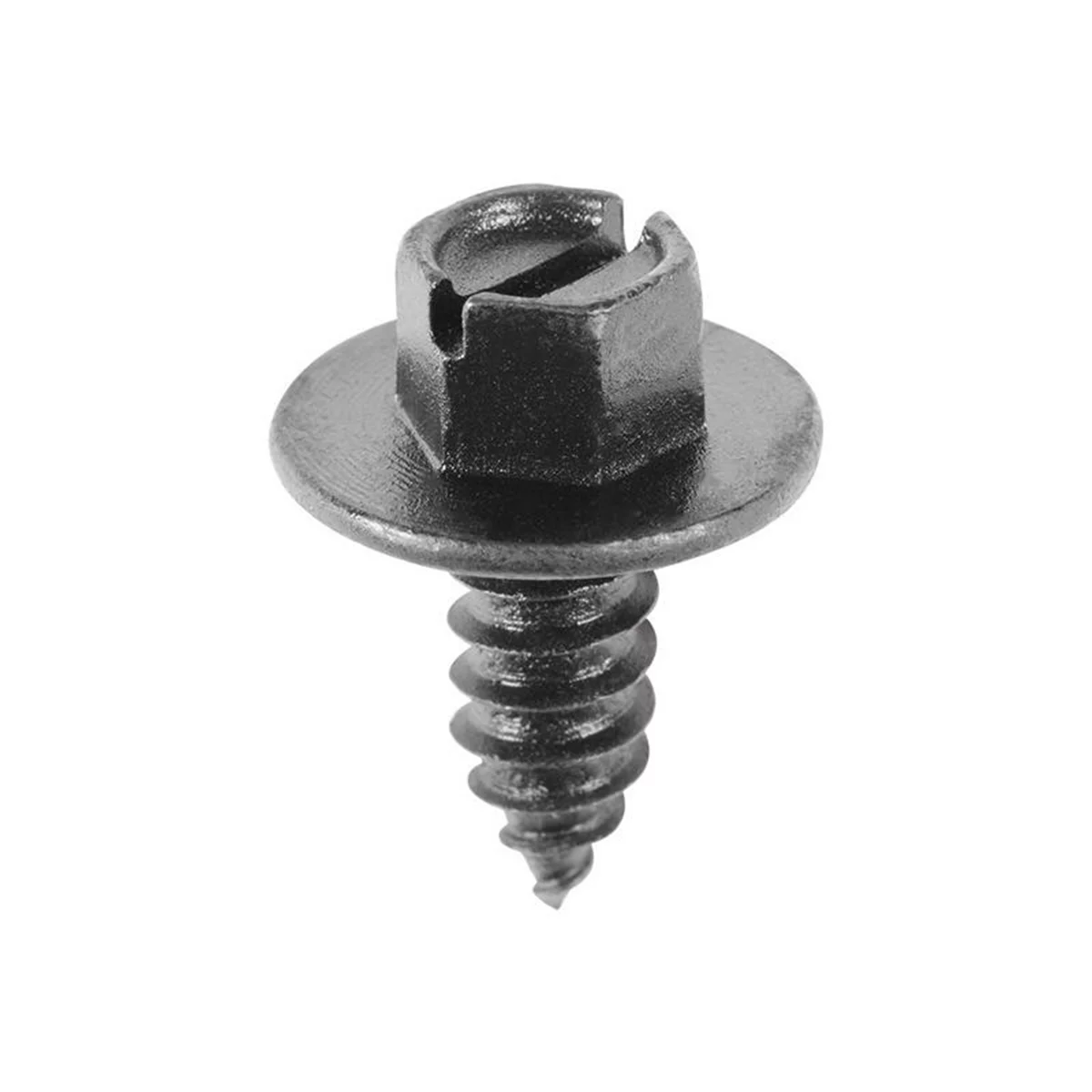
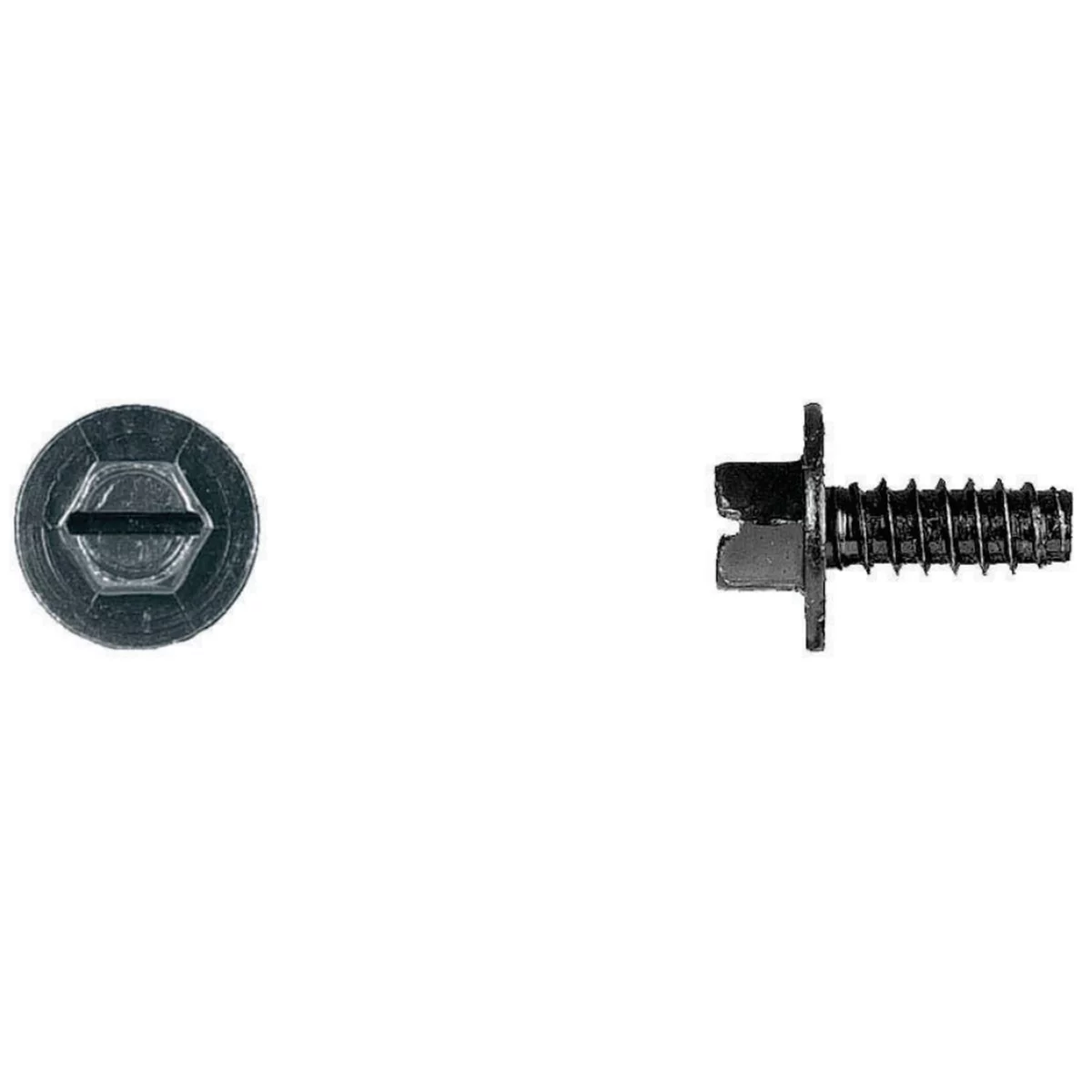
20446 Slotted Hex Washer Head License Plate Screw, #14 Screw
Mfg: AUVECO - Auto Vehicle Parts LLC
Part #: 20446
Anti-Theft Screw Systems
License plate theft remains common in many areas, either for fraudulent use or simply as vandalism. Anti-theft screw systems address this problem by requiring a proprietary bit for removal. These sets typically include four stainless steel screws with unique head patterns—common designs include pin-in-Torx, one-way screws, or custom multi-lobe patterns—along with the matching installation bit.
Most auto parts stores stock anti-theft license plate screw sets in the ten to fifteen dollar range. The installation bit is retained by the vehicle owner, making casual removal significantly more difficult. While a determined thief with a complete bit set could still remove the plate, these fasteners effectively eliminate opportunistic theft and require minimal additional installation time.
The primary consideration with anti-theft screws is bit retention. Store the installation bit in your vehicle’s tool kit or glove compartment documentation, but keep a backup bit in your home workshop. Losing the proprietary bit doesn’t make the screws impossible to remove—you can drill them out or use a screw extractor—but it does create unnecessary complications during routine plate changes.
One-way screws represent the most secure option but should be avoided for general use. These fasteners install normally but cannot be removed with conventional tools, requiring destruction for plate changes. This makes them suitable only for permanent installations or situations where plate removal will never be necessary, which is rarely the case in practical automotive service.
Installation Best Practices
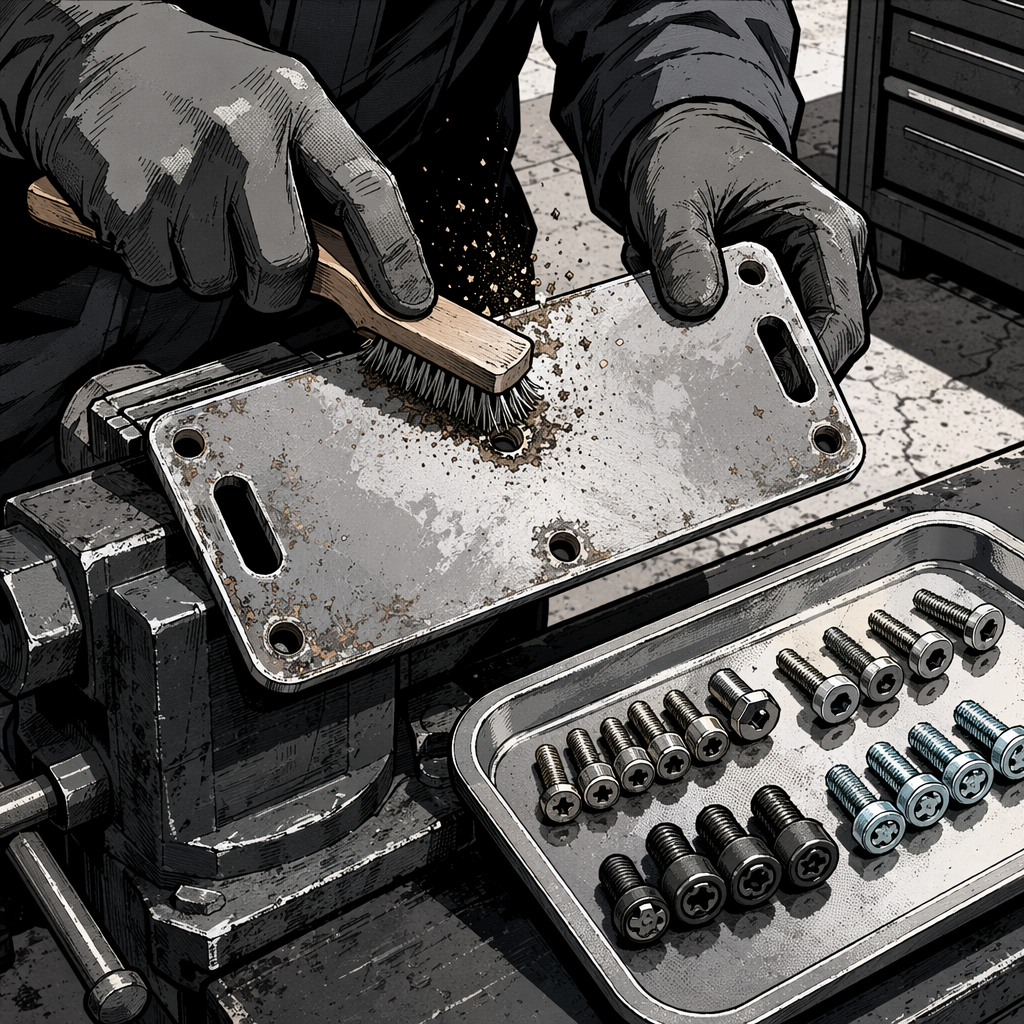
Proper installation begins with cleaning the mounting surface and screw holes. Remove any dirt, old gasket material, or corrosion from the license plate mounting area using a wire brush or plastic scraper. For threaded holes in metal, run a tap through the threads to clean out debris and verify that the threads are intact. This takes less than a minute and prevents cross-threading during installation.
Thread engagement should be verified before final tightening. Start each screw by hand and ensure it threads smoothly without resistance. If you feel binding or cross-threading, back the screw out completely and restart. Cross-threaded fasteners in plastic mounting bosses will strip the threads completely, requiring either oversized self-tapping screws or mounting boss replacement.
Tightening torque should be firm but not excessive. License plate screws don’t require the same torque as structural fasteners—you’re securing a thin metal plate to a mounting surface, not joining load-bearing components. Over-tightening will crack plastic mounting bosses, strip threads in softer metals like aluminum, or deform the license plate itself. Snug the screws down with hand tools until the plate is held firmly without gaps, then stop.
Use all mounting points provided by the manufacturer. Most vehicles have either two or four mounting holes, and all should be utilized even when fewer screws would technically hold the plate in place. This distributes stress evenly, prevents plate vibration that can enlarge mounting holes over time, and ensures compliance with local regulations that may specify the number of attachment points required.
Where to Source Quality License Plate Screws
Auto parts retailers represent the most reliable source for vehicle-specific license plate screws. Stores like AutoZone, O’Reilly, Advance Auto Parts, and NAPA carry sets matched to common vehicle applications, often with reference guides to identify the correct thread specification for your make and model. Staff can typically pull up the correct part number using your vehicle information, eliminating guesswork about thread pitch and length.
Home improvement stores like Lowe’s and Home Depot stock metric fasteners in their hardware sections, often at lower prices than auto parts stores. This works well when you know the exact specification required—for example, if you’ve verified that your vehicle uses M6 × 1.0 pitch screws, you can purchase stainless steel or titanium fasteners by specification rather than vehicle application. However, you’ll need to measure or identify the correct thread yourself.
Online retailers offer the widest selection and often include vehicle-specific kits with both screw types for models that use different threads at front and rear mounting points. The main drawback is lead time—if you need screws for immediate installation, online ordering isn’t practical. Additionally, some online offerings are overpriced for what amounts to commodity hardware; seventeen dollars for a set of four screws is excessive when local retailers stock equivalent products for a quarter of that price.
Dealership parts departments stock OEM-specification license plate screws, which guarantees correct fitment and finish matching. This option makes sense for high-end vehicles where appearance is critical or for situations where you want absolute certainty about specifications. However, dealership pricing typically exceeds aftermarket alternatives significantly, making this the premium choice rather than the practical one for routine service work.
Quick Reference Checklist
- Identify thread type: M6 × 1.0 pitch for metal holes, M5 coarse thread for plastic mounting bosses
- Verify screw length: 3/4 inch is standard for most applications
- Choose corrosion-resistant material: stainless steel minimum, titanium for premium applications
- Consider anti-theft screws in high-risk areas: adds minimal cost, requires proprietary bit retention
- Clean mounting holes before installation: prevents cross-threading and ensures proper engagement
- Hand-start all screws: verify smooth threading before using tools
- Tighten to snug fit only: avoid over-torque that strips threads or cracks plastic bosses
- Use all factory mounting points: distributes stress and prevents vibration damage
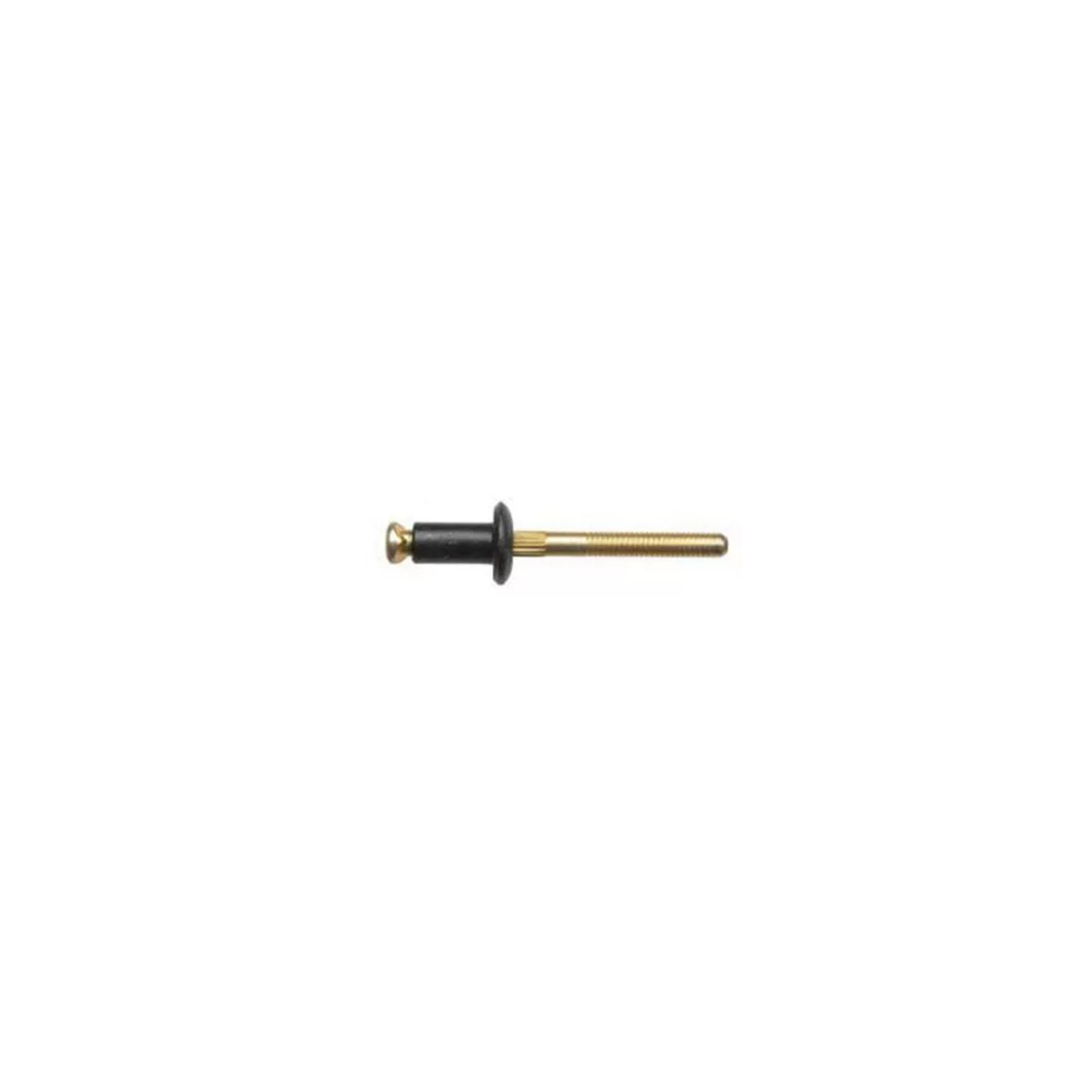
4009PK Outside Door Handle Rivet, 1/4 in Dia x 3/32 to 1/8 i
Mfg: Disco Automotive Hardware
Part #: 4009
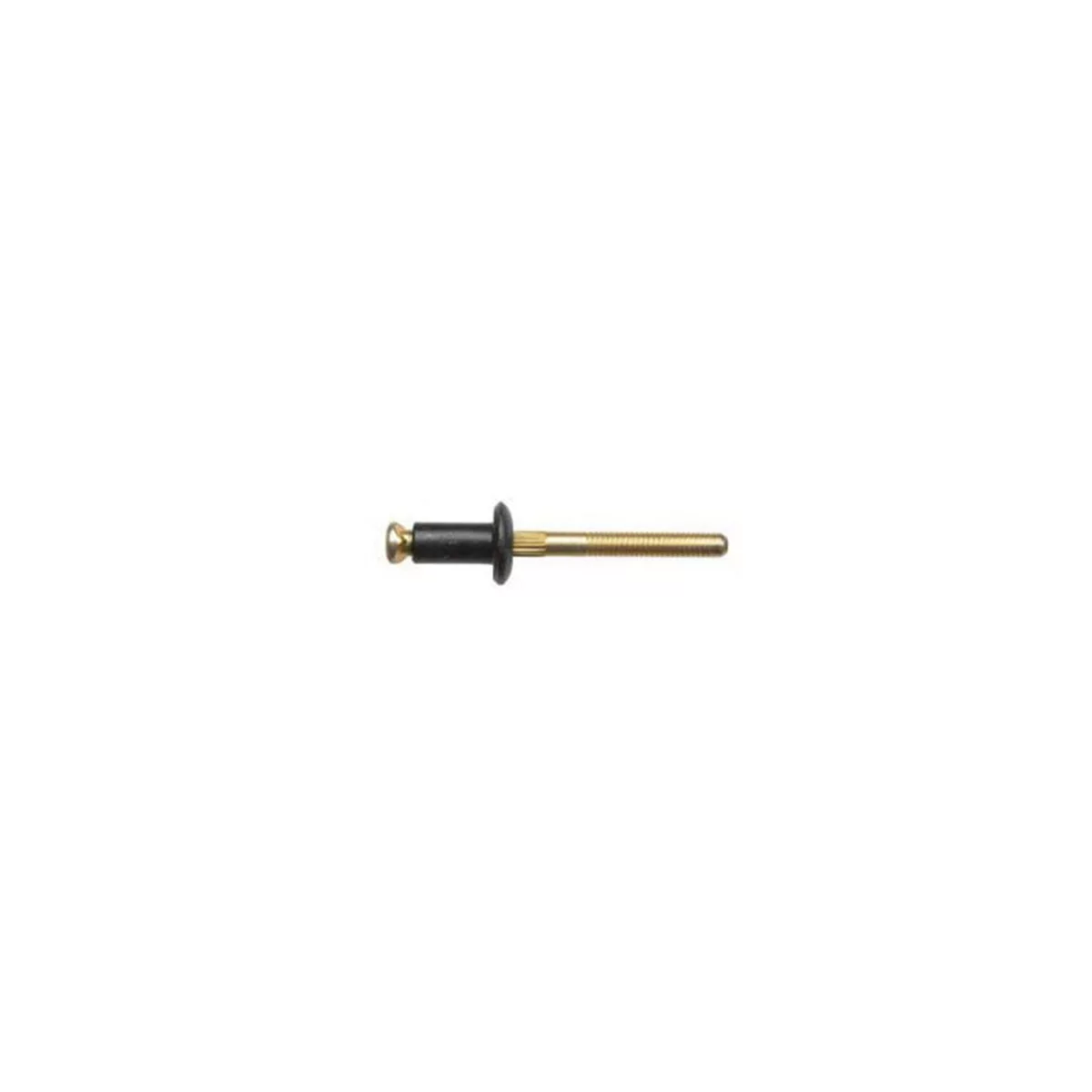
4009MT Outside Door Handle Rivet, 1/4 in Dia x 3/32 to 1/8 i
Mfg: Disco Automotive Hardware
Part #: 4009MT
Frequently Asked Questions
What size screws do I need for license plates?
Most vehicles use M6 × 1.0 pitch screws for metal-threaded holes or M5 coarse thread for plastic mounting points, both in 3/4-inch length. Some domestic vehicles use standard sheet metal screws. Check your vehicle’s service manual or match the thread to your original screws for certainty.
Can I use regular screws from my toolbox for license plates?
This is not recommended. Random screws may have incorrect thread pitch, which strips mounting holes, or may be made from materials that corrode and stain your paint. Automotive-grade stainless steel screws cost only a few dollars and prevent these problems.
Why are my license plate screws rusting?
Standard zinc-plated steel screws corrode when exposed to moisture, road salt, and environmental conditions. Replace them with stainless steel screws to eliminate rust streaking permanently. The replacement process takes minutes and costs less than ten dollars.
How tight should license plate screws be?
Tighten license plate screws to a snug fit where the plate is held firmly against the mounting surface without gaps. Do not over-tighten—excessive torque strips plastic threads, cracks mounting bosses, or deforms the license plate. Hand tools provide adequate force; avoid impact drivers.
Are anti-theft license plate screws worth it?
In areas with frequent license plate theft, anti-theft screws provide effective deterrence for minimal additional cost. They require a proprietary bit for removal, which eliminates opportunistic theft. Sets cost ten to fifteen dollars and include the installation bit for future plate changes.
Where can I buy license plate screws?
Auto parts stores carry vehicle-specific sets with correct thread specifications. Home improvement stores stock metric fasteners by specification if you know the exact size needed. Both options typically cost between four and ten dollars for stainless steel sets, with anti-theft versions slightly higher.
Get the Right Fasteners for License Plate Installation
Choosing quality screws is essential for a professional license plate installation that resists corrosion and resists theft. Browse our Hardware section for stainless steel, titanium, and anti-theft screw sets matched to your vehicle’s specifications.
- Stainless steel and titanium fasteners that resist rust streaking
- Anti-theft screw systems with proprietary bits for high-risk areas
- Metric and sheet metal options to match your vehicle’s mounting points

The Toolsource Technical Team blends decades of real-world automotive service experience with up-to-date technical research. Our writers collaborate with professional mechanics, shop owners, and diagnostic specialists to deliver practical, workshop-ready guidance you can trust.


Follow us on social media