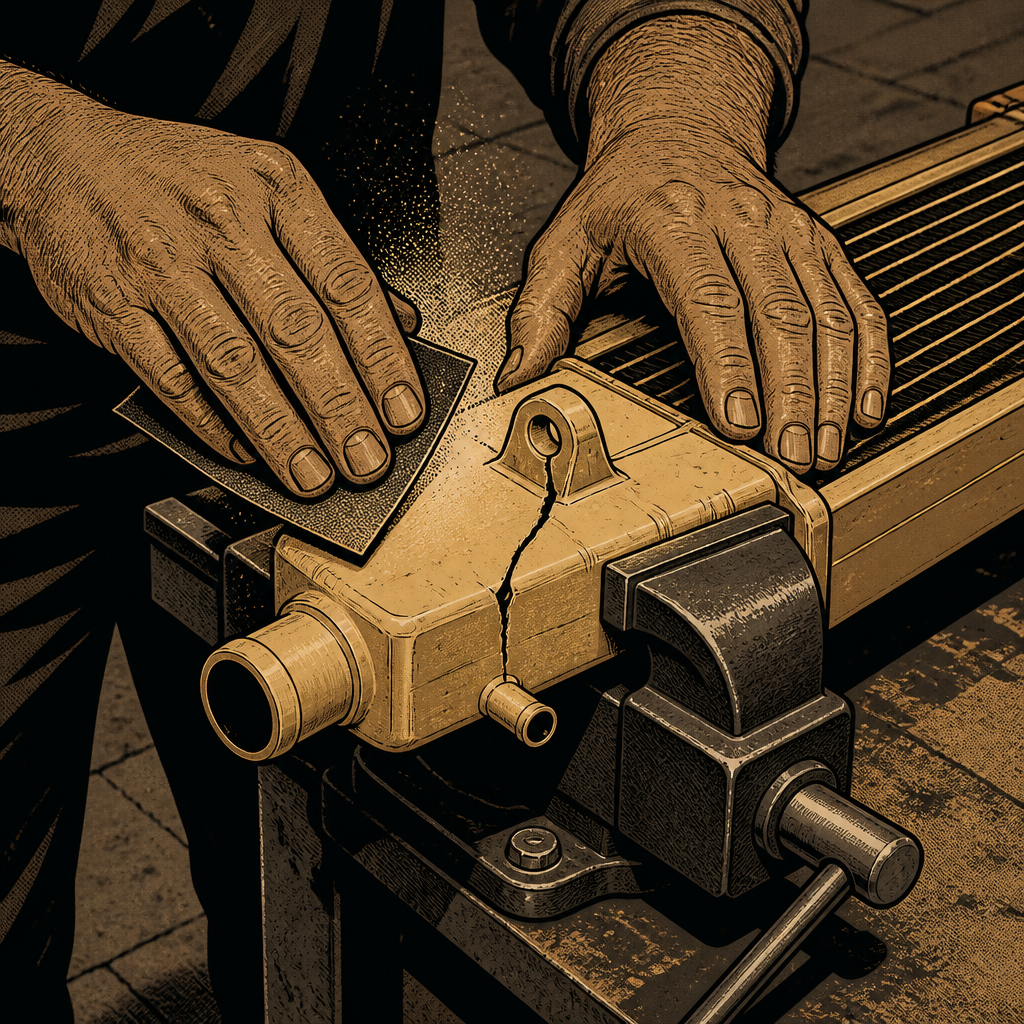
Plastic radiator end tanks get brittle with age and heat cycling, and it doesn’t take much—an errant socket, a pry bar slip, or a tech in a hurry during an unrelated repair—to crack one open. When it happens on a customer’s car and a replacement radiator isn’t sitting on the shelf, a well-executed epoxy patch can buy real time, sometimes indefinitely, if the repair is done correctly. This isn’t a shortcut to skip proper diagnosis or customer communication; it’s a legitimate stopgap technique that shows up more often than most shops like to admit. Here’s how to approach it so the patch actually holds under pressure, heat, and vibration instead of failing on the customer three miles down the road.
Why Radiator End Tanks Crack (and Why Epoxy Can Work)
Most modern radiators pair an aluminum core with plastic end tanks made of nylon-reinforced polymer. Over years of heat cycling, UV exposure, and coolant chemistry breakdown, that plastic loses flexibility and becomes brittle—especially around the crimped seams and mounting bosses. A tank that’s been through 80,000+ miles of thermal cycling can crack from surprisingly light contact, which is exactly what happens when someone removes an alternator, serpentine belt, or A/C compressor bracket in tight quarters and clips the tank with a tool or the part itself.
The reason epoxy can outperform expectations here isn’t magic—it’s material science. Aged, UV-degraded plastic is often more brittle than people assume, so a correctly bonded epoxy patch over a properly prepped surface can end up stronger than the surrounding tank material. That doesn’t mean epoxy is a permanent fix or a substitute for OEM plastic; it means that as a bridge repair, done right, it can outlast a lot of people’s expectations.
Prepping the Surface for a Repair That Actually Holds
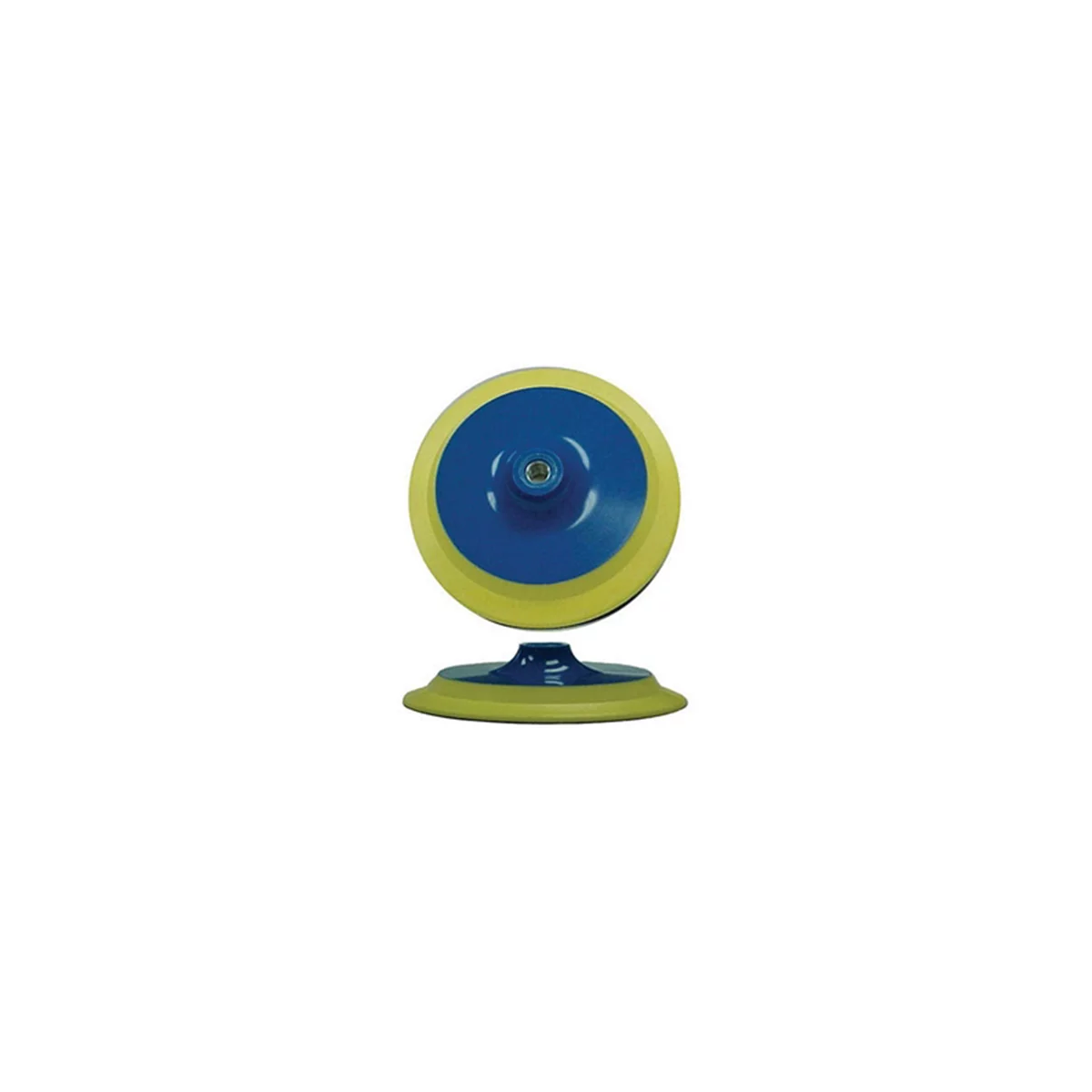
BackUpPads J60658S Sanding Pad, 8 in Dia, 5/8-11 Arbor/Shank
Mfg: Ferro Industries
Part #: 6268
BackUpPads 40496SV Dual Action Sanding Pad, 6 in Dia, Uretha
Mfg: Ferro Industries
Part #: 5166
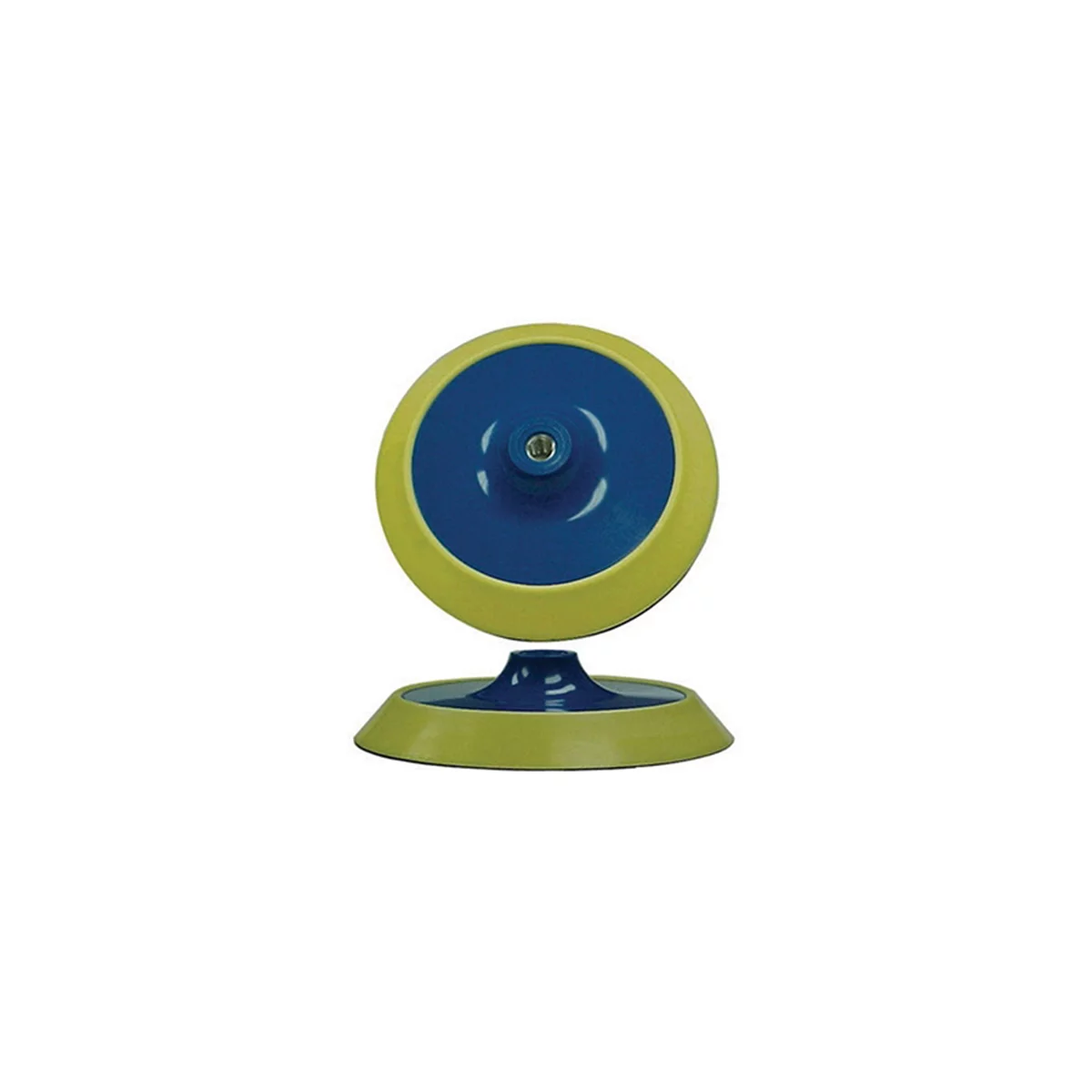
BackUpPads J60678 Velcro Sanding Pad, 8 in Dia, 5/8-11 Arbor
Mfg: Ferro Industries
Part #: 6278
Surface prep is the single biggest factor in whether an epoxy patch survives or fails. Skipping this step is the most common reason DIY radiator patches leak again within days.
- Drain and dry completely. Any coolant residue or moisture at the bond line will prevent proper adhesion. Drain the system, then let the crack area air dry or use compressed air to force out any trapped fluid in the crack itself.
- Clean with solvent. Wipe the area with brake cleaner or isopropyl alcohol to strip away oils, coolant film, and road grime. Let it flash off fully before touching the surface again.
- Abrade the bonding surface. Use 80–120 grit sandpaper or a scuff pad to rough up the plastic around the crack, extending at least half an inch past the damage in every direction. This gives the epoxy mechanical “tooth” to grip instead of relying on adhesion to smooth plastic alone.
- Blow off dust. Sanding residue left behind will sit between the epoxy and the plastic and weaken the bond. Compressed air or a final solvent wipe should be the last step before mixing epoxy.
Recommended Tools
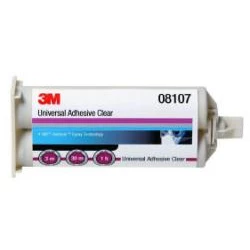
3M Fast Cure Epoxy Adhesive 8107 - Strong Bond Sealant
Mfg: 3M Automotive
Part #: 8107


Two Component Cordless Epoxy Adhesive Dispenser Extended
Mfg: Powerpush by Meritool
Part #: 7000-1500-EXT-11-20V-US
A successful radiator tank repair depends on proper surface preparation and post-repair verification. Find what you need in our Automotive Radiator Tools collection.
- Pressure testers and gauges for verifying repair durability
- Drainage and flush equipment for system preparation
- Tank removal and installation tools
Get the Right Tools for Your Radiator Repair
While epoxy provides a reliable temporary fix, having the proper tools ensures professional results and proper installation. Browse our complete Automotive Radiator Tools collection to find everything needed for radiator maintenance, testing, and repair work.
- Radiator flush kits for system cleaning before epoxy application
- Pressure testing equipment to verify repair effectiveness and durability
- Specialized radiator sealants, compounds, and diagnostic instruments

The Toolsource Technical Team blends decades of real-world automotive service experience with up-to-date technical research. Our writers collaborate with professional mechanics, shop owners, and diagnostic specialists to deliver practical, workshop-ready guidance you can trust.


Follow us on social media