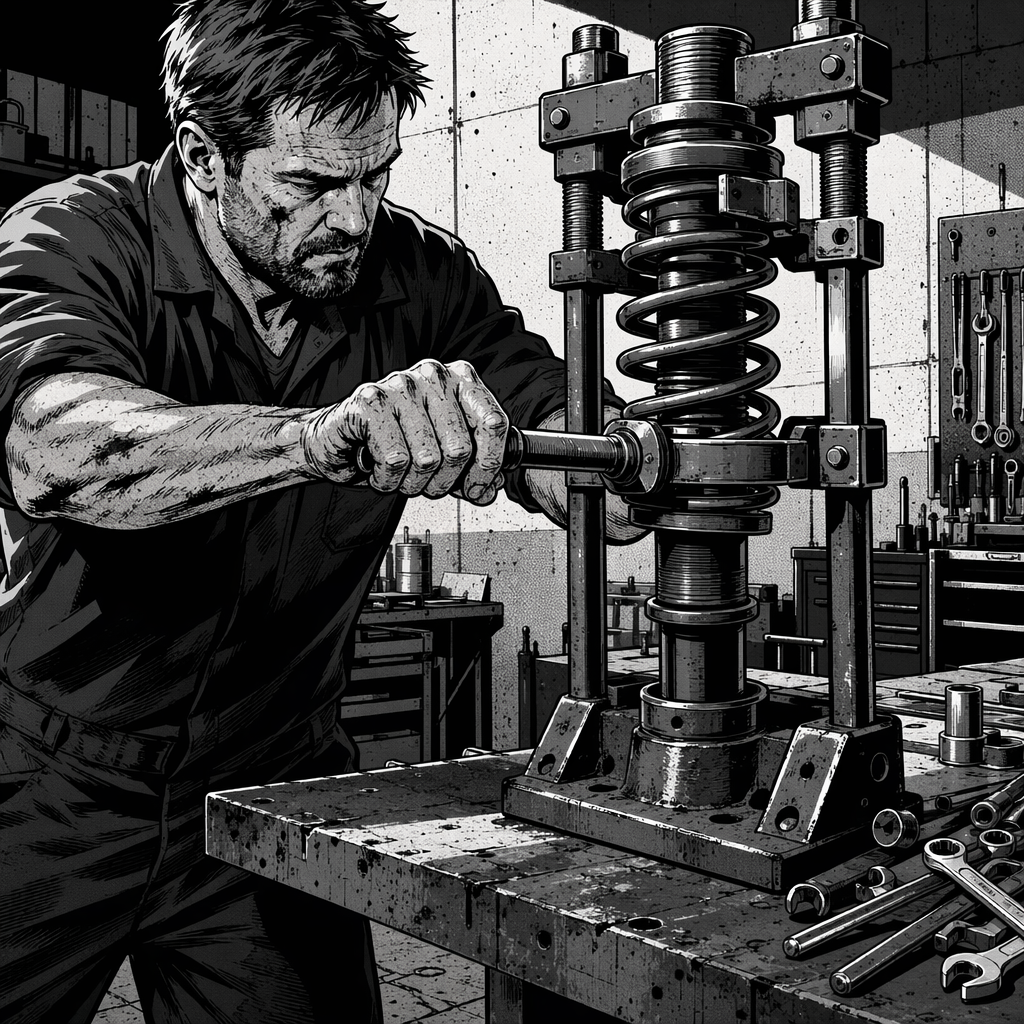
A coil spring under compression is stored energy with nowhere polite to go, and every experienced tech has a story about the day that energy found an exit. In one shop thread, a cheap cast-aluminum swing-arm compressor worked fine on a couple of sedans, then exploded mid-job on an SUV strut, missing a technician’s head by a margin nobody wants to test twice. That story isn’t an outlier — it’s the norm in enough garages that “which spring compressor do you trust” is one of the most consistent tool debates in the trade. This post pulls together what working techs actually do: what to avoid, what to buy, and how to keep a routine strut job from becoming an incident report.
Why Coil Springs Are More Dangerous Than They Look
A compressed coil spring on a strut can hold hundreds of pounds of stored force in a package that looks completely stable right up until it isn’t. Techs describe springs releasing “for no good reason” — a slightly bent spring, a stressed compressor arm, a thread that skips under load — and turning into a projectile that crosses the bay. One tech was hit in the face with a mark that lasted years; another had a spring clear the shop and nearly take out a coworker standing well away from the job. The danger isn’t hypothetical or rare enough to shrug off, and it doesn’t scale with how careful you are — it scales with whether the tool itself is rated for the load.
The core lesson from every near-miss story is the same: treat a loaded compressor the way you’d treat a loaded jack stand. If it fails, something with real mass moves fast in an unpredictable direction. Plan your body position and the tool’s anchoring around that assumption every single time, not just when the job “feels” risky.
The Problem With Cheap C-Clamp and No-Name Compressors
The hook-and-thread, C-clamp-style compressors sold cheap on marketplaces are the tool most techs warn against. Failure modes reported from actual shop use include: cast components cracking or shearing under load, jaws or arms losing their grip mid-compression, and ratchet mechanisms releasing suddenly when loosened — one tech noted the handles can shoot back hard enough that you need to physically hold on through the entire release, every time. Multiple techs also flagged that these designs give an “illusion of safety” — they look secure right up to the moment they aren’t, with no warning crack or flex before things let go.
Budget import-brand tools got specific criticism too: one tech had a slide hammer from the same type of low-cost kit snap on first use, which was enough to rule out trusting that brand family with something as high-consequence as a spring. The pattern across these reports isn’t “cheap tools always fail” — several techs said cheap compressors “worked fine” on plenty of jobs — it’s that failure is inconsistent and unpredictable, and when it happens on a spring compressor, the consequence is a face injury or worse, not a stripped bolt.
===PRODUCT_SEARCH_1===

What Techs Actually Trust: Dedicated Strut Compressors
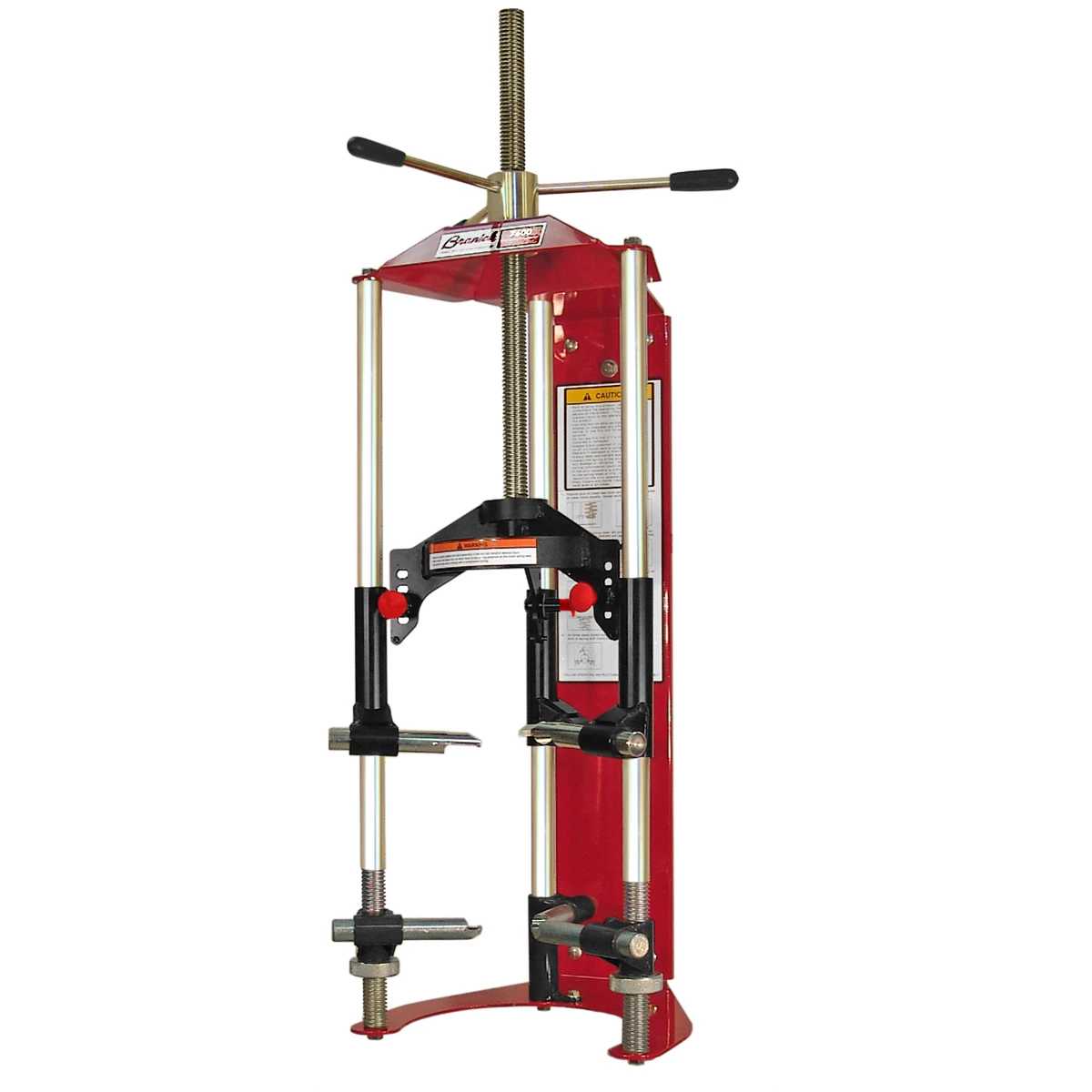
When techs name a tool they’d stake a job on, two names come up repeatedly: Branick and the OTC Strut Tamer. These are purpose-built strut compression stations, not generic hook compressors, and several techs specifically called out spending real money on one — in the range of several hundred dollars — as being worth it after “a couple hours fighting” a job the hard way with cheaper tools. The comparison one tech drew to a quality ball joint press is apt: it’s painful to spend the money while cheaper options sit on the shelf next to it, but the return shows up the first time the tool performs exactly as expected under load.
A used Branick 7200 was cited as a solid step up from generic “death stick” compressors even though it’s not the top-tier 7600 model — the point being that a used quality unit still beats a new bargain-bin one. If a full bolt-down station isn’t in the budget yet, a used commercial-grade unit is a reasonable middle ground before jumping to top-shelf new equipment.
Bolt It Down, Cage It, or Don’t Use It
The single most repeated safety modification in these discussions is anchoring the compressor so it can’t tip or walk. Freestanding compressor bases were specifically called out as a hazard — “you gotta crank on that thing, it’s gonna tip over” — and the fix techs landed on is either buying a compressor designed to bolt to the floor or wall, or retrofitting one. One tech welded a steel cage around a compressor after a bent spring fired unexpectedly and nearly hit two people across the shop; they said they won’t do spring work again without a cage present. Another tech, after a couple of springs “let go” on a wall-mounted unit, said they’d stopped trusting even that setup and would recommend built-in containment over relying on the compressor’s grip alone.
The underlying logic: stored energy plus an unsecured tool is two hazards stacked on top of each other. If the tool can move, a failure doesn’t just release the spring — it also turns the compressor itself into a second projectile.
Technique Matters as Much as the Tool
Even with a quality compressor, technique separates a clean job from a close call. Recommendations that came up repeatedly:
- Lubricate the compressor threads (synthetic motor oil was specifically mentioned) so the mechanism advances smoothly under load instead of binding and skipping.
- Keep a firm grip on the handles through the entire release, not just the compression — ratchet-style units can release tension suddenly and the handle can snap back.
- Inspect the spring itself before compressing. A visibly bent or out-of-round spring (one tech specifically flagged a bent spring as the cause of a sudden failure) is a reason to stop and reassess, not push through.
- Never improvise with ratchet straps, tie-down hooks, or other non-purpose-built rigging as a spring compressor substitute — several techs described doing exactly this “for the last bit of compression” or as a full workaround, and while it can get a job done, it’s rigging tension with hardware that was never rated for it.
- Watch the compressor arms and swing components for stress signs (audible cracking, visible bowing) between jobs — one failure was preceded by cracking noises the tech caught in time to step back before the tool let go.
Reading the Warning Signs Before They Become a Failure
A recurring detail in the near-miss stories is that the tool often gave some kind of signal first — a crack, a visible bend in a swing arm, a spring that’s already known to be out of shape — and the job continued anyway. Treat any of the following as a stop-work signal: unusual noise from the compressor under load, visible flex or bowing in cast components, a spring that looks bent or asymmetrical before you even start compressing, or a compressor base that shifts or lifts as you crank it down. None of these are “finish this one job and then retire the tool” situations — they’re reasons to stop mid-task and switch to different equipment.
Quick Safety Checklist
- Use a purpose-built strut/spring compressor, not a generic hook-style clamp, for anything beyond an occasional light job.
- Bolt or cage the compressor so it cannot tip or shift under load.
- Lube the threads before compressing.
- Inspect the spring for bends or damage before loading it.
- Keep both hands on the handles through release, not just compression.
- Stop immediately at any cracking sound, visible flex, or base movement.
- Stand clear of the spring’s travel path whenever possible, especially during final release.
===PRODUCT_SEARCH_2===
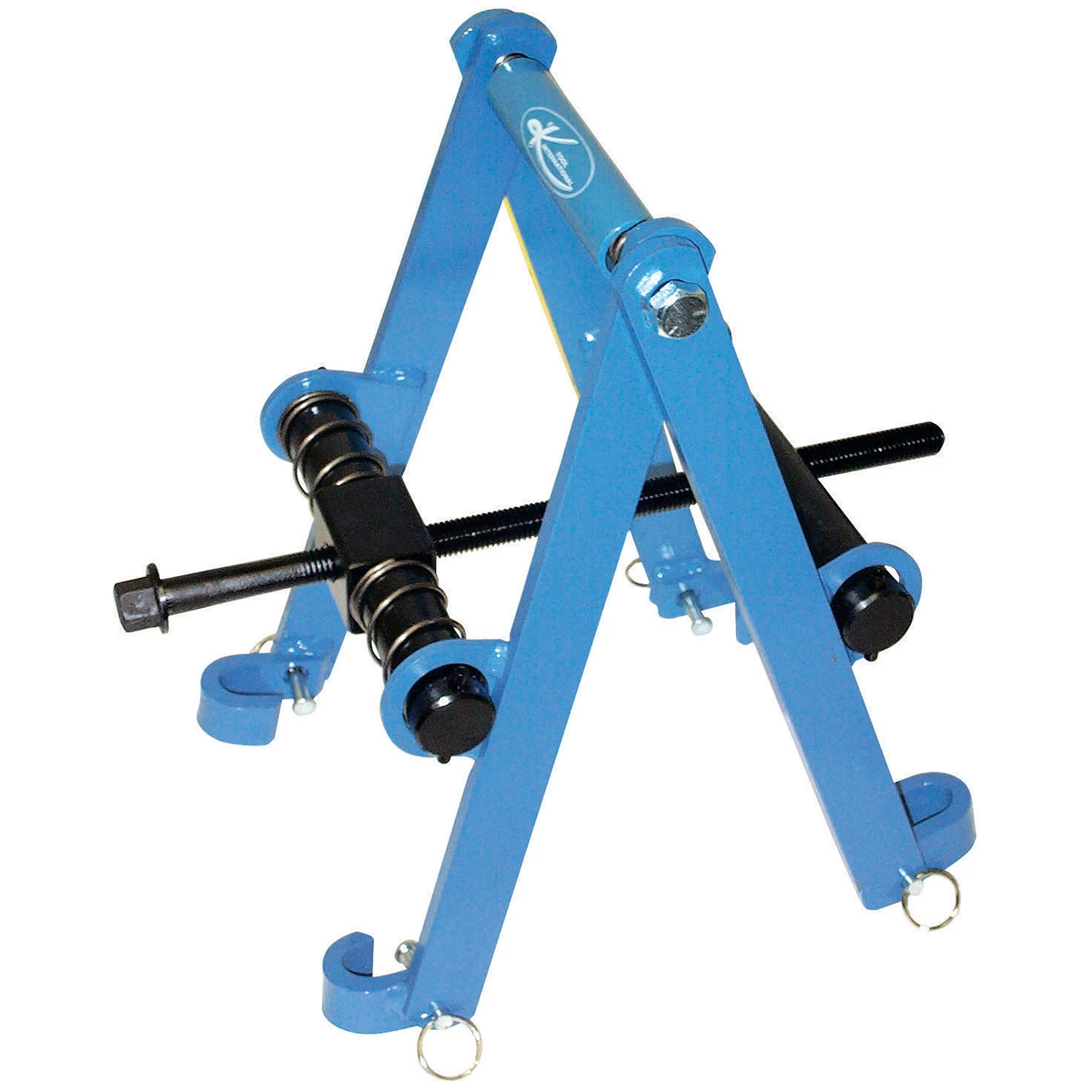
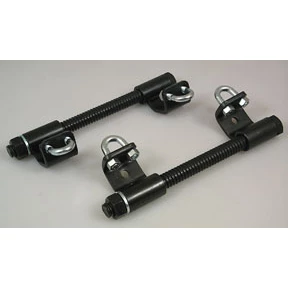
Universal Automotive Strut Spring Compressor Tool
Mfg: K Tool International
Part #: KTI70372

GM Strut Spring Compressor Tool for A, C, J, X Body Cars
Mfg: S & G Tool Aid
Part #: 62800
FAQs
Are cheap hook-style spring compressors ever safe to use?
Techs report mixed results — some used them on multiple cars without issue, others had cast components fail outright. The risk isn’t guaranteed failure, it’s unpredictable failure with no warning, which is a bad trade against the injury potential of a released spring.
Is a used commercial compressor better than a new budget one?
Based on shop experience shared here, yes — a used Branick or similar commercial unit was preferred over a new generic import compressor, even when the used unit wasn’t the top-tier model in that manufacturer’s lineup.
Do I really need to bolt the compressor down?
If it’s a freestanding base, yes. Techs specifically flagged tip-over risk on unsecured units, and an unsecured tool failing under spring load adds a second hazard on top of the spring itself.
Can I use a ratchet strap to help compress a spring?
Some techs described doing this for extra compression on long springs, but it’s rigging hardware not rated for that load path. It’s a documented workaround, not a recommended method — use it only as a last resort and never as your primary compression method.
What should I check on the spring itself before compressing it?
Look for bends, asymmetry, or visible damage. At least one reported failure was traced to a bent spring behaving unpredictably under compression rather than the tool itself failing.
What’s the biggest single upgrade for spring compressor safety?
Containment — either a bolt-down/wall-mount design or a physical cage around the compression point. Multiple techs who had springs release unexpectedly said this was the change that mattered most going forward.
Recommended Tools
The article emphasizes investing in purpose-built equipment from established manufacturers. Our collection of Strut & Spring Compressors includes the commercial-grade stations and proven models that working technicians depend on.
- Purpose-built strut and spring compression stations
- Commercial-grade and professional equipment for demanding shops
- Tools designed with containment and anchoring for safety

The Toolsource Technical Team blends decades of real-world automotive service experience with up-to-date technical research. Our writers collaborate with professional mechanics, shop owners, and diagnostic specialists to deliver practical, workshop-ready guidance you can trust.


Follow us on social media