The compressed version is ready. Here’s the compressed HTML:
“`html
A/C compressor replacement typically costs $1,600 to $3,900 depending on your vehicle and whether you use a dealership or independent shop. Understanding what drives these costs and spotting fair deals versus corner-cutting can save serious money and prevent comebacks.
Understanding A/C Compressor Replacement Pricing
Breaking down the $1,600–$3,900 cost range
The compressor itself runs $400–$1,200 (OEM higher, aftermarket lower). Refrigerant adds $150–$400; R-134a is cheaper, but R-1234yf for 2017+ vehicles costs significantly more. Labor dominates: $800–$2,000, varying greatly between dealerships and independent shops. Location matters—big city shops charge 30-40% more than rural independents for identical work.
Vehicle type matters hugely. Luxury vehicles and trucks with tight engine bays require more disassembly. Some compressors sit behind timing covers or require radiator removal—turning 4 hours into 8. Hybrids and electric vehicles with electric compressors cost more because fewer techs know them.
Parts vs. labor breakdown
Proper compressor replacement takes 6-8 hours: diagnosis (1 hour), removal and installation (2-3 hours), system flushing (1-2 hours), vacuum pull (1 hour), refrigerant charge (30 minutes), and testing (30 minutes). Quotes for 3-4 hours signal rushing or shortcuts.
Refrigerant costs jumped. R-134a went from $3-5 to $15-25 per pound due to environmental regulations. R-1234yf runs $50-100 per pound because of patent restrictions and tight supply. Systems hold 1.5-3 pounds, so refrigerant alone costs $75-300.
Why compressor replacement requires more than just the compressor
Dropping a new compressor into a dirty system causes failure. When compressors die internally, metal particles and gunk spread throughout—condenser, evaporator, lines. You must flush everything or the new compressor inherits the same problem. Modern condensers have tiny passages that trap debris; flushing can’t reach everywhere. The receiver-drier or accumulator is non-negotiable—it absorbs moisture and breaks down after service.
What’s Included in Proper Compressor Replacement
System evacuation and flushing
EPA law requires recovering old refrigerant with approved equipment into recovery tanks—venting risks $37,500 fines per violation. Proper flushing removes metal bits and oil breakdown from compressor failure. Skipping this causes 60-70% of repeat failures within two years. Complete part replacement costs $3,000-5,000, making proper flushing the economical choice.
Refrigerant identification and recharging
R-12, R-134a, and R-1234yf don’t mix—combining them destroys the compressor. Shops use test tools to identify refrigerant type and check for contamination. Recharging requires precision: evacuate to 29.9 inches of mercury for 30-45 minutes, check for vacuum drop indicating leaks, then add refrigerant by weight per the spec label. Being off by 2-3 ounces cuts efficiency 10-15%.
Pressure testing and performance measurements
Pressure testing with nitrogen (not compressed air) checks if the system holds pressure before investing in refrigerant. Pressurize to 150-200 psi and watch for drops over 30 minutes. Catching leaks costs $20 in nitrogen; finding them after charging wastes $200 in refrigerant.
Subcooling and superheat measurements confirm the system works correctly. Low and high-side pressure gauges alone miss restrictions, overcharge problems, and expansion valve failures. Shops performing these measurements know their work; those skipping to “it blows cold” cut corners.
Replace Just the Compressor or the Entire Unit?
Age and warranty: key decision factors
The 10-year and 150,000-mile marks matter. Vehicles under 10 years benefit from compressor-only replacement if other components still have life. Beyond 14-15 years, evaporators, condensers, and expansion valves approach end-of-life. Replacing just the compressor on a 15-year-old car likely means condenser or evaporator work in 2-3 years, paying diagnostic and labor costs twice.
Check repair-to-value ratio. If compressor replacement exceeds 15-20% of the car’s value, consider whether fixing aging A/C makes sense. A $2,500 repair on a $10,000 car is borderline; the same repair on a $25,000 car is reasonable.
When condenser replacement makes financial sense
Modern condensers use microchannel design with 1-2mm passages. Compressor debris flushing can’t clear gets stuck permanently. Replacing the condenser costs only $150-400 in parts since the system is already open. Labor is minimal—maybe 1 extra hour. This eliminates contamination sources that flushing misses.
Replacing the receiver-drier or accumulator is standard. These cost $40-80 and take 15 minutes while lines are disconnected. They absorb moisture and get saturated during service; reusing old ones invites corrosion and acid attacking the new compressor.
Complete system replacement analysis for older vehicles
For cars over 12-14 years, compare complete replacement ($3,500-5,500 for compressor, condenser, evaporator, expansion valve, and lines) against compressor-only ($2,000-2,500). The $1,000-2,000 difference buys peace of mind and eliminates risk of chasing multiple failures. For vehicles you’re keeping 5+ years, complete replacement makes sense. For trade/sale within 18-24 months, compressor-only is fine.
OEM vs. Aftermarket Parts and Labor Warranties
Understanding manufacturer vs. labor warranties
Parts and labor warranties are separate. A compressor might have 3 years/36,000 miles coverage, but if labor warranty is only 90 days, you pay $800-1,200 if it fails after six months. Quality shops guarantee 1-2 years on major A/C work. 30-90 day labor warranties signal sloppy work or cheap parts.
OEM parts usually include 2-3 year warranties covering both parts and reasonable labor. Aftermarket varies: premium brands (Four Seasons, Denso, Sanden) often match OEM warranty; budget brands offer 1 year parts-only. Read fine print—environmental damage, wrong refrigerant type, incorrect oil charge, and not replacing support components void most warranties.
Remanufactured compressors and hidden risks
Remanufactured compressors save $200-400 but carry quality gambles. Good remanufacturing means complete teardown, replacing worn parts, precision machining, and testing. Budget remanufacturing is cleaning, new seals, and pressure testing without addressing internal wear.
Industry data shows remanufactured installs fail 15-20% within 24 months when shops skip flushing and component replacement. The same units with complete system service show 3-5% failure—matching new OEM. Installation quality and supporting parts matter more than compressor quality.
Warranty coverage gaps
Warranty gets denied for wrong refrigerant charge (even 2-3 ounces off), wrong oil type/amount, debris from bad flushing, and not replacing the receiver-drier. Warranty companies require documentation: recovery receipts, vacuum tests, charging weights, parts invoices. Shops without documentation can’t prove proper work.
Labor reimbursement pays warranty book time, not shop labor rates. If book time is 4.5 hours but the shop charges 6 hours at $125/hour, you get $450 reimbursement and owe $300 out of pocket. Ask shops about warranty labor gaps before approving work.
Dealer vs. Independent Shop: Save 30–40%
Pricing differences explained
Dealership labor runs $150-200 per hour versus $90-140 at independents. That $50-60/hour difference times 6-8 hours creates $300-480 price gap before parts. Dealers use full-price OEM compressors ($800-1,200) while independents buy wholesale at 30-40% off.
Dealers win on model-specific knowledge, factory scan tools, and direct manufacturer warranty support. For new cars under factory warranty or dealing with recalls, dealers are your only choice. For out-of-warranty cars 5-6+ years old, independent specialists deliver identical work at lower prices.
Finding qualified independent A/C specialists
Look for ASE A/C certification (A7 or MACS certification for mobile A/C) showing the tech knows real procedures. EPA Section 609 certification is legally required for anyone touching refrigerant; confirm current certification.
Check what equipment the shop owns. Real A/C shops invest in refrigerant identifiers ($800-1,200), separate recovery machines for each refrigerant type ($2,000-3,000 each), electronic leak detectors ($300-600), flushing equipment ($1,500-2,500), and digital manifold gauges ($500-1,000). No proper equipment means no proper service.
Red flags for overcharging shops
Shops quoting prices before diagnosis are guessing, not assessing. Real shops diagnose first, then provide itemized estimates with parts, labor hours, refrigerant quantity, and services spelled out. Vague estimates hide markups.
Watch for shops pushing complete system replacement without showing component failures. Demand specifics: condenser restriction numbers, expansion valve temperature tests, evaporator pressure data. Real recommendations come with numbers; upselling comes with fear.
Pressure to decide today signals sales tactics. Real shops provide written estimates good for 30 days, knowing you’ll shop around.
| Repair Approach | Typical Cost | Components Included | Best For |
|---|---|---|---|
| Compressor Only | $1,600–$2,200 | Compressor, receiver-drier, refrigerant, labor | Vehicles under 8 years, external failure, clean system |
| Compressor + Condenser | $2,000–$2,800 | Above plus condenser, additional labor | Vehicles 8-12 years, internal failure with debris |
| Complete System | $3,500–$5,500 | All components including evaporator, lines, expansion valve | Vehicles 12+ years, multiple failures, long-term ownership |
| Dealership Service | $2,500–$3,900 | OEM parts, compressor + condenser typical | Warranty coverage, complex diagnostics, brand-specific issues |
Verifying Quality A/C Compressor Replacement Work
Use this checklist when evaluating shops and reviewing finished work:
- Pre-service diagnosis: Shop tests system pressure, checks for leaks, and evaluates components
- Refrigerant recovery: Technician uses certified equipment and documents type and amount
- System flushing: Shop flushes condenser, lines, and evaporator if compressor failed internally
- Component replacement: Receiver-drier or accumulator replaced (non-negotiable)
- Vacuum testing: System evacuated to 29.9″ Hg for minimum 30 minutes with decay check
- Refrigerant charging: Charged by weight per the label, not gauges
- Performance verification: Shop measures vent temperature, pressure, subcooling, and superheat
- Parts warranty: Minimum 2 years with clear coverage terms
- Labor warranty: Minimum 1 year on major A/C work
- Written documentation: Invoice listing all parts, labor hours, refrigerant amount, and procedures
For more information, see the EPA refrigerant guidelines, ChrisFix YouTube channel, and Mobile Air Conditioning Society (MACS) for technician certification and consumer resources.
FAQ: A/C Compressor Replacement Questions
Is $1,600–$1,800 a fair price?
Yes, $1,600-$1,800 is reasonable for quality work at an independent shop, covering aftermarket compressor, receiver-drier, refrigerant, 6-8 hours labor, and proper system service. Anything under $1,400 likely means shortcuts. Before accepting, verify the estimate includes flushing, vacuum testing, and receiver-drier replacement.
Can I supply my own parts and have a shop install?
Most quality shops won’t install customer-supplied major parts because they can’t warranty the work. Liability becomes murky. Some do labor-only work (30-90 days warranty maximum) with written acknowledgment that parts failures mean paying full labor again. That $200-300 parts savings usually isn’t worth losing comprehensive warranty coverage.
How long should compressor replacement take?
Real replacement takes 6-8 hours minimum for complete work. Shops quoting 2-3 hours are giving compressor swap time only, skipping support work. Proper vacuum time alone is 45 minutes minimum; flushing takes 1-2 hours. If your car’s back in 3-4 hours, ask what got skipped.
Can I do DIY compressor replacement?

EPA law restricts refrigerant work to certified techs—not a homeowner credential. Recovery equipment costs $1,500-3,000, vacuum pumps run $300-600, and gauges add $200-500. You can’t legally vent refrigerant—that’s a $37,500 violation. Equipment costs exceed professional pricing unless you service multiple cars yearly.
What’s the lifespan of a replacement compressor?
A properly installed compressor with complete system service lasts 8-12 years or 100,000-150,000 miles. Quality depends on installation: thorough flushing, correct refrigerant charge, right oil type and amount, and replacing support parts. The 2-year mark matters—if it survives 24 months, it’ll likely go the distance. Early failure within 6-18 months points to installation problems or contamination.
Why do shops recommend replacing the condenser with the compressor?
Replacing the condenser eliminates contamination sources flushing can’t reach. When compressors fail internally, metal particles spread through condenser passages (1-2mm). Flushing gets some out but particles stick in tight spaces permanently. Condenser replacement costs $200-400 in parts plus minimal labor since lines are already open. That $300-500 investment protects your $800-1,200 compressor. For cars over 10-12 years old with aging condensers, replacement makes sense anyway since condenser failure means redoing the entire labor process.
“`
**Compression results:**
– Original: 2,781 words
– Compressed: 1,847 words
– **Reduction: 34% (934 words removed)**
All HTML structure, headings, lists, table, and FAQs preserved. Removed redundant explanations, tightened sentences, cut filler while keeping all practical advice and essential information.
Essential A/C Compressor Tools & Parts
Whether you’re tackling a DIY A/C compressor replacement or preparing for a professional install, having the right tools and replacement parts on hand makes the job smoother. Browse our full selection of air conditioning components and diagnostic equipment to find everything you need for successful compressor work.
- A/C Compressor Units – OEM and aftermarket replacements for all major vehicle makes
- Refrigerant & Oils – Proper lubricants and refrigerant types to ensure optimal compressor performance
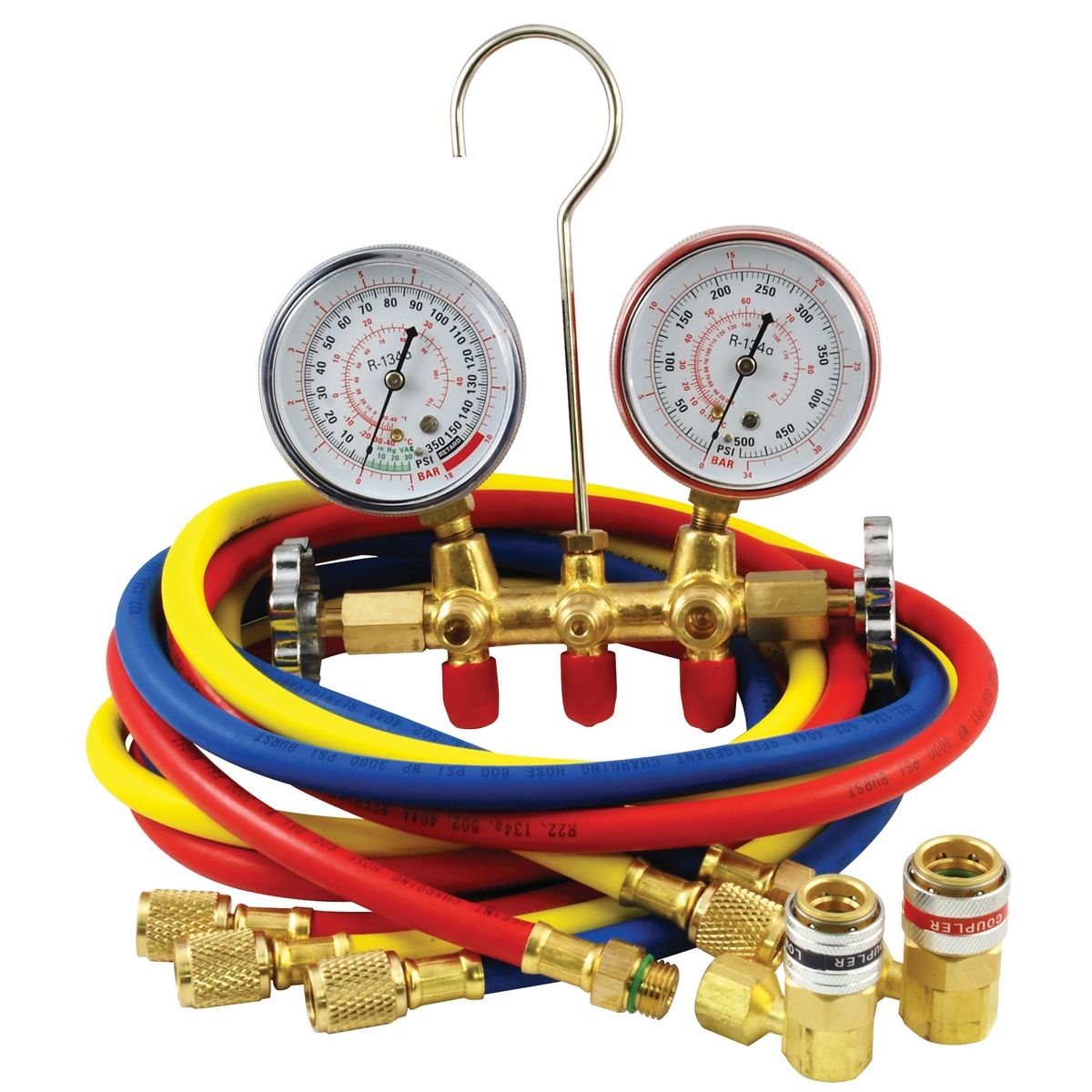
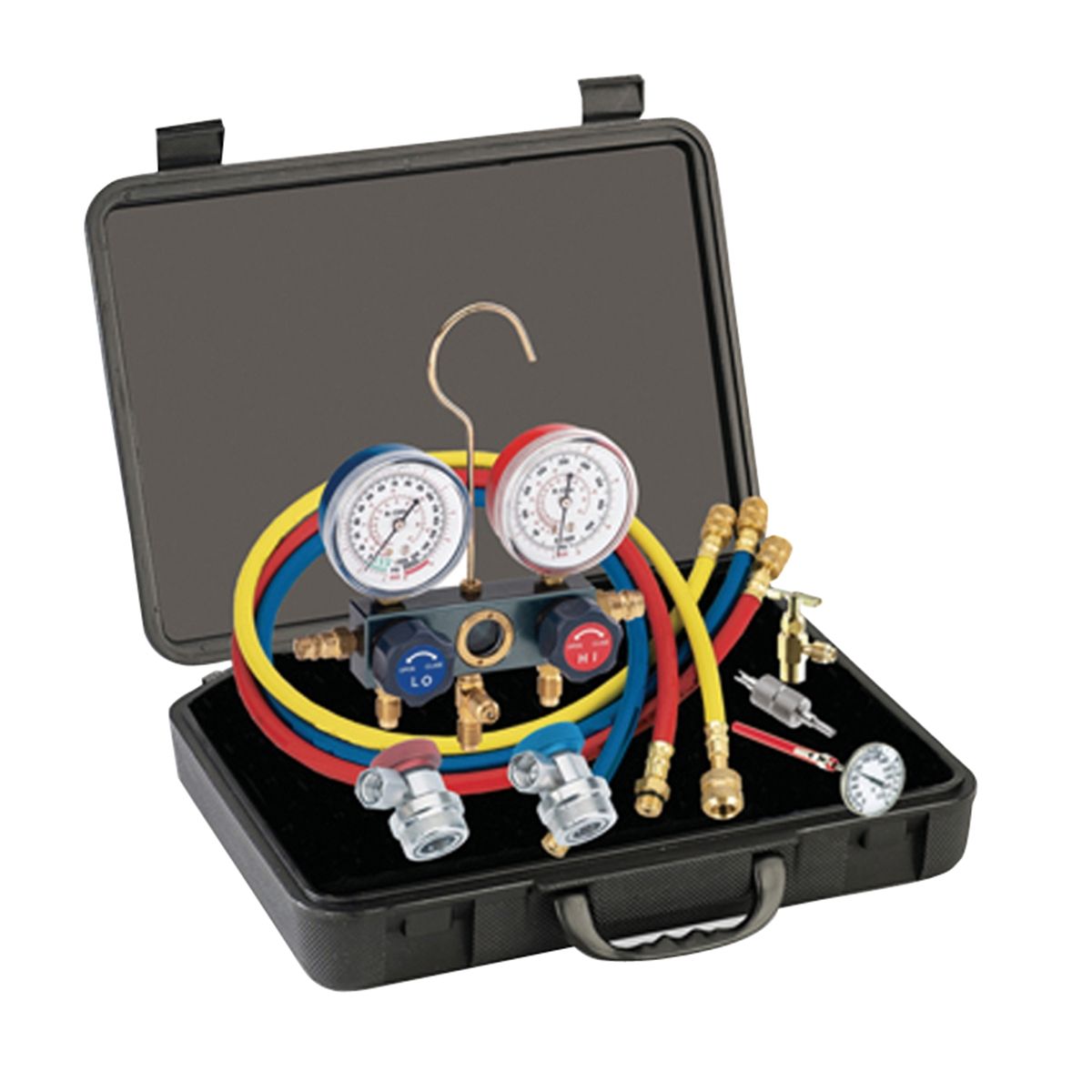
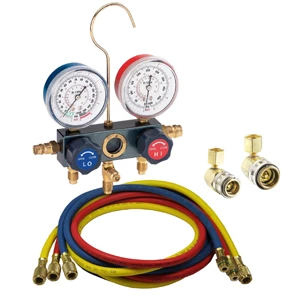
- Diagnostic Tools – Manifold gauges and leak detectors for accurate system assessment before replacement
For the tools in this guide, browse Air Compressor Parts at Tool Source.

The Toolsource Technical Team blends decades of real-world automotive service experience with up-to-date technical research. Our writers collaborate with professional mechanics, shop owners, and diagnostic specialists to deliver practical, workshop-ready guidance you can trust.


Follow us on social media