





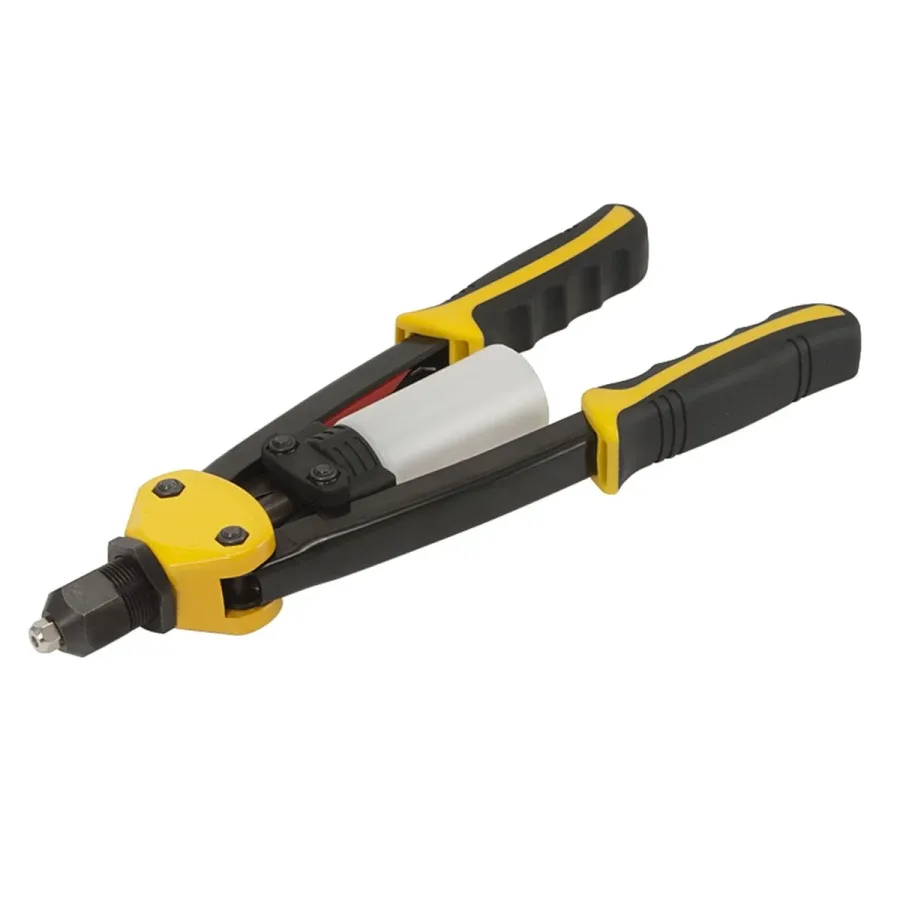
3M - Marson M42483
Your Price:
List Price: $100.5757% off














More than 250 products
ToolSource stocks 250+ riveters, from basic hand tools to advanced pneumatic and hydraulic systems, with prices ranging from $0 to $8284.35.
Our riveter selection covers every fastening need, whether you're working on automotive body panels, aerospace components, or general construction. We carry a wide range of air riveters, hand riveters, hydraulic riveters, and manual riveters to suit any application and budget. If you're looking for a riveters sale, check our current promotions for the best deals.
Brands like 3M-Marson and Astro Pneumatic are known for their reliable pneumatic riveters, offering speed and efficiency for high-volume work. Huck Manufacturing specializes in heavy-duty, structural rivets and installation tools. For thread repair, Heli Coil Products offers specialized riveters for installing threaded inserts. We also stock quality riveters from Titan, Genius Tools, Chicago Pneumatic, and J.H. Williams, ensuring you have access to the best tools for the job. Whether you need a simple hand riveter or a powerful pneumatic riveter tool, ToolSource has you covered.
A blind riveter sets rivets from one side of the work, which makes it the standard tool for joining sheet metal, panels and brackets where the back side cannot be reached. The tool grips the rivet mandrel and pulls it until the rivet body swells and clamps the parts together, then the mandrel snaps off. This category holds hand riveters, long handle lever riveters, air hydraulic rivet guns and rivet nut tools. Collision repair and body shops, trailer and truck body builders, HVAC and sheet metal shops and fabricators use them.
Hand riveters are compact and fine for occasional work and smaller rivets. Lever riveters use long handles for more pull on larger or stronger rivets with less hand effort. Air hydraulic riveters set rivets with a trigger pull and suit production work and shops that set many rivets a day. Rivet nut tools install threaded inserts in thin sheet so a bolt can be fastened to it later. Check which rivet diameters and materials each tool handles, and which nosepieces come with it.
Drill the hole to the size the rivet calls for, and choose a rivet length that matches the total thickness of the parts. Hold the riveter square to the work so the rivet head seats flat. Empty the mandrel collector before it fills, and keep the jaws clean so they grip without slipping. If a riveter starts slipping on mandrels, worn jaws are the usual cause. For air hydraulic tools, keep the air supply clean and dry and check the hydraulic fluid as the instructions direct.
Spare jaws, nosepieces and springs are in Riveter Parts, and blind rivets are in Rivets.
Brands here include Marson, Huck, Astro Pneumatic, Genius, Sunex and Williams.
















Follow us on social media